
 Worksheets
2025 Senior Final Exam - Periods 3 and 4
Total questions: 100
Worksheet time: 50mins
Name
Class
Date
1.
In what city did jazz develop in the mid-1800s?
a)
New Orleans
b)
Philadelphia
c)
Chicago
d)
Tokyo
2.
What is the name of the 1920s style of jazz?
a)
Dixieland
b)
Cool jazz
c)
Chamber music
d)
Swing
3.
Who are important jazz musicians from the 1920s?
a)
Franz Joseph Haydn and Ludwig van Beethoven
b)
Berry Gordy Jr. and Martha Reeves
c)
Eubie Blake, Louis Armstrong, Lil Hardin, and Jelly Roll Morton
d)
Drake and Taylor Swift
4.
What is the name of the 1930s to early 1940s style of jazz?
a)
Chamber music
b)
Dixieland
c)
Swing
d)
Latin fusion jazz
5.
What instrument did Louis Armstrong play?
a)
Trombone
b)
Tuba
c)
Triangle
d)
Trumpet
6.
Spontaneous musical invention / making up the music on the spot is called
a)
Composition
b)
Conducting
c)
Improvisation
d)
Rehearsing
7.
Swing music was often used for
a)
Dancing
b)
Religious ceremonies
c)
Quiet meditation
d)
High school graduations
8.
What was Benny Goodman's main instrument?
a)
Piano
b)
Banjo
c)
Saxophone
d)
Clarinet
9.
Did Mary Lou Williams write a lot of jazz pieces?
a)
Yes; she composed over 350 songs
b)
No; she composed only 5 jazz pieces and then quit
10.
During what decade was bebop the main jazz style?
a)
1920s
b)
1930s
c)
1940s
d)
2010s
11.
Where did bebop develop?
a)
New Orleans
b)
Philadelphia
c)
Chicago
d)
Harlem
12.
Bebop is
a)
A complex style of improvised jazz
b)
A slow, quiet type of jazz that was meant for easy listening
13.
Who are the 2 main pioneers of bebop?
a)
Louis Armstrong and Jelly Roll Morton
b)
Charlie Parker and Dizzy Gillespie
c)
Benny Goodman and Duke Ellington
d)
Mary Lou Williams and Lester Young
14.
What instrument did Dizzy Gillespie play?
a)
Piano
b)
Saxophone
c)
Trumpet
d)
Flute
15.
What instrument did Charlie Parker play?
a)
Guitar
b)
Piano
c)
Saxophone
d)
Banjo
16.
What does the top number of the time signature indicate?
a)
How many notes are in each measure
b)
The total amount of notes in the piece
c)
The total amount of measures in the piece
d)
How many beats are in each measure
17.
What does the bottom number of the time signature indicate?
a)
How much money was in the composer's wallet when they wrote the piece
b)
What note equals 1 beat
c)
How many beats are in each measure
d)
The total amount of measures in the piece
18.
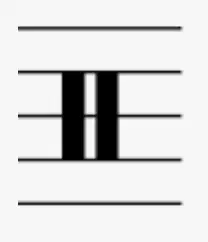
What is this symbol?
a)
Double barline
b)
Percussion clef
c)
Treble clef
d)
Time signature
19.
If 2 is the top number of the time signature:
a)
There are 2 beats in every measure
b)
There are 2 rests in every measure
c)
There are 2 measures in the piece
d)
The composer ate 2 slices of pizza after writing the piece
20.
In duple meter
a)
Beats are grouped in sets of 2
b)
Beats are grouped in sets of 3
c)
Beats are grouped in sets of 4
d)
Beats are grouped in sets of 20
21.
In triple meter
a)
Beats are grouped in sets of 2
b)
Beats are grouped in sets of 3
c)
Beats are grouped in sets of 4
d)
Beats are grouped in sets of 33
22.
In quadruple meter
a)
Beats are grouped in sets of 3
b)
Beats are grouped in sets of 4
c)
Beats are grouped in sets of 5
d)
Beats are grouped in sets of 6
23.
Motown is a nickname for what city?
a)
Philadelphia PA
b)
Detroit MI
c)
Los Angeles CA
d)
Houston TX
24.
What is Motown short for?
a)
Motor City
b)
More City
c)
Money Town
d)
Movie Town
25.
Who founded Motown?
a)
Gordon Berry, Sr.
b)
Berry Gordy, Jr.
c)
Wolfgang Amadeus Mozart
d)
Gordington Berryman
26.
What is a cover version?
a)
The first (original) version of a song
b)
A remake of a song made famous by another artist
27.
How did Motown's quality control team decide which songs to release to the public?
a)
If they had $50,000 to spend, would they buy 50,000 copies of the song or a fancy new car?
b)
If they $100 to spend, would they buy a concert ticket or a new outfit?
c)
If they had $1 to spend, would they buy a record of the song or a sandwich?
28.
Because Mozart was so talented and advanced in music at a young age, he is considered a
a)
Child prodigy
b)
World-famous scholar
c)
Music professor
d)
Genius chef
29.
Mozart wrote
a)
Operas only
b)
Instrumental music only
c)
Symphonies, concertos, and operas only
d)
In almost every genre that existed at his time
30.
Mozart
a)
Wrote best for instruments
b)
Wrote best for voice
c)
Wrote masterpieces for both instruments and voice
31.
The pace with which music moves
a)
Timbre
b)
Tempo
c)
Tonality
d)
Theme and variations
32.
The clarinet is
a)
An idiophone
b)
An electrophone
c)
A membranophone
d)
An aerophone
33.
Strings instruments, such as the violin, are
a)
Chordophones
b)
Membranophones
c)
Metallophones
d)
Stringophones
34.
What is the most basic unit of musical time and is felt as a steady, recurring pulse?
a)
Melody
b)
Beat
c)
Timbre
d)
Percussion clef
35.
What is the division of beats into groups, separated by a barline?
a)
Tone color
b)
Measure
c)
Melody
d)
Harmony
36.
Dynamics refer to
a)
The pace or the speed of the music
b)
The volume of the music
c)
The piece's time signature
d)
How many awards a song has won
37.
Forte means
a)
Loud
b)
Very loud
c)
Soft
d)
Medium soft
38.
Mezzo piano means
a)
Very loud
b)
Medium loud
c)
Medium soft
d)
Soft
39.
Piano means
a)
Fast
b)
Slow
c)
Soft
d)
Loud
40.
Crescendo means
a)
Gradually get slower
b)
Gradually get softer
c)
Suddenly get faster
d)
Gradually get louder
41.
Fortissimo means
a)
Very loud
b)
Very soft
c)
Medium loud
d)
Soft
42.
Mezzo forte means
a)
Medium soft
b)
Moderately slow
c)
Medium loud
d)
Very loud
43.
Pianissimo means
a)
Very slow
b)
Very soft
c)
Very loud
d)
Very fast
44.
Decrescendo means
a)
Gradually get louder
b)
Suddenly get softer
c)
Gradually get softer
d)
To stop playing or singing
45.
Largo means
a)
Very fast
b)
Very slow
c)
Moderate speed
d)
Fast
46.
Presto means
a)
Slow
b)
A moderate walking speed
c)
Very fast
d)
Fast
47.
Adagio means
a)
Slow
b)
Fast
c)
Very slow
d)
Very fast
48.
Allegro means
a)
Soft
b)
Loud
c)
Slow
d)
Fast
49.
To gradually get faster is to
a)
Rallentando
b)
Crescendo
c)
Decrescendo
d)
Accelerando
50.
A moderate speed that means a "walking tempo" is
a)
Andante
b)
Adagio
c)
Allegro
d)
Accelerando
51.
Moderato is
a)
A medium loud dynamic level
b)
A moderate speed that is faster than andante
c)
A medium soft dynamic level
52.
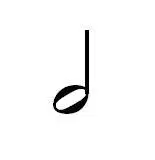
What is this symbol?
a)
Quarter note
b)
Half note
c)
Whole rest
d)
Quarter rest
53.

What is this symbol?
a)
Quarter rest
b)
Half rest
c)
Whole rest
d)
Sixteenth note
54.

What is this symbol?
a)
Eighth rest
b)
Half rest
c)
Whole rest
d)
Hat rest
55.
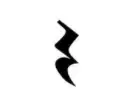
What is this symbol?
a)
Quarter rest
b)
Whole rest
c)
Half rest
d)
Eighth rest
56.
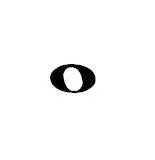
What is this symbol?
a)
Eighth note
b)
Whole rest
c)
Half note
d)
Whole note
57.

What is this symbol?
a)
Quarter note
b)
Whole note
c)
Half note
d)
Quarter rest
58.
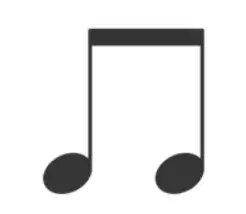
What is this symbol?
a)
A pair of whole notes beamed together
b)
A pair of sixteenth notes beamed together
c)
A pair of eighth notes beamed together
d)
A pair of eighth notes with flags
59.
What is another word for "tone color"?
a)
Pitch
b)
Rhythm
c)
Timbre
d)
Melody
60.
Aerophones make sound by
a)
A vibrating column of air
b)
Electricity
c)
Being struck, scraped or shaken
61.
Idiophones
a)
Create sound when a string is struck, rubbed, or plucked
b)
Are simple, solid instruments that are struck, scraped, or shaken
c)
Produce sound by electricity
62.
Membranophones are
a)
Drums
b)
Flutes
c)
Violins
63.
Chordophones have
a)
Keys
b)
Strings
c)
Valves
64.
Electrophones produce sound by
a)
Using air
b)
Using electricity
c)
Being shaken
65.
A particular type of music with a distinctive form or sound is a
a)
Genre
b)
Category
c)
Section
d)
Subsection
66.
What are the three broad categories of music?
a)
Jazz, rock, and country
b)
Symphony, opera, and Latin fusion
c)
Traditional, popular, and classical
d)
Rap, '80s pop, and swing
67.
Traditional music is often associated with
a)
A specific cultural group or region
b)
The symphony orchestra
c)
The electric guitar and drum set
d)
The current music playing on the radio
68.
Popular music is intended for
a)
Religious ceremonies
b)
A wide audience
c)
A small, select group of people who appreciate art music
d)
Only people who live in North America
69.
Classical music is a style of
a)
Art music
b)
Jazz music
c)
Country music
d)
Motown
70.
Who are 2 classical music musicians?
a)
Michael Jackson and Bruno Mars
b)
Wolfgang Amadeus Mozart and Ludwig van Beethoven
c)
Beyoncé and Keyshia Cole
d)
Elton John and Dua Lipa
71.
What are traditional music styles and genres often associated with?
a)
A certain type of food
b)
Specific cultures or geographic areas
c)
A specific style of clothing
d)
A certain make/model of car
72.
What is the official language of Mexico?
a)
Spanish
b)
Mexican
c)
English
d)
French
73.
Today, Mexican music is a blend of
a)
Jazz, rock, and hip hop
b)
Spanish, African, and native music
c)
French, Swiss, and German music
74.
A Balinese music ensemble (performing group) is called
a)
A brass quintet
b)
Gamelan
c)
A string band
d)
A jazz combo
75.
What are some of the instruments in a gamelan orchestra?
a)
Violins, trumpets, and pianos
b)
Claves, conga drums, and guitars
c)
Metallic instruments such as gongs and cymbals, drums, flutes, and fiddles
76.
Mexican and Balinese music falls under category of
a)
Traditional music
b)
Classical music
c)
Popular music
77.
The roots of Western classical music can be traced to what two geographical areas?
a)
Mexico and Guatemala
b)
Ancient Greece and Rome
c)
South Africa and Botswana
78.
What is the correct order of the historical / stylistic periods in classical music history?
a)
Contemporary, Baroque, Classical, Renaissance, Romantic, Medieval, and Twentieth Century
b)
Medieval, Renaissance, Baroque, Classical, Romantic, Twentieth Century, and Contemporary
c)
Classical, Medieval, Contemporary, Romantic, Baroque, Renaissance, and Twentieth Century
79.
Pythagoras and Aristoxenus
a)
Helped shape our ideas about music theory
b)
Were well-known Medieval painters
c)
Invented the piano
d)
Were opera singers in the Baroque period
80.
In the Middle Ages, music was considered one of the
a)
Literary arts
b)
Mathematical arts
81.
Plainsong was typically sung by
a)
Men
b)
Women
c)
Men and women singing together
82.
Why is Hildegard von Bingen unusual?
a)
She was the first female rapper of the Medieval period
b)
She wrote and performed music for the Medieval church, in a time when women were not allowed to do so
c)
She was the first woman to compose an opera in 1600, at a time when women were not allowed to compose music
83.
Studying music history
a)
Helps us understand developments and trends that brought us to the music of today
b)
Has no real impact on our understanding of today's music
c)
Is impossible because so little information exists
84.
Plainsong was typically in what language?
a)
French
b)
English
c)
German
d)
Latin
85.
The earliest musical staff had how many lines?
a)
1
b)
3
c)
5
d)
7
86.
The modern musical staff has how many lines?
a)
1
b)
4
c)
5
d)
30
87.
Religious music is
a)
Sacred
b)
Secular
88.
Music with no strict meter or accompaniment, sung by a single voice or unison choir is
a)
Parallel organum
b)
Plainsong
c)
Mariachi
89.
Music with a single melodic line is
a)
Monophonic
b)
Polyphonic
90.
A compositional method in which two voice parts sing the same melody 4 or 5 pitches apart is
a)
Plainsong
b)
Gamelan
c)
Parallel organum
91.
Written notation is often called
a)
Improvisation
b)
A score
c)
Lyrics
92.
Markings over or under the text to signal pitch changes are
a)
Neumes
b)
Barlines
c)
Clefs
93.
What is solmization?
a)
A method of assigning a syllable to each tone of the scale
b)
A Medieval dance
c)
A Medieval instrument
94.
What are poet-musicians of the Middle Ages called?
a)
Rappers
b)
Lyricists
c)
Troubadours
95.
Non-religious music is
a)
Sacred
b)
Secular
96.
Why do we use the term "Western classical music?"
a)
The genre developed in the Western United States in the 1800s, during the Gold Rush
b)
The genre developed in Western Europe
c)
The genre developed throughout several West African countries
97.
Did Medieval secular music sometimes use instruments?
a)
Yes
b)
No
98.
Did Medieval sacred music use instruments?
a)
Yes
b)
No
99.
How can we best describe the beat of Medieval sacred music?
a)
There is almost always a strong, steady beat in this genre, made clear by the drumbeat
b)
There is rarely a strong, steady beat in this genre; the music tends to flow freely with the words
100.
What is another term for plainsong?
a)
Opera
b)
Plainchant
c)
Symphony
d)
Songplain
100 %

