Wayground logo

Free Printable Worksheets

Font size

S
M
L
XL
Worksheets

Science 5 (4th Periodical Test)

Total questions: 80

Worksheet time: 53mins

Name
Class
Date
1.
The thinnest layer of the Earth is?
a)
Mantle
b)
Lithosphere
c)
Athenosphere
d)
Crust
2.
What happens to pressure as we move from the crust down into the inner core?
a)
Pressure Decreases
b)
Pressure Increases
c)
Nothing
3.
What happens to temperature as we move from the crust down into the inner core?
a)
Decreases
b)
Increases
4.
This layer of Earth is solid Iron and Nickel
a)
Outer Core
b)
Mantle
c)
Inner Core
d)
Crust
5.

This layer of Earth is the thickest?

a)

crust

b)

outer core

c)

mantle

d)

inner core

6.
What are the two types of crust
a)
continental and oceanic
b)
ocean and upper
c)
lower and upper
d)
pizza and subway
7.
Scientists determine what Earth’s interior looks like by using:
a)
Volcanoes
b)
Seismic Waves
c)
Continental Drift
d)
Convection Currents
8.
Which layer of the earth has the lowest temperature?
a)
Crust
b)
Mantle
c)
Outer Core
d)
Inner Core
9.
What is the correct order (starting from the surface) of Earth's layers?
a)
crust, outer core, inner core, mantle
b)
mantle, outer core, inner core, crust
c)
crust, mantle, outer core, inner core
d)
outer core, inner core, crust, mantle
10.
Which layer of Earth is LIQUID iron and nickel?
a)
upper mantle
b)
lower mantle
c)
outer core
d)
inner core
11.
The Earth's magnetic field is caused by
a)
magnets put at the north and south poles
b)
convection currents in the mantle
c)
the lithosphere floating on the asthenosphere
d)
the solid inner core spinning inside the liquid outer core
12.

The lithosphere combines what two layers?

a)

Athenosphere & Crust

b)

Crust & Upper Mantle

c)

Mantel & Asthenosphere

13.
What happens to pressure as we move from the crust to the inner core?
a)
Pressure Decreases
b)
Pressure Increases
c)
Nothing
14.
Which layer of the earth is under the highest pressure?
a)
Crust
b)
Mantle
c)
Outer Core
d)
Inner Core
15.
What is the name of the layer that contains the uppermost mantle and crust
a)
Asthenosphere
b)
Mesosphere
c)
Lithosphere
d)
Transosphere
16.

which one is the hottest?

a)

the crust

b)

mantle

c)

Inner core

17.
Is the Outer core solid or liquid?
a)
solid
b)
liquid
18.
Which layer of Earth is made up of tectonic plates?
a)
outer core
b)
inner core
c)
asthenosphere
d)
lithosphere
19.

Which crust is thicker

a)

oceanic

b)

continental

c)

bread

d)

pizza

20.
What observation can we make about Earth’s lithosphere AND asthenosphere?
a)
The asthenosphere floats on top of the lithosphere.
b)
The crust and the core make up the lithosphere.
c)
The crust and mantle make up the asthenosphere. 
d)
The lithosphere floats on top of the asthenosphere
21.
What is the correct order (starting from the SURFACE) of Earth's layers?
a)
lithosphere, asthenosphere, mesosphere, outer core, inner core
b)
mesosphere, lithosphere, outer core, inner core, asthenosphere
c)
asthenosphere, inner core, outer core, lithosphere, mesosphere
d)
lithosphere, outer core, inner core, mesosphere, asthenosphere
22.

Two thirds of the Earth’s mass is in this layer.

a)

Crust

b)

Mantle

c)

Core

23.

Which of the following is true regarding the composition of the lithosphere?

a)

The lithosphere is mostly liquid, with some medium-density materials, such as silicon.

b)

The lithosphere is more plastic and flows slowly compared to the solid crust of Earth.

c)

The lithosphere includes the core and the lower portion of the mantle.

d)

The lithosphere includes the crust and the uppermost portion of the mantle, which is sold and rigid.

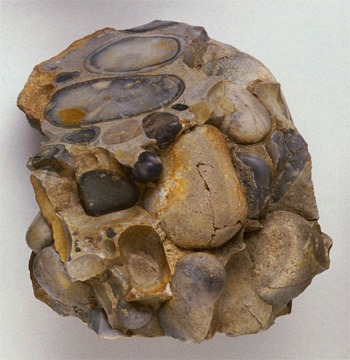
24.
This rock formed when bits of other rocks became pressed into a solid. What type of rock is it?
a)
Sedimentary Rock
b)
Metamorphic Rock
c)
Igneous Rock
25.
What are the 3 major types of rocks?
a)
Igneous, Metamorphic, Sedimentary
b)
Metamorphic, Igneous, Cementation
c)
Brown, Red, Gray
d)
Streak, Hardness, Breakage
26.
What process is used to form sedimentary rocks?
a)
Lava cools and hardens to form a rock.
b)
Weathering, Erosion, Deposition, Compaction, Cementation
c)
Extreme heat and pressure from inside the Earth turn rocks into new rocks.
d)
Magma trapped under the Earth's surface cools and solidifies.
27.
Which of the words below describe broken up rock?
a)
stalactites
b)
magmas
c)
metamorphs
d)
sediments
28.
This rock was formed by smaller pieces of rock that settled at the bottom of a lake millions of years ago. What type of rock is this?
a)
Sedimentary
b)
Igneous
c)
Metamorphic
29.
This rock was found near the mouth of a volcano. What type of rock is this?
a)
Sedimentary
b)
Igneous
c)
Metamorphic
30.
When sediments are pressed together tightly, this is called ____________.
a)
Compaction
b)
Cementation
c)
Weathering
d)
Erosion
31.
The process in which sediment are fused or glued together.
a)
compaction
b)
deposition
c)
organic rock
d)
cementation
32.
This rock was formed when molten rock cooled into a solid. What type of rock is it?
a)
Igneous Rock
b)
Metamorphic Rock
c)
Sedimentary Rock
33.
Which type of rock is formed from INTENSE heat and pressure?
a)
igneous
b)
sedimentary
c)
metamorphic
34.
Extreme Heat and Pressure creates a _________ rock.
a)
Igneous
b)
Metamorphic
c)
Sedimentary
d)
Mineral
35.
This rock started as lava that cooled and then was heated and put under pressure over time. What type of rock is this?
a)

Sedimentary

b)

Igneous

c)

Metamorphic

36.
This rock was molten magma that slowly cooled under the ground. What type of rock is this?
a)
Sedimentary
b)
Igneous
c)
Metamorphic
37.

The three groups of rocks are classified by __________.

a)

How they form

b)

Color

c)

Grain size

d)

Chemical Composition

38.

Fossils are only found in ________.

a)

Sedimentary rocks

b)

Foliated Metamorphic rocks

c)

Igneous Rocks

d)

Nonfoliated Metamorphic rocks

39.
A never ending process by which rocks are changed from one type to another.  
a)
weathering and erosion
b)
rock cycle
c)
heat and pressure
d)
pressing and cementing
40.

It is the breaking down of rocks into fragments.

a)

erosion

b)

flooding

c)

runoff

d)

weathering

41.

A type of weathering that involves a change in the composition of the rock.

a)

chemical

b)

mechanical

c)

both chemical and mechanical

d)

physical

42.

The rocks are broken into small pieces of different shapes without changing their original composition.

a)

mechanical

b)

biological

c)

chemical

43.

It is the movement of rock fragments and soil from of place to another.

a)

Erosion

b)

Raining

c)

Sediments

d)

Weathering

44.

What branch of science studies weather and atmospheric conditions that produce weather?

a)

Climatology

b)

Meteorology

c)

Geology

d)

Paleontology

45.

It is the state of the atmosphere at a certain time and place.

a)

Weather

b)

Climate

c)

Season

d)

Humidity

46.

A wind vane and an anemometer measure wind.

What is the difference between a wind vane and an anemometer?

a)

A wind vane measures wind speed; an anemometer measures wind direction.

b)

A wind vane measures wind direction; an anemometer measures wind speed.

c)

A wind vane measures wind direction; an anemometer measures humidity in wind.

d)

A wind vane measures air pressure; an anemometer measures humidity of wind.

47.

Which instrument is used to measure temperature?

a)

anemometer

b)

barometer

c)

thermometer

d)

wind vane

48.

Which instrument is used to measure wind direction?

a)

anemometer

b)

barometer

c)

thermometer

d)

wind vane

49.

Which instrument is used to measure wind speed?

a)

anemometer

b)

barometer

c)

thermometer

d)

wind vane

50.

Which instrument is used to measure air pressure?

a)

anemometer

b)

barometer

c)

thermometer

d)

wind vane

51.

What would be measured by the scientific instrument?

a)

precipitation

b)

temperature

c)

wind speed

d)

wind direction

52.

Kelly heard the meteorologist on the news say the wind would be blowing 35 miles per hour today with gusts up to 40 miles per hour. Which tool would the meteorologist use to measure how fast the wind is blowing?

a)

anemometer

b)

rain gauge

c)

thermometer

d)

wind vane

53.

Mr. Smith’s science class is collecting weather data. Each student receives a small toolbox containing weather instruments.Which instrument can be used to take measurements in Fahrenheit or Celsius?

a)

anemometer

b)

rain gauge

c)

ruler

d)

thermometer

54.

The first layer in the Sun’s interior.

Enormous amounts of energy are produced here through nuclear fusion.

a)

Corona

b)

Core

c)

Photosphere

d)

Convection Zone

55.

The visible layer on the surface of the

sun that gives off light.

a)

Core

b)

Convection Zone

c)

Photosphere

d)

Corona

56.

The part of the sun's atmosphere that is a reddish glow only visible during a total solar eclipse

a)

Core

b)

Corona

c)

Photosphere

d)

Chromosphere

57.

The outermost layer of the sun's atmosphere that appears as a bright halo.

a)

Core

b)

Corona

c)

Photosphere

d)

Convection Zone

58.

Areas of gas on the sun’s surface that are cooler than the gases around them.

a)

Solar flare

b)

Solar wind

c)

Prominences

d)

Sunspots

59.

Reddish loops of gas that link parts of sunspot regions.

a)

Helium

b)

Prominences

c)

Solar flare

d)

Hydrogen bonds

60.

Eruptions that occur when the loops in the sunspot regions suddenly connect.

a)

Solar flare

b)

Hydrogen bonds

c)

Helium

d)

Prominences

61.

Which of these people was the first to set foot on the Moon?

a)

Neil Armstrong

b)

Jim Lovell

c)

Luke Skywalker

d)

Orville Wright

62.
What type of rock is found on the maria?
a)
Obsidian
b)
Basalt
c)
Sandstone
d)
Granite
63.
Densely pitted, light-colored areas on the moon are called ____________.
a)
Craters
b)
Maria
c)
Highlands
d)
Crescents
64.
The highest mountain on the moon is only 1km less in height than Mt. Everest. What region of the moon can mountains be found?
a)
Craters
b)
Maria
c)
Highlands
d)
All over
65.
______________ are regions of dark, smooth, ancient beds of basaltic lava.
a)
Highlands
b)
Maria
c)
Craters
d)
Meteorites
66.
How did the lunar mare (maria) form?
a)
Asteroids punctured the lunar surface, causing magma to bleed out
b)
Asteroids punctured the lunar surface, causing rock to break apart
c)
They were ancient oceans
d)
They were ancient beds of ice
67.
When did the moon form?
a)
About 4.5 billion years ago
b)
About 4.5 million years ago
c)
20,000 years ago
d)
13.6 billion years ago
68.
If we are looking at the dark side of the moon (so the sun is shining on the opposite side), what lunar phase is the moon in?
a)
Full moon
b)
New moon
c)
First quarter
d)
Third quarter
69.
If we are looking at the moon and it is fully bright, what lunar phase is the moon in?
a)
Full moon
b)
New moon
c)
First quarter
d)
Third quarter
70.
If we are looking at the moon and it is ALMOST fully bright, but not quite a full moon, what lunar phase is it in?
a)
Crescent
b)
New moon
c)
Gibbous
d)
First quarter
71.
When the moon appears to be growing larger, the moon is ______________.
a)
Waxing
b)
Waning
72.
Why are craters on the moon so well-preserved?
a)
No atmosphere = no precipitation for erosion
b)
The rocks on the moon are more solid
c)
The rocks on the moon absorb more impact
73.
CHOOSE THE CORRECT MOON PHASE
a)
FIRST QUARTER
b)
LAST QUARTER
c)
FULL MOON
d)
NEW MOON
74.
Name the moon phase
a)
waning crescent
b)
waxing crescent
c)
waning gibbous
d)
waxing gibbous
75.
Select the order from smallest to largest.
a)
Sun, Milky Way, solar system, universe
b)
Sun, Milky Way, universe, solar system
c)
Sun, solar system, Milky Way, universe
d)
Sun, solar system, universe, Milky Way
76.
Day and night is caused by the _____________ of earth on its axis.
a)
revolution
b)
orbit
c)
rotation
77.

When Earth spins, it turns around an imaginary line called a(n)

a)

rotation

b)

axis

c)

orbit

d)

ellipse

78.

The hottest planet is...

a)

JUPITER

b)

EARTH

c)

MARS

d)

VENUS

79.

How many stars are in our Solar System?

a)

Billions

b)

1

c)

5,000

d)

8

80.

Which planet has the Big Red Spot?

a)

Jupiter

b)

Saturn

c)

Mars

d)

Neptune