Wayground logo

Free Printable Worksheets

Font size

S
M
L
XL
Worksheets

Early college science end-of-year test

Total questions: 124

Worksheet time: 4hrs 45mins

Name
Class
Date
1.

Which subatomic part of an atom gives it a positive charge?

a)

Neutron

b)

Proton

c)

Electron

d)

Nucleus

2.

Which region of an atom has a negative charge?

a)

The nucleus

b)

Both nucleus and electron cloud

c)

The neutrons

d)

The electron cloud

3.

What is the smallest 'building block' of the elements that make up the universe?

a)

An atom

b)

An electron

c)

A proton

d)

A cell

4.

An atom of carbon has 6 protons and 7 neutrons in its nucleus. If the atom is neutral, how many electrons does it have?

a)

0

b)

7

c)

6

d)

13

5.

The number of protons in the nucleus of an atom?

a)

Isotope

b)

Atomic mass

c)

Atomic number

d)

Element

6.

A certain atom of oxygen contains 8 protons, 8 neutrons, & 8 electrons. Another atom of unknown identity contains 9 protons. Which of the following MUST be true about this unidentified atom?

a)

It has 9 neutrons in its nucleus.

b)

It is an isotope of oxygen.

c)

Its atomic mass is a decimal number.

d)

It cannot be an atom of oxygen.

7.

An atom of iodine has 7 valence electrons. What will an atom of iodine MOST likely do to be stable?

a)

Lose 1 electron

b)

Lost 7 electrons

c)

Gain 1 electron

d)

Neither gain nor lose any valence electrons

8.

An atom of neon has 8 valence electrons. What will an atom of neon MOST likely do to be stable?

a)

Gain 1 electron

b)

Lose 2 electrons

c)

Lose 8 electrons

d)

Neither gain nor lose any valence electrons

9.

What type of bond is formed when atoms share electrons?

a)

Covalent

b)

Ionic

c)

Hydrogen

d)

Polyatomic

10.

How are ionic and covalent bonds alike?

a)

They both form organic molecules.

b)

They both fill outer electron shells.

c)

They both transfer electrons from one atom to another.

d)

They both transfer protons from one atom to another.

11.
Which units of measurement are used for volume?
a)
grams
b)
centimeters
c)
grams/milliliter
d)
milliliter
12.
Jack has a rock. The rock has a mass of 14g and a volume of 2cm3. What is the density of the rock?
a)
7 mL
b)
7 g/cm3
c)
28 g/cm3
d)
1/7 g/cm3
13.
What is the formula for density?
a)
density = mass x volume
b)
density = mass / volume
c)
density = mass + volume
d)
density = mass - volume
14.
Mercury is a metal that is liquid at room temperature and has a density of 13.5 g/cm3.  Which of these metals would sink below the mercury if dropped into a container of mercury?
a)
gold (density=19.3 g/cm3)
b)
lead (density=11.4 g/cm3)
c)
iron (density=7.9g/cm3)
d)
aluminum (density=2.7g/cm3)
15.
Elements are made of 
a)
Many types of atoms 
b)
the Periodic Table
c)
One type of Atom 
d)
Molecules 
16.
Molecules are 
a)
2 atoms bound together 
b)
2 elements bound together 
c)
2 or more atoms mixed together
d)
2 or more atoms bound together 
17.
Matter is 
a)
everything that has density
b)
everything made of atoms 
c)
elements 
d)
anything that has mass and takes up space 
18.
Convert 8 kilometers to meters
a)
800 m
b)
80,000 m
c)
8,000 m
d)
.008 m
19.
Is Gatorade powder dissolving in water physical or chemical change?
a)
Physical 
b)
Chemical
20.
Is wood burning a physical or chemical change?
a)
Physical 
b)
Chemical
21.

A physical property that measures mass per unit volume

a)

density

b)

flammability

c)

physical property

d)

element

e)

reactivity

22.

characteristic/trait that can be seen through direct observation of a substance.

a)

mixture

b)

physical property

c)

physical change

d)

chemical property

e)

chemical change

23.

Anything that has mass and volume.

a)

solid

b)

liquid

c)

gas

d)

matter

e)

mixture

24.

transforms one type of matter into another type of matter

a)

physical change

b)

physical property

c)

chemical change

d)

chemical property

25.

a change to a substance that does NOT change the identity of the substance

a)

physical change

b)

physical property

c)

chemical change

d)

chemical property

26.

matter that has a fixed shape and volume (rigid)

a)

solid

b)

liquid

c)

gas

d)

plasma

e)

Bose-Einstein condensate

27.

matter that has no fixed volume or shape - it takes the shape and volume of its container

a)

solid

b)

liquid

c)

gas

28.

a substance that cannot be broken down into other substances

a)

matter

b)

mixture

c)

element

d)

solid

e)

solution

29.
In the diagram given, what happens as we move to the left?
a)
Stars Get Larger
b)
Stars get Colder
c)
Stars get hotter
30.
As you move from the bottom to the top of the H R diagram the __________ changes.
a)
Temperature
b)
Luminosity or Brightness
31.

Which reaction produces harmful radioactive waste?

a)

Fission

b)

Photosynthesis

c)

chain reaction

d)

Fusion

32.

Which process occurs naturally in the centre of stars like the Sun

a)

Bi-multiple reaction

b)

Fission

c)

chemical

d)

fusion

33.
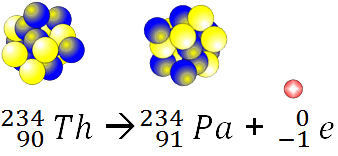
Which type of nuclear radiation is being emitted here?
a)
Alpha
b)
beta
c)
gamma 
d)
none
34.
Has the highest penetrating power.  Can penetrate our body.  Even several cm thick of lead or several meters thick of concrete cannot stop all of it.
a)
Alpha
b)
Beta
c)
Gamma
35.

The moon is 250,000 miles from earth. How many feet is that?

a)

47, 348 ft.

b)

47 ft.

c)

1.32 X 109 ft.

d)

1.3 X 109 ft.

36.

This past summer our rain gauge collected 0.80 yards of rain. Express this amount in centimeters.

a)

73 cm

b)

73.2 cm

c)

74 cm

d)

73.152 cm

37.

Americans drink 5, 604, 000 gallons of sweet tea each day. How many liters is that?

a)

21,200,000 L

b)

21,220,000 L

c)

21,207, 190.2 L

d)

21,000,000 L

38.

You never learned dimensional analysis so you have been working at a fast food restaurant for 35.0000 years wrapping burgers. Each hour you wrap 184 burgers. You work 8 hours per day, 5 days a week. How many burgers have you wrapped? (1 year --> 52 weeks)

a)

13,395,200 burgers

b)

18,753,300 burgers

c)

40,185,600 burgers

d)

56,259,800 burgers

39.

How many decades are equal to 1.7 x 1025 minutes? Round your final answer to 2 sig figs.

(60 min = 1 hour; 24 hours = 1 day; 7 days = 1 week; 52 weeks = 1 year; 10 years = 1 decade)

a)

3.2 x 10¹⁸ decades

b)

3.2 x 10¹⁹ decades

c)

1.2 x 10²² decades

d)

2.3 x 10²⁰ decades

40.

On Dr. Davis' bookshelf, there are 23 science textbooks, each with an average of 31 chapters. If each chapter contains 5 pages, how many total pages are there? (Round your answer to 2 sig figs)

a)

3.6 x 10⁴ pages

b)

36 pages

c)

3.6 x 10² pages

d)

3600 pages

41.

Jonathan raised 60 goats, then he traded all the goats for sheep at an exchange rate of 5 goats for 7 sheep. Next, he exchanged all the sheep for hogs at a rate of 4 sheep for 2 hogs. How many hogs did he get?

a)

62 hogs

b)

42 hogs

c)

84 hogs

d)

86 hogs

42.

Eggs are shipped from a farm in trucks. Each carton of eggs holds 12 eggs. The cartons of eggs are placed in a crate that holds 20 cartons, which are packed in trucks that each carry 3130 crates of eggs. How many truckloads will it take to carry 3.75 x 10⁶ eggs? [Round your answer to 1 sig fig]

a)

3 trucks

b)

4 trucks

c)

5 trucks

d)

9 trucks

43.

You have a summer job serving ice cream cones at the beach, serving an average of 25 cones per hour. You work 8 hours per day, 5 days a week, and get paid a salary of $940.34 every 2 weeks. Approximately how many ice cream cones will you have to serve to earn the $5,800 you are saving to buy a car? [Round your answer to 2 sig figs]

a)

12,000 cones

b)

62,000 cones

c)

21,000 cones

d)

95,000 cones

44.
If you are helping your friend who has run out of time to catch up on their homework, it’s acceptable to let them copy your answers because that doesn’t count as cheating.
a)
True
b)
False
45.
Which of the following behaviors makes you guilty of academic dishonesty? Select all that apply.
a)
Letting a friend copy your work.
b)
Accusing someone of cheating when you know they didn’t.
c)
Self-plagiarism (duplicating your own work from a previous project and putting it into a new project without significant changes and without permission)
d)
Citing an idea from an article you read
46.

What is the DEPENDENT variable (effect) in this experiment?


"Does eating breakfast improve test scores?"

a)

eating breakfast or not

b)

the grade you got on the test

c)

what time you get up in the morning

d)

how tasty the breakfast is

47.

A hypothesis is always written as an _______________ statement.

a)

if...,then.....because...

b)

why.....because....

c)

positive

d)

questioning

48.
When experimenting with the growth of a plant, a scientist uses three (of the same type of) plants, two different fertilizers, equal light, and equal water. What type of variable is the fertilizer?
a)
Dependent
b)
Independent
c)
Control
d)
Compound
49.
Part of lab safety includes reading the lab procedure...
a)
before doing the lab
b)
while doing the lab
c)
after doing the lab
d)
only if you think you really need it
50.
How many significant figures does the following number have: 0.002040
a)
6
b)
4
c)
3
d)
2
51.
Round 0.010229 to four significant figures
a)
1022
b)
1023
c)
0.01023
d)
0.01022
52.

What is the length of the object in centimeters?

a)

3.40 cm

b)

4.3 cm

c)

3.5 cm

d)

1 1/4 inches

53.

What is the volume of the liquid in this graduated cylinder?

a)

19 mL

b)

35 mL

c)

24.0 mL

d)

26.0 mL

54.
Calculate 1.23 m x 0.89 m and give your answer with the correct number of significant figures.
a)
1.0 m2
b)
1.1 m2
c)
1.0947 m2
d)
1.095 m2
55.
This bullseye demonstrates...
a)
High Accuracy & High Precision
b)
High Accuracy & Low Precision
c)
Low Accuracy & High Precision
d)
Low Accuracy & Low Precision
56.
Calculate 12.34 + 1.234 + 0.1234 and give your answer with the correct number of significant figures.
a)
13.6974
b)
13.697
c)
13.70
d)
13.7
57.

Which element is similar to Li?

a)

Be

b)

K

c)

Fe

d)

I

58.
Elements which are shiny, conduct electricity and heat are called
a)
metal
b)
nonmetal
c)
metalloid
d)
nonexistent
59.
How many protons are in this element?
a)
79
b)
196
c)
117
d)
Cannot be determined
60.
?
a)
Helium
b)
Oxygen
c)
Sodium
d)
Phosphorous
61.
The groups of the period table tell us:
a)
Number of electron shells
b)
Number or electrons
c)
Number of protons
d)
Number of valence electrons
62.
Atomic radius generally increases as we move __________.  
a)
down a group and from right to left across a period 
b)
up a group and from left to right across a period 
c)
down a group and from left to right across a period 
d)
up a group and from right to left across a period 
63.

Potassium-39 has how many neutrons?

a)

19

b)

18

c)

20

d)

21

64.

24.1% of all the isotopes of an element have a mass of 75.23 u, 48.7% have a mass of 74.61 u, and 27.2% have a mass of 75.20 u.

What is the average atomic mass of this element?

a)

74.92 u

b)

24.97 u

c)

75.01 u

d)

74.51 u

65.

An element has three different isotopes. One has a mass of 35.00 u; another has a mass of 36.00 u; and another has a mass of 38.00 u. What is the average atomic mass of this element?

a)
36.33 amu
b)
37.00 amu
c)
12.11 amu
d)
impossible to tell
66.
The molar mass of an element is equal to its...
a)
Atomic mass
b)
Atomic number
c)
Oxidation number
d)
Valence electrons
67.
What is the mass of one mole of aluminum chloride (remember to determine the correct formula first)?
a)
62.435g
b)
116.399g
c)
133.341g
d)
97.888g
68.
How many particles are in a mole?
a)
602
b)
602 million
c)
602 moles
d)
6.02 x 10²³
69.
What is the molar mass of table salt (NaCl)?
a)
116.886 g/mol
b)
35.453 g/mol
c)
22.990 g/mol
d)
58.443 g/mol
70.

How many moles are in 3.01 x 10²² atoms of magnesium?

a)

0.05 moles

b)

1.81 x 1046 moles

c)

5.00 x 10²¹ moles

d)

5.00 moles

71.

What is the percent composition by mass of sulfur (S) in the compound MgSO4?

a)

20.22%

b)

19.85%

c)

26.64%

d)

28.64%

72.
Calculate the number of atoms in 0.0340 g Zn.
a)
5.200 x 10⁻⁴ atoms Zn
b)
3.130 x 10²³ atoms Zn
c)
3.130 x 10²⁰ atoms Zn
d)
1 atom Zn
73.
Which pair has the same empirical formula?
a)
NaCrO4 and Na2Cr2O7
b)
C2H4O2 and C6H12O6
c)
C3H6O3 and C2H6O2
d)
CH4 and C2H6
74.

Use the given the chemical equation to answer the following question:

2C2H6 + O2 → 4CO2 + 6H2O


What does the number 4 represent for the formula unit 4CO2 ?

a)

The number 4 represents the coefficient, which is also equal to the number of grams of the formula unit above.

b)

The number 4 represents the subscript, which is also equal to the number of moles of the formula unit above.

c)

The number 4 represents the coefficient, which is also equal to the number of moles of the formula unit above.

d)

The number 4 represents the subscript, which is also equal to the number of grams of the formula unit above.

75.
How many moles are there in 58 g of MgF2?
a)
62.3
b)
3613.4
c)
.931
d)
1.07
76.

What percentage of the total atomic mass of lithium phosphide (Li3P) is composed of phosphorus?

a)

13%

b)

29%

c)

40%

d)

60%

77.

PCl5 + ___ H2O → ___ HCl + H3PO4

a)

4, 5

b)

1, 6

c)

3, 8

d)

2,2

78.
Balance this equation.
_CF4 + _Br2 -- _CBr4 + _F2
a)
2,1,2,1
b)
1,2,2,1
c)
1,2,1,2
d)
2,2,2,2
79.
The following is what type of reaction:
PbCl2 + AgNO3 → Pb(NO3)2 + AgCl
a)
Synthesis
b)
Decomposition
c)
Single Replacement
d)
Double Replacement
80.
The following is what type of reaction:
NH3 + HCl  → NH4Cl
a)
Synthesis
b)
Decomposition
c)
Single Replacement Replacement
d)
Double Replacement Replacement
81.
3Ca + 2AlCl3 --> 3CaCl2 + 2Al
a)
Synthesis
b)
Decomposition
c)
Single Displacement
d)
Double Displacement
82.

Name the following: MgO

a)

Magnesium Oxide

b)

Monomagnesium monoxide

c)

Magnesium monoxide

d)

Magnesium (II) oxide

83.

Name the following: N2O5

a)

Nitrogen oxide

b)

Dinitrogen pentoxide

c)

Nitrous oxide

d)

Nitrogen pentoxide

84.

Name the compound: Zn3P2

a)

zinc phosphide

b)

trizinc diphosphide

c)

zinc phosphate

d)

zinc phosphite

85.
The chemical formula for an ionic compound of aluminum and chlorine is
a)
AlCl.
b)
ClAl.
c)
AlCl3.
d)
Al3Cl.
86.

Lithium nitride

a)

Li3N

b)

LiN

c)

Li3(NO3)2

d)

LiNO3

87.
What atom matches this electron configuration?
1s22s22p63s23p64s23d10
a)
Zinc
b)
Copper
c)
Nickel
d)
Germanium
88.
What electron configuration matches an oxygen atom?
a)
1s22s22p63s2, 3p64s23d104p5
b)
1s22s22p4
c)
1s22s22p6
d)
1s22s22p63s23p64s23d1
89.

What is the maximum number of electrons that an S orbital can have?

a)

1 electron

b)

2 electrons

c)

3 electrons

d)

4 electrons

90.
Which electron configuration belongs to Copper (Cu)?
a)
1s2 2s2 2p6 3s2 3p6 4s2 3d8
b)
1s2 2s2 2p6 3s2 3p6 4s2 3d9
c)
1s2 2s2 2p6 3s2 3p6 4s2 3d10
91.
Anions are _______ that form ____________ ions and __________ electrons.
a)
nonmetals, positive, lose
b)
nonmetals, negative, gain
c)
metals, positive, gain
d)
metals, positive, lose
92.
What is the electronic configuration of iron?
a)
1s22s22p63s23p64s23d6
b)
1s22s22p63s23p63d8
c)
1s22p63s23p64s23d6
d)
1s22s22p63s23p64s13d6
93.

Which is the correct orbital notation for nitrogen (atomic # = 7)

a)
b)
c)
d)
94.
What is incorrect about this orbital diagram?
a)
Both arrows in the 2p box should be pointing up
b)
There is nothing incorrect with this diagram
c)
In the 2p box there should only be 1 electron in the first 2p box and one in the 2nd 2p box
d)
All the arrows should be pointing up.
95.
A plate boundary where two plates move away from each other is called
a)
Divergent Boundary
b)
Convergent Boundary
c)
Transform Boundary
d)
Subduction
96.
_______________ Currents within the mantle cause the earth's plates to move and shift s molten material rises and falls due to density and gravity
a)
Convection
b)
Radiation
c)
Conduction
d)
Wind
97.
Convergent Plate Movement can create
a)
Rifts
b)
Mountains
c)
Ocean Ridges
d)
Radiation
98.

2SO2(g)+O2(g) ⇌ 2SO3(g) + Heat


Adding SO2(g) will

a)

shift equilibrium right

b)

shift equilibrium left

c)

increase rate of reaction

d)

have no change

99.

When writing an endothermic reaction, heat energy is stated as a

a)

product

b)

reactant

100.
What is the activation energy?
a)
The quantity of heat absorbed in a reaction
b)
The minimum energy needed to begin a reaction
c)
The energy given off after reactants collide.
d)
The energy difference between reactants and products
101.
What would be the effect on the particles if more heat is supplied to the system?
a)
They would slow down
b)
They would stop moving
c)
They would speed up
d)
There would be no effect
102.

If the specific heat of water is 4.18 J/g∙°C, how much heat is required to increase the temperature of 1.2 kg of water from 23 °C to 39 °C? (show your work)

a)

-80,256 J

b)

80.256 J

c)

80,256 J

d)

-80.256 J

103.
When the temperature of matter increases the particles...
a)
speed up and move closer
b)
speed up and move farther apart
c)
slow down and move closer together
d)
slow down and move farther apart
104.

A gas at 23 oC occupies a volume of 250 L, if the gas is heated to a temperature of 46 oC, what is the new volume?

a)

4.23 L

b)

269 L

c)

500 L

d)

447 L

105.

A 7.50 liter sealed jar at 18 °C contains 0.125 moles of oxygen and 0.125 moles of nitrogen gas. What is the pressure in the container?

a)

7.38 atm

b)

0.796 atm

c)

0.684 atm

d)

0.398 atm

106.

When 0.250 moles of a gas is placed in a container at 298 K, it exerts a pressure of 700 mm Hg. What is the volume of the container?

a)

0.557 Liters

b)

6.57 Liters

c)

8.74 Liters

d)

0.0087 Liters

107.
In order to convert to Kelvin, you add ______ to the Celsius measurement.
a)
372
b)
273
c)
237
d)
732
108.
Cl2 + 2KBr → Br2 + 2KCl
How many grams of potassium chloride (KCl) can be produced from 356 g of potassium bromide (KBr)?
a)
749 g
b)
223 g
c)
479 g
d)
814 g
109.
B2H6 + 3O2 -->2 HBO2 + 2 H2O
 What mass of O2 will be needed to burn 36.1 g of B2H6?
a)
13.8 g O2
b)
3.86 mol of O2
c)
125.2 g O2
110.

How many particles are in 13.5 grams of Beryllium?

a)

1.50 particles

b)

9.03 particles

c)

4.00x10²³ particles

d)

9.03x10²³ particles

111.
What are the products of this reaction?
Cu+ AgNO3--> 
a)
Cu(NO3)2+Ag
b)
CuNO3 + Ag
c)
CuAg+NO3
d)
Cu+ AgNO3
112.

What are the products of this reaction:

C2H4 + O2 →

a)

C2O2 + H4

b)

CO2 + H2 + O2

c)

CO + H

d)

CO2 + H2O

113.

The correct chemical formula for magnesium phosphate is

a)

MgPO4

b)

Mg₂(PO4)₃

c)

Mg₃P₂

d)

Mg₃(PO₄)₂

114.

What type of reaction is the following:
BaCl2+2KI −> 2KCl + BaI2BaCl_2+2KI\ ->\ 2KCl\ +\ BaI_2  

a)

Combination

b)

Decomposition

c)

Single Replacement

d)

Double Replacement

e)

Combustion

115.

What type of reaction is the following:
Na2S +2HCl −> H2S+2NaClNa_2S\ +2HCl\ ->\ H_2S+2NaCl

a)

Combination

b)

Decomposition

c)

Single Replacement

d)

Double Replacement

e)

Combustion

116.

Which of the following statements is NOT true about what happens in all chemical reactions?

a)

The ways in which atoms are joined together change

b)

New atoms are formed as products

c)

The starting substances are called reactants

d)

The bonds of reactants are broken and new bonds of products are formed

117.

Chemical equations must be balanced to satisfy ____.

a)

The law of definite proportions

b)

The law of multiple proportions

c)

The law of conservation of mass

d)

Avogadro's principle

118.

Why does a collision with an airbag (a gas-filled bag) hurt less than a collision with a steering wheel (a solid)?

a)

Particles of a gas have less mass than particles of a solid

b)

Particles of a gas are smaller than particles of a solid

c)

Gases are more chemically reactive than solids

d)

Particles of a gas are spread apart and compressible, while particles of a solid are held firmly in one position

119.
In which region would the nonmentals be found?
a)
1
b)
4
c)
3
d)
5
120.
Covalent compounds
a)
Share electrons
b)
transfer electrons
c)
contain a sea of electrons
d)
conduct electricity
121.

This could be the dot diagram of

a)

Mg

b)

Cl

c)

C

d)

O

122.
This could be the dot diagram of 
a)
Ne
b)
Si
c)
Al
d)
Be
123.
At 17 °C, a 0.80 mole sample of a gas exerts a pressure of 1.2 atmospheres. What is the volume of the container?
a)
22.9 Liters
b)
2355 Liters
c)
0.0630 Liters
d)
15.9 Liters
124.
How many moles of propane gas are in a 7.0 L tank at 20°C and 5.45atm of pressure?
a)
0.629 mol
b)
1.59 mol
c)
23.2 mol
d)
917 mol