Wayground logo

Free Printable Worksheets

Font size

S
M
L
XL
Worksheets

Evolution

Total questions: 45

Worksheet time: 45mins
Name
Class
Date
1.
This scientist came up with the idea of natural selection.
a)
Jean Baptiste Lamarck
b)
Gregor Mendel
c)
Charles Darwin
d)
Thomas Malthus
2.
Inherited trait that helps an organism survive is a(n) __________.
a)
Fossil
b)
Adaptation
c)
Ancestor
d)
Natural selection
3.
Structures with the same parts have different functions; suggests that organisms share a common ancestry
a)
vestigial structures
b)
homologous structures
c)
adaptive radiation
d)
fossil
4.
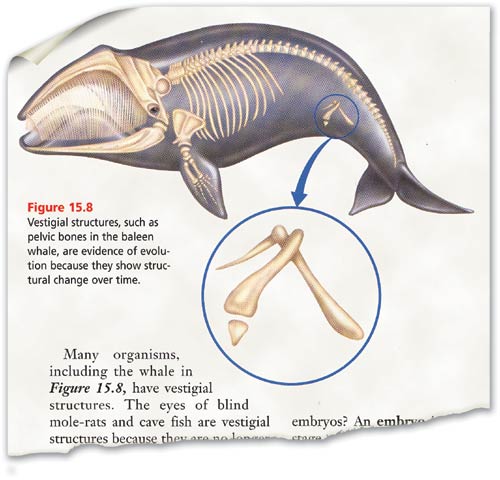
Which of the following is an example of a vestigial structure?
a)
the wings of a red-tailed hawk
b)
the hind limbs of a house cat
c)
the fins of sharks
d)
the tailbone of a human
5.

What do we call a change in a species over time?

a)

Adaptation

b)

Evolution

c)

Extinction

d)

Environmental influences

6.
Ostrich wings are examples of
a)
homologous structures
b)
vestigial structures
c)
adaptations
d)
traits
7.
What is embryology?
a)
the age of organisms
b)
the oldest stage of development
c)
the life span of an organism
d)
the earliest growth stage of development
8.
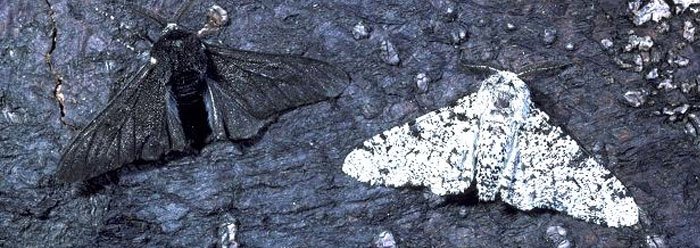
The environment around Manchester, England, changed during the Industrial Revolution.  How did this change affect peppered moths living in the area?
a)
Natural selection favored moths with dark wings because predators could not see them on the soot-colored trees.
b)
Natural selection favored moths with white wings that were easy for predators to see.
c)
Natural selection favored moths with white wings because predators could not see them on the soot-colored trees.
d)
Natural selection caused moths with white wings to become extinct.
9.
When an organism completely dies out, it is called.....
a)
Adaption
b)
Extinction
c)
Fossilization
d)
Mutation
10.
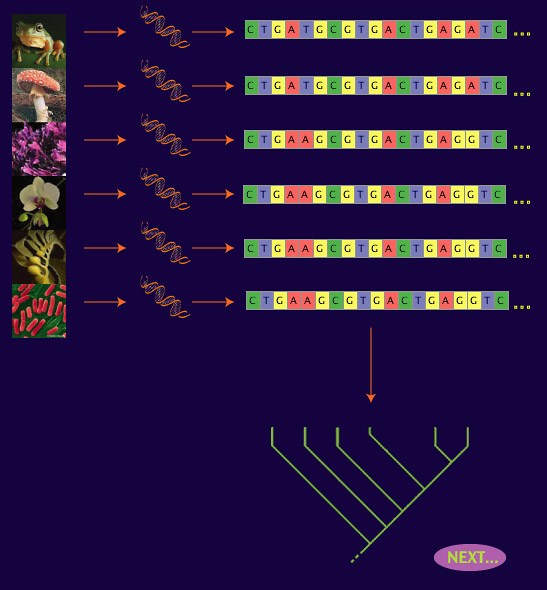
Two organisms that are closely related would have
a)
very similar DNA sequence
b)
exactly the same DNA sequences
c)
no proteins in common
d)
completely different DNA sequence
11.
All the individuals of a species that live in a particular area are called a
a)
variation
b)
population
c)
fossil
d)
group
12.
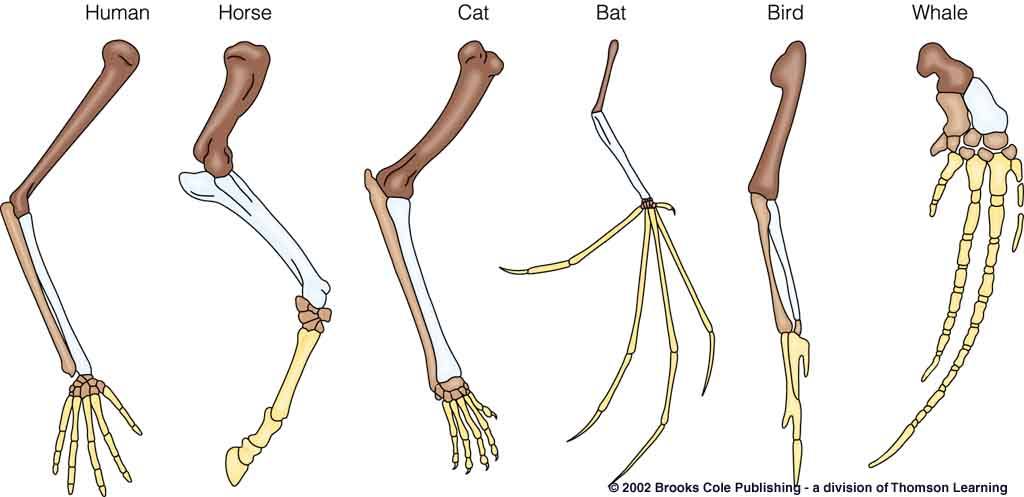
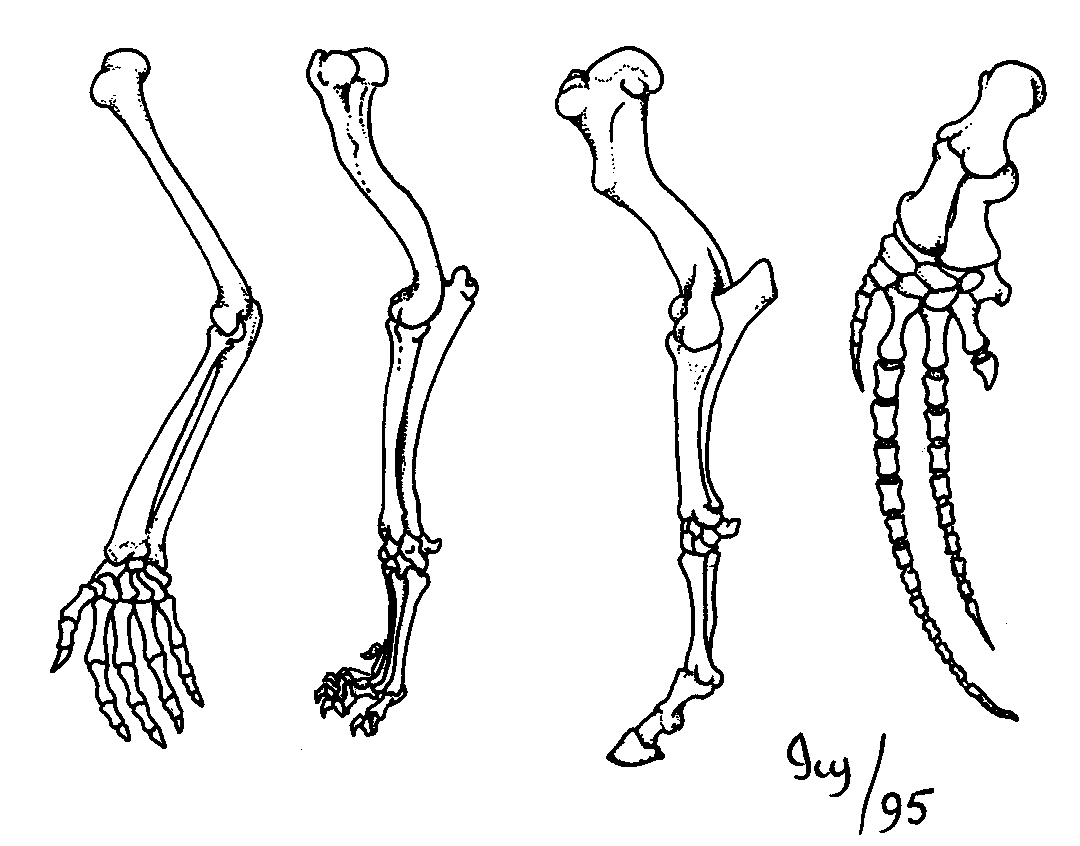
The structures shown are_________
a)
homologous
b)
heterologous
c)
analogous
d)
vestigial
13.
Where the better adapted organisms survive to pass traits along to offspring.
a)
Evolution
b)
Natural Selection
c)
Extinction
d)
Artifical Selection
14.
Why are advantageous traits more likely to be passed onto offspring?
a)
Because they are more likely to survive and reproduce.
b)
Because they come from dominant alleles.
c)
Because they come from recessive alleles.
d)
Because the trait is an acquired phenotype.
15.
Natural selection is when ____________ decides who survives and who doesn't
a)
nature
b)
humans
c)
animals
d)
years
16.
The trees these moths used to live on were white, but have been covered in soot from coal factories. Which moth will be more successful in this environment?
a)
Dark moth
b)
Light moth
c)
Both will be equally successful
d)
Neither will be successful
17.
Which best describes mutations?
a)
Always helpful
b)
Always harmful
c)
Can be helpful or harmful
d)
Always neutral
18.
Study of embryos of various organisms to show a common ancestor because of similarities in development
a)
natural selection
b)
embryology
c)
speciation
d)
evolution
19.
The ability of an organism to survive and reproduce in its specific environment 
a)
diversity.
b)
evolution
c)
adaptation
d)
 fitness
20.
Genetic differences between organisms of the same species
a)
Variation
b)
Adaptation
c)
Behavior
d)
Environment
21.
An error in DNA copying that results in a new trait
a)
Homeostasis
b)
Mutation
c)
Natural Selection
d)
Selective Breeding
22.
Mutations are important because they bring about
a)
death of the organism in which they develop
b)
genetic variation needed for a population to evolve
c)
benefits for the individual, not for the population
d)
Hardey-Weinberg equilibrium within a population
23.
Finches on the Galapagos Islands had different beaks in order to help them do what?
a)
Build nests
b)
Fight off predators
c)
Collect food sources
d)
Compete with rivals
24.

A remains or traces left over of an organism from the past is called a _______.

a)

Ancestor

b)

Skeleton

c)

Fossil

d)

Imprints

25.
This mechanism of evolution occurs when populations migrate.
a)
Extinction
b)
Gene flow
c)
Genetic drift
d)
Natural Selection
26.

The female birds of paradise tend to look for the most colorful, best dancing males to make babies together.

a)

Genetic Drift

b)

Non-random mating

c)

Gene flow

d)

Mutation

27.

Charles Darwin observed that finches of different species on the Galápagos Islands have many similar physical characteristics, this supports the hypothesis that these finches

a)

are twins

b)

acquired traits through use and disuse.

c)

all eat the same type of food.

d)

descended from a common ancestor.

28.

In a population of ladybugs, black bugs are more successful in escaping predators. Overtime, this gene becomes more popular in the population and the ladybug population loses its red color. This is an example of?

a)

Natural Selection

b)

Mutation

c)

Genetic Drift

d)

Gene Flow

29.

A lion gets chased off from his pride, then joins another pride. He mates with a lioness and make 6 lion cubs. This is an example of?

a)

Natural Selection

b)

Mutation

c)

Genetic Drift

d)

Gene Flow

30.

A hurricane wipes out half the population of blue jays in Cape Hatteras, North Carolina. This is an example of?

a)

Natural Selection

b)

Mutation

c)

Genetic Drift

d)

Gene Flow

31.
Modern whales developed their traits through natural selection.  What occurs during the process of natural selection?
a)
Organisms choose mates from other species to create new species
b)
Breeders selectively cross organisms with desired traits
c)
Only the fittest organisms can survive and reproduce
d)
Organisms remain exactly the same over time.
32.
Which statement best describes the process of evolution?
a)
Populations can survive in different locations on earth
b)
Environmental conditions limit the number of species on Earth
c)
Populations grow when resources are abundant
d)
The traits of a species can change over time
33.

Based on the image, why are these similar looking birds now considered different species, even though they have a common ancestor?

a)

all these birds could swim, so they went to different continents to evolve

b)

their environments changed over time, so they had to adapt to those environment

c)

the birds acquired the new traits while trying to adapt to their new environments

d)

there were fewer species of birds in the past, now there are more

34.

Individuals undergo evolution

a)

True

b)

False

35.

SELECT ALL THAT APPLY: Which of the following must be true in order for organisms to be considered the same species?

a)

They must be able to mate

b)

They must be able to produce viable offspring

c)

They must have structural similaries

d)

They must have the same bone structure

36.
The climate of a certain area is cold, and snow is found on the ground most of the year. Equal numbers of two populations of rabbits are introduced into this climate by a group of scientists. One of the populations is brown and the other is white. Predict what will happen over several generations.
a)
There will be equal numbers of brown and white rabbits
b)
There will be more brown rabbits that white rabbits
c)
There will be more white rabbits than brown rabbits
d)
There is no way to predict what will happen to the rabbit population
37.

Members of a species can breed with other members of the same species.

a)

True

b)

False

38.
___ are mistakes in the DNA that cause variation within a species.
a)
mutations
b)
adaptations
c)
speciations
d)
isolations
39.
Organisms with the most beneficial traits will survive.  This is commonly known as ___.
a)
theory of evolution
b)
variations
c)
survival of the fittest
d)
ecosystems
40.

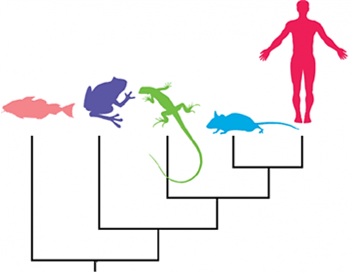
According to this phylogenetic tree, which creature is the least related out of all pictured?

a)

Fish

b)

Frog

c)

Salamander

d)

Human

41.

Which group of animals on this tree are most closely related to birds?

a)

Saurischian dinosaurs

b)

Ornithischian dinosaurs

c)

Crocodiles

d)

None of these are related to birds

42.

Which of the following is an example of natural selection?

a)

Breeding horses, humans selecting which traits make the fastest race horses

b)

Giraffes with the longer necks will be most likely to survive, reproduce, and pass that trait to their offspring.

c)

Giraffes stretching their necks to reach leaves and passing that trait to their offspring.

d)

Cropping the ears of a boxer dog

43.

This is the combinations of all of the genes present in a given population.

a)

genome

b)

allele frequency

c)

microevolution

d)

gene pool

44.

allele frequency

a)

the number of a certain allele present in a population

b)

the act of leaving one's own territory to settle permanently in another

c)

the exchange of genetic material between homologous chromosomes during meiosis

d)

the action of coming to live permanently in a new territory

45.

Genetic equilibrium in a population refers to ..

a)

constant allele frequencies in successive generations

b)

constant mutation rate in the population

c)

equal numbers of dominant and recessive alleles

d)

equal numbers of males and females