
 Worksheets
How can Earth’s surface change-Gr4
Total questions: 74
Worksheet time: 48mins
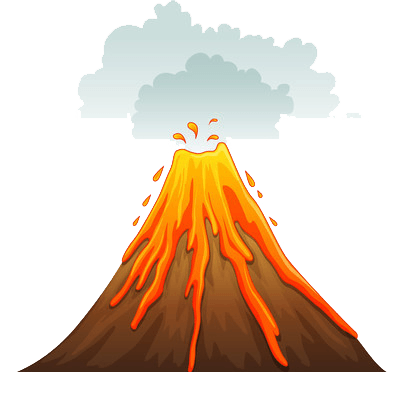
Volcanoes create new land on the Earth’s surface when –
lava flows then cools and hardens to form rock.
an eruption destroys the side of a mountain.
magma forms giant underground chambers.
saltwater touches lava and changes into steam.
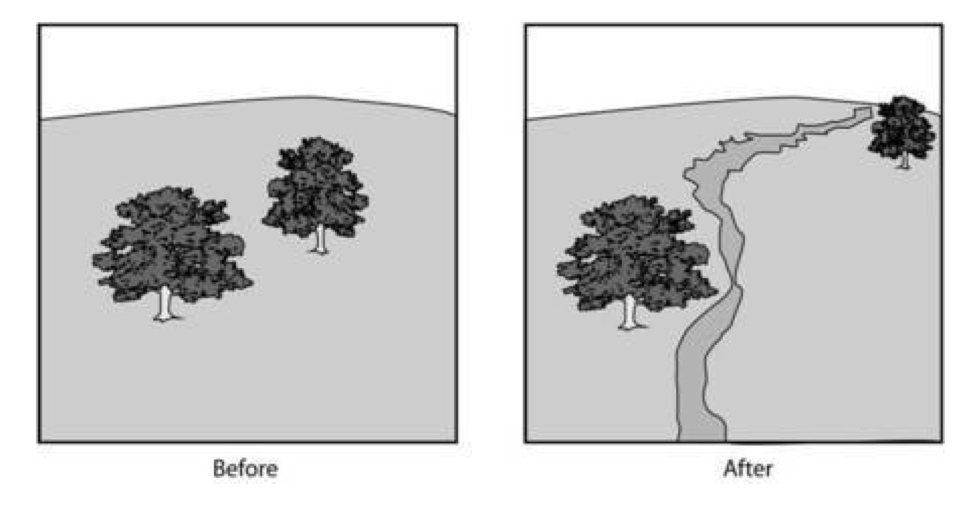
Which of the following most likely caused the change to the Earth's surface illustrated?
landslide
thunderstorm
sinkhole
earthquake
Which would be an example of a rapid change to the Earth’s surface?
A mountain's top cracking open due to volcanic eruptions.
A valley getting deeper as a river runs through it.
A plain forming cracks when hot weather makes it dry.
A hill rising as the wind piles up loose sand.
Which of the following is one way an earthquake affects the Earth?
Large cracks suddenly form in the ground.
A big rock slowly moves across the land.
Hills of sand form as the wind blows.
A large amount of heat rises into the air.
Which events force melted rock from deep in the Earth toward the surface and build it up on the earth’s surface?
landslides
volcano eruptions
earthquakes
mountain building
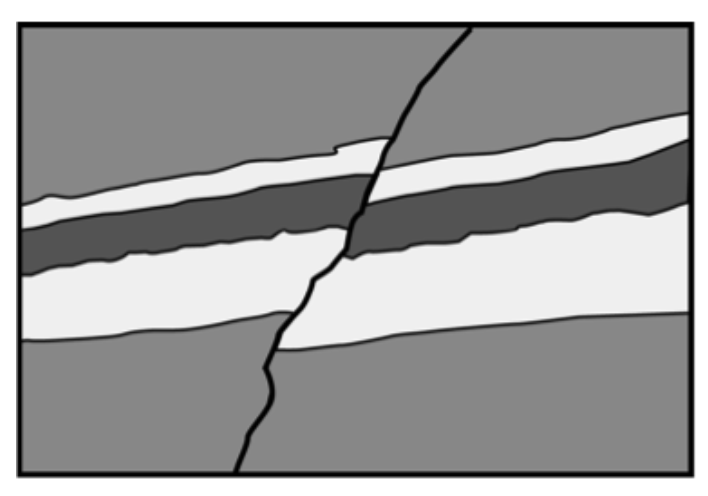
The rock layers pictures here have split and been shifted. What most likely caused this change?
river
landslide
earthquake
volcano
A force that causes Earth's surface to crack--
Earth's surface
Rapid change
Earthquake
Gravity
Something that happens quickly to Earth's surface to make it different--
Earth's surface
Rapid change
A river forming
A mountain forming
A force that causes new land to form --
Earth's surface
Earthquake
Landslide
Volcano


What is sedimentary rock?
solid rock that is formed from deposited sediment
soft rock that weathers and becomes sediment
sediment that has been washed away by water
sediment that forms under water
Any eroded material that is deposited in a new place.
sediment
glacier
mineral
sedimentary rock
A slowly moving river of ice.
sediment
glacier
mineral
sedimentary rock
Glaciers are huge rivers of (a) .

The process that breaks rocks into smaller pieces is called...
erosion
weathering
deposition
The Hulk - Smash

Erosion is...
the process of carrying away weathered bits of rock.
the process of breaking down rocks into smaller pieces.
the process that forms minerals.
the process that causes rust on some metals.
Which of the following is an example of chemical weathering?
ice wedging
root wedging
acid rain
Eath's crust is made up of large pieces that push against each other. What do scientists call these pieces?
slabs
shelves
plates
deposition

Water can cause physical and chemical weathering.
True
False

The Grand Canyon was created by...
water erosion.
Bob the Builder.
a volcano.
The Mid Atlantic Ridge

The carrying away of rocks and soil from one place to another
weathering
erosion
glacier
earthquake

A great flow of water over dry land is a
flood
hurricane
erupt
erosion

As it moves, a ___________ picks up rocks in its path
erupt
glacier
volcano
weathering

Glaciers, rivers and wind cause ______________
weathering
landslide
erosion
hurricane

____________ is a process that breaks down rocks at or near the surface of the earth (This process causes the surface of the earth to dissolve, decompose, and break into smaller pieces.)
Deposition
Weathering
Erosion
Where do volcanoes form?
In hot spots in Earth's mantle
In mountains
In hot spots in Earth’s mantle and the edge of tectonic plates
At the edge of techtonic plates
How do waves on a beach change the rocks on a beach?
They make them grow
The water soaks into the rocks
The water fills the cracks
The waves break down the rocks into smaller pieces
What are the agents of weathering?
Pigeons
The FBI
Ice, Wind, Water, and Waves
Plants and Animals
What are the three slow process that change the Earth's surface?
Weathering, Erosion, and Deposition
Volcanos, Floods, Earth Quakes
Mud Slides, Erosion, Weathering
A lot of water quickly covers dry land.
Weathering
Flood
Erosion
Landslide
Ash, hot gases, and lava explode suddenly onto Earth's surface.
Weathering
Flood
Volcanic Eruption
Landslide
Fill in the blank.
Weathering is a ____________ process that changes Earth's surface.
Slow
Rapid
Soil being carried away from its original location is an example of:
Erosion
Flood
Weathering
Deposition
What is an example of weathering?
Rocks being broken
Pebbles being moved down a stream
Mountains forming from sand
Sand moving in the ocean
A person taking a walk outside feels the ground violently moving and shaking. What is MOST LIKELY happening?
A wind tornado is happening
A treasure has been found
An earthquake is occurring
Lightning and thunder is happening
The moving of rocks and soil by wind, water, ice, and gravity.
weathering
deposition
erosion
moraines

Us this an example of weathering or erosion?
weathering
erosion
True or False? Glaciers are made from layers of ice.
True
False
Hot rock from the mantle pours through _____ in the Earth's crust
cracks
earthquakes
vents
Magma that reaches earth's surface is called..
crust magma
volcanoes
lava
chamber
Earthquakes happen when ___________ move suddenly.
bowls
forks
spoons
plates
True or False? Plates sliding past each other can cause Earthquakes.
True
False
Which is NOT a rapid change to the Earth's surface?
Earthquake
Glacier
Landslide
Volcano
The layer of rock lying below the crust is the
Mantle
Core
Outer Core
Pangaea
A break in the Earth's outer layer of rocks is called
A fault
An earthquake
A focus
An epicenter
This is the place BELOW the crust in which the movement of an earthquake begins
Epicenter
Focus
Seiche Effect
Tsunami
Molten rock hardens to form this type of rock
Sedimentary
Igneous
Metamorphic
Granite
This type of rock forms when you have layers of soil, sediment, rock and fossils
Volcanic
Metamorphic
Igneous
sedimentary
This forms when existing rocks are changed by heat, pressure, or chemicals
Metamorphic
Igneous
Sedimentary
Weathering
What is the most common causes of Tsunamis?
Thunderstorms
floods
underwater earthquakes
landslides
What is lava?
it's another name for magma in the ground
water and rock
when magma escapes the Earth and it comes out of the ground
it's another name for sand
Earthquakes happen when there is movement along a fault in the Earth.
True or False?
true
false
What is WEATHERING
A very slow process that breaks racks in to smaller pieces
When it rains,snows,or when its windy
Come safely through a storm
Click the correct answer choices:
What are examples of Physical Weathering is:
Ice
Wind
Animals
Plants
Gravity
An example of physical weathering is Plant roots(it can grow through the cracks)............true or false
True
False

__________, __________, and __________ _____________ can change the appearance of landforms.
Water
Wind
Natural Disasters
None of these
What is sediment?
the process of breaking rock into soil, sand, and other small pieces
Small pieces of rock
the process of moving sediment from place to place
the process of dropping sediment in a new location.
What is erosion?
the process of breaking rock into soil, sand, and other small pieces
Small pieces of rock
the process of moving sediment from place to place
the process of dropping sediment in a new location.
Faults.....
Places where pieces of crust move
The remains of past life found in sedimentary rock
shaking of the ground caused by release of energy from Earth’s crust
Energy form released from Earthquakes
The theory of how Earth’s continents move over it’s surface
Earthquake.....
Places where pieces of crust move
The remains of past life found in sedimentary rock
shaking of the ground caused by release of energy from Earth’s crust
Energy form released from Earthquakes
The theory of how Earth’s continents move over it’s surface

