
 Worksheets
US History 2nd Sem Final Exam
Total questions: 103
Worksheet time: 57mins
What is the term given to identify the ideological, economic, and military conflict between the United States and the Soviet Union from the conclusion of World War II to 1991?
Hundred Years War
Great War
Great Revolution
Cold War

During what Cold War event did the U.S. bypass a Soviet blockade in Germany without provoking a military conflict?
Berlin Airlift
Vietnam War
Watergate Scandal
Bataan Death March
The first country in Asia to become communist in 1949 was
Japan
North Korea
South Korea
China

What does this map represent
Truman Doctrine
Containment plan
Marshall Plan
NATO Alliances
How did the United States respond to the discovery of nuclear missiles in Cuba?
The United States invaded Cuba
The United States launched an airstrike on the missile sites in Cuba
The United States carried out a naval "quarantine" of Cuba
The United States installed additional nuclear missiles in Mongolia
What was name of the event in which the United States failed in overthrowing Fidel Castro and the Communist government of Cuba, hurting the global prestige of the United States?
Bay of Pigs
Cuban Missile Crisis
Iran-contra Scandal
Tet Offensive
Which of the following best identifies the result of the Korean War?
The United States liberated the Communists in Korea
Korea was united under a new communist government
The United States ended the war with atomic force
Korea remained divided after the war
What is the contest between nations to gain weapons superiority?
Arms Race
Space Race
Perestroika
Detente
The arms race was established on the belief that if one nation has enough weapons of mass destruction, like nuclear missiles, their enemy would be less likely to attack. What is this concept known as?
Mutually Assured Destruction
Massive Retaliation
Globalization
Glasnost
The _______ Doctrine focused on the policy of _______.
Eisenhower, Containment
Truman, Brinkmanship
Eisenhower, Détente
Truman, Containment

Military alliance of communist countries after WWII and led by the Soviet Union.
Warsaw Pact
NATO
SALT II
Axis Powers

Military alliance of democratic countries after WWII
NATO
Warsaw Pact
SALT I
Star Wars

Term for using fear of communism to promote your own gain as Senator McCarthy did in the 1950’s. ________________is part of the Red Scare period of American history in the late 1940s and 1950s.
McCarthyism
Red Scare
Defamation
Blacklisting

Line of latitude that served as the divider between North and South Korea from the end of the Korean War until today.
38th Parallel
Iron Curtain
Berlin Wall
Demarcation

First man-made satellite sent into orbit by the Soviet Union in October 1957. The Soviet Union inaugurates the “Space Age” with its launch of _________, the world’s first artificial satellite, on October 4, 1957.
Sputnik
Apollo
Kazakh
Tet

33rd President of the United States
Began the policy of “containment” of communism aka The Truman Doctrine
President during the Korean War to stop communism from spreading
Famously fired Gen McArthur from the war for disobedience.
Made the decision to drop the atomic bomb during WW2
Harry S. Truman
John F. Kennedy
Richard Nixon
Lyndon Johnson

36th President of the United States
Master at domestic politics but couldn’t stop the US from getting mired in the Vietnam War
Chose not to run for reelection due to the stress of the Vietnam War
Lyndon B. Johnson
Gerald Ford
Dwight Eisenhower
Richard Nixon

35th President of the United States
Took blame for disastrous Bay of Pigs invasion early in term
Stood up to communists during Cuban Missile Crisis
Assassinated in Dallas in 1963
John F. Kennedy
Robert Kennedy
George W. Bush
Gerald Ford

Soviet Premier
"De-Stalinization"
Soviet leader after Stalin
Visited the US and made a closer relationship with the US than before
He faced several crises, such as the Suez Canal, the Hungarian uprising, the Berlin Wall, the Cuban missile crisis, and the Sino-Soviet split
Backed the Soviet space program
Removed from power in 1964
Nikita Khrushchev
Fidel Castro
Mikhail Gorbachev
Vladimir Lenin

The Truman Doctrine represented a dramatic sea-change in American foreign policy.
TRUE
FALSE
The policy of containment was designed to “contain” Soviet communism from spreading beyond its post World War II borders.
TRUE
FALSE
The "Iron Curtain" of which Churchill spoke of symbolically
threatened Soviet Union power in Europe
enforced the agreements made at the Tehran Conference
upheld the virtues of a liberated Europe
separated the Communists dominated countries of Eastern Europe from the Western democracies
What is containment?
U.S. foreign policy of threatening to use all out military aggression against enemy
The purchasing of material goods
Designing of products to wear out or become outdated so consumers need to buy more
U.S. foreign policy of blocking spread of communism to other nations by the Soviets
What is an arms race?
100 meter dash where you can only use your arms like some kind of legless hyena
a competition between nations for superiority in the development of technology
a competition between nations for inferiority in the development and accumulation of weapons
a competition between nations for superiority in the development and accumulation of weapons
The Civil Defense Administration encouraged citizens to do what
prepare for nuclear attack
build bomb shelters
practice duck and cover drills
all of the above

How did Congress's decision to investigate communist activities in the United States affect average Americans?
Americans began to distrust their government.
Accused communists lost their Fifth Amendment rights.
Thousands of Americans were accused of being communists.
The spread of communism within the country was prevented.
State and local laws enforcing racial segregation in the Southern United States.
Affirmative Action Laws
Integration Laws
Civil Disobedience Laws
Jim Crow Laws
Name given the failed invasion of Cuba by U.S. forces while attempting to oust communist leader Fidel Castro
Tet Offensive
Gulf of Tonkin Resolution
Bay of Pigs
Cuban Missile Crisis
Theory based on the idea that if communism was allowed in one area, it would quickly spread to surrounding areas in a domino effect.
Domino Theory
Vietnamization
Anti-War Movement
Peace with Honor
How was the Cold War different from previous wars involving the United States?
Previous wars were fought between the United States and European countries, and the Cold War was fought between the United States and the Soviet Union.
The Cold War refers to the political and economic tension between the United States and the Soviet Union-not an actual war.
The Cold War was fought in the cold climate region of the Soviet Union, whereas previous wars were fought in warmer climate regions.
The Cold War battles were fought with more modern weaponry since it took place in the 1960s.
At the end of WWII, tension started increasing between which two countries?
Britain and the Soviet Union
China and the Soviet Union
The US and the Soviet Union
France and China
The 1962 confrontation between US and the Soviet Union over Soviet missiles in Cuba. The U.S. responded by blockading Cuba until the Soviets agreed to remove the missiles.
Korean War
Vietnam War
Cuban Missile Crisis
Bay of Pigs Invasion
The conflict between Communist North Korea and Non-Communist South Korea. The United Nations (led by the United States) helped South Korea in an effort to contain communism.
Korean War
Vietnam War
Cuban Missile Crisis
Bay of Pigs Invasion
A prolonged war (1954-1975) between the communist armies of North Vietnam who were supported by the Chinese and the non-communist armies of South Vietnam who were supported by the United States.
Korean War
Vietnam War
Cuban Missile Crisis
Bay of Pigs Invasion
Increase in birthrate after WWII. Led to an increased demand for housing and the growth of the suburbs.
Baby Boom
McCarthyism
Space Race
Arms Race
Why did Joseph Stalin block the city of Berlin from getting supplies?
He wanted to make the people dependent on communist Germany for their needs
He hated Berlin
The railroads were broken and still needed to be fixed after the war
The people of Berlin were very wealthy and did not need his help

“During Harry Truman’s presidency, food and supplies were dropped to the people of Berlin, Germany. They were experiencing starvation because of blocks set up by the Soviet Union.”
What was the "drop" called?
VJ Day
Berlin Wall
Communist Containment Policy
Berlin Airlift

⭐ The United States followed a policy of containment during the Cold War in response to the spread of communism. How did the Marshall Plan reflect containment policy?
It blocked Soviet missiles from from arriving in communist Cuba.
It provided economic aid to European countries in order to prevent the spread of communism.
It authorized the use of military force against communist forces in Vietnam.
It stopped communist efforts to control the Korean Peninsula.
“…The truth of the matter is that Europe’s requirements for the next three or four years of foreign food and other essential products— principally from America—are so much greater than her present ability to pay that she must have substantial additional help, or face economic, social, and political deterioration of a very grave character..."
Based on this text, how did the Marshall Plan try to stop the spread of communism in Western Europe?
by providing government housing for refugees
by providing military assistance to Vietnam
by providing money to stop poverty

During the Cold War, what bill did the U.S. Congress pass to provide financial assistance to western European countries?
Truman Doctrine
Open Door Policy
Marshall Plan
Domino Theory

What does the bold green line on this map represent?
the demilitarized zone of Europe
The alliances of World War II
the Iron Curtain
the western border of the Soviet Union

President Truman adopted a new foreign policy during the Cold War know as the Truman Doctrine. What was the main goal of the Truman Doctrine?
to expand trade with Europe to encourage the spread of communism
to limit the buildup of nuclear weapons to stop the spread of communism
to increase nuclear weapons to stop the spread of communism
to send financial aid to countries fighting against the spread of communism

⭐ Which statement explains how the Truman Doctrine guided U.S. foreign policy in Europe following World War II?
The United States provided financial aid to noncommunist governments fighting communist rebels
The United States divided countries and cities recovering from the war into zones occupied by international forces.
The United States established satellite governments in countries that share borders with the Soviet Union.
The United States boycotted international events held in countries allied with the Soviet Union.

⭐ What policy did the United States follow to STOP the spread of communism?
Open Door Policy
Big Stick Policy
Containment Policy
Dollar Diplomacy

What was the goal of the protests depicted on this map?
To pressure Congress to prohibit discrimination against disabled citizens.
To demonstrate the economic impact of discriminatory practices on interstate transportation.
To challenge the federal government to enforce Supreme Court rulings against discrimination in interstate transportation.
To persuade states to abandon discriminatory voter-registration procedures.
In 1963, Martin Luther King, Jr., spoke of his dream that the United States would reach a time "... when all God's children, black men and white neb,... will be able to join hands..." This speech expressed his desire to--
unite all churches into one religious faith
replace racial segregation with an integrated society
create a separate nation for African Americans within the United States
establish religious freedom for Americans
Which method for achieving civil rights is most associated with Martin Luther King, Jr.?
Obtaining signatures to petition for a referendum.
Using peaceful protests and acts of non-violent resistance
Recalling officials in special elections.

Which president came close to nuclear war during the Cuban Missile Crisis
Truman
Eisenhower
Kennedy
Johnson
Which generalization regarding these headlines is most valid?
“Jackie Robinson Breaks Color Barrier in Major League Baseball”
“President Truman Issues Executive Order Desegregating Armed Forces”
“NAACP Challenges School Segregation”
These headlines are most closely associated with:
A decline in African American participation in political activities.
The beginning of the modern civil rights movement.
Southern resistance to the Civil Rights Act of 1964.
The effects of affirmative action programs.

Dr. Martin Luther King & 200,000 DEMONSTRATORS PRESSURE CONGRESS TO PASS NEW CIVIL RIGHTS LAW in the
Topeka, Kansas
The March on Washington
Gulf on Tonkin
Montogmery Bus Boycott
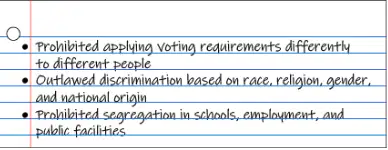
What is the student who wrote down these notes studying?
the decision in Plessy v. Ferguson
the decision in Brown v. Board of Education
the Voting Rights Act of 1965
the Civil Rights Act of 1964
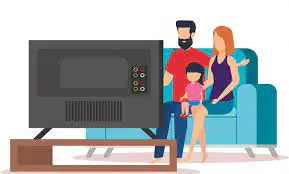
Which of the following statements BEST characterizes the impact that television had on the civil rights movement?
Popular prime-time television shows that included African American characters in starring roles angered many white Americans and slowed progress in the civil rights movement
News coverage of demonstrations, particularly police violence toward demonstrators, helped many white Americans turn their sympathies toward the civil rights
News coverage of demonstrations, complicated the routine functioning of daily life, caused many white Americans to further resent blacks.
Popular prime-time television shows that included likable black characters helped many white Americans relate to African Americans and demand improvements in their civil rights.
Which of the following events contributed most to the drastic increase in registered African American voters in the South U.S.?
passage of the Jim Crow laws
Passage of the 14th Amendment
passage of the Civil Rights Act of 1964
passage of the Voting Rights Act of 1965
In 1957, Martin Luther King, Jr., and other ministers founded the ____.
Southern Christian Leadership Conference (SCLC)
Civil Rights Act of 1964
Voting Rights of 1965
Congress of Racial Equality (CORE)
Protest technique in which African Americans occupied a segregated establishment and demanded service
sit-in
March on Washington
Southern Christian Leadership Conference (SCLC)
Freedom Rides
Legislation that banned discrimination in all public facilities.
Nation of Islam
de jure segregation
Civil Rights Act of 1964
de facto segregation
Removed barriers to black enfranchisement in the South, banning poll taxes, literacy tests, and other measures that effectively prevented African Americans from voting -
Voting Rights Act of 1965
Voting Rights Act of 1865
Votings Rights Act of 1982


What caused the United States to enter WWII?
Pearl Harbor
Germany invaded Poland
Mussolini came to power in Italy
Unrestricted submarine warfare
The primary reason President Harry Truman made the decision to use atomic bombs on Hiroshima and Nagasaki was to
save American lives by avoiding the invasion of Japan
destroy the entire Japanese military in Southeast Asia
allow the United States to defeat Germany
halt the Japanese invasion of the Soviet Union
In the years immediately following World War II, United States foreign policy was primarily focused on
securing peace in the Middle East
containing the spread of communism
sending volunteers to developing countries
maintaining neutrality in world conflicts
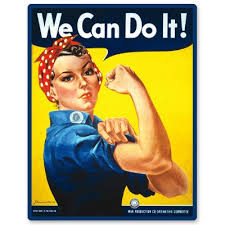
Who is this a image of and what did she a symbol of .....
June the Fighter symbol of women's suffrage
Susan the solider symbol of women working on airplanes
Rosie the Riveter symbol of women working in factories during the war.
Mrs. Hackert flexing her muscles.

The D-Day invasion in June 1944 on the beaches of Normandy was important to the outcome of World War II because it -
opened a new Allied front in Europe
avoided the use of the atomic bomb against civilian targets
forced Italy to surrender
stopped Soviet advances in Europe
Which most accurately characterizes the policy followed by the United States in the years between World War I and World War II?
isolation from European conflicts
containment of Communism
active membership in the League of Nations
military alliances with France and Great Britain
Which was an example of appeasement?
the U.S. Neutrality Acts of 1935 and 1937
the conquest of Poland in 1939
the entry of the United States into World War II in 1941
the agreement of Britain and France to give Germany the Sudetenland in 1938

What is the purpose of this poster from 1943?
to share that President Roosevelt ordered the desegregation of the armed forces
to demonstrate an American victory in the war requires men working in the factories
to show that racial equality in defense industries is important to American prosperity
By virtue of the authority vested in me as President of the United States, and Commander in Chief of the Army and Navy, I hereby authorize and direct the Secretary of War: to prescribe military areas in such places and of such extent as he or the appropriate Military Commander may determine, from which any or all persons may be excluded, and with respect to which, the right of any persons to enter, remain in, or leave shall be subject to whatever restriction the Secretary of War or the appropriate Military Commander may impose in his discretion.
—President Franklin D. Roosevelt, 1942
Which statement explains how President Roosevelt used his executive powers during World War II?
declaring war on the Axis Powers
ending segregation in the armed forces
ordering Japanese-Americans along the west coast to report to internment camps
African Americans were involved in all branches of the military but in segregated units.
Few of those relocated were actually United States’ citizens.
The Japanese American experience was similar to what happened to German Americans at this time
President Franklin D. Roosevelt approved the action because he believed Japanese Americans were a military threat.
Which of the following is an example of how African Americans contributed to the war effort?
African Americans served as airmen in integrated units.
African Americans stayed at home caring for their families.
African Americans were involved in all branches of the military but in segregated units.

Which of the following statements BEST describes the meaning of the cartoon?
“The federal government will most likely need to take control of manufacturing plans.”
“President Roosevelt expects other nations to supply the same amount of arms as the United States.”
“President Roosevelt is determined to supply the United States military and its allies with whatever it takes to defeat the Axis powers.”

Use the propaganda posters to answer the following question.
How do the posters show the changing role of women in World War II?
Women were assigned military roles equal to those held by men by the end of the war
Women held many jobs during the war and were hired for jobs in factories that were previously held by men.
Women bought war bonds and continued to work outside the home only in jobs traditionally performed by women.

Use the posters to answer the following question.
Which United States government action was MOST similar to the goal shown in these posters?
Institution of the draft by the Selective Service Act (1940)
Rationing by the Office of Price Administration (1941)
Aid to the Soviet Union under the Lend-Lease Act (1941)
Why were the Normandy landings (D-Day) considered an important turning point in World War II?
They allowed the Allied Powers to attack all Germany’s forces at once.
They forced Germany to fight on multiple fronts, which divided and weakened its military strength.
They showed the effectiveness and safety of beach invasions, which led to more successful Allied invasions.
Use the text to answer the following question.
...This new phenomenon would also lead to the construction of bombs, and it is conceivable-though much less certain-that extremely powerful bombs of a new type may thus be constructed…
Yours truly,
Albert Einstein
—Letter to President Franklin D. Roosevelt from Albert Einstein, 1939
How did the administration of President Roosevelt react to the information written in this letter?
proposing the Lend-Lease Act
creating the Manhattan project
declaring war on the Axis powers
Why did President Truman choose to drop an atomic bomb on Japan instead of ordering a land invasion?
American forces were too defeated for a land invasion.
Japan’s geography would not allow a land invasion.
A land invasion would result in too many American casualties.
It was not possible to supply troops with weapons for a land invasion.
Use the information to answer the following question.
The Japanese ruling groups are aware of the desperate military situation...but still find unconditional surrender unacceptable. The basic policy of the present government is to fight as long and as desperately as possible in the hope of avoiding complete defeat and of acquiring a better bargaining position in a negotiated peace. The Japanese believe that unconditional surrender would be the equivalent of national extinction.
Because of this report’s conclusions, what did American leaders decide?
the decision to use nuclear weapons
the decision to sell weapons to the Allies
the decision to intern Japanese Americans


When Britain and France gave into Germany because they were sick of war and they had economic problems it was called
Appeasement
Fascism
Communism
Prohibition
Germany's battle tactic of quickly overwhelming the opposition is referred to as
kamikaze
blitzkrieg
island-hopping
total war
spread of ideas for the purpose of helping or damaging a cause
propaganda
isolationism
appeasement
super bowl commercials
France and Britain initially adopted this policy in response to Hitler's territorial expansion
appeasement
praise
extermination
interventionism
Congress passed these acts to prevent US involvement in WW2
neutrality acts
isolationist acts
Roosevelt Acts
nuclear acts

