
 Worksheets
Chemistry - Review
Total questions: 100
Worksheet time: 1hrs 18mins
Cr2O72-(aq) + Fe2+(aq) ---> Cr3+(aq) + Fe3+(aq)
Which species is being reduced in the equation above?
Cr2O72-
Fe2+
Cr3+
Fe3+
Which species is the strongest reducing agent?
Cl-
Br-
I-
Cl2
The equation for the reaction between chlorine gas and water is
Cl2 (g) + H2O (l) ⟺ HCl (aq) + HClO (aq)
This is a ______.
hydrolysis reaction
substitution reaction
disproportionation reaction
displacement reaction
Z forms white precipitate with silver nitrate solution.
White precipitate is then dissolved in excess ammonia solution.
Solid Z is ____
KI
KCl
KBr
KBrO3
Write the products of electrolysis when dilute sulphuric acid is electrolysed using Platinum electrodes.
O2 , H2
O2,N2
N2,H2
SO2,H2
type of reaction occurs in the formation of Nylon 6,6 polymer
addition
combination
condensation
distillation
Predict the number of ions produced per formula unit in an aqueous solution
of [Ni(en)3]Cl2
4
3
2
1
The acidic strength of halogen acids varies in the order
HF>HCl>HBr>HI
HI>HF>HCl>HBr
HI>HBr>HCl>HF
HBr>HI>HCL>HF
when a freshly precipitated Fe(OH)3 is shaken with a little
amount of dilute solution of FeCl3.
COAGULATION OCCURES
path of light is visible
peptization occures
a new compound is formed
the number of lone pairs on central atom in XeF4 ARE
1
2
3
4
Solutions of two electrolytes ‘A’ and ‘B’ are diluted. The limiting molar conductivity of ‘’A increases to a smaller extent while that of ‘B’ increases to a much larger extent comparatively. Which of the two is a strong electrolyte
A
B
their neighBour means C
BOTH A and B
3AgNO3 + Na3(PO4) ---> Ag3(PO4) + 3NaNO3
A sample of silver contains 5.71 x 10²² atoms. How many moles of silver are present?
3.43 x 1046 moles
0.0529 moles
0.0948 moles
10.5 moles
Calculate de-Broglie wavelength of an electron moving with velocity 107 m/s.
10 A°
5 m
0.73 A°
0.72 m
If a proton and an electron have same energy, then which one is correct?


Which one is correct Schrodinger time dependent equation?
H = E
H = Eψ
Hψ = ψ
Hψ = Eψ
Two metals X and Y have work function 2 eV and 5 eV respectively . when these metals are irradiated with light of wavelength 400nm, the emission of photoelectron will take place from metal Y only and not from metal X. [use hc = 1240 eV nm]
True
False
What is the cut off wavelength?
h = 6.6 x 10⁻³⁴ Js
c = 3 x 10⁸ ms⁻¹
The spectral line in hydrogen spectrum obtained when the electron jumps from n=5 to n=2 energy level belongs to:
Lyman series
Balmer series
Paschen series
Pfund series
What are the possible values of the magnetic quantum number for an electron in a 3p orbital?
-3, -2, -1, 0, +1, +2, +3
-2, -1, 0, +1, +2
-1, 0, +1
0
The correct electronic configuration of Cr (Z=24) is
[Ar] 3d 5 4s 1
[Ar] 3d 4 4s 2
[Ar] 3d 9 4s 2
[Ar] 3d 10 4s 1
The radius of first orbit of hydrogen is 0.53 Å. The radius of second orbit would be
1.06 Å
0.26 Å
0.53 Å
2.12 Å
The sub-shell with n=6, l=2 can accomodate a maximum of
10 electrons
12 electrons
36 electrons
72 electrons
This element has the lowest electron affinity
magnesium
sodium
silicon
sulfur
Which metal ion (cation) is the smallest
oxide ion (oxygen ion)
nitride ion (nitrogen ion)
aluminum ion
magnesium ion
Which of the following molecule is not polar?
NH3
NF3
BF3
CHCl3
Which of the following statement is correct about CO32- ?
The hybridisation of central atom is Sp3
Its canonical structure has one C--O single bond and two C=O double bonds
All C--O bond lengths bond lengths are equal
Canonical structures are less stable
Which of the following statement is not correct from the view point of molecular orbital theory?
Be2 is not a stable molecule
He2 is not a stable molecule
Bond strength of N2 is maximum amongst the homonuclear diatomic molecules belonging to the second period.
The order of energies of molecular orbitals in N2 molecule is
σ2s < σ* 2s < σ2pz < (π2pX = π2pY) < (π*2pX = π*2pY) < σ*2pz
Which of the following pair is expected to have the same bond order?
O2 , N2
O2+, N2–
O2 – , N2+
O2–, N2–
H2O and CH4 have almost similar mass but H2O has higher boiling point than CH4. Explain.
H2O is a polar molecules whereas CH4 is a nonpolar molecules.
H2O has hydrogen bonding whereas CH4 has only weak van der waals forces.
H2O has dipole-dipole interactions whereas CH4 has only weak van der waals forces.
H2O has bigger size than CH4 .
The strongest intermolecular forces present between HCl molecules is
dipole-dipole interaction
dispersion forces
Hydrogen bond
covalent bond
What is the effect of increasing the pressure on the following equilibrium: 2NO(g) + O2 (g) ⇌2NO2(g)?
The yield of NO2 increases
The yield of NO2 decreases
The reaction is slower
The concentration of O2 increases.


How do catalysts increase the rate of reaction?
The frequency of collisions is the increased
The activation energy is lowered.
The energy of collisions is increased
Both the frequency and energy of collisions is increased
If the reaction quotient, Q has a bigger value than the related equilibrium constant, K, _________
the reaction is at equilibrium and no change will occur.
the reaction is not at equilibrium, reaction shift to the right and will make more products.
the reaction is not at equilibrium, reaction shift to the left and will make more reactants.
the value of K will increase until it is equal to Q.
2NaOH + H2SO4 → Na2SO4 + 2H2O
Given the following rate law,
rate = k[A]2[B]
if [A] were doubled, what must happen to [B] to keep the rate constant?
[B] must tripled
[B] must double
[B] must be havled
[B] must be quartered
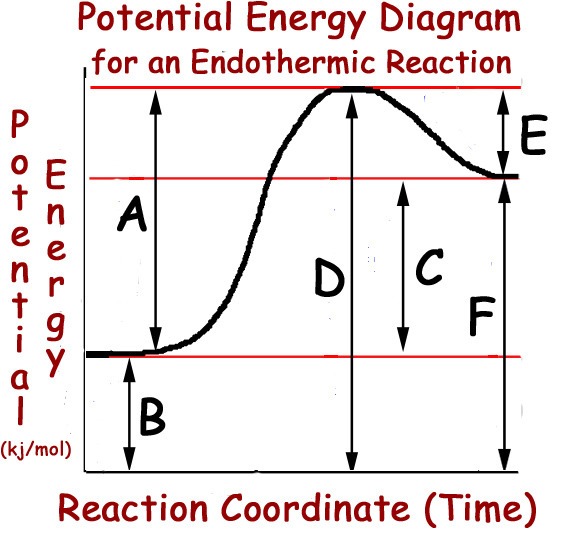
What letter represents the activation energy?
A
B
C
D


Which molecule does not shown geometric isomerism?
A
B
C
None of the above

Ethene is devoid of any alpha hydrogen so hyperconjugation is not possible.
True
False

An electrophile is a Lewis...............
Base
Acid
Radical
Anion

Which type of reaction is this
SN1
SN2
E1
None
Which of the following statements regarding the E2 mechanism is wrong?
Reactions by the E2 mechanism are always bimolecular.
Reactions by the E2 mechanism are generally second order.
Reactions by the E2 mechanism usually occur in one step.
Reactions by the E2 mechanism usually occur in two steps.

Which is the main product of the following reaction?


Elimination reactions of cis- and trans-1-bromo-2-methylcyclohexanes with NaOEt in EtOH can give the same or different main product, 1-methylcyclohexene (1) or 3-methylcyclohexene (2). Which of (a)-(d) indicates the main products?
1 both from the cis and trans substrates
2 both from the cis and trans substrates
1 from the cis and 2 from the trans substrate
2 from the cis and 1 from the trans substrate
Which of the following statements regarding mechanisms of elimination reaction is wrong?
The E1 mechanism does not require a base.
The E2 mechanism generally occurs under highly basic conditions.
The E2 mechanism is stereospecific.
The E1cB mechanism is usually unimolecular in the rate-determining step but leads to a second order rate law.


The tail of a surfactant molecule is oil-loving or known as ________?
hydrophile
lipophobic
lipophilic
hydrophilic
The values of colligative properties of colloidal solution are of small order in comparison to those shown by true solutions of same concentration because of colloidal particles __________________.
exhibit enormous surface area.
remain suspended in the dispersion medium.
form lyophilic colloids.
are comparatively less in number.
In physisorption adsorbent does not show specificity for any particular gas because ______________.
involved van der Waals forces are universal.
gases involved behave like ideal gases.
enthalpy of adsorption is low.
it is a reversible process.
Bredig's arc method is used for the preparation of colloidal soln of:
Metal like silver, gold, etc
Organic compounds
Two liquids
Inorganic compounds
Select the FALSE statement about adsorption.
The value of adsorption enthalpy of physical adsorption is less than chemical adsorption.
Physical adsorption occurs due to Van der Waals'forces.
Chemical adsorption decreases at high temperature and low pressure.
Physical adsorption is reversible.
Which plot is the adsorption isobar for chemisorption x is the amount of gas adsorbed on the mass m at temperature T at constant pressure?


Glutamine has two pKa (2.17 and 9.13). Which one is the major form of glutamine at pH = 1.5?


Which of the following are true for isoelectric focusing?
proteins separate according to their isoelectric point
proteins stop migrating at the isoelectric point
All the proteins move from Anode to Cathode
no further procedure is necessary to separate the proteins
Assertion : A gas with higher critical temperature gets adsorbed to more extent than a gas with lower critical temperature.
Reason : The easily liquifiable gases get adsorbed to more extent.
assertion is true but the reason is false
assertion is false but the reason in true.
both assertion and reason are true and the reason is a correct explanation of assertion
If both assertion and reason are true but reason is not a correct explanation of assertion.
A process during which the temperature of a sample of gas doesn't change is called a (a) process

Consider the pV diagram shown. Consider the magnitude of work done on the gas during each process AB, BC, CD and DA. Reorder the magnitude of work done from least to greatest.
A to B
B to C
C to D
D to A

A sample of an ideal gas can be taken from state A to state B through one of two processes A→Y→B or A→X→B , as shown in the pV diagram. Which of the following will be the same for both processes?
The average kinetic energy of the gas
The temperature of the gas at the end of the process
The thermal energy transferred to the gas by heating
The work done on the gas
which of the following laws is applicable for the behaviour of perfect gas...
Boyle's law
Charle's Law
Gas Lussac law
All of the above
Transfer of heat from low temperature to high temperature is
None of these
Possible by doing some external work
Possible by keeping both the bodies in contact
Impossible
A piece of ice is added to water in a cup. The entropy
decreased
increased
no change
decreases then increases.
The gaseous layer which protects human life from on earth uv radiation is
Oxygen
ozone
Nitrogen
Carbondioxide
Intensive property of a system is one whose value
depends on the mass of the system, like volume
does not depend on the mass of the system, like temperature, pressure, etc.
is not dependent on the path followed but on the state
is dependent on the path followed and not on the state
Work done in a free expansion process is
+ ve
-ve
zero
maximum
vrms, vave, and vmp are root mean square, average, and most probable speeds of molecules of a gas obeying Maxwellian velocity distribution. Which of the following statements is correct?
vrms<vave<vmp
vrms>vave>vmp
vmp>vrms>vave
vmp<vrms<vave
The universal gas constant is:
Cp/Cv
Cp-Cv
Cp+Cv
Cv/Cp
Which is a test for a C=O?
Bromine water
Fehling's solution
Acidified potassium dichromate (VI)
2,4-DNPH (Brady's reagent)

Name this molecule:
Pentanoic acid
2-hydroxy-2-methylbutan3-one
3-hydroxy-3-methylbutane-2-one
2-oxo-3-methylbutan-3-ol
Which of the following reagents will oxidise propan-1-ol to propanal (tick all that apply)?
Acidified potassium dichromate (VI)
2,4-DNPH (Brady's reagent)
Fehling's solution
PCl5 (phosphorus pentachloride)
2. Fehling's test: No observable change
3. 2,4-DNPH: yellow ppt
Which compound will have the above observations?
If propanal reacts with KCN in acidic conditions, which of the following is true?
The product is not chiral
A racemic mixture of the R and S enantiomers is formed
Only the R enantiomer forms
Only the S enantiomer forms
Which of the following is the most acidic?


What will be formed if butanone is reacted with LiAlH4 in dry ether?
Butanoic acid
Butan-1-ol
Butan-2-ol
Butanal
Compound X dissolves in an aqueous sodium hydroxide solution but does not dissolves in an aqueous sodium carbonate solution. Compound X maybe


Glucose is an example of a naturally occurring aldehyde. Which is not true about glucose?
Glucose can be reduced.
Glucose reacts with alkaline iodine.
Glucose can undergo polymerisation.
Glucose reacts with 2 , 4-dinitrophenylhydrazine.
An ester extracted from bananas has the structural formula, CH3COOCH2CH(CH3)CH2CH3.
What are the products formed if the ester is reacted with LiAlH4 followed by hydrolysis?
CH3CHO and HOCH2CH(CH3) CH2CH3
CH3COOH and HOCH2CH(CH3) CH2CH3
CH3OH and HOCH2CH2CH (CH3) CH2CH3
CH3CH2OH and HOCH2CH(CH3) CH2CH3
1 - Hexanamine and aniline are amines. Which statements are true about the amines?
Ⅰ. 1 - Hexanamine is a weaker base compared to aniline.
Ⅱ. 1 - Hexanamine has a higher boiling point compared to aniline.
Ⅲ. Both amines produce primary amides when reacting with acyl chloride.
Ⅳ. Both amines act as nucleophiles.
Ⅰ and Ⅲ
Ⅰ and Ⅳ
Ⅱ and Ⅲ
Ⅱ and Ⅳ
Brown ring test is used for the confirmation of
Acetate
chloride
sulphate
nitrate
Green tinted ash is obtained for
Aluminium
zinc
Magnesium
Calcium
Use the balanced equation to answer the following question.
4 NH3 + 5 O2 → 4 NO + 6 H2O
How many grams of nitrogen monoxide (NO) will be produced from 2.50 moles of oxygen (O2)?
Molar Mass NO: 30.01 g/mol Molar Mass O2: 32.00 g/mol
60.0 g NO
64,.0 g NO
2.00 g NO
75.0 g NO
Consider these generic equations:
2X + 3Y→2Z, ΔH=?
2X + 2Y→2Z, ΔH=−600kJ
2Z + Y→2Z, ΔH=−200kJ
What is the missing ΔH?
300 kJ
-300 kJ
800 kJ
-800 kJ

Which reaction is not an electrophilic addition ?
A
B
C
D
Bromine reacts with ethene to form 1, 2-dibromoethane.
What is the correct description of the organic intermediate in this reaction ?
It has a negative charge
It is a free radical
It is a nucleophile
It is an electrophile

