
 Worksheets
Review for Final Exam 2023
Total questions: 173
Worksheet time: 4hrs 23mins

What law is best described
1st
2nd
3rd
law of motion
What law is best described
Equal and Opposite
1st
2nd
3rd
speed

What law is best described
A magician pulls a tablecloth out from under dishes and glasses on a table without disturbing them.
Newton's 1st Law
Newton's 2nd Law
Newton's 3rd Law

What law is best described
A person not paying attention while skateboarding hits a rock. The skateboard stops...they don't.
The Law of Inertia (1st law)
The Law of Acceleration (2nd law)
The Law of Conservation of Momentum
Action Reaction Law (3rd law)

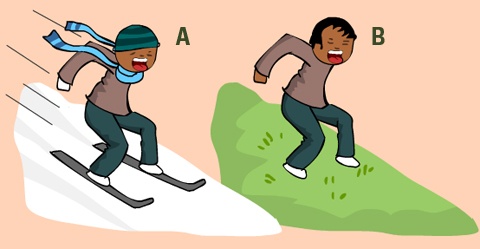
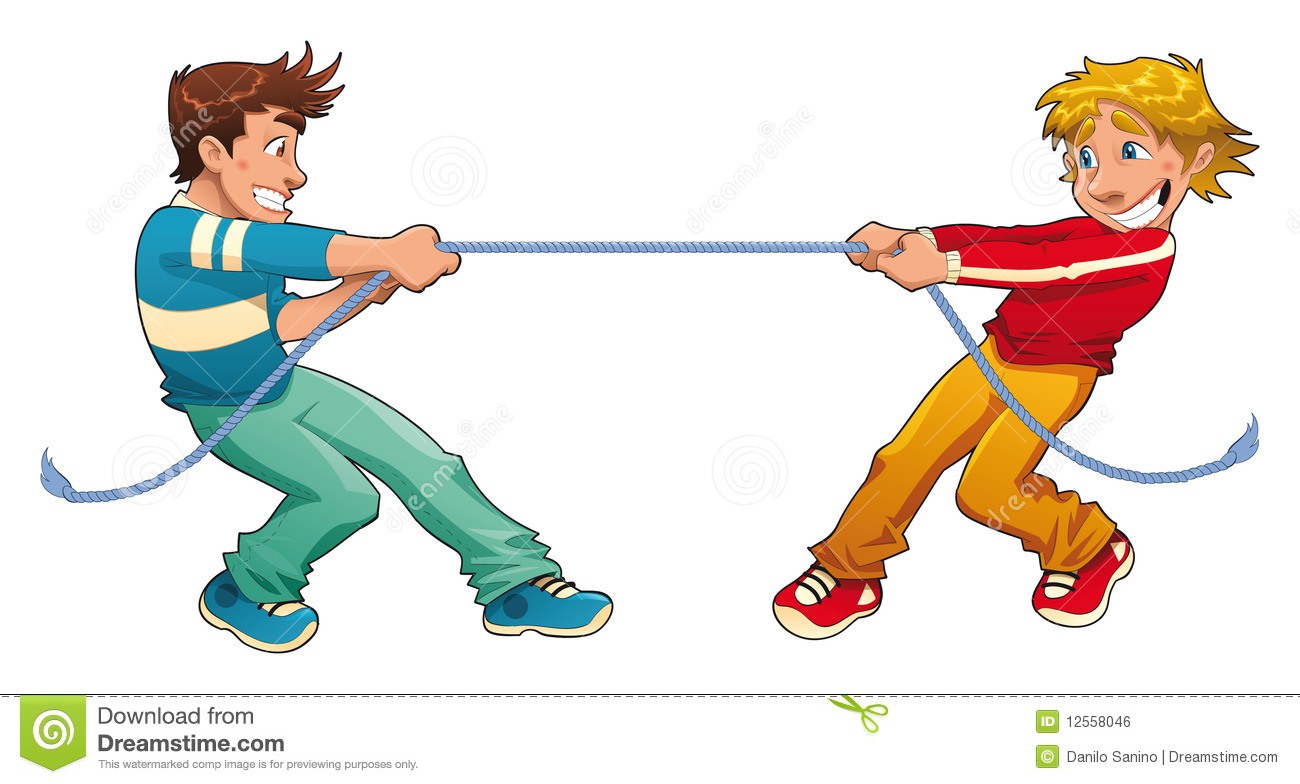


1st
Law of Motion
2nd
Law of Motion
3rd
Law of Motion
1st
Law of Motion
2nd
Law of Motion
3rd
Law of Motion
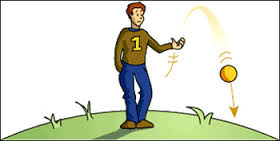
States that force equals mass x acceleration
Newtons 1st law
Newtons 2nd law
Newtons 3rd law
Claims if an object exerts a force on another object, the second object exerts a force of equal strenght in the opposite direction back towards the first object
Newtons 1st law
Newtons 2nd law
Newtons 3rd law
States an object at rest will remain at rest unless acted on by an unbalanced force
Newtons 1st law
Newtons 2nd law
Newtons 3rd law
An object moving at a constant velocity will continue moving at a constant velocity unless acted upon by an unbalanced force applies to this law
Newtons 1st law
Newtons 2nd law
Newtons 3rd law
A squid ejects water backward, and the water pushes back, causing the squid to propel forward.
Newtons 1st law
Newtons 2nd law
Newtons 3rd law
A 1,000-kg truck barrels down a highway at 24 m/s2 with a force of 24,000 N.
Newtons 1st law
Newtons 2nd law
Newtons 3rd law
A tossed paper airplane glides forward until a gust of wind blows it sideways.
Newtons 1st law
Newtons 2nd law
Newtons 3rd law
When the force of an object remains constant, then an increase in mass corresponds with a decrease in acceleration.
Newtons 1st law
Newtons 2nd law
Newtons 3rd law
The amount of matter in an object in the object's ________.
Inertia
Weight
Mass
Density
One Newton (N) equals ________.
1 kg ⋅ m/s2
1 lb ⋅ m/s2
1 kg ⋅ m/s
1 lb ⋅ m/s
The force needed to overcome ________ friction is more significant than that required to overcome the other two types of abrasion.
Rolling
Gliding
Fluid
Figure skaters A and B both apply the same amount of force to skate forward. If figure skater B has faster acceleration, is her mass less than that of figure skater A?
Yes
No
A white pool cue ball strikes a striped billiard ball at rest with a speed of 5 m/s. How fast does the striped billiards ball move, and in what direction?
5 m/s2 forward
5 m/s2 backward
5 m/s forward
5 m/s backward
Force equals...
mass x volume
mass x accelleration
change in direction
velocity x mass
What is the acceleration (a) of a 92 kg (m) downhill skier that skis with a force of 118 kg ⋅ m/s2 (F)?
.77 m/s2
1.3 m/s
1.3 m/s2
.77 m/s

? = mass x acceleration
or
? = m x a
is used to find
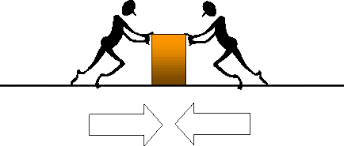

You push against a wall and the wall is pushing back on you.
Newton's 1st Law
Newton's 2nd Law
Newton's 3rd Law

A cheetah can run briefly with a speed of 31.0 m/s. Suppose a cheetah with a mass of 47.0 kg runs at this speed. What is the cheetah’s kinetic energy?
1457 Joules
22,584 Joules
15 Joules
45,167Joules
Which object has the most potential energy?
A ball resting on the ground.
A ball being thrown at 100 miles per hour.
A ball on top of a refrigerator.
A ball resting on the edge of a cliff.

Four cars are positioned at the top of a hill. Which car has the most potential energy?
A
B
C
D
Energy stored because of gravity is called:
Gravitational Potential Energy
Kinetic Energy
Mechanical Advantage
Chemical Energy
What is the gravitational potential energy (GPE) of a 1 kilogram book that is 1 meter above the ground?
g = 9.8 m/s2
9.8 Joules
1.0 Joule
0.10 Joule
11.8 m/s2
Moving a book to a lower shelf decreases its potential energy
True
False
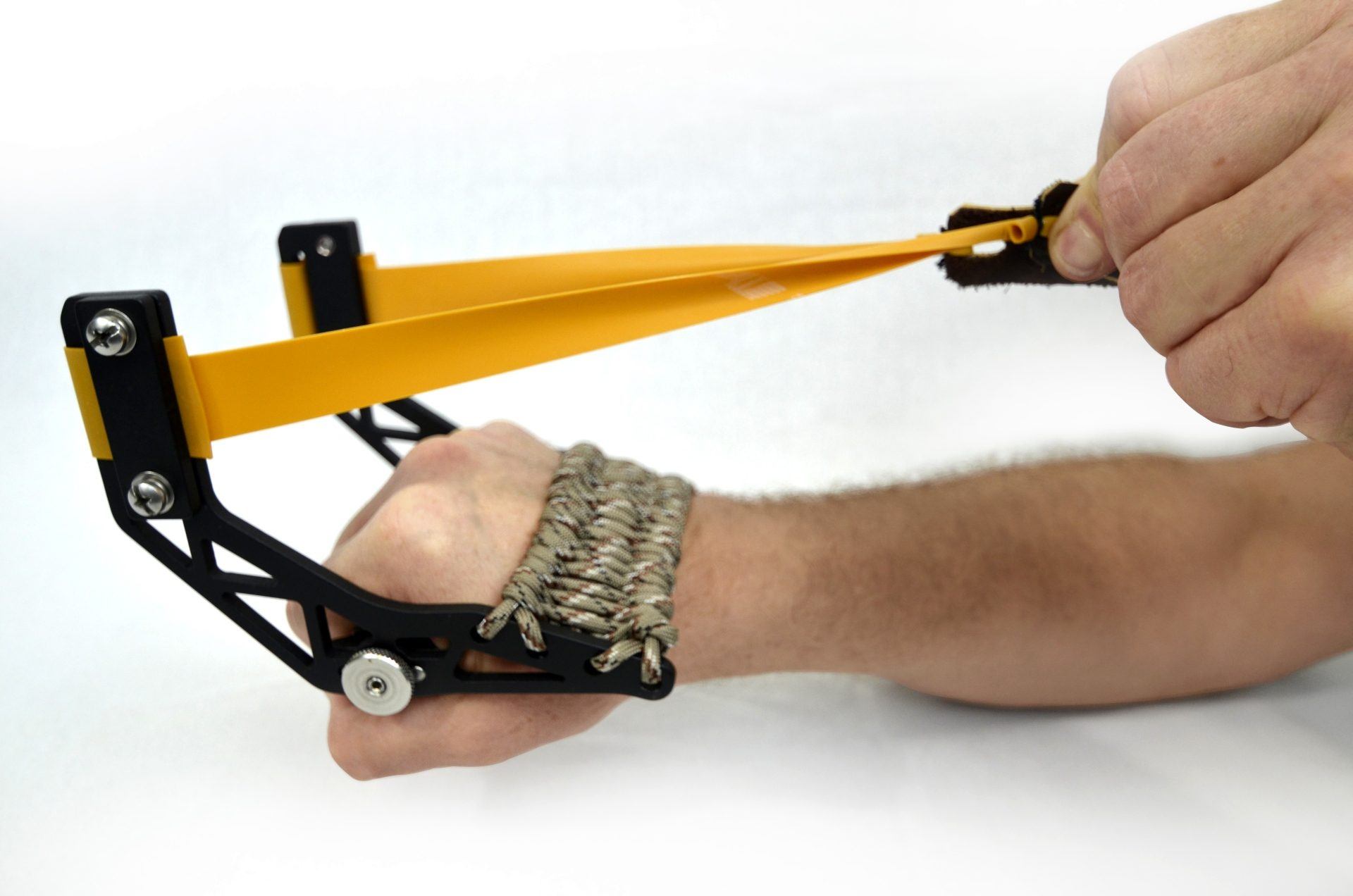
Increasing an object's speed will increase its kinetic energy.
True
False
Increasing an object's mass will increase its kinetic energy.
True
False
The fixed point around which a lever rotates is know as the
wheel.
fulcrum.
input force.
output force.
Which of the following is NOT an example of the simple machine know as a screw?
lid of a jar
turning on and off a faucet
a drill bit
a screw driver
How can simple machines make work easier?
by decreasing the force needed to complete the task
by increasing the friction between the machine and the object
by adding more work on the object than originally applied
by removing the force of gravity on the object
Which machine could be considered to be a type of inclined plane?
wheel and axle
lever
screw
pulley
A doorknob is a simple machine made up of 2 circular objects of different sizes. When turning a doorknob, what type of simple machine is being used?
inclined plane
wheel and axle
wedge
pulley
Workers push a heavy box up an inclined plane and onto a moving truck. Which best explains why these workers use an inclined plane?
It makes their work easier because it requires less effort.
It decreases the amount of work they have to do.
It increases the amount of friction necessary to do the task.
It makes the box weigh less.
A group of workers needs to move a piano from the second floor of a building. The piano is too wide to fit through the doorway, so they will lower the piano to the ground through a window. Which simple machine would be the best to help the workers lower the piano from the window?
wheel and axle
inclined plane
pulley
wedge
A house uses a roof to carry away large amounts of rain efficiently. A roof composed of 2 attached inclined planes would be considered which type of simple machine?
wedge
screw
ramp
lever
Simple machines can make work easier by reducing the input force needed to move an object. However, there is a trade off for decreased input. What is the trade off?
The distance the object is moved is increased.
The distance the object is moved is decreased.
The amount of work is increased.
The amount of work is decreased.
Using the back of a hammer makes it much easier to remove a nail from a wooden board. What kind of simple machine would the hammer be classified as if you are using it for this purpose?
Wedge
Lever
Pullye
Inclined Plane
What are the units of force?
Kilograms and Newtons
Just Newtons
Newtons and Pounds
Kilograms and Pounds
Which class of lever has the fulcrum in the middle (between Fe and Fr)?
1
2
3
4
In a wheel and axle, how do we know which is the wheel and which is the axle?
We guess
The wheel has the larger diameter/radius
The axle is better greased
The wheel is the one that looks like it would roll better

What class of lever is this?
1
2
3

What type of simple machine is this?
Lever
Pulley
Inclined Plane
Wedge
The purpose of a simple machine is to make work easier by allowing for a push or pull to occur over an increased distance.
True
False
Which simple machine consists of a sloping surface, used for raising heavy objects, or sliding objects down?
Wedge
Inclined Plane
Pulley
Screw
Which simple machine is an inclined plane that is wrapped around a pole?
Screw
Pulley
Wedge
Wheel-and-axle
Why are simple machines "simple"?
They reduce the effort required to perform a simple task. Less force can be applied.
They are actually quite complicated.
You can easily put two pieces of wood together.
Splitting through wood is much faster.
Where might a screw be used?
A bottle cap
A Lightbulb
Cell Phone Charger
All of the above
What would you be measuring if you had the object's speed and direction
momentum
velocity
force
weight
What factor will slow down an object moving through space?
air resistance
friction
another object
gravity
What is the change in velocity divided by time?
momentum
force
speed
acceleration
Charged particles exibit what kind of force?
contact force
electromagnetic force
gravitational force
frictional force
The force of gravity is dependent on an object's ________.
mass
volume
temperature
speed
Newton's second law states that greater the mass the more _________ will be needed to move the object.
power
force
distance
speed
force equals mass times .......
speed
acceleration
velocity
momentum
If you multiple velocity by mass you will get the object's .....
acceleration
force
speed
momentum
If a speed boat is traveling at a constant rate and hits a large wave, how would the boat respond?
It would keep going straight
it would go backward a bit
It would go forward a bit
It would stop
If I threw a rock in space what force would be acting against it?
gravity
friction
electromagnetism
nothing
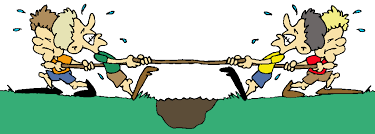

What is the change in velocity divided by time?
momentum
force
speed
acceleration
The force of gravity is dependent on an object's ________.
mass
volume
temperature
speed
Newton's second law states that greater the mass the more _________ will be needed to move the object.
power
force
distance
speed
force equals mass times .......
speed
acceleration
velocity
momentum
What is the average speed of an object that travels 6.00 meters north in 2.00 seconds and then travels 3.00 meters east in 1.00 second?
9.00 m/s
4.24 m/s
3.00 m/s
0.333 m/s
The speedometer in a car does not measure the car’s velocity because velocity is a
vector quantity and has a direction associated with it
vector quantity and does not have a direction associated with it
scalar quantity and has a direction associated with it
scalar quantity and does not have a direction associated with it
A toy car moves 8 m in 4 s at the constant velocity. What is the car’s velocity?
1 m/s
2 m/s
3 m/s
4 m/s
A train moves at a constant velocity of 50 km/h. How far will it move in 0.5 h?
10 km
20 km
25 km
45 km
A boat can move at a constant velocity of 8 km/h in still water. How long will it take for the boat to move 24 km?
2 h
3 h
4 h
6 h
Which of the following is a vector quantity?
time
velocity
speed
distance
What is the unit of measurement used in physics for speed?
seconds
seconds per meter
meters
meters per second
If a person runs 100 meters in 10 seconds, what is their average speed?
1 m/s
2 m/s
5 m/s
10 m/s
The velocity of a plane is 500 miles per hour west. What is the speed of the plane?
West
500 miles per hour
250 miles per hour
500 miles per hour west
500 miles per hour east
Which one of the following quantities is NOT a vector?
10 mi/hr, east
10 mi/hr/sec, west
35 m/s, north
20 m/s
Which one of the following quantities is NOT a speed?
10 mi/hr
10 mi/hr/sec
35 m/s
20 m/s
Find the distance a hiker walks if he travels 3.50 mi north, and then turns around and walks 3.00 mi south.
0.50 mi
3.00 mi
1.50 mi
6.50 mi
Find the displacement for a hiker who walks 3.50 mi north, and then turns around and walks 3.00 mi south.
0.50 mi
6.50 mi
0.50 mi north
6.50 mi north
What is speed at a given instant?
Average Speed
Instantaneous Speed
Speed in a GIVEN direction
Velocity
Distance
If I have positive acceleration it means?
Speeding up
Slowing down

Which of the following dot diagrams shows an object that is accelerating
A
B
Neither object is accelerating
You can not tell from the dot diagram
_______ is the length of the path between two points.
distance
reference
statistic
law
What is the unit for velocity?
feet (ft)
meters (m)
meters per second (m/s)
meters per second per second (m/s/s or m/s2)
What is the unit for acceleration?
feet (ft)
meters (m)
meters per second (m/s)
meters per second per second (m/s/s or m/s2)

The SI unit for distance
m
m/s
m/s2
d

If a kangaroo runs for 2.5 seconds at 19 m/s, how far did it go?
47.5 m
7.6 m
0.13 m
19 m

Average speed is equal to the total distance divided by
the time on your watch.
the total time.
velocity.
acceleration.

The equation for speed:
d ÷ t
(vf-vo) ÷ t
d x t
t ÷ d

The fastest speed on this graph
A
B
C
not enough information

A car travels a distance of 10m at the rate of 20m/s. What is the time it took to drive this?
0.5 seconds
2 seconds
200 seconds
10 seconds

Which is NOT one of the ways in which to accelerate?
straight line at a constant speed
turn
speed up
slow down

What are the units for acceleration?
m/s
m/s2
m
s

What is the difference between velocity and speed?
speed includes a measure of direction but velocity is just how fast
speed is how fast and velocity is how fast and what direction
speed is only one way but velocity is any way
they are the same thing
The speed you read on a speedometer is
average speed
constant speed
velocity
instantaneous speed
How long will it take an object traveling at 25 m/s to reach a distance of 125 meters?
0.2 s
0.2 min
5 s
5 m
A cross-country runner runs 10 km in 40 minutes. What is his average speed?
454 km
30 km/min
.25 km/min
0.0088 km
What does the slope of a distance vs. time graph tell you?
the speed of the object
the acceleration
the time it took for the object to travel
the total distance traveled
A car travels west for 240 km in 4 hr. What is the car's velocity?
60 km/hr west
60 km/hr
.016666 km/hr
1.67 km/hr west

During which interval is the object not moving?
B to C
A to B
E to F
only at point A

During which interval is the object moving back to its original position?
A to B
D to E
E to F
G to H


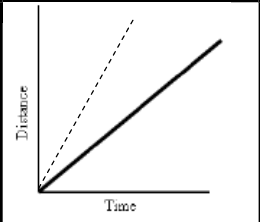
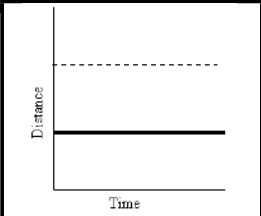
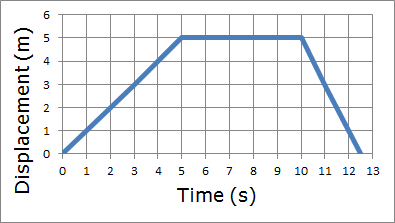
How far an object has traveled is what?
time
distance
direction
speed
What is the formula for speed?
distance / time
time / distance
direction / time
direction / distance
If I walk 20 miles in 5 hours, what is my speed?
5 miles per hour
0.25 miles per hour
4 miles per hour
20 miles per hour
What is it called when the speed of an object does not change?
average speed
increasing speed
constant speed
decreasing speed

Which segment shows the faster speed?
A to B
C to D
B to C
E to F

What is the motion of the object from segment D to E?
It is moving slowly
It is returning to the starting point
It is moving quickly
It is not moving

Which best describes this motion in the graph?
stopped, walking, running home
running, walking, stopped, walking home
walking, stopped, walking, running home
walking, running, running, stopped

What does a line with a positive slope mean?
The object is moving at a constant speed forwards
The object is moving at a constant speed backwards
The object is not moving at all

What does a negative sloped line mean on a position vs time graph?
The object is not moving at all
The object is slowing down.
The object is moving at a constant back to where it started.

What is happening from segment A to B?
Object is moving at constant speed forward
Object has stopped
Object is moving backwards at a constant speed
What is happening from segment B to C?
Object is moving at constant speed forward
Object has stopped
Object is moving backwards (or back to beginning) at a constant speed
What is happening from segment D to E?
Object is moving at constant speed forward
Object has stopped (not moving)
Object is moving backwards (or back to beginning) at a constant speed


An object travels 5 meters in 1 second. Then travels 10 meters in 2 seconds, next it travels 15 meters in 3 seconds. Which best describes the motion of the object?
it is going faster
it is slowing down
it is moving backwards
it is moving at a constant speed
Two balls of similar shape and size, one weighing 1 kg. and the other 2 kg. are both dropped from the top of a ladder at the same time. Which ball will hit the ground first?
Gravity will cause both to hit the ground at the same time
friction will cause both to hit the ground at the same time
the 2 kg ball will hit the ground first because it has more mass than the 1 kg ball
the 1 kg ball will hit the ground first because it has less mass than the 2 kg ball

Between which section did the bus stop?
A - B
O - B
B - C
D - E

The object traveled 200 meters in 4 minute. What is the speed of the object?
4 meters per minute
200 meters per minute
50 meters per minute
20 meters per minute

Which graph shows the object has stopped?
Graph 1
Graphe2
Graph 3
Graph 4

Which graph shows the object moving at a constant speed?
Graph 1
Graph 2
Graph 3
Graph 4

What is the distance the object moved in 3 min. time ?
50
100
150
200
Which graph shows the object moving at a constant speed then suddenly stops?
Graph 1
Graph 2
Graph 3
Graph 4

