
 Worksheets
Semester II Final Study Guide
Total questions: 119
Worksheet time: 3hrs 36mins

The force that causes objects with mass to attract one another.
Weight
Gravity
Mass
Magnetism

The gravitational attraction between two objects would increase if both masses are –
increased, and the distance between them is increased.
increased, and the distance between them is decreased.
decreased, and the distance between them is decreased.
decreased, and the distance between them is increased.

Why do planets orbit the Sun?
The Sun is the only celestial object that has a gravitational pull.
The Sun’s chemical composition makes it attract planets.
Only celestial bodies that emit light, like the Sun, can be at the center of an orbit.
The Sun is the most massive object in our solar system, so it exerts the greatest gravitational pull.

Gravity can be defined as the –
force of attraction between two or more masses.
friction created when two objects are in contact.
energy given off by stars due to nuclear reactions.
path an object follows as it moves through space.
1st
Law of Motion
2nd
Law of Motion
3rd
Law of Motion
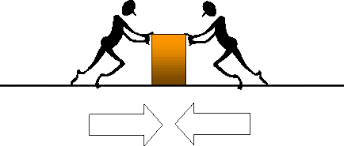
What force slows objects down and keeps them from moving?
Acceleration
Gravity
Friction
Net Force

The more mass an object has, the _______ force it takes to accelerate it.
more
less
There is ______ friction on a smooth surface.
more
less
no
lots of
When is having less friction useful?
walking
driving
ice skating
climbing
Friction is a type of force. True or False?
True
False
Friction occurs when two surfaces rub against one another. True or False
True
False
If a 10 kilogram object accelerates suddenly at 15 m/s2, what is the resultant force?
150 Newtons
15 Newtons
150 kilograms
100 kilograms


When a small car pushes a big truck, the truck applies an equal and opposite force on the car.
False
True
The equation to calculate momentum is
p = m x v
p = 1/2 m x v2
p = m x g x h
p = m x g
What is the unit for momentum?
m/sec
kg/sec
kg/m
kg x m/sec
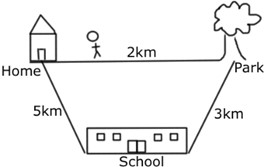
Jerry walked from home to school, then from the school to the park. What is his total distance?
2 km
5 km
8 km
10 km
Jerry walked from home to school, then from the school to the park. What is his total displacement?
2 km E
5 km N
8 km S
10 km W
82 meters N
18 meters N
18 meters S
82 meters S
A car drives 84 meters forward. It's displacement and distance would be the same magnitude.
True
False
A place or object (like a stop sign or mailbox) used for comparison to determine if another object is in motion is called a
comparison point
frame of reference
point of view
motion detector

Relative motion
the motion of an object in comparison to other objects in a specific frame of reference
the point of view used to measure the position and movement of objects
how fast something moves
the distance
The best reference points are stationary (not moving).
true
false
If you walk to your friends house 500 meters down the street. What is the DISTANCE you have traveled?
500 meters
1000 meters
250 meters
0 meters

Click on image to make it bigger.
A
B
C
D

You go on a hike on the blue path from point A to point B. (Click on image to make it larger)
What DISTANCE did you travel?
4.6 km
9.2 km
10.3 km
0 km


Kendra is walking home and her house is 200 m away. It takes her 20 seconds to get home. What was her speed?
400 m/s
200 m/s
25 m/s
10 m/s


The graph shows
positive velocity that's getting faster
negative velocity that's getting faster
negative velocity that's getting slower
positive velocity that's getting slower
Which of the following conversions is illustrated with a solar powered car?
radiant (light) to electrical
radiant (light) to mechanical
mechanical to radiant (light)
electrical to mechanical
As a soccer ball is kicked high into the air, it
loses kinetic energy and loses potential energy.
loses kinetic energy and gains potential energy.
gains kinetic energy and gains potential energy.
gains kinetic energy and loses potential energy.
The maximum kinetic energy of a box sliding from the top of a ramp to the bottom is
at the top.
at the bottom.
at the exact middle of the ramp
stored equally within the box at all locations.
Our bodies convert chemical energy into
light energy.
radiant energy.
mechanical energy.
thermal energy.
Which statement is an inference that could be made about a swinging pendulum?
The pendulum will swing for a minute before it stops.
The pendulum swings slowly because the string is long.
The pendulum string is 30 cm long.
The pendulum string is thick.
Which of the following shows the best examples of the energy conversion in a battery powered flashlight?
Chemical >>> Electrical >>> Radiant
Electrical >>> Mechanical >>> Chemical
Mechanical >>> Radiant >>> Electrical
Radiant >>> Electrical >>> Chemical
A wind turbine makes use of which type of energy to generate electricity?
chemical energy
mechanical energy
electric energy
thermal energy
A television converts electricity into
light.
sound.
light and sound.
light, sound, and heat.
An example of electrical energy transforming to thermal energy is
a fire burning.
using a toaster.
burning coal.
lighting a candle.
Before burning logs in a fireplace, they were a source of
elastic potential energy.
chemical potential energy.
electrical potential energy
gravitational potential energy.
Batteries and food are an example of
potential chemical energy.
potential elastic energy.
potential light energy.
potential electrical energy.
Which best describes what happens when a ball is thrown off mountain top?
The kinetic energy increases and so does the total amount of energy.
The kinetic energy decreases and the total amount of energy increases.
The potential energy decreases and the total amount of energy also decreases.
Both the kinetic and potential energy change, but the total energy remains constant.
An object with kinetic energy must be
at rest.
stopped
in motion.
at an elevated position.
The energy of electromagnetic waves is also known as ________ energy.
chemical
thermal
radiant
chemical
What energy is given off by the sun?
thermal and mechanical
thermal and radiant
radiant and electrical
electrical and chemical
Which kitchen appliance converts radiant energy into thermal energy?
Dishwasher
Microwave
Coffee Maker
Refrigerator
Right before a ball starts to fall, it has
kinetic energy only.
potential energy only.
both kinetic and potential energy.
neither kinetic or potential energy.
We played Jenga the other night. The wooden piece at the top has the greatest amount of ____ potential energy.
falling
elastic
chemical
gravitational
Steve slammed on his brakes when a ball rolled out in front of his bike. During this quick stop, some of the mechanical energy (his motion) was changed into
heat energy.
light energy.
kinetic energy.
potential energy.
Which is a characteristic of both kinetic and potential energy?
Increase with mass
Increase with velocity or speed
Increase with height
Increase with temperature
What is law of conservation of energy?
energy is universal
energy can neither be created nor be destroyed
energy has electrical mass
Burning your feet on the hot sand in the summer is an example of...
Radiation
Convection
Conduction
Less dense warm air rises and more dense cool air sinks in this kind of heat transfer...
Radiation
Conducation
Convection
What happens to particles as you add thermal energy?
Molecules speed up and contract, causing the material to expand.
Molecules break apart and the atoms spread out.
Molecules speed up and spread out, causing the material to expand.
Molecules slow down and begin to contract.
The sun's rays heating the earth is an example of...
radiation
convection
conduction
Touching a hot pot and burning your hand is an example of what kind of heat transfer?
Radiation
Conduction
Convection
Boiling water is an example of what kind of heat transfer?
Radiation
Conduction
Convection
Heat always travels...
alone
by air
with a partner
from hot to cold
Heat energy is also known as
Thermal Energy
Kinetic Energy
Potential Energy
When particles are heated, they
expand
contract
conduct
insulate
When particles are cooled they,
expand and move apart
expand and move together
contract and move apart
contract and move together
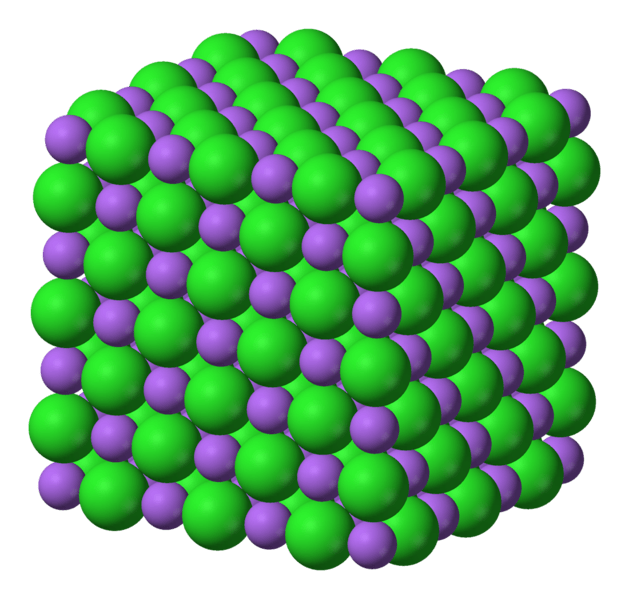
Which state of matter does this picture show?
Solid
Liquid
Gas
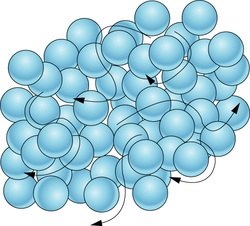
What state of matter does this picture show?
Solid
Liquid
Gas
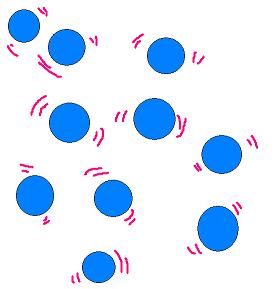
Which state of matter does this picture show?
Solid
Liquid
Gas
As temperature increases, what happens to particles?
They speed up
They slow down
As temperature decreases, what happens to particles?
They speed up
They slow down
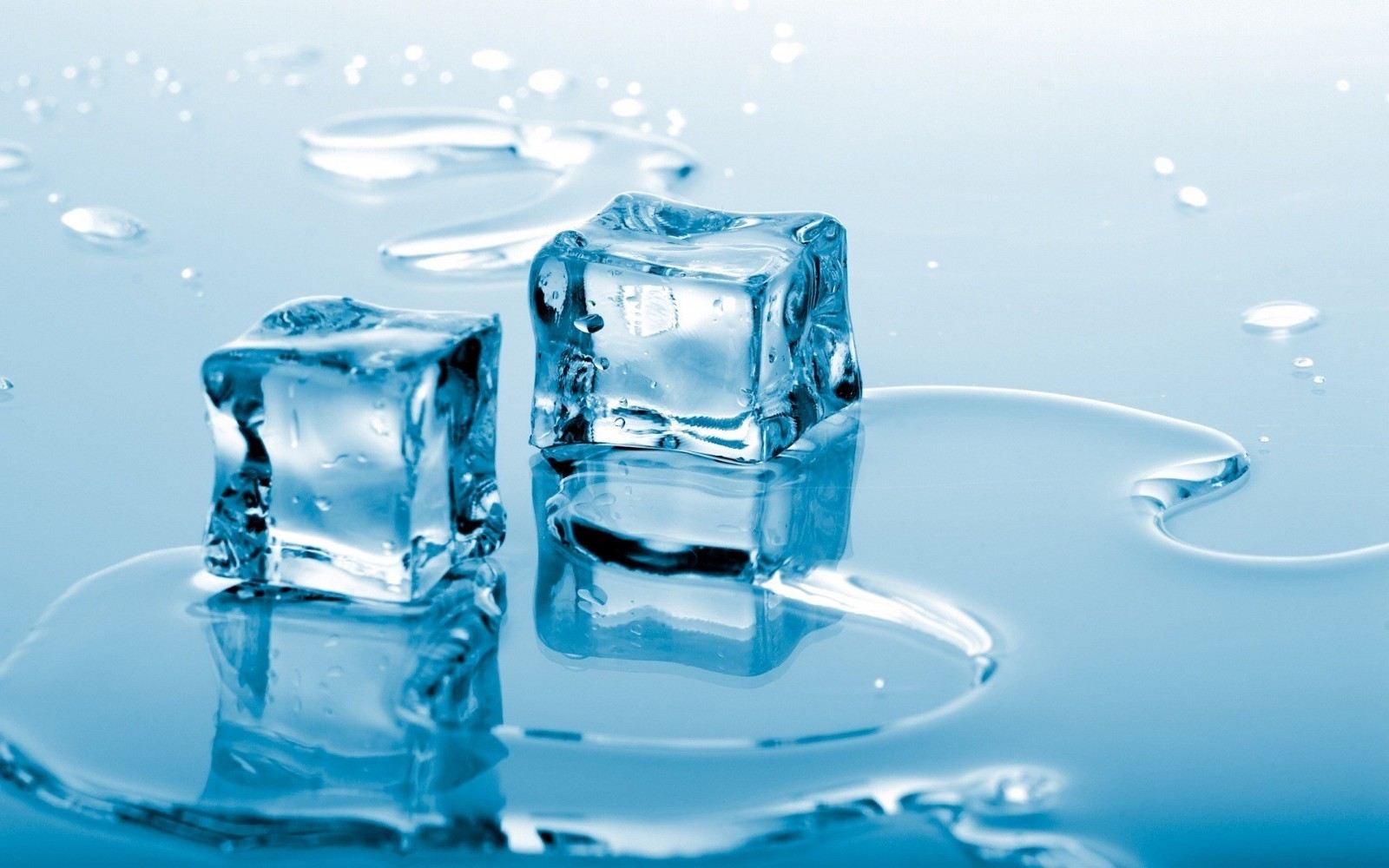
What is happening in this picture of ice melting?
Molecules are speeding up
Molecules are slowing down

What is happening in this picture of water boiling?
Molecules are speeding up
Molecules are slowing down

What is happening in this picture of this lake freezing?
Molecules are speeding up
Molecules are slowing down

Which of these is the electron?
A
B
C
What is the property that causes subatomic particles such as protons and electrons to attract or repel one another?
electric charge
electric force
electric field
static electricity
What is the force of attraction or repulsion between electrically charged objects?
electric charge
electric force
electric field
static electricity
What is the effect an electric charge has on other charges in the space around it?
electric charge
electric force
electric field
static electricity
What is the study of the behavior of electric charges, including how charge is transferred between objects?
electric charge
electric force
electric field
static electricity
What happens when a pathway through which charges can move forms suddenly?
electric charge
electric force
electric field
static discharge
What law states that the total charge in an isolated system is constant?
Law of Gravity
Law of Life
Law of Conservation of Energy
Law of Conservation of Charge

