
 Worksheets
Unit 3 Test Review
Total questions: 115
Worksheet time: 2hrs 40mins

Which type of rock is formed from the solidification of magma or lava?
igneous
sedimentary
metamorphic
bioclastic

Where is magma located?
above ground
below ground
in the stratosphere
in the thermosphere

Where is lava located?
above ground
below ground
in the core
in the mantle

Describe the texture of the following igneous rock.
smooth
coarse
vesicular
glassy

Describe the texture of the following igneous rock.
glassy
rough
vesicular
coarse
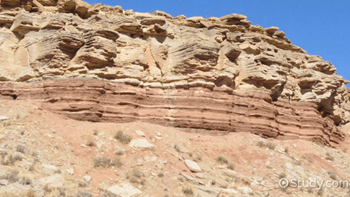
What factors can lead to the formation of a sedimentary rock?
melting and solidification
extreme heat and pressure
compaction and cementation
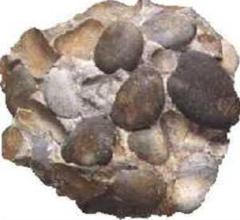
Which of the following is a land-derived sedimentary rock?
rock gypsum
limestone
gabbro
conglomerate
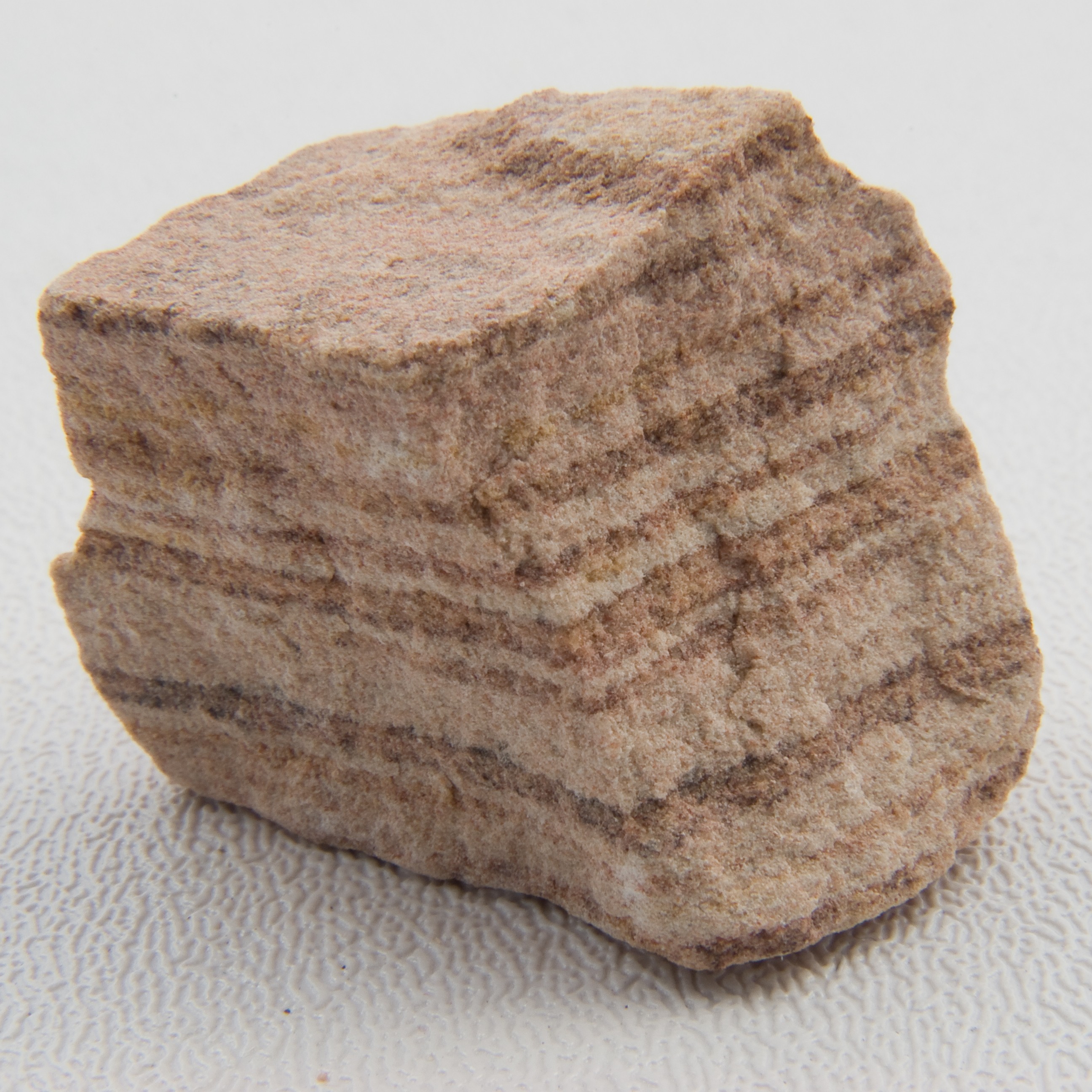
Describe the method of lithification for sandstone.
melting and solidification
compaction and cementation
evaporation and precipitation
extreme heat and pressure
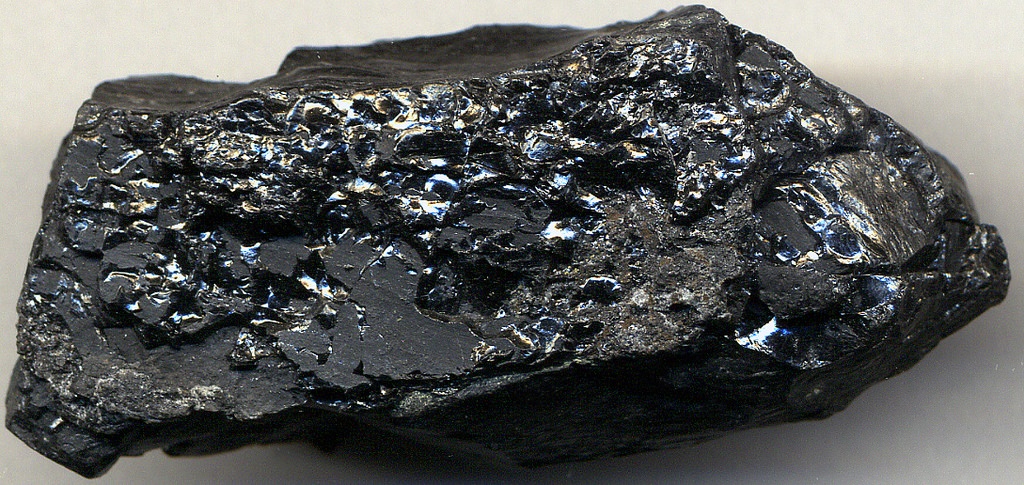
Which of the following is an organically formed sedimentary rock?
obsidian
coal
siltstone
shale
A rock deep within the Earth experiences extreme temperature and pressure. After a long period of time it becomes which rock?
Magma
Igneous
Metamorphic
Sedimentary
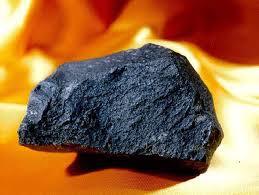
This rock was found near the mouth of a volcano. What type of rock is this?
Sedimentary
Igneous
Metamorphic


Which statement best explains why this process results in weathering?


water, ice, wind or gravity
moves fragments of rock
and soil.
water, ice, wind or gravity
deposit rock sediments
and soil in a new place.
Earth’s crust into smaller
and smaller pieces.

Which substance is a mixture of organic matter & weathered rock?
Schist
Soil
Limestone
Granite
Which layer of soil has the most humus?
A horizon
Bedrock
O Horizon
Regolith
Which layer in a soil profile would be most affected by weathering & erosion
C horizon
B horizon
R horizon
A horizon
The 2 types of weathering are _________
alpha & beta
mechanical & conventional
conduction & convection
chemical & mechanical

Humus, which is formed by the decay of organic matter, is important in the formation of __________.
soils
minerals
sediment
surface bedrock


the process of wearing down by friction - like sand blasting
exfoliation
abrasion
erosion
deposition
The name of the chemical reaction between a chemical compound and water
leaching
hydrolysis
weathering
As surface area of a rock increases, the rate of weathering ___________________________.
Decreases
Increases
Stays Constant


Soil sample that is 60% clay, 30% silt, and 10% sand has which texture?
clay
clay loam
sandy loam
silt

Soil sample that is 10% clay, 20% silt, and 70% sand has which texture?
clay
clay loam
sandy loam
silt

Which layer of soil is on bottom?
Topsoil
Subsoil
Bedrock
Which soil horizon typically contains the least organic matter?
A horizon
B horizon
C horizon
O horizon
Which soil particle is the largest?
Sand
Silt
Clay
Loam
What is a vertical cross section of the soil of the soil triangle called?

40 % Sand
50% Silt
10% Clay
Clay
Clay Loam
Silt Loam
Sandy Loam

70 % Sand
15% Silt
15% Clay
Sandy Loam
Clay
Silt Loam
Clay Loam

35 % Sand
15% Silt
50% Clay
Clay Loam
Sandy Loam
Silt Loam
Clay

20 % Sand
60% Silt
20% Clay
Sandy Loam
Silt Loam
Clay Loam
Clay

30 % Sand
40% Silt
30% Clay
Clay
Sandy Loam
Clay Loam
Silt Loam
The second broadest category of geologic time is______________?. The Cenozoic is one of them.
era
eon
epoch
period
The epoch we are currently living in is the
Holocene
Quaternary
Cambrian
Pleistocene

The principle of fossil succession states that different types
of fossil organisms
succeed one another in a definite order.
occur most often in sedimentary rock.
are older in the deepest layers of rock.
generally leave behind hard parts.

The largest expanse of time on the geologic time scale is the
eon
epoch
era
period
Fossil organisms succeed one another in a definite and determinable order, and any time period can be recognized by its fossil content.
trace fossils
principle of fossil succession
index fossil
petrified fossil
What is the largest interval of geologic time scale?
Period
Epoch
Eon
Era
Eras are subdivided into shorter time division called ______________.
Eons
Periods
Epochs
Era
Periods are subdivided into shorter time division called ______________.
Eons
Eras
Period
Epochs

Which of the following is known as the age of dinosaurs?
Precambrian Time
Paleozoic Era
Mesozoic Era
Cenozoic Era
Preserved remains or traces of organisms that lived in the past are known as
clades
species
fossils
cells

A crystalline carbon that is valued as a gem; can cut glass.
minerals
hardness
magma
diamond
Which horizon is know as the subsoil?
R
C
B
A
Which horizon contains topsoil and organisms?
R
C
B
A

What soil horizon is shown?
Horizon O
Horizon A
Horizon E
Horizon B
Horizon C

What is the breakdown of the Earth’s crust into sediment called?
erosion
deposition
weathering
whooshing

What is it called when weathered rock is carried away?
weathering
erosion
deposition
breaking
Which one of the examples below is physical weathering?
lichens growing on rock
acid rain wearing away limestone
oxidation (rusting) of a flag pole
frost wedging splitting a rock apart

Which of these terms describes the process of acid rain wearing out limestone?
deposition
chemical weathering
physical weathering
erosion
What is the process called when a glacier deposits rocks in oceans and lakes?
deposition
chemical weathering
physical weathering
erosion
Extreme temperature changes is an example of what type of weathering?
chemical
physical

This is an example of _____________________________.
physical weathering
chemical weathering
Preserved remains of plants and animals from the remote past are called?
Sedimentary rocks
Radioactive dating
Decayed organisms
Fossils
Which of the following organizes the divisions of geologic time from longest to shortest?
eons, eras, periods, epochs
epochs, periods, eras, eons
periods, eons, epochs, eras
eras, epochs, eons, periods
Which of the following is typically measured in hundreds of thousands to millions of years?
a period
an eon
an era
an epoch
Which of the following is NOT a division of geologic time?
eons
periods
generations
epochs
Rocks are different from minerals because
Rocks are organic
Rocks are made of minerals
Minerals are rocks
Rocks are not naturally occuring
Which is not a type of rock?
Igneous
Sedimentary
Vitreous
Metamorphic
Igneous rocks are formed from
magma and lava cooling off
other rocks being changed by temperature and pressure
pieces of rock and other solids getting cemented together over time
other rocks breaking
Sedimentary rocks are formed from
magma and lava cooling off
other rocks being changed by temperature and pressure
pieces of rock and other solids getting cemented together over time
other rocks breaking
What two intense things help form metamorphic rocks?
Temperature
Density
Pressure
Volume

This type of rock has holes in it because cooling lava traps pockets of gas.
Igneous
Sedimentary
Metamorphic

This rock will often have straight bands of different materials that press together over time.
Igneous
Sedimentary
Metamorphic

Intense heat and pressure cause this rock's appearance to become distorted and wavy. The new rock is classified as
Igneous
Sedimentary
Metamorphic

This type of rock can include shells or fossils!
Igneous
Sedimentary
Metamorphic
If rocks are like pizza, then the toppings could be considered
the minerals that make up rocks
the different ways of forming rocks
the chemical composition of minerals
The name of a person that studies rocks and the earth.
veterinarian
geologist
podiatrist
teacher
In which type of rock might you see a fossil?
Marble
Igneous rock
Metamorphic rock
Sedimentary rock
How are metamorphic rocks created?
Cooling and crystallizing as it moves away from the core
Formed from pieces of other rock
None of these options are correct.
Heat and pressure as they move toward the core


Conglomerate forms from pebbles that are cemented together. Which type of rock is this?
Igneous
Sedimentary
Metamorphic
Gneiss is a rock that forms from high pressure and temperatures. What type of rock is this?
Igneous
Sedimentary
Metamorphic
Obsidian forms when lava cools rapidly. What type of rock is this?
Igneous
Sedimentary
Metamorphic
Granite forms from the slow crystallization of magma below Earth's surface.
Igneous
Metamorphic
Sedimentary

