wayground logo

Free Printable Worksheets

Font size

S
M
L
XL
Worksheets

Practice Final

Total questions: 117

Worksheet time: 2hrs 57mins
Name
Class
Date
1.
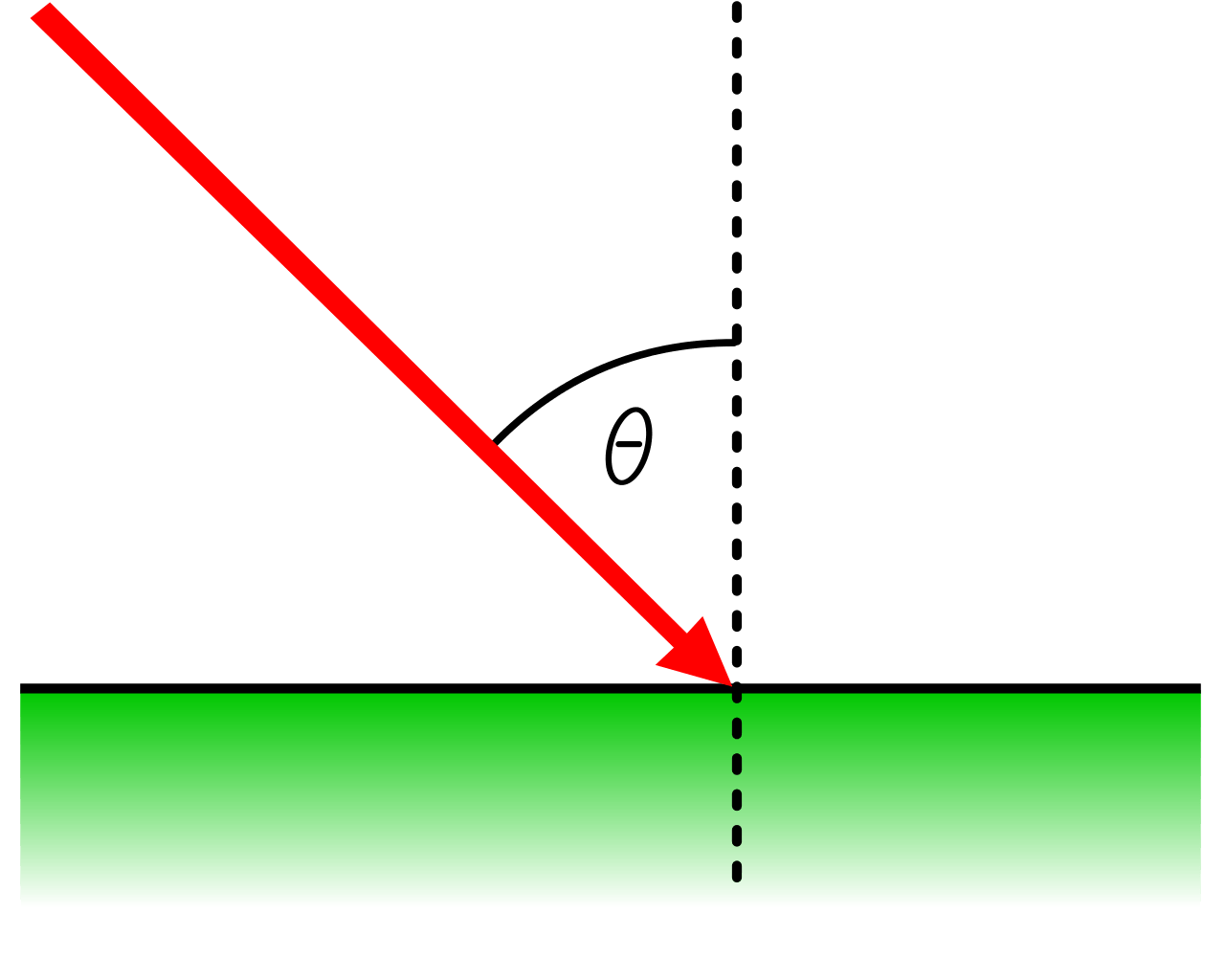
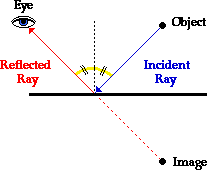
The illustration shows a light ray striking an object.
In the illustration, the light ray striking the object is-
a)
absorbed
b)
stopped
c)
reflected
d)
refracted
2.

What is the angle of reflection equal to?

a)

The angle of refraction

b)

The angle of incidence

c)

The angle of absorption

d)

The angle of light

3.
According to the Law of reflection, a light ray striking a mirror
a)
continues moving through the mirror in the same direction
b)
moves into the mirror at a slightly different angle
c)
bounces off the mirror toward the direction it came from
d)
bounces off the mirror at the same angle it hits.
4.
Glass has a _____________ index of refraction than air.
a)
Equal
b)
Greater
c)
Less
d)
Impossible to say
5.

Refraction happens because light travels _____________ in glass or water compared to air

a)

Faster

b)

The same

c)

At the speed of sound

d)

Slower

6.
How is light affected by an increase in the index of refraction?
a)
Its frequency increases
b)
Its frequency decreases
c)
Its speed increases
d)
Its speed decreases
7.
In what medium does light travel the fastest?
a)
vacuum
b)
air
c)
water
d)
glass
8.
The velocity of light in vacuum is _______ m/s
a)
3x10⁸
b)
3x10¹²
c)
3x10⁶
d)
3x10¹⁰
9.
Refraction is the bending of a wave disturbance as it passes from one _________ into another.
a)
glass
b)
medium
c)
area
d)
boundary
10.

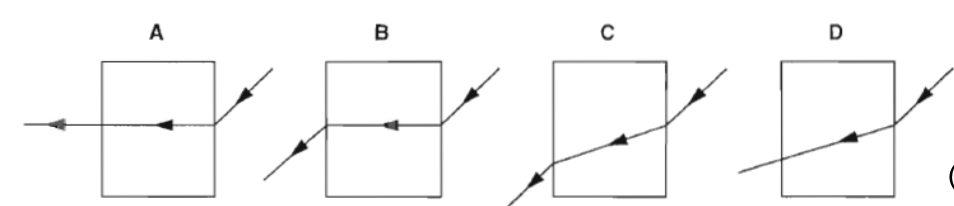
A ray of light travels from air into a glass block.


Which diagram correctly shows the path of the ray through the glass block?

a)

A

b)

B

c)

C

d)

D

11.
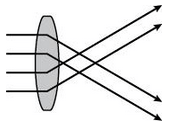
The point where the rays meet is known as....
a)
Fire
b)
the focal point
c)
refraction
d)
Plane of the lens
12.
Which describes a convex lens?
a)
triangular in shape
b)
more transparent in the middle
c)
thicker on the edges than in the middle
d)
thicker in the middle than on the edges
13.
Is a convex lens thicker or thinner in the middle?
a)
Thicker 
b)
Thinner 
14.
What does the word "diverging" mean?
a)
to spread apart
b)
to come together
c)
parallel
d)
perpendicular
15.
This image is...
a)
Inverted and smaller
b)
inverted and bigger
c)
not inverted and smaller
d)
not inverted and bigger
16.

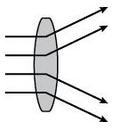
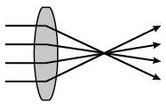
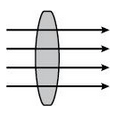
Which figure represents the path light takes through a converging lens?
a)
b)
c)
d)
17.
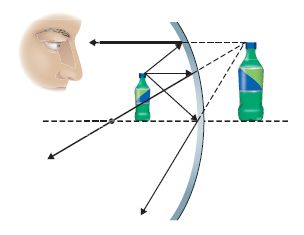
Which terms describe the reflection seen in this image?
a)
virtual, upright
b)
virtual, inverted
c)
real, upright
d)
real, inverted
18.
What is the superposition of waves?
a)
when a single wave splits into two different waves at a point
b)
when two waves combine at the same place at the same time
19.

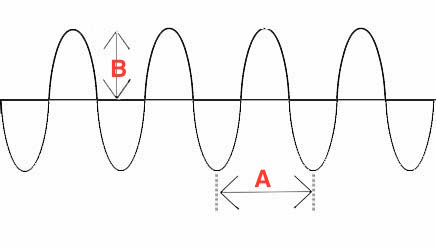
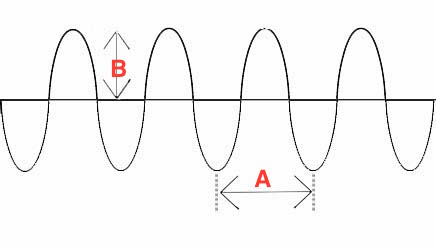
What property of this wave is represented by the letter "A"

a)

amplitude

b)

crest

c)

trough

d)

wavelength

20.

According to superposition, which choice best describes what occurs when the waves pictured pass over one another?

a)

A

b)

B

c)

C

d)

D

21.

According to superposition, which choice best describes what occurs when the waves pictured pass over one another?

a)

A

b)

B

c)

C

d)

D

22.

According to superposition, which choice best describes what occurs when the waves pictured pass over one another?

a)

A

b)

B

c)

C

d)

D

23.

The lowest part of a transverse wave are the

a)

crests

b)

troughs

c)

wave points

d)

low nodules

24.

How often a wave occurs is the wave's

a)

frequency

b)

amplitude

c)

wavelength

d)

velocity

25.

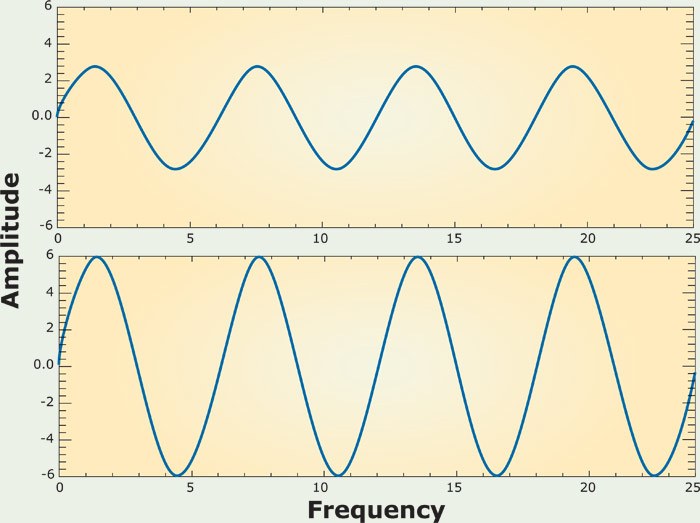
What is the amplitude of this wave?

a)

3

b)

-3

c)

6

d)

4

26.

What is the wavelength of this wave?

a)

3

b)

10

c)

4

d)

8

27.

What happens to the frequency of a wave when the amplitude is tripled?

a)

the frequency is tripled

b)

the frequency is a third of what it was

c)

amplitude does not affect frequency

28.

What would happen to the wavelength if the frequency was doubled?

a)

the wavelength would be halved

b)

the wavelength would be doubled

c)

the wavelength would stay the same

d)

frequency does not affect wavelength
29.
The following is an example of which type of interference? 
a)
constructive 
b)
destructive 
30.
Which wave behavior do noise cancelling headphones use?
a)
diffraction
b)
refraction
c)
constructive interference
d)
destructive interference
31.
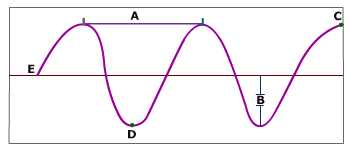
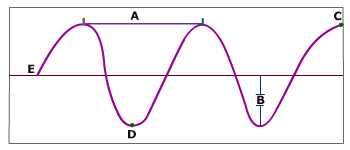
Which letter represents wavelength?
a)
A
b)
B
c)
C
d)
D
32.
Which letter represents amplitude?
a)
A
b)
B
c)
C
d)
D
33.
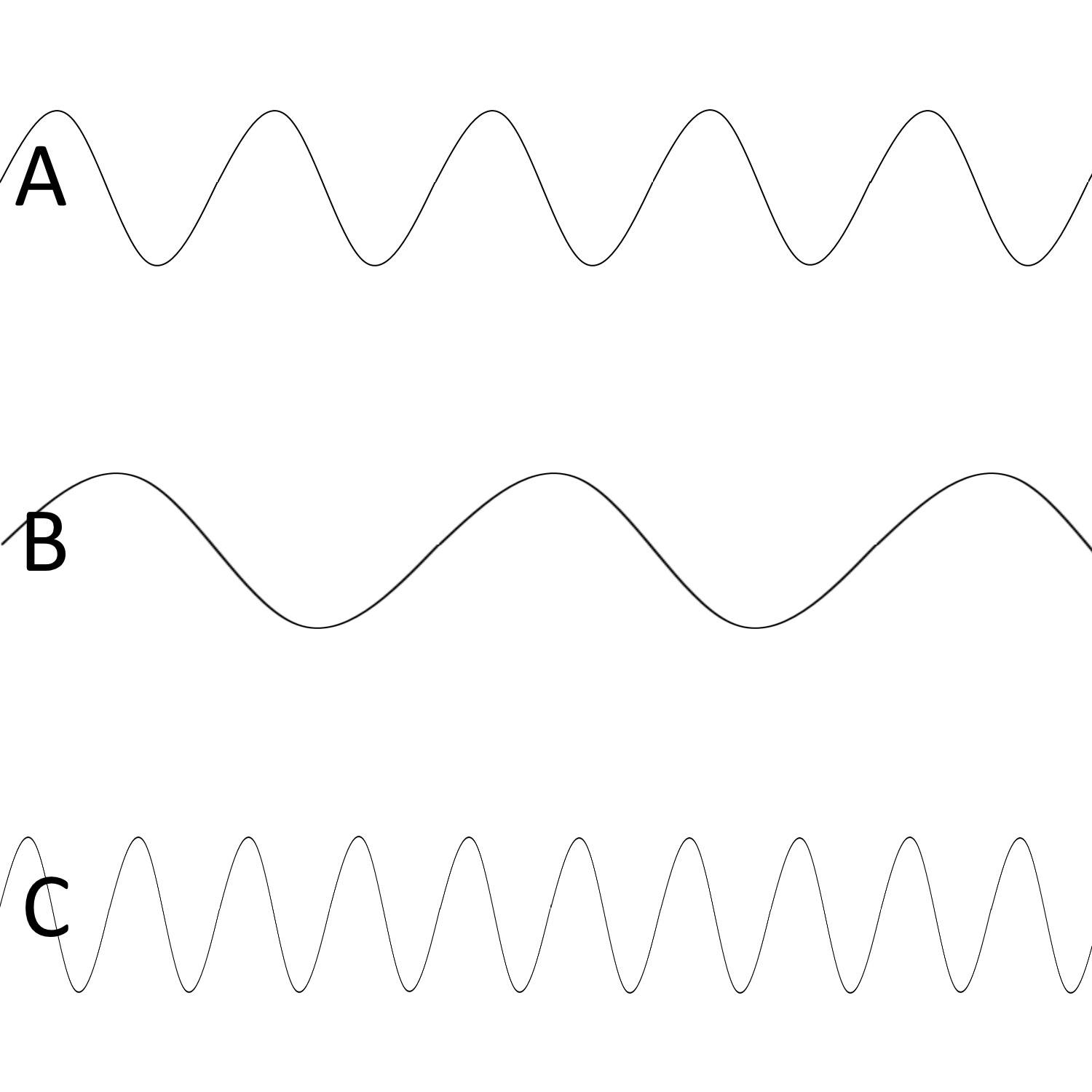
Which property of these waves differs?
a)
Frequency
b)
Wavelength
c)
Amplitude
d)
Pitch
34.

What is the material waves travel through called?
a)
Period
b)
Frequency
c)
Medium
d)
Hertz
35.
Which wave has the largest wavelength?
a)
A
b)
B
c)
C
d)
None (same wavelength)
36.
What property of this wave is represented by the letter "A"
a)
amplitude
b)
crest
c)
trough
d)
wavelength
37.
What property of the wave is represented by the letter "B"?
a)
amplitude
b)
crest
c)
trough
d)
wavelength
38.
The highest point on a wave is:
a)
the crest
b)
the trough
c)
the top
d)
the coast 
39.
The lowest point on a wave is the:
a)
Amplitude
b)
Crest
c)
Trough
d)
Wavelength
40.
The number of wavelengths that pass a point each per second is:
a)
frequency
b)
period
c)
longitudinal 
d)
transverse wave 
41.
When the frequency of a wave increases, what happens to the wavelength?
a)
The wavelength is not directly affected by the frequency of a wave.
b)
The wavelength increases.
c)
The wavelength decreases.
d)
More specific information is needed to form a conclusion about the wavelength.
42.
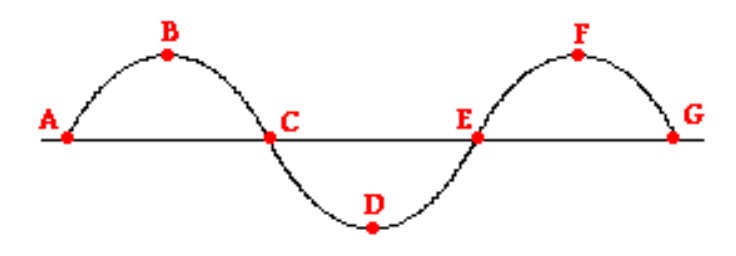
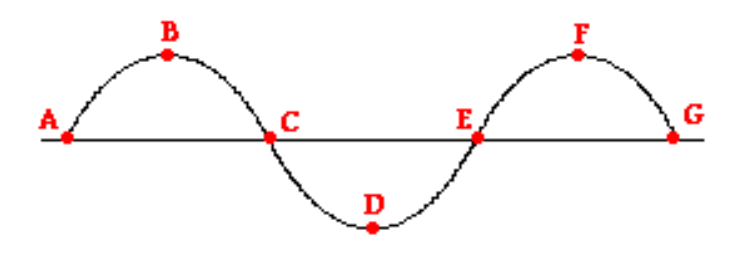
Which letter(s) represent the trough of the wave?
a)
A
b)
B & D
c)
D
d)
C & G
43.
Which letter(s) represent the crest of the wave?
a)
A
b)
B & D
c)
B & F
d)
F
44.
Which wave in the diagram has the greatest frequency?
a)
1
b)
2
c)
3
d)
4
45.
Which wave in the diagram has the greatest wavelength?
a)
1
b)
2
c)
3
d)
4
46.

The material a wave is travelling through is known as its

a)

crest

b)

trough

c)

medium

d)

energy

47.

Which of the following wave would have more energy?

a)

A wave with a higher frequency

b)

A wave with a low frequency

c)

A wave with a bigger medium

d)

A wave with a greater velocity

48.

The unit for frequency is...

a)

meters

b)

meters/second

c)

hertz

d)

newtons

49.

Which of the following is TRUE?

a)

A higher amplitude causes a longer wavelength

b)

A higher frequency causes a shorter wavelength

c)

A faster wave velocity causes a longer wavelength

d)

A lower amplitude causes a slower wave velocity

50.

Which of the following represents wavelength?

a)

A

b)

B

c)

C

d)

D

51.

The relationship between wavelength and frequency is

a)

inverse

b)

direct

c)

there is no relationship

52.

The top wave is a _____________ wave

a)

longitudinal

b)

stadium

c)

medium

d)

transverse

53.

Which is a correct measure of this wave's wavelength?

a)
b)
c)
d)
54.

Which is a correct measure of this wave's amplitude?

a)
b)
c)
d)
55.

What type of wave is this?

a)

transverse

b)

longitudinal

c)

transitudinal

d)

longsverse

56.

Francine is at the beach, watching the waves. She notices waves are reaching the shore about 4 seconds apart. She estimates the crests of the waves are about 12 meters apart.


What is the frequency of the waves?

a)

4 s

b)

4 Hz

c)

1/4 s

d)

1/4 Hz

57.

Francine is at the beach, watching the waves. She notices waves are reaching the shore about 4 seconds apart. She estimates the crests of the waves are about 12 meters apart.


What is the wavelength of the waves?

a)

12 meters

b)

24 meters

c)

4 seconds

d)

3 meters per second

58.

Francine is at the beach, watching the waves. She notices waves are reaching the shore about 4 seconds apart. She estimates the crests of the waves are about 12 meters apart.


What is the speed of the waves?

a)

12 meters

b)

24 meters

c)

4 seconds

d)

3 meters per second

59.

Water waves and light waves are both examples to ___

a)

Longitudinal Wave

b)

Transverse Wave

c)

Frequency wave

d)

Sound Wave

60.
What is current measured in?
a)
Ω (Ohms)
b)
V (Volts)
c)
A (Amps)
d)
W (Watts)
61.
What size resistor would produce a 3 Amp current flow with a 12 Volt battery
a)
1 Ohm
b)
3 Ohms
c)
4 Ohms
d)
12 Ohms
62.
What is resistance measured in?
a)
Ω (Ohms)
b)
V (Volts)
c)
A (Amps)
d)
W (Watts)
63.
What is Resistance?
a)
The flow of electrons
b)
Electric potential difference
c)
A battery
d)
The ability to reduce the flow of electrons
64.
What is the Voltage of a circuit that has a resistance of 5 Ω and a current of 2 A?
a)
25 V
b)
10 V
c)
2.5 V
d)
0.4 V
65.
The mathematical relationship among Voltage, Current, and Resistance
a)
Faraday's Law
b)
Tesla's Law
c)
Edison's Law
d)
Ohm's Law
66.
If the Voltage stays the same and Resistance is increased, Current will 
a)
Increase
b)
Decrease
c)
Stay the same
d)
X
67.
What size resistor would produce a 3 Amp current flow with a 12 Volt battery
a)
1 Ohm
b)
3 Ohms
c)
4 Ohms
d)
12 Ohms
68.

Speakers need a household voltage of 110 V to push a current of 5.5 A through them. What is the

resistance of the speakers?

a)

10Ω

b)

20Ω

c)

30Ω

d)

40Ω

69.

An IPod uses a standard 1.5 V battery. How much resistance is in the circuit if it uses a current of 0.01A?

a)

50Ω

b)

100Ω

c)

150Ω

d)

200Ω

70.

What current flows through a hair dryer plugged into a 120 Volt circuit if it has a resistance of 25 ohms?

a)

2.4A

b)

3.6A

c)

4.8A

d)

6A

71.

A 12 Volt car battery pushes charge through the headlight circuit resistance of 10 ohms. How much current

is passing through the circuit?

a)

1A

b)

1.2A

c)

1.4A

d)

1.6A

72.

A portable radio connected to a 9.0 V battery draws a current of 25 A. What is the resistance of the radio?

a)

0.036Ω

b)

0.36Ω

c)

3.6Ω

d)

36Ω

73.
A conductor is?
a)
material that current can pass through easily
b)
material that current cannot pass through easily
c)
magnet
d)
electric current
74.
What 'flows' in a wire?
a)
Protons
b)
Neutrons
c)
Atoms
d)
Electrons
75.
Current is like...
a)
The amount of electrons per second flowing through the circuit
b)
Momentum of electrons
c)
The amount of energy the electrons have
d)
Resistance to current
76.

The three subatomic particles of an atom and their charges are

a)

Protons (+), neutrons (+), electrons (+)

b)

Protons (-), neutrons (-), electrons (-)

c)

Protons (+), neutrons (no charge), electrons (-)

d)

Protons (-), neutrons (+), electrons (no charge)

77.

What type of circuit is show in the image?

a)

Series Circuit

b)

Parallel Circuit

78.

Does this diagram represent a series or parallel circuit?

a)

series circuit

b)

parallel circuit

79.

During a lab a balloon was rubbed with a wooly fabric. This is an example of which type of charging?

a)

conduction

b)

friction

c)

induction

80.
Which of the following is caused by static electricity?
a)
a stove getting hot when it is turned on
b)
a magnet being attracted to a refrigerator
c)
a lightning strike during a storm
d)
a light bulb coming on when a switch is turned on
81.

Which is the value of the constant in Coulomb's equation?

a)

k = 9·10-9

b)

k = 9.8

c)

k = 6.67·10-11

d)

k = 9 ·109

82.
What variable is a Coulomb the unit for?
a)
Charge
b)
Force
c)
Distance
d)
Mass
83.

If one of the charges doubles, what happens to the force?

a)

it doubles

b)

it gets cut in half

c)

it quadruples

d)

it is cut by 1/4

84.
The Electric Force is strongest when charges are...
a)
close together
b)
far apart
c)
the electric force is constant everywhere
85.
What is gravitational force?
a)
a force that attracts any object
b)
a force that pushes any object
c)
a force that shrinks any object
d)
a force that enlarges anyobject
86.

Which of the following formulas is the correct equation for the law of Universal gravitation?

a)

F=GM1M2d2F=\frac{GM_1M_2}{d^2}

b)

F=mgF=mg

c)

F=Gd2m1m2F=\frac{Gd^2}{m_1m_2}

d)

F= F=KQ1Q2d2F=\frac{KQ_1Q_2}{d^2}

87.

At what point is the force of gravity on an object greatest

a)

At the center of the earth (Core of the earth)

b)

At twice the distance from the surface of the earth

c)

At the surface of the earth

d)

The force of gravity ios the same irrespective of distance from the center of the earth

88.
What states that "every object in the universe attracts every other object"?
a)
Law of Universal Gravitation
b)
Newton's First Law of Motion
c)
My mother
d)
Inertia & gravity
89.

If I double the mass of one object, but don't change anything else... What happens to the gravitational force between two objects?

a)

Doubles

b)

Quadruples

c)

Cut in Half

d)

4x Smaller

90.
In a first-class lever, ...
a)
the effort is located between the fulcrum and the resistance
b)
the fulcrum is located at the end of the lever
c)
the resistance is located between the fulcrum and the effort
d)
the fulcrum is located between the effort and the resistance
91.
In a second-class lever, ...
a)
the effort is located between the fulcrum and the resistance
b)
the resistance is located between the fulcrum and the effort
c)
the fulcrum is located between the effort and the resistance
d)
the resistance is located at the end of the lever
92.
The unit for power is the ...
a)
watt
b)
joule
c)
newton
d)
dyne
93.
True or false
You do work only when you exert a force on an object and move it
a)
true
b)
false
94.
units for work are
a)
netwons
b)
joules
c)
meters
d)
seconds
95.
if you push a cart with a force of 60 N for 2 m... how much work have you done
a)
120 J
b)
30 J
c)
120 N 
d)
30 N
96.
work transfers
a)
sweat
b)
energy
c)
velocity
d)
effort
97.

Which of the following is the best example of work being done.

a)

doing homework

b)

lifting a box

c)

pushing a stationary box

d)

holding a box

98.
A 5000N block is lifted 10 m. How much work was done?
a)
50000 J
b)
5000 J
c)
500 J
d)
50 J
99.
Force is a _____ or _______
a)
simple    complex
b)
push     pull
c)
up      down
d)
in      out
100.
If 150 Joules of work is needed to move a box 10 meters, what force was used? 
a)
1500 N
b)
15 N
c)
1.5 N
d)
150 N
101.
What does temperature measure?
a)
Heat
b)
ºC
c)
Kinetic Energy
d)
Thermal Energy
102.

Heat ALWAYS moves from

a)

Low to High Temperature

b)

High to Low Temperature

c)

It doesn't move

d)

High to Low Pressure

103.

When heat is absorbed by a substance, what happens to the temperature of the substance?

a)

it increases

b)

it stays the same

c)

it decreases

d)

it depends on the substance

104.
The slower molecules move, 
a)
the higher the temperature
b)
the less temperature
c)
the same temperature
105.

In this image, what does "Q" stand for?

a)

thermal energy transfer

b)

mass of the object

c)

specific heat

d)

change in temperature

106.
What  is the formula to calculate heat energy required to raise the temperature of any substance?
a)
Q=mc∆t
b)
Q=mc
c)
Q= ½mv
d)
m=QC
107.

If you calculate Q=mcΔTQ=mc\Delta T  and the value for Q is positive- what does this mean?

a)

Thermal energy is going into the object

b)

Thermal energy is going out of the object

108.
What form of energy is represented by a rock sitting at the top of a cliff?
a)
Electrical 
b)
Chemical 
c)
Elastic 
d)
Gravitational 
109.
__________ energy is the energy due to motion.
a)
Kinetic 
b)
Potential 
c)
Neither 
d)
Both
110.
A device that converts Electrical Energy and into Thermal Energy.
a)
A Battery
b)
A Hair Dryer
c)
A Bicycle
d)
Your Stomach
111.
What does one newton exerted over a distance of one meter equal?
a)
One watt
b)
One hertz
c)
One volt 
d)
One joule 
112.
The unit of work is the ...
a)
joule
b)
force
113.
The unit of power is the...
a)
work
b)
watt
114.
When does an object have no kinetic energy?
a)
when it is at rest
b)
when it is moving very slowly
c)
when the only force that is acting on it is gravity
d)
when it has no electrical charge
115.
The equation to find kinetic energy is
a)
KE=1/2mv2
b)
KE=mgh
c)
KE=1/2kx2
d)
KE=Fd
116.

A 5 kg ball is lifted 12 m above the ground. It's gravitational potential energy is

a)

60 J

b)

600 J

c)

17 J

d)

2.4 J

117.

A 70 kg runner has a velocity of 5 m/s. Her kinetic energy is

a)

875 J

b)

175 J

c)

1750 J

d)

350 J