
 Worksheets
Chapters 1-3 Question Bank
Total questions: 115
Worksheet time: 2hrs 41mins
Correctly categorize the descriptions to the type of growth.
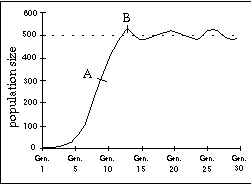
Occurs with unlimited resources
J-Curve
Occurs when resources become limited
S-Curve
Has a carrying capacity
What is a limiting factor?
Factors that always increase a population
Factors that always decrease a population
Resources that are unlimited
Factors/resources that reduce how many organisms can live in an area at the same time
If there was a wildfire in the forest that destroyed the plant life, what would happen to the herbivore population?
Herbivores would decrease due to a lack of food
Herbivores would increase due to an increase of food
Herbivores would not be affected
Herbivores would decrease due to an increase in predators
What does the carrying capacity of a population show?
How many organisms live in the ecosystem
The maximum number of organisms that an ecosystem can support for a long period of time
The minimum number of organisms that can live in an area
The types of organisms living somewhere
What happens if a population goes over its carrying capacity?
It will continue to grow
It will eventually decrease due to a lack of resources
It will die immediately
It will get unlimited resources

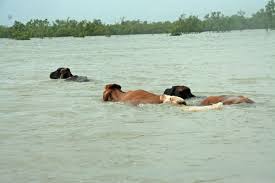
Travelers who visit a crowded African village become infected with a disease caused by parasites.
Density-Dependent
Density-Independent
The amount of space in which a seedling grows determines whether or not that tree will be able to collect enough sunlight, water, and soil nutrients that it needs to live. Although many small plants sprout in a forest many will die as they are crowded out by more mature trees which block the sun.
What is the limiting factor for the population in this study?
Access to air
Access to other trees
Access to sunlight
Access to soil
What is the primary gas responsible for the greenhouse effect?
Oxygen
Nitrogen
Carbon Dioxide
Helium
What is the primary gas responsible for the greenhouse effect?
Oxygen
Nitrogen
Carbon Dioxide
Helium
Which of the following best describes the relationship between the hydrosphere and the atmosphere?
The hydrosphere provides oxygen to the atmosphere.
The atmosphere provides water vapor to the hydrosphere.
The hydrosphere and atmosphere do not interact.
The atmosphere provides carbon dioxide to the hydrosphere.
Which of the following correctly describes a community?
a group of ecosystems all in the same area
a group of populations all in the same area
a group of individuals all in the same area
all the abiotic and biotic things in the same area
Which of the following is an example of the Hydrosphere and Geosphere interacting?
Animals breathe out air
Rain causes a mudslide
An animal decays into soil and minerals
a volcano erupts and emits CO2
Which of the following is an example of a weather pattern?
The average temperature of a region over 30 years
A hurricane forming in the Atlantic Ocean
The melting of polar ice caps
The increase in global sea levels
Explain how the increase in greenhouse gases can lead to changes in weather patterns.
Greenhouse gases trap heat, leading to more extreme weather events.
Greenhouse gases cool the Earth's surface, reducing weather variability.
Greenhouse gases have no impact on weather patterns.
Greenhouse gases increase the Earth's rotation speed, affecting weather.

A collection of organisms that make up a community as well as all of the nonliving components of the environment.
Population
Community
Habitat
Ecosystem

How do plants prevent erosion?
plant roots hold sediment in place, helping to stabilize the areas where they are planted.
plants reduce runoff erosion
both of these
none of these
What is the best definition of Biotic Factors?
All rocks, plants, and animals in the environment
All living things in the ecosystem
The factors that define the type of ecosystem present.
All nonliving things in the ecosystem
Which of the following are Abiotic Factors?
Temperature
Salinity
Water
All of the above
The natural increase of CO2 in the atmosphere leads to warmer temperatures on earth as heat is trapped in the atmosphere. This describes what phenomenon?
The greenhouse effect
Global Warming
Weather patterns
Nitrogen Cycle
True or False: Climate is the short-term changes in the atmosphere.
True
False
In which Sphere is all water found?
Biosphere
Geosphere
Hydrosphere
Atmosphere
Plants taking in water through their roots is an example of which two spheres interacting?
Biosphere and Geosphere
Geosphere and Hydrosphere
Geosphere and Atmosphere
Biosphere and Hydrosphere
True or False: The greenhouse effect is a natural process that occurs even without human involvement.
True
False
Which option is ordered correctly from simplest to most complex
Individual, population, community, ecosystem, biome, biosphere
Individual, biome, population, community, ecosystem, biosphere
Community, ecosystem, organism, biome, biosphere
population, community, Individual, ecosystem, biome, biosphere.
Which of the following is the definition of a biome?
All the organisms that interact in the same area
All the planets living and non living organisms.
A group of similar individuals living in the same area
A group of ecosystems that share similar climates and typical organisms.
Part of the Earth where life is found
Biome
Ecology
Biosphere
Ecosystem
A volcanologist examines lava expelled during the latest eruption. She is studying what
Earth sphere?
Geosphere
MAgnetosphere
Cryosphere
Hydrosphere
the part of the earth in which living organisms are known to exist
Geosphere
Atmosphere
Biosphere
Asthenosphere
the layers of gasses that surround a planet
Atmosphere
Biosphere
Geosphere
Asthenosphere
Florida's unique sandy soil and subtropical climate are ideal for growing orange trees. Which of these parts of the Earth system are interacting when Florida’s orange trees grow?
biosphere, hydrosphere, and atmosphere
geosphere, cryosphere, and atmosphere
biosphere, hydrosphere, and cryosphere
cryosphere, atmosphere, and hydrosphere

The body of air surrounding our planet is known as the (a)
Which sphere is composed of all the living things?
atmosphere
hydrosphere
biosphere
geosphere
The (a) includes the continents, the ocean floor, all the rocks on Earth's surface, and all of the sand in the deserts?

Which of the following are greenhouse gases?
Carbon dioxide
Methane
Water vapor
All answers are correct
Without the Greenhouse Effect the Earth would be
warm
cold

Which of the following does NOT happen to solar energy when it reaches Earth?
Some solar energy reflects off the atmosphere, back to space
Some solar energy passes through Earth and comes out the other side
Some solar energy is absorbed by land and water
Some solar energy is radiated from the Earth's surface and trapped by the atmosphere

The greenhouse effect is a natural process
true
false

The greenhouse effect is caused by
more heat arriving at the Earth from the sun
the Earth releasing more heat at night
gases in the air trapping heat released by the Earth
Which is the simplest level of organization within the environment?
cell
organism
population
community
Which of the following is the highest level of organization within the environment?
population
organism
ecosystem
biosphere
Reorder the following from least to greatest (from left to right).
organism
population
community
ecosystem
biome

Which of the following describes #2?
An ecosystem is the interaction between biotic and biotic factors.
A community is a group of different populations in the same area.
An organism is one living thing.
A population is a group of the same organisms.

What level of ecological organization does this entire picture represent?
Organism
Population
Community
Ecosystem

What level of ecological organization does the bird represent?
Organism
Population
Community
Ecosystem

What level of ecological organization do the organisms represent?
Species
Population
Community
Ecosystem
(a) - Organisms that have similar features and can reproduce.
(b) - A group of the same species that live in a certain area.
(c) - A combination of all the different populations that live and interact in the same environment
(d) - All the living and non-living things that interact in one specific part of the environment.
Which of the following describes #3?
An ecosystem is the interaction between biotic and biotic factors.
A community is a group of different populations in the same area.
An organism is one living thing.
A population is a group of the same organisms.
Which of the following describes #4?
An ecosystem is the interaction between biotic and biotic factors.
A community is a group of different populations in the same area.
An organism is one living thing.
A population is a group of the same organisms.
All the alligators in a swamp are an example of a(n) _______________.
organism
community
population
group
A group of only one type of organism is a
Population
Community
Ecosystem
Niche

Is this an example of a population or community?
Population
Community

Is this an example of a population or community?
Population
Community
The living and nonliving things in an environment and all the interactions
population
food chain
ecosystem
community


What do the arrows in the food chain indicate about the flow of energy in an ecosystem?
Energy is continuously recycled by the organisms in an ecosystem.
Energy flows in one direction in an ecosystem, from producers to consumers.
More of the available energy in an ecosystem is given to large animals than to small animals.
Organisms at the end of the food chain receive more energy than those at the beginning.

How would the removal of earthworms from the food chain affect the other organisms?
The number of bass will increase.
The number of crayfish will decrease.
The crayfish will get their energy directly from the sun.
The number of bass and ospreys (bird) will increase.

The diagram shows part of an aquatic food web for a stable lake ecosystem in Connecticut. What is the source of energy for the algae?
waves
sunlight
bacteria
rotifers, water fleas and tadpoles

Suppose that a new predator of the rabbit migrated to this ecosystem. What is the most likely initial effect on the other organisms?
More competition among the mice for food
More competition among the hawks for food
Less competition among snakes for food
Less grass available for food

For the food chain shown, which of the following changes would have the most severe consequences?
a drastic decrease in rainfall, causing a drought
the poaching of predatory hawks by game hunters
the introduction of a second predator that eats field mice
a parasitic infestation that reduces the cricket population

The diagram provided shows a marine food chain. In this food chain, the zooplankton are
primary producers.
primary consumers.
secondary consumers.
tertiary consumers.
A chemical pesticide was applied to an area of this ecosystem by a landowner to control the mouse population. There was a decrease in the mouse population due to the presence of this pesticide. Which one of the following would most likely occur due to this change in the ecosystem?
The amount of grass would decrease.
The snake population would increase.
The rabbit food supply would increase.
The snake food supply would increase.
What would happen if their were no producers?
Every population would grow larger
Everything would die out
The animals would make their own food
What would happen if the primary consumers died out?
the producers would grow and the secondary and tertiary consumers would die
producers would die out
consumers would grow

How much energy is passed on to the next trophic level in an energy pyramid?
5%
1%
100%
10%

If the grass in this example had 10,000 Kcal of energy, about how much of that energy would be stored in trophic level 3?
100 Kcal
100,000 Kcal
10 Kcal
1,000 Kcal

What does the arrow actually represent in a food web or food chain?
Who is being eaten
Who is eating
The flow of energy
the direction of food
In an energy pyramid, energy _________ as you move up the pyramid.
increases
decreases
stays the same
changes up and down

In this energy pyramid, which organism has the least amount of energy available?
Producers
Carnivores
Herbivores
Top Predator

The 10% rule states that 10% of energy moves from each trophic level to the next.
In the pyramid, if the producers level contains 1234 kilocalories, how many kilocalories are transferred to the primary consumer level?
123.4
1.234
1234
1234
The 10% rule states that 10% of energy moves from each trophic level to the next.
In the pyramid, if the producers level contains 1234 kilocalories, how many kilocalories are transferred to the primary consumer level?
123.4
1.234
1234
1234
The 10% rule states that 10% of energy moves from each trophic level to the next.
In the pyramid, if the producers level contains 1234 kilocalories, how many kilocalories are transferred to the bird (apex predator)?
123.4
1.234
1234
1234

Which of the following statements about this food web is FALSE?
The ultimate source of energy for the whole food web is the radiant energy of the sun.
Arrows in a food web show the direction that energy moves from one trophic level to another.
Energy is used up by each trophic level, and lost as heat energy.
100% of the energy made by the vegetation is passed to the geese and mute swans.
A pyramid shape is used to show the amount of available energy at each trophic level because ...
energy amounts are the same at each trophic level.
energy decreases as you go up the food chain, just like the pyramid shape gets smaller as you go up.
energy increases up the food chain just like the pyramid shape gets smaller as you go up.
What is the ultimate source of energy for an ecosystem?
Producers
Decomposers
Tertiary Consumers (APEX predators)
Sun
What is the average amount of energy transferred from one trophic level to the next?
90%
10%
20%
50%
If there is 1000 Kcal available at the producers level, how much energy is available in the primary consumers level?
100 Kcal
10 Kcal
1 Kcal
1000 Kcal

What are examples of carbon sinks?
ocean
forest
artificially made (man-made)
clouds

Which cycle are fossil fuels (oil, coal, natural gas) part of?
carbon
water
nitrogen
phosphorus
Which cycle DOESN'T have an atmosphere component (part)?
carbon
nitrogen
phosphorus
water

Which one of these does not add CO2 to the atmosphere?
cooking with gas
planting trees
burning wood
riding in a bus


Identify the cycle pictured.
The Water cycle
The Carbon cycle
The Nitrogen cycle
The Phosphorus cycle.

Identify the cycle pictured.
The Water cycle
The Carbon cycle
The Nitrogen cycle
The Phosphorus cycle.

