
 Worksheets
Y10 Combined Science T1 Revision Quiz - Physics
Total questions: 122
Worksheet time: 1hrs 1mins

The diagram shows an enlarged drawing of the end of a metre rule. It is being used to measure the length of a small feather.
What is the length of the feather?
19 mm
29 mm
19 cm
29 cm
68 cm = ___________ mm
0.68
6.8
68
680
240 cm = ___________ m
2400
24
2.4
0.24

The diagram shows part of a ruler. The ruler is used to find the length of a nail.
What is the length of the nail?
2.2 cm
2.7 cm
3.2 cm
3.7 cm

A student measures the length of a rod XY by holding it next to a metre rule.
The student writes down the length as 94.8cm.
Which statement is correct?
The value is correct.
The value is incorrect because it should be 95.2cm.
The value is incorrect because it should be in millimetres.
The value is incorrect because the student should subtract the reading for end Y from the reading for end X.

A ruler is used to measure the length of an object. What is the length of the object?
3.0cm
4.0cm
5.0cm
6.5cm

The diagram shows four identical spheres placed between two wooden blocks on a ruler.
What is the diameter of one sphere?
1.0 cm
2.0 cm
3.0 cm
4.0 cm

A stopwatch is used to time a runner in a race. The diagrams show the stopwatch at the start and at the end of a lap of the race.
How long did the runner take to finish the lap of the race?
50.00 seconds
50.10 seconds
90.00 seconds
100.10 seconds

The eye of the observer should always be perpendicular to the plane of scale. What type of error is it if the position of the eye is not directly above the scale of measurement?
Calibration error
Zero error
Parallax error
Human error

Given that a pendulum makes 10 oscillations in 20s. Find the period of the pendulum.
0.5s
1.0s
1.5s
2.0s

A student wishes to find the volume of a small, irregularly-shaped stone.
A ruler and a measuring cylinder containing some water are available.
Which apparatus is needed?
neither the ruler nor the measuring cylinder
the measuring cylinder only
the ruler and the measuring cylinder
the ruler only
A measuring cylinder is used to measure the volume of a quantity of water.
Which measuring technique would not improve the accuracy of the measurement?
making sure that the measuring cylinder is vertical
making sure that the water surface is at eye level
reading the top of the water meniscus
using the smallest measuring cylinder available that will contain all the water

The diagram shows a measuring cylinder used to measure the volume of a small stone.
What is the volume of the stone?
8 cm3
9 cm3
14 cm3
26 cm3
Which of the following is not a correct equation defining the relationship between the speed of an object, the distance it travels and the time taken?
time taken = speed x distance
distance = speed x time taken
speed = timetakendistance
time taken = speeddistance
The time taken for a pendulum to complete 40 swings is measured
as 20.40 seconds. Which of these is the period of the pendulum?
816 s
0.5 s
0.51 s
0.50 s

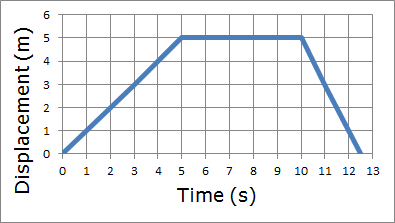
The diagram shows a distance-time graph for a moving object.
What is the average speed for the object during the complete journey?
0.57 s/m
1.75 s
0.57 m/s
1.75 m/s

The diagram shows a speed-time graph for a bus. Calculate the distance travelled by the bus in the first twenty five seconds of the journey.
100 m
225 m
115 m
150 m

The diagram shows a velocity-time graph for a car braking.
Calculate the acceleration of the car while it is braking.
2.57 m/s2
31.5 m/s2
1.8 m/s2
6.0 m/s2
A speedboat travels a distance of 3.0 km in ten minutes.
What is the average speed of the speedboat?
300 m/s
1 800 000 m/s
5.0 m/s
0.3 m/s

The diagram shows a distance-time graph for a skydiver.
At which point was the acceleration greatest?
A
B
C
D




A roller coaster accelerates from an initial speed of 6.0 m/s to a final speed of 70 m/s over 4 seconds. What's the acceleration?
24 m/s2
18 m/s2
16 m/s2
16 m/s
A negative acceleration means that your object is _____.
doing nothing
moving in circles
speeding up
slowing down
Mass is the measure of how much ______ is in an object.
Density
Weight
Matter
Gravity
Force
Weight is the measure of the force of ______ on an object.
Density
Mass
Matter
Gravity
Velocity
What unit of measurement is used for mass in physics?
Liters
Kilograms
Meters
Kelvins
Newtons
6) Which measurement would be different if you were on the Moon versus on Earth?
Mass
Weight
What is the weight of a 1kg mass object on planet Earth?
1 pound
1 Newton
5 Newtons
9.8 Newtons
9.8 pounds

.14 g/cm3

Nathan has an eraser. It has a mass of 4 g, and a volume of 2 cm3. What is its density?
.5 g/cm3

Claire has a liquid. It has a mass of 9g and a volume of 3mL. What is its density?
3 g/mL
.33 g/mL
27 g/mL
39 g/mL

What is the formula for Mass?
Mass/Volume
Density x Volume
Mass/Density
Density/Mass
Volume/Mass

What is the formula for Volume?
Mass/Volume
Density x Volume
Mass/Density
Volume/Mass
Density/Mass

What is the volume of 55 grams of lead if it has a density of 11 g/cm3?
605 cm3
5 cm3
66 cm3
.2 cm3

What is the volume of a 40 gram liquid if it has a density of 4 g/mL?
.1 mL
10 mL
160 mL
44 mL

What is the mass of a 100mL liquid if it has a density of 3 g/mL?
300 g
33.3 g
.03 g
103 mL

What is the mass of a 25 cm3 liquid if it has a density of 5 g/cm3?
125 g
5 g
30 g
.2 mL
Density is...
the amount of mass in an object
the amount of space an object takes up
the amount of mass in a given volume or space
the weight of an object
You have a ball with a weight of 76N. What is the mass of the ball?
76N
76kg
7.6kg
7.6N
What would be the weight of a 10 kg object on earth?
1 N
10 N
0.1 N
100 N
What are the correct units for force and for weight?
kilogram , kilogram
Newton , Newton
kilogram , Newton
Newton , kilogram
A child has a mass of 30 kg on Earth. If the gravitational field strength on Moon is one sixth that of the Earth what is the mass of the child on Moon?
30 Kg
180 Kg
5 Kg
0 Kg
If the weight of a body on the Earth's surface is 600 N, what would be its weight on the Moon? (the gravitational field strength on Earth is 6 times the gravitational field strength on the Moon)
3600 N
100 N
600 N
6000 N
The gravitational field strength on Jupiter is about 2 times the gravitational field strength on Earth. If an object has a mass of 50 kg and a weight of 500 N on Earth, what would be the object's approximate mass and weight on Jupiter?
50 kg and 500 N
100 kg and 500 N
50 kg and 1000 N
100 kg and 1000 N

A parachutist inside an aeroplane has a mass of 70 kg.
What is his mass after he has jumped from the aeroplane?
0 kg
between 0 kg and 70 kg
70 kg
greater than 70 kg
What is the formula of weight?
w=m⋅g
w=m+g
w=m÷g

A student wishes to determine the density of an irregularly-shaped stone.
First he finds the mass of the stone. Next he lowers the stone into a measuring cylinder containing water.
The diagrams show the measuring cylinder before and after the stone is lowered into it.
How should the student calculate the density of the stone?
mass of stone × reading 2
mass of stone × (reading 2 – reading 1)
mass of stone ÷ reading 2
mass of stone ÷ (reading 2 – reading 1)
The diagrams show the dimensions and masses of four regular solid objects. The objects are made from different metals.
Which metal has the greatest density?


Diagram 1 shows a measuring cylinder containing water.
Diagram 2 shows the same measuring cylinder and water after 10 identical solid glass spheres have been added.
The mass of one of the spheres is 10 g.
What is the density of the glass from which the spheres are made?
0.25 g / cm3
0.40 g / cm3
2.5 g / cm3
4.0 g / cm3

A student wishes to determine the density of the solid block shown.
Which quantities must be known?
the area of the shaded face and the volume of the block
the area of the shaded face and the weight of the block
the mass of the block and the height of the block
the mass of the block and the volume of the block

Two blocks of metal X and Y hang from spring balances, as shown in the diagrams.
What does the diagram show about X and Y?
They have the same mass and the same volume but different weights.
They have the same mass and the same weight but different volumes.
They have the same mass, the same volume and the same weight.
They have the same weight and the same volume but different masses
which of the following is not an effect of force:
to move a body from rest
to stop a moving body
to change the colour of an object
to change the shape of a body


In which of these situations is no resultant force needed?
A car changing direction
a car slowing down
a car speeding up
a car moving in a straight line at a steady speed
A boat is travelling at a steady speed in a straight line across the surface of a lake. Which statement about the boat is correct?
The resultant force on the boat is the direction of motion
The resultant force on the boat is in the opposite direction to its motion
The resultant force on the boat is vertically downwards
The resultant force on the boat is zero
Which list contains only properties of an object that can be changed by a force?
Direction of motion, mass shape
direction of motion, mass, speed
direction of motion, shape, speed
mass, shape, speed
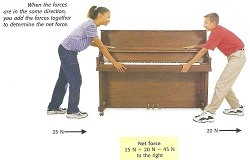
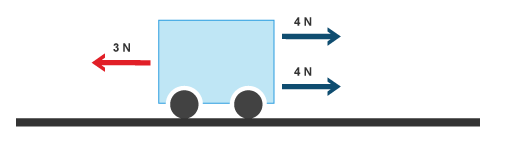
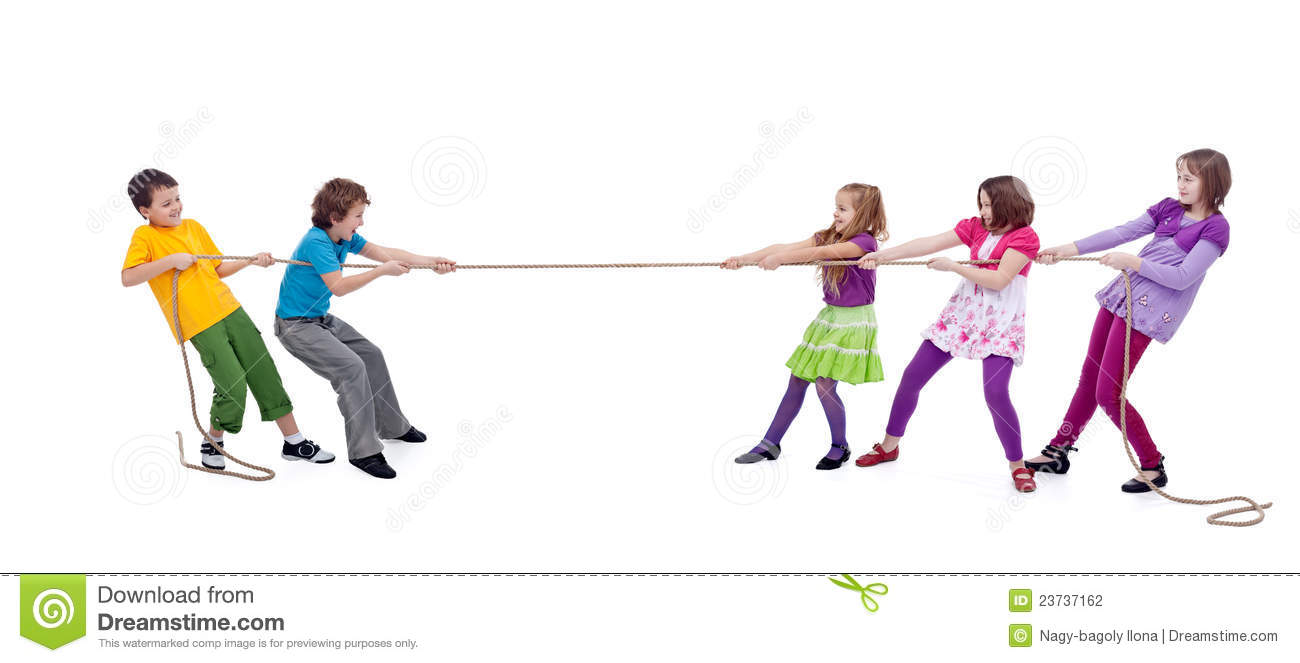

A spring has a spring constant of 450 N/m. How far is the spring compressed if 150 N of force are used?
2.2 m
3m
5.0 m
0.3 m
Which of the following springs is the stiffest?
A spring that requires a force of 2000 N to compress it by 5 m.
A spring that requires a force of 4000 N to stretch it by 10.0 m.
A spring that requires a force of 2400 N to compress it by 4m.
A spring that requires a force of 4800 N to stretch it by 12 m.
_________ is the unit of Spring Constant
N
N/m
m
Who discovered Hooke's law?
Robert Hooke
Charlie
Newton
If the original length of a spring is 20m and its extended length is 30m. What is the extension?
20m
12m
75m
45m
10m
What is the spring constant of a bungee rope in N/m if a person weighs 100 N if we want it to extend (stretch) 20m?
5N/m
5N/cm
5N
10N
10N/m
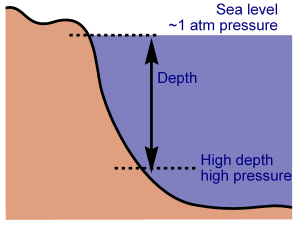
When you increase your depth under water, the water pressure on your body
increases
decreases
stays the same
How do you Calculate Pressure
Force(N)/Area(m2)
Force(kg)/Area(mi2)
Area(m2)/Force(N)

Diagram shows the design of a dam. Why does the thickness of the dam increase with its depth?
The design of this structure is stronger.
Water pressure increases with depth.
The cost of construction is lower.
Water pressure acts uniformly in all directions.
According to Hooke's law; Force is equal to -
Spring Constant × Extension
Spring Constant ÷ Extension
Spring Constant + Extension


1 Pa = 1N/m2

Pressure in gases is a measure of:
the number of collisions per second of the particles with the side of the container.
the force of the collisions of the particles with the side of the container.
the amount of space taken up by the particles in the container.
None of the above

The pressure inside the balloon will:
Decrease
Increase
Remain the same
Not enough information to formulate an answer

We can increase the pressure of a gas by:
Adding more gas.
Reduce the volume of the container.
Increase the temperature of the gas.
None of the above answers.

The reason gases can be compressed is because:
The particles are very close together.
The particles are merely vibrating.
The particles are unable to move.
The particles are very far apart.
How much force is needed to pull a spring with a spring constant of 20 N/m a distance of 25 cm?
10
20
15
5

