wayground logo

Free Printable Worksheets

Font size

S
M
L
XL
Worksheets

Pretest - Chemistry of Life

Total questions: 118

Worksheet time: 1hrs 13mins

Name
Class
Date
1.

When is an ionic bond formed?

a)

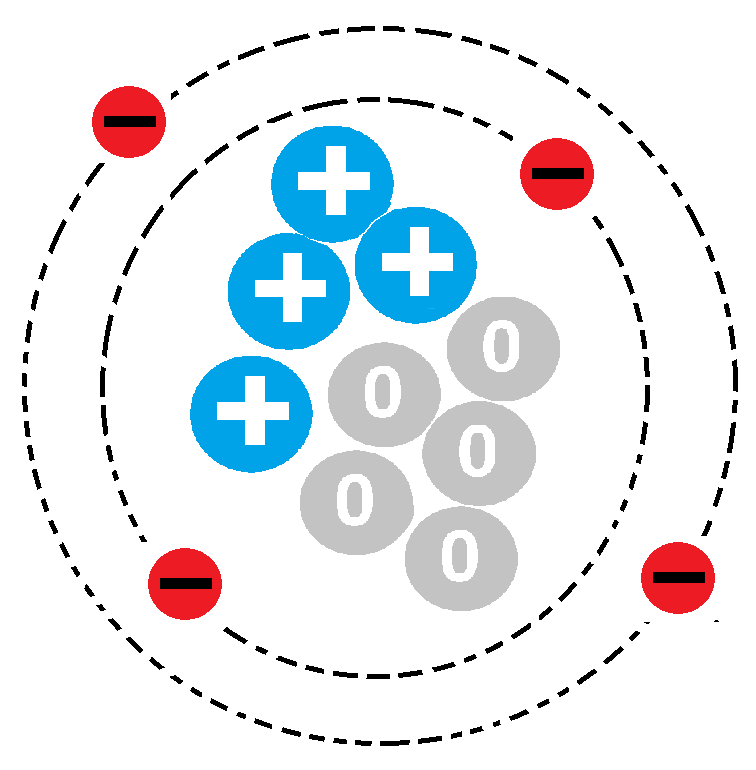
when electrons are shared

b)

when protons are shared

c)

when oppositely charged atoms gain or lose electrons

d)

when oppositely charged atoms gain or lose a proton

2.

What makes carbon so important to life?

a)

bonding properties

b)

its place on the Periodic Table

c)

it is a reactant in all chemical reactions

d)

it is an enzyme

3.

What gives water so many important properties for life?

a)

adhesion and cohesion

b)

the amount of carbon in each molecule

c)

energy released exothermically

d)

hydrogen bonds give it polarity

4.

What makes a chemical reaction?

a)

matter is conserved

b)

breaking and forming of chemical bonds

c)

when products form reactants

d)

when you do a lab

5.

What are the smallest basic units of matter?

a)

molecules

b)

atoms

c)

elements

d)

7th graders

6.

Exothermic reactions

a)

absorb more energy than they release

b)

are cold

c)

do not use bond energy for activation

d)

release more energy than they absorb

7.

Enzymes act on

a)

products

b)

proteins

c)

amino acids

d)

substrates

8.

Atoms that share electrons are

a)

in a covalent bond

b)

in an ionic bond

c)

are usually salts

d)

always metals

9.

The building blocks of most living things contain the element

a)

carbon

b)

nitrogen

c)

calcium

d)

sodium

10.

What are the products in this chemical reaction?

a)

calcium and oxygen

b)

Ca and CaO

c)

2Ca and O2

d)

2CaO

11.

What is the primary function of DNA?

a)

to make nucleic acids

b)

long term energy storage

c)

store genetic information

d)

to function as RNA

12.

What are the 4 types of carbon-based molecules in organisms?

a)

carbohydrates, lipids, fatty acids, and monomers

b)

polymers, monomers, acids, bases

c)

adhesion, cohesion, evaporative cooling, and high specific heat

d)

nucleic acids, proteins, lipids, and carbohydrates

13.

What are the reactants in this chemical equation?

a)

CH4 and 2O2

b)

carbon and oxygen

c)

CO2 and 2 H2O

d)

water and methane

14.

Atoms that share electrons are

a)

in a covalent bond

b)

in an ionic bond

c)

are usually salts

d)

always metals

15.
The smallest part of an element is
a)
proton
b)
atom
c)
compound
d)
mixture
16.
all matter is made of what 
a)
energy 
b)
atoms 
c)
electrons 
d)
compounds 
17.
This picture represents which of the following?
a)
element
b)
compound
c)
mixture
18.
What chemical symbol stands for Carbon?
a)
C
b)
C20
c)
Ca
d)
Cb
19.
What is the symbol for OXYGEN?
a)
O
b)
Ox
c)
Oy
d)
Og
20.
what does the 6 in this picture represent?
a)
Atomic mass
b)
atomic number
c)
chemical symbol
d)
element name
21.
What is the symbol for Lithium?
a)
La
b)
Li
c)
Lr
d)
Lh
22.
What is He?
a)
Holmium
b)
Helium
c)
Barium
d)
Cesium
23.
What is the symbol for CARBON?
a)
C
b)
Ca
c)
Cl
d)
Cu
24.
What is Be?
a)
Bromine
b)
Beryllium
c)
Berkelium
d)
Barium
25.
What is N?
a)
Rubidium
b)
Gold
c)
Potassium
d)
Nitrogen
26.

Atoms that gain an electron have an electric charge of ---

a)

-1.

b)

-2.

c)

+1.

d)

+2.

27.

If an atom has 7 protons and 7 electrons, its electric charge is ---

a)

-7

b)

-14

c)

0

d)

+7

28.

Atoms form compounds to become more ---

a)

reactive

b)

stable

c)

explosive

d)

toxic

29.

An atom with a different number of electrons than it should have (more or less) is called an ---

a)

isotope

b)

valence electron

c)

ion

d)

octet

30.

A _______ is the force that holds atoms together in a compound.

a)

Chemical Formula

b)

Chemical Reaction

c)

Chemical Bond

d)

Synthesis Reaction

31.

An electron has a ___ charge.

a)

no charge

b)

positive

c)

negative

d)

it depends

32.

A proton has a ___ charge.

a)

positive

b)

negative

c)

no charge

d)

it depends

33.

The basic building blocks of matter

a)

atoms

b)

elements

c)

molecules

d)

organisms

34.

A substance that cannot be decomposed into simpler substances by chemical means - made up of the same atoms

a)

atom

b)

element

c)

molecule

d)

organism

35.

An atom that has a different number of neutrons than the standard for that element.

a)

element

b)

isotope

c)

molecule

d)

organism

36.

A group of two or more atoms that are bonded together

a)

elements

b)

isotopes

c)

molecules

d)

essential elements of life

37.

A living thing

a)

element

b)

molecule

c)

isotope

d)

organism

38.

This element is an important part of DNA molecules.

a)

phosphorus

b)

hydrogen

c)

sulfur

d)

iron

39.

This element is abundant in plants and helps the soil break down microbes to make nutrients.

a)

hydrogen

b)

phosphorus

c)

calcium

d)

sulfur

40.

Which of the following elements is the main element in the hard part of bones?

a)

nitrogen

b)

hydrogen

c)

oxygen

d)

calcium

41.

Which element is essential for metabolic processes in the body like the synthesis of proteins used during electron transport for aerobic cell respiration?

a)

iron

b)

calcium

c)

sulfur

d)

phosphorus

42.

Which of the following is NOT a characteristic of living things?

a)

ability to change temperature

b)

ability to move

c)

ability to grow

d)

ability to respond to changes in the environment

43.

Which of the following are examples of nonliving things? Mark all that apply.

a)

sun

b)

soil

c)

water

d)

cells

44.
Number of protons that an atom has
a)
Atomic symbol
b)
Atomic Number
c)
Atomic Mass
d)
Mass Number
45.
What particle is found in the nucleus and has no charge?
a)
electron
b)
neutron
c)
proton
d)
atom
46.
The 4 macromolecules are
a)
vitamins, lipids, water, micronutrients
b)
micronutrients, macronutrients, water, vitamins
c)
Lipids, Waxes, Vitamin A, Water
d)
Carbohydrates, Lipids, Proteins, Nucleic Acids
47.
Which of the following shows the correct way to balance the chemical equation?
Fe + O2 -> Fe2O3
a)
4Fe + 3O2 -> 2Fe2O3
b)
2 Fe + 3O2 -> Fe2O6
c)
4 Fe + O6 -> 2Fe2O3
d)
None of the options are correctly balanced.
48.

The flower is 8 cm tall.

a)

qualitative data

b)

quantitative data

49.

The center of the flower is yellow and fuzzy.

a)

qualitative data

b)

quantitative data

50.

Which subatomic particle has a negative charge?

a)

proton

b)

neutron

c)

electron

d)

cybertron

51.
The number of protons in an element can be found by:
a)
looking up the group the element is in.
b)
subtracting the atomic mass from atomic number
c)
looking up the atomic mass
d)
looking up the atomic number
52.
What is the mass number?
a)
the number of protons
b)
the number of protons and neutrons
c)
the number of neutrons
d)
the number of protons and electrons
53.
What is the atomic number of this atom?
a)
4
b)
5
c)
9
d)
none of the above
54.

The most basic building block of all matter is known by which of the following terms?

a)

Compound

b)

Atom

c)

Chemical

d)

Element

55.
Where does fusion occur naturally?
a)
Underwater
b)
All around us
c)
In the radioactive waste
d)
On the sun
56.
The splitting of a nucleus into smaller nuclei is
a)
fusion
b)
fission
c)
decay
d)
gamma radiation
57.

What type of bond is found BETWEEN water molecules?

a)

hydrogen bonds

b)

ionic bonds

c)

nonpolar covalent bonds

d)

polar covalent bonds

58.
Large bodies of water help to keep nearby climates from being too hot or too cold  because they...
a)
absorb heat in the spring and slowly release that heat in the fall
b)
absorb heat in the fall and slowly release that heat in the spring
c)
absorb heat in the summer and slowly release that heat in the winter
d)
absorb heat in the winter and slowly release that heat in the summer
59.
Which statement explains why water molecules stick together?
a)
both sides are negative
b)
one side has a positive charge and the other side has a negative charge
c)
one side has a negative charge adn the other side has a neutral charge
d)
both sides are positive
60.
The tightness across the surface of water that enables paper clips to float is ____________.
a)
adhesion
b)
capillary action
c)
surface tension
d)
polarity
61.
The fact that ice floats on liquid water is due to the fact that water's solid is ___________ than it's liquid form
a)
less polar
b)
more polar
c)
less dense
d)
more dense
62.
Water beads up on the surface of a penny because of what property?
a)
Adhesion
b)
High Surface Tension
c)
Universal Solvent
d)
Changes in Density
63.
When water molecules stick easily to other water molecules, this is called what?
a)
cohesion
b)
adhesion
c)
solution
d)
polar molecule
64.
What word describes when water is attracted to other substances?
a)
cohesion
b)
adhesion
c)
capillary action
d)
surface tension
65.
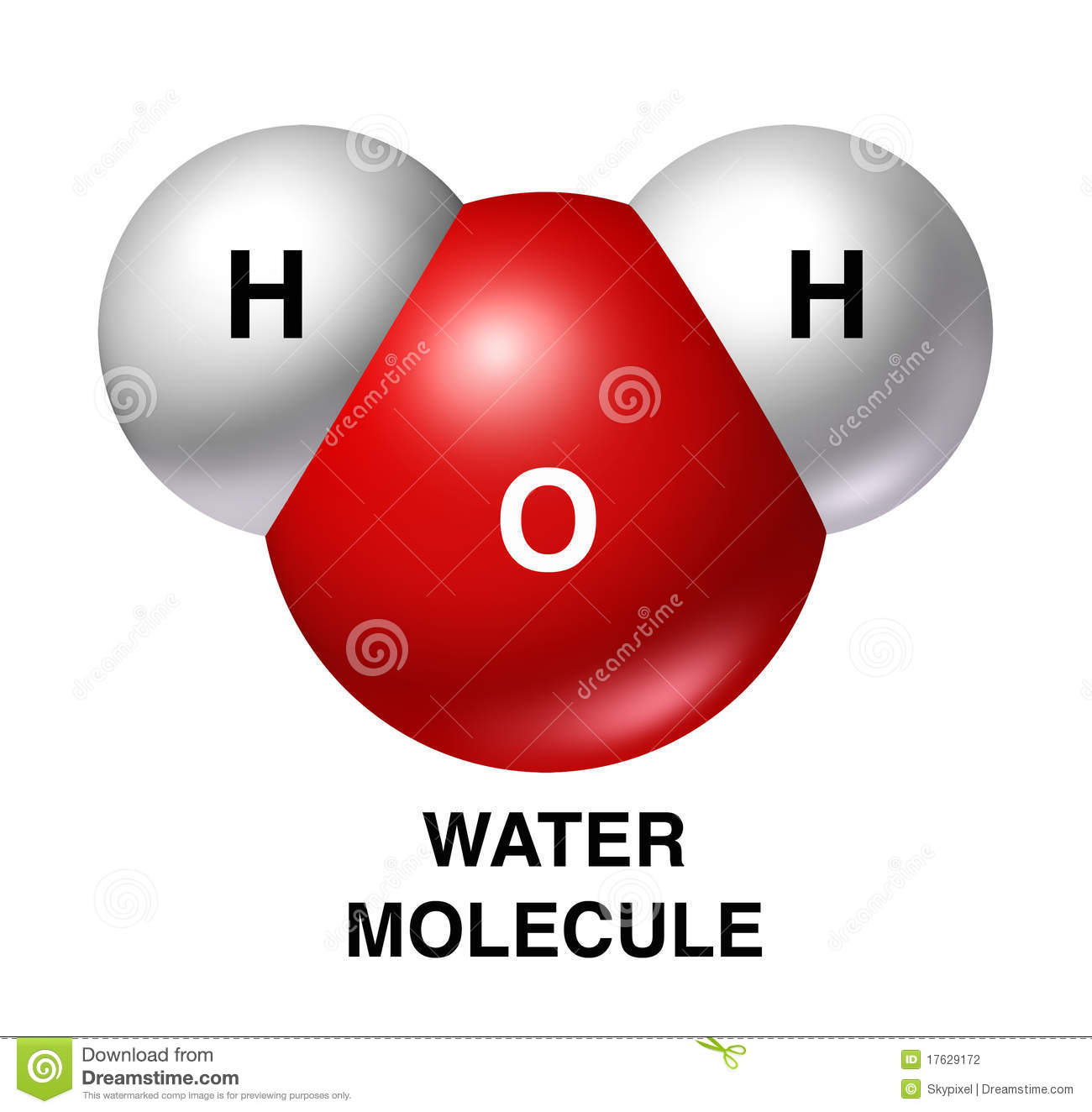
Which end of the water molecule has a slightly positive charge?
a)
the oxygen end
b)
the hydrogen end
c)
both ends are slightly positive
d)
neither end is positive
66.

Cohesive force between water molecules and adhesive force between water molecules and other molecules enable this phenomenon __________________ occur.

a)

surface tension

b)

capillary action

c)

float on water

d)

photosynthesis

67.

Surface tension of water is the cohesive force between water molecule and other molecule.

a)

True

b)

False

68.

What type of bond is found BETWEEN water molecules?

a)

hydrogen bonds

b)

ionic bonds

c)

nonpolar covalent bonds

d)

polar covalent bonds

69.

Which part of a water molecule has a Positive Charge?

a)

The Hydrogen

b)

The Oxygen

c)

The Top

d)

The Bottom

70.

Which part of a water molecule has a Negative Charge?

a)

The Hydrogen

b)

The Oxygen

c)

The Left

d)

The Right

71.

Which of the following can water NOT dissolve?

a)

Salt

b)

Sugar

c)

Oil

d)

Baking Soda

72.

Which of the following can water NOT dissolve?

a)

Ionic Compounds

b)

Polar Compounds

c)

Nonpolar Compounds

73.

What is the correct chemical formula for water?

a)

H2O

b)

HO2

c)

H2O2

d)

2H1O

74.

Which of the following is an example of COHESION?

a)

water sticking to water

b)

water sticking to glass

c)

oil sticking to plastic

d)

hydrogen sticking to oxygen

75.

You body sweats to help prevent you from overheating. How does water regulate temperature?

a)

it lets heat pass through it

b)

it absorbs a lot of heat, then decreases in temperature

c)

it absorbs a lot of heat, but only increases a little in temperature

d)

heat is afraid of water and avoids it

76.

Water is polar. What does that mean?

a)

it is a molecule with opposite charges on opposite ends

b)

it is a molecule with no charge

c)

it is a molecule with identical charges on opposite ends

d)

it is a molecule with too many protons
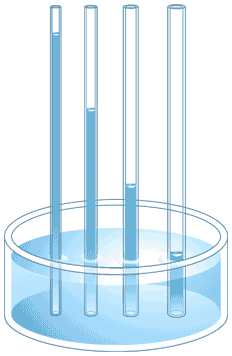
77.

What is the term for water's ability to defy gravity and climb up a tube?

a)

Capillary Action

b)

Specific Heat

c)

Universal Solvent

d)

Magic

78.

Water sticks well to many materials. What term relates to this property of water?

a)

cohesion

b)

adhesion

c)

density

d)

surface tension

79.

Why does ice float?

a)

water expands when it freezes, making ice less dense than water

b)

water compacts when it freezes, making ice more dense than water

c)

hydrogen bonds in water push the ice to the surface

d)

ice is afraid of water, and avoids it

80.

What is the function of Carbohydrates?

a)

Long-term energy

b)

Muscle development

c)

Short-term energy

d)

enzyme activity

81.

Which macromolecule has amino acids as monomers?

a)

Carbohydrates

b)

Lipids

c)

Proteins

d)

Nucleic acids

82.

Which one of the macromolecules are instrumental in the cell membrane?

a)

Carbohydrates

b)

Lipids

c)

Proteins

d)

Nucleic acids

83.

This macromolecules is responsible for providing our genetic material. Choose the macromolecule that best fits.

a)

Carbohydrates

b)

Lipids

c)

Proteins

d)

Nucleic acids

84.

Which one of our macromolecules would you consume in order to receive long-term energy?

a)

Carbohydrates

b)

Lipids

c)

Proteins

d)

Nucleic acids

85.

My monomers are glycerol and fatty acids. Which macromolecule am I?

a)

Carbohydrates

b)

Lipids

c)

Proteins

d)

Nucleic acids

86.

My monomers are monosaccharides. Which macromolecule am I?

a)

Carbohydrates

b)

Lipids

c)

Proteins

d)

Nucleic acids

87.

My monomers consist of a phosphate group, a sugar, and a nitrogenous base. Which macromolecule am I?

a)

Carbohydrate

b)

Lipids

c)

Proteins

d)

Nucleic Acids

88.

Which macromolecule has this structure?

a)

Carbohydrate

b)

Lipids

c)

Proteins

d)

Nucleic acids

89.

Which macromolecule is structured this way?

a)

Carbohydrates

b)

Lipids

c)

Proteins

d)

Nucleic acids

90.

Which macromolecule is structured in this way?

a)

Carbohydrates

b)

Lipids

c)

Proteins

d)

Nucleic acids

91.

Which of the macromolecules are structured in this way?

a)

Carbohydrates

b)

Lipids

c)

Proteins

d)

Nucleic acids

92.
The diagram shows the general structure of an amino acid. Which type of molecule is formed from amino acids?
a)
lipids
b)
proteins
c)
carbohydrates
d)
nucleic acids
93.
You are analyzing a compound in the laboratory. You find that it is made up of carbon, hydrogen, and oxygen in a ratio of two hydrogen atoms for each carbon atom. How will you classify the compound?
a)
lipid
b)
protein
c)
carbohydrate
d)
nucleic acid
94.
You are analyzing a compound in the laboratory. You find that it is made up of carbon, hydrogen, and oxygen in a ratio of two hydrogen atoms for each carbon atom. How will you classify the compound?
a)
lipid
b)
protein
c)
carbohydrate
d)
nucleic acid
95.
Fats, oils and cholesterol are all types of what?
a)
cell membranes
b)
hormones
hormones
c)
lipids
d)
fatty acids
96.
RNA and DNA are which type of macromolecules?
a)
carbohydrate
b)
lipid
c)
nucleic acid
d)
protein
97.
Many plants have waxy coatings on some surfaces. This coating reduces water loss because it is not water-permeable. This waxy coating is which of the following types of organic molecule?
a)
protein
b)
carbohydrate
c)
nucleic acid
d)
 lipid
98.
A sugar, a phosphate group, and a nitrogen base form the building blocks of which organic compound?
a)
carbohydrates
b)
lipids
c)
nucleic acids
d)
proteins
99.
The human body maintains a temperature of around 98.6 degrees at all times. Enzymes are involved in almost every chemical reaction in the body. Which of the following describes the connection between these two statements? 
a)
Enzymes function best at a specific temperature.
b)
The body needs to be warm to prevent hypothermia.
c)
The body is kept relatively warm to prevent too much enzyme action. 
d)
There is no connection between the two statements. 
100.
Like complex carbohydrates, proteins are macromolecules that serve many functions and can be chemically broken down and restructured. Both proteins and complex carbohydrates are which of the following?
a)
 polymers of smaller subunits
b)
sequence of sugars
c)
lipids of large molecules
d)
nucleotides of DNA
101.
 In living organisms, lipids function mainly as:
a)
Sources of stored energy and transmitters of genetic information
b)
Sources of stored energy and components of cellular membranes
c)
Transmitters of genetic information and catalysts of chemical reactions
d)
Catalysts of chemical reactions and components of cellular membranes
102.
What is the function of macromolecule subunit below?
a)
energy
b)
catalyst
c)
stores genetic information
d)
composes the majority of the cell membrane
103.

What is the monomer of a lipid?

a)

Amino Acid

b)

Fatty Acid

c)

Monosaccharides

d)

Glucose

104.

What macromolecule is shown?

a)

Nucleic Acids

b)

Lipids

c)

Proteins

d)

Carbohydrates

105.

What is one of the functions of lipids?

a)

Storing genetic information

b)

Long Term Energy

c)

Short Term Energy

d)

Acting as chemical signals

106.

What is the function of nucleic acids?

a)

Short Term Energy

b)

Storing Genetic Information

c)

Long Term Energy

d)

Speeding Up Chemical Reactions

107.

What macromolecule is shown?

a)

Carbohydrate

b)

Nucleic Acid

c)

Protein

d)

Lipid

108.

What is one of the functions of proteins?

a)

Long Term Energy

b)

Short Term Energy

c)

Storing Genetic Information

d)

Speeding Up Reactions in Cells

109.

Which of the following is NOT a macromolecule?

a)

Fiber

b)

Carbohydrates

c)

Amino Acid

d)

Monosaccharides

110.
Which of the following contains the genetic code for protein synthesis?
a)
carbohydrate
b)
lipid
c)
protein
d)
nucleic acid
111.
What are the single sugars that are the building blocks of carbohydrates?
a)
monosaccharides
b)
disaccharides
c)
polysaccharides
d)
amino acid
112.
What are the building blocks of proteins?
a)
amino acid
b)
fatty acid
c)
nucleotide
d)
lipid
113.
The element _______is found in all of the organic compounds.
a)
Iron
b)
Nitrogen
c)
Carbon
d)
Oxygen
114.
Waxes, oils and fats are examples of
a)
Carbohydrates
b)
Lipids
c)
Proteins
d)
Nucleic Acids
115.
What is the primary function of carbohydrates in your body?
a)
Speed up chemical reactions.
b)
Give immediate energy.
c)
Help to store energy.
d)
Build cell walls in plants.
116.
Where does the energy from our food originally come from?
a)
the Sun
b)
chemical reactions
c)
carbohydrates
d)
mitochondria
117.

Which macromolecule is shown?

a)

lipid

b)

protein

c)

nucleic acid

d)

carbohydrate

118.
What type of macromolecule is being represented in this image? 
a)
carbohydrate
b)
lipid
c)
protein
d)
nucleic acid