wayground logo

Free Printable Worksheets

Font size

S
M
L
XL
Worksheets

Cardiovascular System Review

Total questions: 118

Worksheet time: 2hrs 59mins

Name
Class
Date
1.
I am the 'liquid' portion of blood.
a)
Erythrocytes
b)
Thrombocytes
c)
Leukocytes
d)
Plasma
2.
RED BLOOD CELLS.
a)
Erythrocytes
b)
Thrombocytes
c)
Leukocytes
d)
Plasma
3.
WHITE BLOOD CELLS
a)
Erythrocytes
b)
Thrombocytes
c)
Leukocytes
d)
Plasma
4.
CLOTTING CELLS.
a)
Erythrocytes
b)
Thrombocytes
c)
Leukocytes
d)
Plasma
5.
In Normal Blood, PLASMA accounts for about...
a)
55%
b)
44%
c)
1%
6.
During an acute infection your ______ count will likely _____.
a)
Leukocyte, decrease
b)
Leukocyte, increase
c)
Thrombocyte, decrease
d)
Thrombocyte, increase
7.
What part of blood carries hemoglobin?
a)
Red blood cells
b)
Plasma
c)
Platlets
d)
White blood cells
8.
What part of blood is responsible for fighting infections?
a)
Red Blood Cells
b)
White Blood Cells
c)
Platelets
d)
Plasma
9.
What blood type is the "universal donor" because it can be donated to anyone?
a)
A
b)
B
c)
AB
d)
O
10.
What type of blood can receive any type of blood?
a)
A
b)
B
c)
AB
d)
0
11.
Mike has type O blood. Mike can receive blood from someone who has Type A or Type B.
a)
True
b)
False
12.
Someone with type A blood can receive blood from someone who is type AB.
a)
True
b)
False
13.
As an arterial pathway moves farther from the heart, the arteries
a)
get smaller
b)
get larger
c)
do not change in size
d)
have a party
14.
Valves in veins
a)
make the use of a skeletal muscle pump unnecessary for venous blood flow
b)
are the leading cause of high blood pressure.
c)
cause venous blood flow to go in only one direction
d)
are formed of the tunica media
15.
These carry blood to the heart:
a)
arteries
b)
veins
c)
capillaries
d)
arterioles
16.
These carry blood away from the heart
a)
arteries
b)
veins
c)
venules
d)
capillaries
17.
These have muscular walls:
a)
capillaries
b)
veins
c)
venules
d)
arteries
18.
These have valves that prevent backflow of blood
a)
arteries
b)
veins
c)
arterioles
d)
capillaries
19.
Where material exchange takes place between the cells and blood vessels:
a)
arteries
b)
veins
c)
venules
d)
capillaries
20.
Largest artery in the human body:
a)
Pulmonary artery
b)
femoral artery
c)
aorta
d)
carotid artery
21.
Structure(s) that keep the blood flowing in one direction.
a)
Valve(s)
b)
Septum(s)
c)
Neuron(s)
d)
Bronchiole(s)
22.
Which is the largest vein in the body?
a)
Aorta 
b)

Subclavian

c)
Superior Vena Cava 
d)

Pulmonary vein

23.
The amount of blood ejected from the heart per beat is?
a)
Stroke Volume
b)
Cardiac Output
c)

Heart Rate

d)

Ejection fraction

24.

These are one cell thick

a)

arteries

b)

capillaries

c)

veins

d)

venules

25.

Pulse is felt here

a)

arteries

b)

capillaries

c)

veins

d)

arterioles

26.

When the ventricles contract it is called

a)

sphygmomanometer

b)

systole

c)

diastole

d)

cardiac output

27.
a)
Aorta
b)
Pulmonary Artery
c)
Superior Vena Cava
d)
Inferier Vena Cava
28.
a)
Aorta
b)
Pulmonary Artery
c)
Pulmonary Vein
d)
Inferior Vena Cava
29.
a)
Aorta
b)
Pulmonary Artery
c)
Pulmonary Vein
d)
Inferior Vena Cava
30.
a)
Aorta
b)
Pulmonary Vein
c)
Superior Vena Cava
d)
Inferior Vena Cava
31.
a)
Aorta
b)
Pulmonary Artery
c)
Superior Vena Cava
d)
Inferior Vena Cava
32.
Blood leaves the right ventricle through the ___________.
a)
pulmonary artery
b)
aorta
c)
superior vena cava
d)
right atrium
33.
The two chambers of the heart which receive blood are known as the _________
a)
atria
b)
ventricles
c)
systemics
d)
pulmonic
34.

What type of blood do the arteries usually carry?

a)

Oxygenated Blood

b)

Deoxygenated Blood

35.
How many chambers in the heart?
a)
1
b)
2
c)
3
d)
4
36.
How many valves in the heart?
a)
4
b)
3
c)
2
d)
1
37.
Blood enters the heart through which vessels
a)
Superior and Inferior Vena Cava
b)
Pulmonary Artery
c)
Pulmonary Vein
d)
Tricuspid Valve
38.
Which of the following helps form scabs?
a)
Red Blood cells
b)
White blood cells
c)
Platelets
d)
Plasma
39.
Which of the following are the blood vessels that have the thickest walls?
a)
Veins
b)
Arteries
c)

Capillaries

d)

Arterioles

40.
What is the name of the circulation between the heart and lungs?
a)
Diastolic
b)
Systemic
c)
Pulmonary
d)
Coronary
41.
What is the name of the circulation between the heart and the body?
a)
Diastolic
b)
Systemic
c)
Pulmonary
d)
Coronary
42.
What is the name of the problem that causes a fatty build up in the walls of blood vessels?
a)
Atherosclerosis
b)
Heart failure
c)
Angina
d)
Stroke
43.
What is the name of the problem that happens when brain cells are starved of oxygen and die?
a)
Atherosclerosis
b)
Heart failure
c)
Heart attack
d)
Stroke
44.

A condition in which a person's blood pressure stays at a level that is higher than normal is called

a)

heart attack

b)

asteriosclerosis

c)

hypertension

d)

artherosclerosis

45.

What gas is a waste product carried by the blood?

a)

oxygen

b)

water

c)

nutrients

d)

carbon dioxide

46.

The functions of the circulatory system are

a)

to carry waste products from the body's cells

b)

to deliver vital substances to the body's cells

c)

to fight diseases

d)

all of the above

47.

Where does the blood go after it leaves the right ventricle?

a)

pulmonary artery

b)

pulmonary vein

c)

aorta

d)

vena cava

48.

The heart receives oxygen-rich blood from the lungs via the

a)

pulmonary vein

b)

pulmonary artery

c)

vena cava

d)

aorta

49.
The right side of the heart carries oxygenated blood
a)
True
b)
False
50.
Pulmonary Artery
a)
carries oxygenated blood to atrium
b)
carries deoxygenated blood to lungs
c)
carries oxygenated blood to lungs
d)
none of the above
51.
Blood flows from left atrium to left ventricle through which valve?
a)
Bicuspid
b)
Tricuspid
c)
Semilunar Valve
d)
Pulmonary valve
52.
Bicuspid valve is also called __________
a)
tricuspid
b)
mitral
c)
pulmonary
d)
aortic
53.
This is the thickest layer of the heart
a)
Pericardium
b)
Endocardium
c)
Myocardium
d)
Epicardium
54.
The smooth layer that lines the inside of the heart
a)
Endocardium
b)
Pericardium
c)
Myocardium
d)
None of the Above
55.
Double membrane sac that covers the outside of the heart
a)
Pericardium
b)
Myocardium
c)
Endocardium
d)
All of the above
56.
_______starts in the heart and causes the heart muscle to contract and the heart to beat
a)
Enzymes
b)
Electrical impulses
c)
Hormones
d)
Neurons
57.

The human heart is located behind the

a)

sternum

b)

ribs

c)

clavicle

d)

ulna

58.
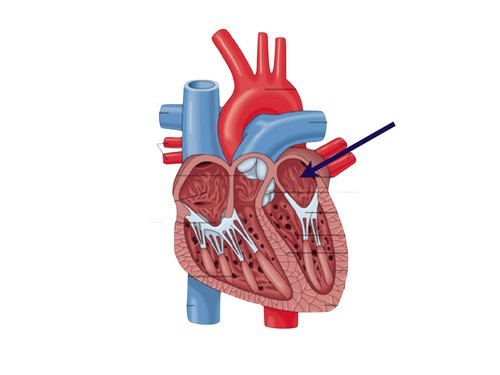
Identify
a)
Left atrium
b)
Right atrium
c)
Left ventricle
d)
Right ventricle
59.
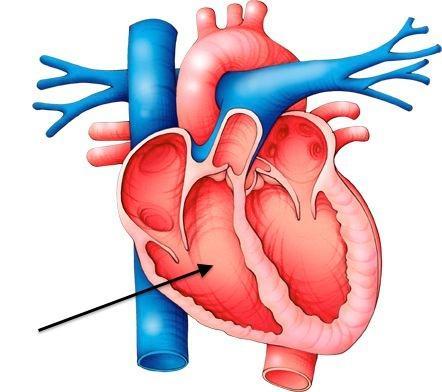
Identify
a)
Left atrium
b)
Right atrium
c)
Left ventricle
d)
Right ventricle
60.
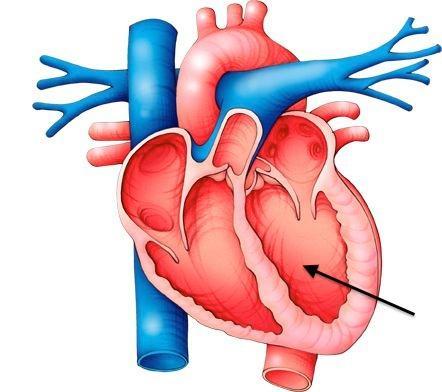
Identify
a)
Left atrium
b)
Right atrium
c)
Left ventricle
d)
Right ventricle
61.
Identify
a)
Left atrium
b)
Right atrium
c)
Left ventricle
d)
Right ventricle
62.
The smallest veins of the body are the ___________.
a)
vena cava
b)
arterioles
c)
venules
d)
capillaries
63.
The smallest blood vessels of the body are the _____________
a)
arterioles
b)
venules
c)
capillaries
d)
aorta
64.
What is the aorta?
a)
the large vein leading back to the heart
b)
the large artery leading away from the heart
c)
A chamber of the heart
d)
The artery leading from the heart to the lungs
65.

Normal value for blood pressure.

a)

120 / 80

b)

80 / 120

c)

115 / 180

d)

120 / 180

66.

What is the purpose of the valves in the cardiovascular system?

a)

To fill the next chamber more quickly

b)

To keep the blood moving in one direction

c)

To stop the blood from leaving the circulatory system

d)

To help blood reach organs

67.

What is systole?

a)

Relaxation of the heart

b)

Contraction of the heart

c)

The amount of blood a heart pumps out

d)

The term for a heart attack

68.

What is diastole?

a)

Relaxation of the heart

b)

Contraction of the heart

c)

The amount of blood pumped out

d)

The first sound the heart makes

69.

What is the first sound?

a)

Systole

b)

Diastole

c)

The heart filling with blood

d)

The heart dancing

70.

The pressure in the arteries between heart beats, when the heart relaxes.

a)

Systole

b)

Diastole

c)

Atrial repolarization

d)

The breaking of a young lovers heart

71.

What is cardiac output?

a)

The amount of blood pumped with every beat

b)

The number of times a heart beats a minute

c)

The amount of blood pumped out in one minute

d)

The amount of blood left at the end of a contraction

72.

What is heart rate?

a)

The amount of blood pumped with every beat

b)

The number of heart beats a minute

c)

The amount of blood pumped out in one minute

d)

The amount of blood left after a contraction

73.

What is plasma primarily composed of?

a)

H2O

b)

erythrocytes

c)

leukocytes

d)

thrombocytes

74.

What is the function of hemoglobin?

a)

To carry oxygen by using iron

b)

To move nutrients

c)

To eat bacteria

d)

To form scabs

75.
What are the main parts of the cardiovascular system?
a)
heart and lungs 
b)
blood, blood vessels and heart
c)
blood, heart and brain
d)
veins, arteries, lungs and heart
76.
Red blood cells  are produced in the...
a)
pancreas
b)
Heart
c)
Muscles
d)
Bone marrow
77.

The outermost layer of the wall of the heart is called?

a)

epicardium

b)

myocardium

c)

endocardium

d)

pericardium

78.

Irregular heart rate is also known as?

a)

tachycardia

b)

bradycardia

c)

arrythmia

d)

asystole

79.
FAST
F - face dropping or numbness
A - arm weakness
S - speech difficulty
T - time to call 911
Are all signs of ...
a)
Heart attack
b)
Stroke
c)
Fainting
d)
Diabetes
80.
This happens when cells don't get enough blood...
a)
Stroke
b)
Shock
c)
Heart attack
d)
Fainting
81.
True or False: Strokes occur when the brain is deprived of blood and tissues begin to die.
a)
True
b)
False
82.
What is the most common type of stroke?
a)
Hemorrhagic
b)
Ischemic
83.
When auscultating blood pressure, the examiner listens to the 
a)
Carotid artery
b)
Brachial artery
c)
Radial artery
d)
Femoral artery
84.
What antigens are present in a person with type O blood?
a)
b)
A and B
c)
d)
none 
85.
All of the following are pulse sites except:
a)
temporal
b)
popliteal
c)
dorsalis pedis
d)
jugular
86.
An apical pulse is taken at which site?
a)
apex of the heart
b)
radial site
c)
brachial site
d)
atrium of the heart
87.
All of the following are parts of a stethoscope except:
a)
bell
b)
diaphragm
c)
ear pieces
d)
microphone
88.
Pulse rate can be both increased or decreased by which factor?
a)
exercise
b)
medications/drugs
c)
nervousness
d)
fever
89.
Pulse is
a)
the measurement of the balance between heat lost and heat produced
b)
the pressure of the blood felt against the wall of an artery
c)
the breathing rate of the patient
d)
the force exerted by the blood against the arterial walls when the heart contracts and relaxes
90.

The heart is located in this cavity.

a)

Cranial

b)

Abdominal

c)

Thoracic

d)

Ventral

91.

The heart is _____________ to the diaphragm

a)

Inferior

b)

Lateral

c)

Medial

d)

Superior

92.

Which heart valve does blood pass through first?

a)

Aortic

b)

Mitral

c)

Pulmonary

d)

Tricuspid

93.

Which heart valve does blood pass through last?

a)

Aortic

b)

Bicuspid

c)

Pulmonary

d)

Tricuspid

94.

What is the name of the innermost layer of an artery?

a)

Tunica adventia

b)

Tunica externa

c)

Tunica intima

d)

Tunica media

95.

Varicose veins are caused by

a)

Breakdown of valves in the veins

b)

Buildup of fatty deposits in the arteries

c)

High blood pressure

d)

Low blood pressure

96.

Hardening of the arteries

a)

Arteriosclerosis

b)

Angina pectoris

c)

Hypertension

d)

Myocardial infarction

97.

In what units do we measure blood pressure?

a)

Ounces

b)

Beats

c)

Millimeters of mercury (mmHg)

d)

Liters

98.

How long should you wait to retake a blood pressure measurement?

a)

30 seconds

b)

1 minute

c)

5 minutes

d)

10 minutes

99.

In FAST, what is the recommended time limit to receive treatment for a stroke?

a)

1 hour

b)

2 hours

c)

3 hours

d)

24 hours

100.

Which is the correct sequence of the cardiac conductive system?

a)

AV node, SA node Bundle of His, Purkinje fibers, L & R Bundle branches

b)

SA node, AV Node, Bundle of His, L & R Bundle branches, Purkinje fibers

c)

SA node, AV node, Bundle of His, Purkinje fibers, L&R Bundle Branches

d)

SA node, Bundle of His, AV node, L & R Bundle branches, Purkinje fibers

101.

Which can occur if given the wrong type of blood?

a)

Agglutination

b)

Atherosclerosis

c)

Arteriosclerosis

d)

Angina

102.

Place the steps of the heart's conduction system in the correct order from start to finish.

a)

Sinoatrial (SA) node

b)

Atrioventricular (AV) node

c)

Atrioventricular (AV) bundles

d)

Bundle branches

e)

Purkinje fibers

1)
2)
3)
4)
5)
103.

Match the following

a)

heart

1.

pumps blood

b)

arteries

2.

Vessels going away from the heart and lungs - full of oxygen

c)

veins

3.

vessels going back to the heart and lungs - full of carbondioxide

d)

capillaries

4.

mini blood vessels, where oxygen and carbondioxide are exchanged

104.

Match the 4 parts of the blood

a)
1.

red blood cells

b)
2.

white blood cells

c)
3.

plasma

d)
4.

platelets

105.

Match part of the blood with its job

a)

red blood cells

1.

carry oxygen and nutrients to the body

b)

white blood cells

2.

fight pathogens

c)

plasma

3.

water, nutrients, minerals

d)

platelets

4.

clot the blood so you stop bleeding

106.

A person with type A blood can receive ​ (a)   and ​ (b)   blood.

Choose from the below words
A
O
AB
B
107.

A person with type B blood can receive ​ (a)   and ​ (b)   blood

Choose from the below words
B
O
AB
A
108.

Reorder the following in order of innermost to outermost layer of the heart wall

a)

Endocardium

b)

Myocardium

c)

Epicardium

1)
2)
3)
109.

The area(s) that mark the atria of the heart

110.

Put the flow of blood through your heart in order. Start with deoxygenated blood coming to the heart.

a)

Right atrium

b)

Right ventricle

c)

lungs

d)

left atrium

e)

left ventricle

1)
2)
3)
4)
5)
111.

Label the chambers of the heart

112.

Label the valves of the heart

113.

Label the major blood vessels of the heart

114.

The heart is made up of 4 chambers. The superior chambers are the ​ (a)   and ​ (b)   blood. The inferior chambers are the ​ (c)   and they ​ (d)   blood.

Choose from the below words
atria
receive
ventricles
pump
115.

Match the layer of the heart to the best description

a)

Myocardium

1.

The middle muscular layer of the heart

b)

Epicardium

2.

The external layer of the heart

c)

Endocardium

3.

The inner lining of the heart

116.

Reorder the following zones of the blood vessel wall SUPERFICIAL (1) to DEEP (3).

a)

tunica externa

b)

tunica media

c)

tunica intima

1)
2)
3)
117.
Question Image

Match the following

a)

A

1.

neutrophil

b)

B

2.

eosinophil

c)

C

3.

basophil

d)

D

4.

lymphocyte

e)

E

5.

monocyte

118.

Which type of stroke usually produces symptoms that resolve in a few minutes? (a)  

Choose from the below words
Transient Ischemic Attack
Hyperactive Stroke
Subarachnoid Hemorrhage
Hemorrhagic Stroke