
 Worksheets
Test 1 Review: SEV1
Total questions: 98
Worksheet time: 1hrs 27mins
Which of the following are all biotic?
Temperature, Light, Rain, Gravity, Heat
Water, Fish, Insects, Lily Plants
Dogs, Meat, Cats, Catnip
Lion, Pride Rock, Warthog, Meerkat
Which of the following are all abiotic?
Temperature, Light, Rain, Gravity, Heat
Water, Fish, Insects, Lily Plants
Dogs, Meat, Cats, Catnip
Lion, Pride Rock, Warthog, Meerkat
Which definition best fits the term biotic?
The study of the interactions between animals and their environment
Factors in the environment that are considered not alive
the environment in which an organism lives.
Factors in the environment that are considered living or the remains of living things
The role a species plays in the ecosystem.
Which definition best fits the term Population?
A group or organisms of the same species that live in the same area and interact with one another.
A group of many populations (of different species) that live and interact with one another
A group of populations of many different species that live and interact with both one another and all of the abiotic factors in their environment.
A set of different ecosystems that acer connected by similar geographic features and share the same or similar climate.
Anywhere on earth that life exists.
Which definition best fits the term community?
A group or organisms of the same species that live in the same area and interact with one another.
A group of many populations (of different species) that live and interact with one another
A group of populations of many different species that live and interact with both one another and all of the abiotic factors in their environment.
A set of different ecosystems that acer connected by similar geographic features and share the same or similar climate.
Anywhere on earth that life exists.
Which definition best fits the term ecosystem?
A group or organisms of the same species that live in the same area and interact with one another.
A group of many populations (of different species) that live and interact with one another
A group of populations of many different species that live and interact with both one another and all of the abiotic factors in their environment.
A set of different ecosystems that acer connected by similar geographic features and share the same or similar climate.
Anywhere on earth that life exists.

Which level of organization is depicted in this image?
Population
Community
Ecosystem
Biome
Biosphere

Which level of organization is depicted in this image?
Population
Community
Ecosystem
Biome
Biosphere

Which level of organization is depicted in this image?
Population
Community
Ecosystem
Biome
Biosphere

Which level of organization is depicted in this image?
Population
Community
Ecosystem
Biome
Biosphere

Which level of organization is depicted in this image?
Population
Community
Ecosystem
Biome
Biosphere

Which level of organization is depicted in this image?
Population
Community
Ecosystem
Biome
Biosphere
Biotic
Dead
Non-living
Alone
Living
individual member
of a species or
population
population
community
organism
ecosystem
community PLUS all
of the abiotic factors
in the environment
organism
population
community
ecosystem
the zone
of life on Earth,
encompassing all of
Earth’s ecosystems
biosphere
biome
ecosystem
community
The Biosphere contains all ecosystems
True
False
Select the examples of biotic things
Plants
Soil
Sun
Animals
Select from the following, examples of a population.
Herd of buffalo
School of fish
All the people living in a town
The people, animals, and plants at Liberty Elementary School.


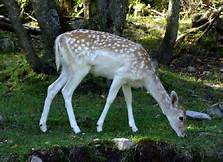


If there is 2000 kcal of energy in this particular ecosystem, how many kcal of energy will be available for hawk?
(a)
Which of the following is NOT needed for a producer to make its own food?
Oxygen
Carbon dioxide
Water
Sunlight

Look at the food web of a pond ecosystem.
Which food chain shows the correct flow of energy in the pond
of the food web?


Rain forests normally receive a lot of rain. Which of the following is MOST LIKELY to happen to the plants in a rain forest during a severe drought and which organism might this affect?
The plants will wilt and may die. Herbivores may have less food.
The plants will quickly adapt. Herbivores may have more food.
The plants will grow taller. Carnivores
may have more food.
The plants will sprout new leaves. Carnivores may have more food.

Look at the desert food web.
What organism will possibly die out if the feather grass were removed from the desert?
Jackrabbit
Grasshopper
Desert tortoise
Desert fox

Look at the table.
Based on the Properties of Aquatic Organisms table, which organism is a producer?
Grass Shrimp
Phytoplankton
Water Snail
Zooplankton

The food web shows interactions in a forest environment.
What statement about the interactions within the forest is correct?
Carpenter ants are producers.
Lichen are not producers.
Voles do not get energy from owls.
Black-tailed deers will not get energy from berries.
Which of these organisms would most likely be found at the top of an energy pyramid?
clams
sardines
sharks
kelp (seaweed)

The diagram provided shows a marine food chain. In this food chain, the zooplankton are
primary producers.
primary consumers.
secondary consumers.
tertiary consumers.

The picture provided shows an ocean bay food chain. Sea otters move into the ocean bay. They eat all of the sea urchins. This change will cause the
kelp to have less food.
crabs to have more food.
sea ducks to have less food.
arctic foxes to have more food.

Photosynthesizing plants affect the carbon cycle by...
Creating more carbon atoms
Reducing the amount of carbon in the soil
Absorbing CO2 from the atmosphere, lowering atmospheric levels of carbon
None of the above; plants do not affect the carbon cycle

Examples of decomposers include:
humans, dogs, and whales
trees, tomato plants, and phytoplankton
viruses
fungi, worms, and bacteria

hot, humid forests with much rainfall
grassland
terrestrial ecosystems
tropical rainforest
biodiversity

The cold biome of the far north. It has permanently frozen soil, so it can't support large plants.
taiga
canopy
tundra
biomes

Which type of biome is it?
Temperate grassland
Chaparral/Mediterranean
Desert
Savanna grassland
This biome has four very different seasons.

A sandy or rocky biome with little precipitation or plant life.
biomes
tundra
biodiversity
desert
Which two terrestrial biomes receive the least amount of precipitation?
tundra and taiga
tundra and desert
desert and taiga
desert and grassland


What factors influence the type of plants grow in a biome?
temperature & precipitation
temperature only
precipitation only
none of these
All of the following are abiotic factors that influence aquatic ecosystems except
sunlight
temperature
distance below the water's surface
the presence of plankton

What are the 2 types of aquatic biomes?
rivers and streams
lakes and oceans
marine and fresh water
marine and oceanic
Adaptations in the river biome might include the ability to ___________
ability to produce energy from sulfur
excrete salt water
resist a strong current
conserve oxygen by not moving
Primary succession occurs in an area that has:
Has Soil
Has No Soil
Has Some Soil
none of these
___ are the first organisms to colonize an area and begin the process of ecological succession.
foundational organisms
introductory organisms
primary organisms
pioneer species
What is the main difference between primary and secondary ecological succession?
Primary begins WITHOUT soil; Secondary begins WITH soil
Primary is the first state and secondary is the second stage
Primary builds plant community; secondary builds animal community.
Primary begins WITH soil; Secondary begins WITHOUT soil
What is an example of an area that is likely to undergo primary succession?
Glaciers melt and leave exposed rock
Plants die from drought and decompose
Land is bulldozed and soil remains
Which of the following is the correct order of ecological succession?
grass - shrubs - lichens - trees
lichens - shrubs - grasses - trees
lichens - grasses - shrubs - trees
grasses - lichens - shrubs - trees
All of the following contribute directly to soil formation EXCEPT
lichens
decomposition of organisms
volcanic eruptions
erosion of rock by weather
What is an increase of biodiversity over time, after a natural or man made disturbance?
ecological recession
climax recession
ecological succession
climax succession
What is an example of a disturbance that could bring about secondary succession?
Humans cut down many trees in a small region
A volcanic eruption covers a village in lava.
What is the term that describes a steady and stable community?
peak community
turf community
climax community
disturbed community
Which is faster: Primary or Secondary Succession?
Primary Succession
Secondary Succession
Both Take The Same Amount of Time
T or F: Succession increases biodiversity.
True
False
The Final stage of ecological succession is...
Mature Tree Growth
Climax Community
Pioneer Community
the variety of species in an ecosystem is called
biogeography
biodiversity
resilience
resistance
a species that is critical to the success of an ecosystem
predator species
parasitism
carrying capacity
keystone species
the number of different types of species in an ecosystem
richness
evenness
hot spot
biodiversity
an ecological hotspot is
an area where temperatures reach at least 120 degrees F
an area of very high biodiversity
an area where almost no species can be found
a species that is only found in one part of the world
a species that exist in one area and nowhere else in the world is called
hot spot species
epistatic species
endemic species
predation species
two types of ecological disturbance are
animals and plants
abiotic and biotic
natural and human-caused
weather and climate
the first species of an area that previously had 0 species
fresh species
resilient species
keystone species
pioneer species
A stable ecosystem typically has high biodiversity.
True
False

How do biodiversity and stability work together?
The lower the biodiversity the greater the stability of an ecosystem.
The higher the biodiversity, the less stable the ecosystem
The higher the biodiversity, the greater the stability of the ecosystem.
Biodiversity has nothing to do with ecosystem stability.


Which ecosystem is more likely to survive a change in the environment?
One with High biodiversity
One with Low biodiversity

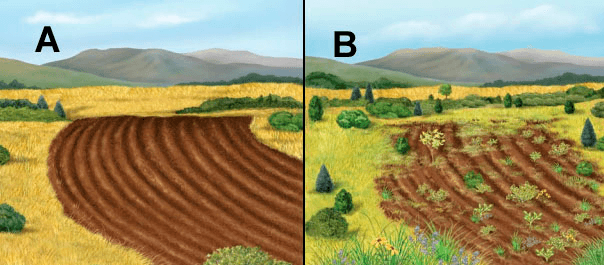
Which shows more biodiversity Image A or Image B. Why?
Image B is more biodiverse, because shows more different species than image A.
Image A is more biodiverse, because shows a greater number of organisms that image B
Both images show the same biodiversity


