wayground logo

Free Printable Worksheets

Font size

S
M
L
XL
Worksheets

Physical Science Review

Total questions: 114

Worksheet time: 2hrs 25mins

Name
Class
Date
1.
Which runner had a head start?
a)
A
b)
B
c)
C
d)
None of them
2.
What does this graph represent?
a)
Constant speed
b)
Acceleration
c)
Not moving
3.
During which interval is the object speeding up?
a)
A to B
b)
B to C
c)
D to E
d)
E to F
4.

Which runner stopped for a rest?

a)

Albert

b)

Bob

c)

Charlie

d)

None of them stopped

5.
What is happening at D?
a)
Stationary
b)
Accelerating
c)
Fast steady speed; moving away from the starting position
d)
Slower steady speed; moving away from the starting position
6.
Which graph represents the greatest acceleration?
a)
A
b)
B
c)
C
d)
D
7.
Which section of the graph shows decreasing velocity?
a)
CD
b)
DE
c)
EF
d)
GH
8.
Which graph is would represent a decrease in speed?
a)
Graph A
b)
Graph B
c)
Graph C
d)
The object is not decreasing in speed in any of these graphs
9.
What is the object doing from 10-12.5 seconds?
a)
Slowing down 
b)
Returning to the starting position
c)
Speeding up
d)
Not moving
10.
Describe the speed of the object from
0-2 seconds using the distance vs. time graph.
a)
Constant speed
b)
Speeding up
c)
Slowing down
d)
Not moving
11.
Which graph represents zero acceleration (constant velocity)?
a)
A
b)
B
c)
C
d)
D
12.
How many times does this object STOP moving?
a)
None
b)
Once
c)
Twice
d)
Three times
13.
How far does the object move?
a)
40m
b)
80m
c)
100
d)
100m
14.
What is the objects average speed from 0-20 seconds?
a)
0.5m/s
b)
10m/s
c)
2m/s
d)
10m
15.
What is happening at C?
a)
Stationary
b)
Accelerating
c)
Fast steady speed; moving away from the starting position
d)
Slower steady speed; moving away from the starting position
16.

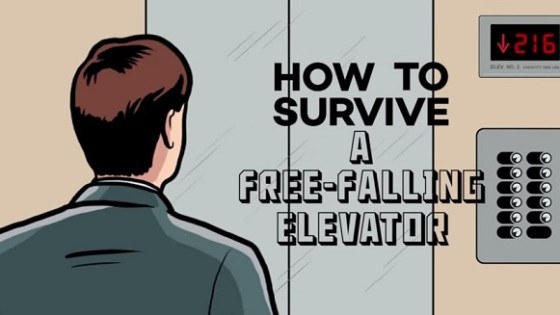
What is the force on a 1000 kg elevator that is falling freely at 9.8 m/sec2

a)

102.04 n

b)

9,800 n

c)

980 n

d)

103 n

17.
A 50 kg skater pushed by a friend accelerates 5 m/sec2.  How much force did the friend apply?
a)
45 N
b)
15 N 
c)
10 N
d)
250 N
18.
A force of 250 N is applied to an object that accelerates at a rate of 5 m/sec2.  What is the mass of the object?
a)
100kg 
b)
1,250kg
c)
50kg
d)
5kg
19.
This triangle is used to determine speed. 
a)
True
b)
False
20.
If you increase the mass on an object, its acceleration
a)
decreases
b)
stays the same
c)
also increases
d)
stops
21.
How much force is needed to accelerate a 3kg skateboard at 5m/s2. 
a)
8N
b)
1.6N
c)
0.6N
d)
15N
22.
If you increase the force on an object, its acceleration? 
a)
decreases
b)
stays the same
c)
also increases
d)
stops
23.
What is the acceleration of a 50 kg object pushed with a force of 500 newtons?
a)
100 m/s2
b)
25,000 m/s2
c)
10 m/s2
d)
25 m/s2
24.
A 50 kg skater pushed by a friend accelerates 5 m/sec2.  How much force did the friend apply?
a)
45 N
b)
15 N 
c)
10 N
d)
250 N
25.
What do each of the letters correctly represent?
a)
Funny, Monkeys, Arrive
b)
Force, Mass, Acceleration
c)
Free, Mass, Access
d)
Force, Magnesium, Arsenic
26.
A 20 kg bike accelerates at 10 m/s2.  what was the force?
a)
25 Newtons
b)
20 Newtons
c)
200 Newtons
d)
10 Newtons
27.
Unit of mass
a)
m/s 2
b)
m/s
c)
newtons
d)
kg
28.
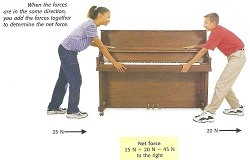
You and your dad are moving the couch from one side to another. Your dad pushes with a force of 35 N to the right and you push with a force of 25 N right. What is the net force on the couch?
a)
60 N right
b)
10 N left
c)
60 n right
d)
50 N left
29.
A 50 kg skater pushed by a friend accelerates 5 m/s2.  How much force did the friend apply? The answer to this question is most likely (HINT: Look at the units!!!) - 
a)
250 N
b)
250 m/s2
c)
250 kg 
30.
A force of 250 N is applied to an object that accelerates at a rate of 5 m/s2.  What is the mass of the object? The answer to this question is most likely (HINT: Look at the units!!!) - 
a)
50 N
b)
50 m/s2
c)
50 kg
31.
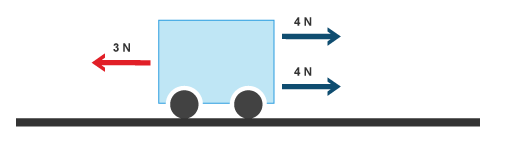
What is the net force?
a)
5 N
b)
45 N to the left
c)
5 N to the right
d)
45 N to the right
32.
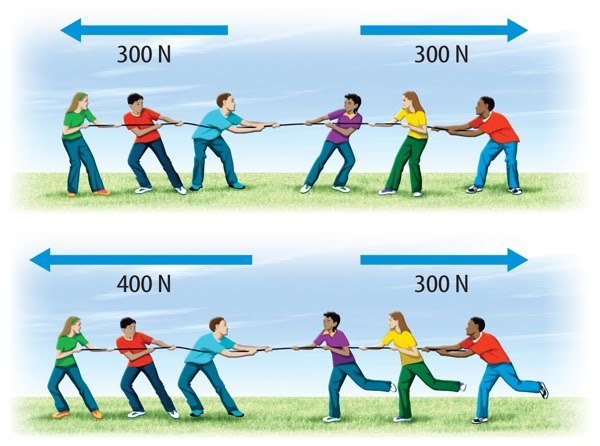
Which one is balanced?
a)
top
b)
bottom
c)
both
33.
Is it BALANCED? 
a)
Yes
b)
No
34.
Determine if the object was accelerating between 40 seconds and 60 seconds. 
SPEED = DISTANCE/TIME
a)
No, the speed stayed the same
b)
Yes, the speed increased
c)
Yes, the speed decreased
d)
Yes. the speed stayed same
35.
What two measurements are necessary for calculating speed?
a)
Mass and time
b)
Temperature and mass
c)
Mass and distance
d)
Distance and time
36.
At 60 seconds, how far had this object traveled? 
a)
0 m
b)
10 m
c)
20 m
d)
40 m
37.
How many times does this object STOP moving?
a)
None
b)
Once
c)
Twice
d)
Three times
38.
A measurement of how fast an object is moving
a)
Velocity
b)
Speed
c)
Vector
d)
Acceleration
39.
Which of the graphs shows that one of runners started 10 yards further ahead of the other (note that graph c is the bottom right and graph d is the bottom left)? 
a)
Graph A
b)
Graph B
c)
Graph C
d)
Graph D
40.
What does this graph represent?
a)
Constant Speed
b)
Acceleration
c)
Deacceleration
d)
Not moving
41.
Which runner won the race?
a)
A
b)
B
c)
C
d)
It was a tie
42.
According to the graph how far does the person travel in the first 5 seconds?
a)
2 m
b)
10 m
c)
0 m
d)
5 m
43.
What is the person doing from 5 seconds to 10 seconds?
a)
Walking 
b)
Running
c)
Standing Still 
d)
Walking Fast
44.
What is happening at A?
a)
Stationary
b)
Accelerating
c)
Slower steady speed; moving away from the starting position
d)
Steady speed; returning to start position
45.
What is happening at E?
a)
Stationary
b)
Accelerating
c)
Fast steady speed; moving away from the starting position
d)
Steady speed; returning to start position
46.
It takes a leopard 5 minutes to travel 3 miles. What is the leopard's speed?
a)
15 m/m
b)
8 m/m
c)
.6 m/m
d)
2 m/m
47.

John and Caroline go out for a drive one day. The graph represents the distance they traveled over time.


During what part of their drive were they not moving?

a)

From 0 to 0.75 hours

b)

From 1.25 to 2.0 hours

c)

From 0.75 to 1.25 hours

d)

They are moving the entire time.

48.

The graph represents the distance a car travels over time while on the highway. Which statement is true about the car's trip is accurate?

a)

The car does not move more over time.

b)

The car travels at a constant velocity.

c)

The car's velocity increases constantly over time.

d)

The car's velocity decreases constantly over time.

49.

During summer break, Jamie's family went camping in the mountains. There were no roads to their camp, 8 miles away, and it took them 4.5 hours to reach their campsite on foot. Did Jamie's family stop to rest during the trip? How can you tell from the data?

a)

No. They continued moving but their speed varied.

b)

Yes, after 1.5 hours, there is no change in position for 30 minutes.

c)

No. They continued moving, although they also slowed down continuously during the trip.

d)

Not really. They did stop, but that was only when they reached the campsites at distance equals 0.

50.

Consider the 4 line graphs representing speed in meters/second, where each X-axis is labelled in seconds and each Y-axis labeled in meters.


What do the four graphs have in common?

a)

They all indicate a constant speed.

b)

They all indicate an increase in speed.

c)

All 4 graphs have nothing in common.

d)

They all represent the same speed in m/s.

51.

Ben and Jerry went for a drive. They decided to stop for a snack and have some ice cream. How long did they stop at the store to eat ice cream?

a)

1/2 hour

b)

1 hour

c)

1 1/4 hours

d)

1 1/2 hours

52.

The graph shows the speed of a car during a trip along the highway. What can you say, in general, about the speed of the car?

a)

It is constant during the trip

b)

It is moving at a slow rate of speed.

c)

It is increasing throughout the trip

d)

It varies at different times during the trip

53.

During a race, four competitors of the same weight rode identical bicycles for 10 minutes. At 8 minutes, which bicycle was moving with the greatest velocity?

a)

A

b)

B

c)

C

d)

D

54.

A car's position in relation to time is plotted on the graph. What can be said about the car during segment B?

a)

The car travels for 80 seconds during segment B

b)

The car has come to a stop and has zero velocity.

c)

The car is traveling faster during segment B than in segment C

d)

The car is traveling with a constant velocity due to he flat line of the graph.

55.

speed of an object in a particular direction

a)

motion

b)

velocity

c)

speed

d)

acceleration

56.

when an object changes its position compared to a reference point.

a)

acceleration

b)

speed

c)

motion

d)

reference point

57.

total distance traveled divided by total time taken to travel that distance

a)

velocity

b)

motion

c)

acceleration

d)

average speed

58.

the rate at which speed or velocity changes

a)

acceleration

b)

average speed

c)

motion

d)

reference point

59.

an object that appears to stay in place and that helps you detect motion in another object

a)

acceleration

b)

average speed

c)

motion

d)

reference point

60.

Is this a speed or acceleration graph?

a)

speed

b)

acceleration

61.

What is happening at segment E?

a)

acceleration

b)

deceleration

c)

constant speed

d)

no motion/object at rest

62.

What is happening at segment F?

a)

acceleration

b)

deceleration

c)

constant speed

d)

no motion/object at rest

63.

What is happening at segment A?

a)

acceleration

b)

deceleration

c)

constant speed

d)

no motion/object at rest

64.

What is happening at segment B?

a)

acceleration

b)

deceleration

c)

constant speed

d)

no motion/object at rest

65.

What is happening at segment C?

a)

acceleration

b)

deceleration

c)

constant speed

d)

no motion/object at rest

66.

What is happening at segment D?

a)

acceleration

b)

deceleration

c)

constant speed

d)

no motion/object at rest

67.

Is this a speed or acceleration graph?

a)

speed

b)

acceleration

68.

What is happening at segment B?

a)

no motion/object at rest

b)

constant speed

c)

acceleration

69.

What is happening at segment A?

a)

no motion/object at rest

b)

constant speed

c)

deceleration

70.

A runner crossed the 1 mile marker of a race running at a speed of 9 miles per hour. She crossed the finish line running at a speed of 9.8 miles per hour. Did the runner change her velocity?

a)

Yes

b)

No

71.

A runner crossed the 1 mile marker of a race running at a speed of 9 miles per hour. She crossed the finish line running at a speed of 9.8 miles per hour. This is an example of...

a)

positive acceleration

b)

negative acceleration

c)

no acceleration

72.

A snake slithered across the sidewalk in between two sign posts. At the first sign post his speed was 1.2 m/s. At the second sign post his speed was 1.2 m/s. Did the snake change velocity?

a)

Yes

b)

No

73.

A snake slithered across the sidewalk in between two sign posts. At the first sign post his speed was 1.2 m/s. At the second sign post his speed was 1.2 m/s. This is an example of...

a)

positive acceleration

b)

negative acceleration

c)

no acceleration

74.

The formula for calculating speed is...(x means multiply; / means divide)

a)

time x distance

b)

distance x speed

c)

distance / time

d)

time / distance

75.
At which point is potential energy greatest?
a)
W
b)
X
c)
Y
d)
Z
76.
__________ is stored energy. 
a)
Potential
b)
Kinetic
c)
None of the above 
d)
All of the above 
77.
The faster an object moves, the ________ kinetic energy it has. 
a)
more
b)
less
c)
none of the above
d)
same
78.
What kind of energy is in a moving skateboard?
a)
Potential
b)
Kinetic
c)
Both potential and kinetic energy
d)
none of the above
79.
What kind of energy is in a rock at the edge of a cliff?
a)
Potential
b)
Kinetic
c)
Both potential and kinetic energy
d)
none of the above
80.
Which is the best example that something has kinetic energy?
a)
a. a car parked on a steep hill 
b)
b. a tennis ball rolling across the court
c)
c. a picture hanging on the wall 
d)
d. a piece of coal before it's burned 
81.
Energy due to motion is ____________ energy. 
a)
Potential 
b)
Energy
c)
Kinetic
d)
Friction
82.
Gravitational potential energy depends on the ________ and ________ of the object. 
a)
Height and mass
b)
Friction and movement
c)
Mass and Movement
d)
Height and Friction 
83.
What kind of energy is in a person climbing a ladder?
a)
Potential
b)
Kinetic
c)
Both
84.
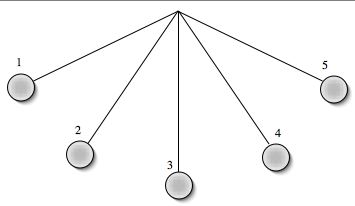
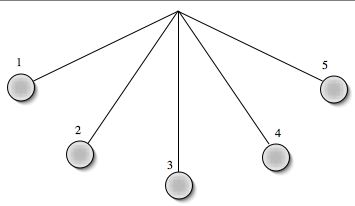
When a pendulum swings, at which point is kinetic energy highest?
a)
1
b)
2
c)
3
d)
4
85.
When a pendulum swings, at which point is potential energy at its greatest?
a)
1
b)
2
c)
3
d)
4
86.
Energy can be _____________ or changed from one type to another.
a)
destroyed
b)
transferred
c)
created
d)
ignored
87.
Gravitational potential energy depends on the ________ and ________ of the object. 
a)
Height and mass
b)
Friction and movement
c)
Mass and Movement
d)
Height and Friction 
88.
Conservation of energy states that energy cannot be ________ or ________, but can be altered from one form to another.
a)
created, destroyed
b)
gravity, force
c)
heat, created
89.
What are the two factors that affect kinetic energy?
a)
time and energy
b)
power and mass
c)
mass and speed
d)
time and work
90.
What is the unit of measurement for kinetic energy
a)
Newton
b)
Joule
c)
Watt
d)
Kilogram
91.
Which of the following is an exmaple of a change of kinetic energy into gravitational potential energy?
a)
a person parachuting out of a plane
b)
a car racing around an oval track
c)
a person skiing down a hill
d)
a person walking up a hill
92.
What would have the greatest kinetic energy?
a)
A car driving down a hill.
b)
A person running down a hill. 
c)
A ball rolling down a hill. 
d)
leaves rolling down a hill 
93.
Which is an example of potential energy?
a)
a roller coaster speeding down a hill
b)
the pulled back string on an archers's bow
c)
releasing the strings on a guitar
d)
an electric current lighting a light bulb
94.
Choose the BEST answer that is an example of an energy transformation from potential energy to kinetic energy.
a)
a ball rolling down a ramp
b)
a picture hanging on the wall
c)
a swing swaying back and forth
d)
a coat hanging on a hook
95.
Which of the following is a true statement about work?
a)
It measures how quickly an object accelerates 
b)
It measures how much effort is applied over a certain distance
c)
It measures the change in an object's rate of speed
d)
It measures how much time it takes to move a massive object
96.
What does one newton exerted over a distance of one meter equal?
a)
One watt
b)
One hertz
c)
One volt 
d)
One joule 
97.
A kid applies a force of 70 N to a ball over 1.1 meters. How much work did he do on the ball? 
a)
77 J
b)
7.7 J 
c)
0.7 J 
d)
770 J 
98.
A weightlifter lifts two 300 newton weights 1.5 meters off the ground. How much work has he done?
a)
600 J 
b)
660 J
c)
900 J 
d)
1200 J 
99.
Simple machines make work easier by increasing what?
a)
The distance over which work is done 
b)
The force needed to do work 
c)
The time required to do work
d)
The acceleration of a massive object 
100.
Which of these is a measure of force?
a)
100 newtons
b)
100 meters per second
c)
100 joules
d)
100 watts
101.
You move a 12-newton box up a 6-meter ramp. In order to find out how much power you created, what would you need to know?
a)
The mass of the box
b)
The slope of the ramp 
c)
The direction the box moved
d)
How long the task took
102.
You do 90 joules of work in 30 seconds. How much power have you generated?
a)
30 watts
b)
3 watts
c)
120 watts
d)
270 watts
103.
You move an 8-newton weight five meters in 4 seconds. How much power have you generated?
a)
160 watts
b)
10 watts
c)
6.4 watts
d)
17 watts
104.
Which of the following would produce the most power?
a)
A mass of 10 kilograms lifted 10 meters in 10 seconds 
b)
A mass of 10 kilograms lifted 10 meters in 5 seconds
c)
A mass of 5 kilograms lifted 10 meters in 5 seconds
d)
A mass of 5 kilograms lifted 5 meters in 10 seconds
105.
Work divided by time equals...
a)
energy
b)
power
106.
The unit of work is the ...
a)
joule
b)
force
107.
The unit of power is the...
a)
work
b)
watt
108.
Force multiplied by distance equals...
a)
work
b)
power
109.
Work is done on an object when the object moves in the SAME direction in which the force is applied.
a)
True
b)
False
110.
The FARTHER you move an object, the more work you do.
a)
True
b)
False
111.
The more POWER you use to move an object, the more work you do. 
a)
True
b)
False
112.
If you lift a box from the floor to a height of 1m and then carry the for for 10m, you do work only when you CARRY the box.
a)
True
b)
False
113.
Power is the RATE at which work is done. 
a)
True
b)
False
114.

What is needed to calculate work?

a)

force

b)

distance

c)

time

d)

mass