wayground logo

Free Printable Worksheets

Font size

S
M
L
XL
Worksheets

States of Matter and Phase Change

Total questions: 120

Worksheet time: 3600secs
Name
Class
Date
1.
At higher temperatures
a)
particles in an object have less energy
b)
particles in an object move faster
c)

particles have less enthalpy

2.
Which form of matter does not take the shape of its container?
a)
liquid
b)
gas
c)
solid
d)

plasma

3.
How is a gas defined?
a)
Indefinite shape, indefinite volume
b)
Definite shape, definite volume
c)

charged particles that have indefinite shape and indefinite volume

d)
Definite volume, indefinite shape
4.

The slower the particles in a substance move,

a)

the colder it is.

b)

the warmer it is.

c)

the more energy it has.

d)

the more enthalpy it has

5.

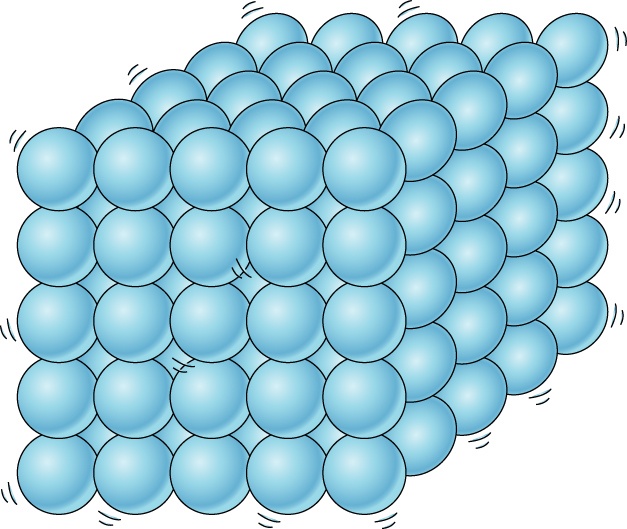
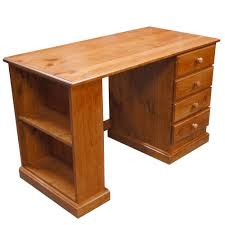
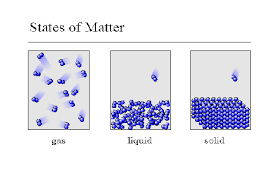
What state of matter?

a)

Solid

b)

Liquid

c)

Gas

d)

Plasma!!!

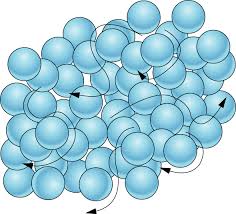
6.

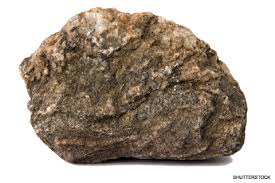
What state of matter?

a)

Solid

b)

Liquid

c)

Gas

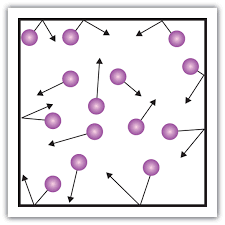
7.

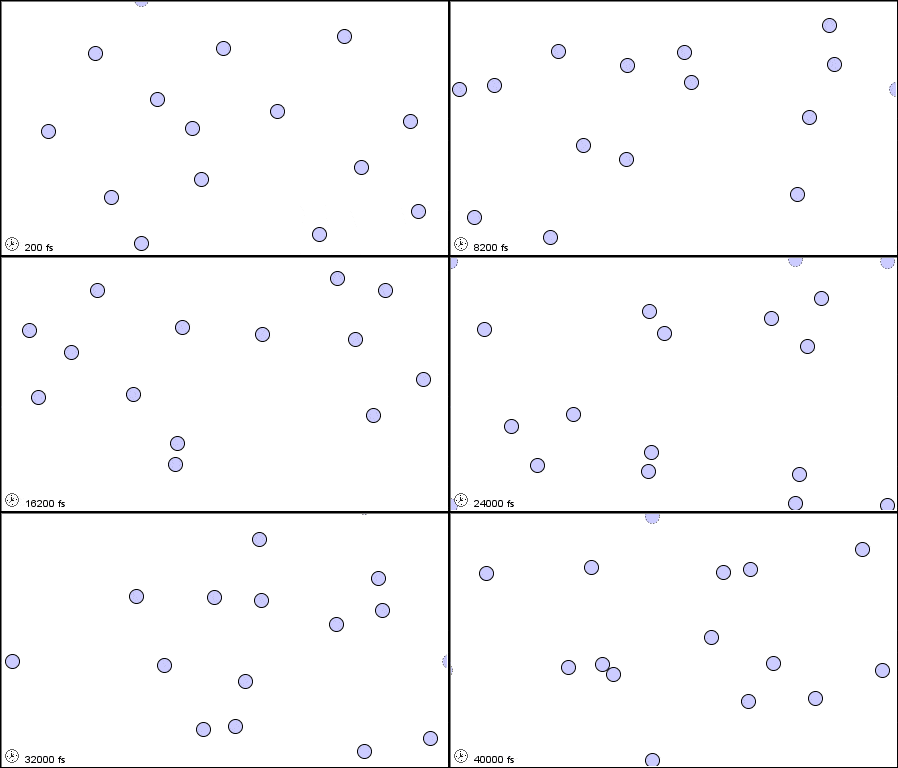
What state of matter?

a)

Solid

b)

Liquid

c)

Gas

8.
When the temperature of matter increases the particles...
a)
speed up and move closer
b)
speed up and move farther apart
c)
slow down and move closer together
d)
slow down and move farther apart
9.

What is the phase change of a solid to a liquid?

a)

freezing

b)

melting

c)

evaporation

d)

condensation

10.

Change from Liquid to Solid is called ...

a)

ionization

b)

freezing

c)

sublimation

d)

evaporation

11.
Change from gas to liquid...
a)
condensation
b)
evaporation
c)

deionization

d)

sublimation

12.

Change from liquid to gas is called....

a)

ionization

b)

vaporization

c)

condensation

d)

deposition

13.

This state of matter has a constant volume, but fits the space of the container holding it.

a)

Solid

b)

Liquid

c)

Gas

d)

Plasma

14.

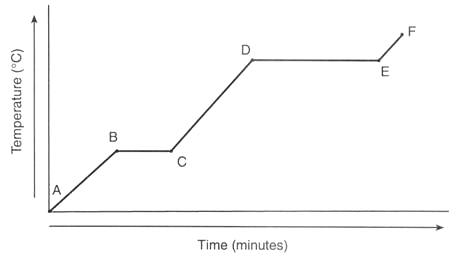
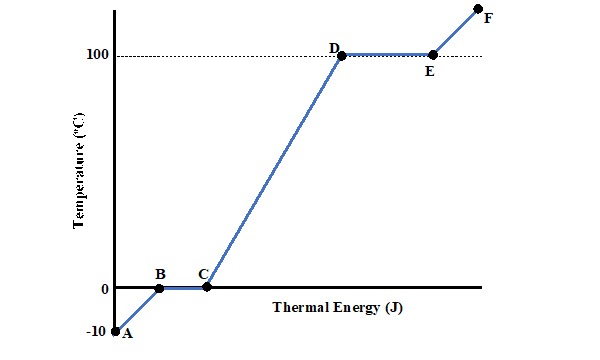
What term goes on the y-axis? (A)

a)

Heat(Energy)

b)

Temperature

c)

Phase

d)

Type of Matter

15.

What term goes on the x-axis? (B)

a)

Heat(Energy)

b)

Temperature

c)

Phase

d)

Type of Matter

16.

What phase of matter exists in part D of the graph?

a)

Gas

b)

Liquid

c)

Solid

d)

Plasma

17.

What phase of matter exists in part C of the graph?

a)

Gas

b)

Liquid

c)

Solid

d)

Plasma

18.

What phase of matter exists in part E of the graph?

a)

Gas

b)

Liquid

c)

Solid

d)

Plasma

19.

What phase change occurs when you start at D and end at E?

a)

Freezing

b)

Melting

c)

Condensing

d)

Vaporization

20.

What phase change occurs when you start at D and end at C?

a)

Freezing

b)

Melting

c)

Condensing

d)

Vaporization

21.

What phase change occurs when you start at E and end at D?

a)

Freezing

b)

Melting

c)

Condensing

d)

Vaporization

22.

What phase change occurs when you start at C and end at D?

a)

Freezing

b)

Melting

c)

Condensing

d)

Vaporization

23.

On which parts of the graph does the temperature remain the same?

a)

Between C and D

b)

Between D and E

c)

At C, D, or E

d)

On both flat sections

24.

How is a liquid defined?

a)
Indefinite shape, indefinite volume
b)
Definite shape, definite volume
c)

charged particles that have indefinite shape and indefinite volume

d)
Definite volume, indefinite shape
25.

Particles of a liquid

a)

are tightly packed together and stay in a fixed position/pattern

b)

are free to move around one another but still touch.

26.

The faster the particles in a substance move,

a)

the colder it is.

b)

the warmer it is.

c)

the more energy it has.

d)

the more enthalpy it has

27.

When the temperature of matter decreases the particles...

a)
speed up and move closer
b)
speed up and move farther apart
c)
slow down and move closer together
d)
slow down and move farther apart
28.

What is the phase change of a solid to a liquid?

a)

freezing

b)

melting

c)

evaporation

d)

condensation

29.
5. What is it called when a solid turns directly into a gas?
a)
Sublimation
b)
Condensation
c)
Liquid
d)

Ionization

30.
Change from Gas to Solid is called........
a)
Sublimation
b)
Deposition
c)

Deionization

d)

Condensation

31.

Change from Liquid to Solid is called ...

a)

ionization

b)

freezing

c)

sublimation

d)

evaporation

32.
Change from gas to liquid...
a)
condensation
b)
evaporation
c)

deionization

d)

sublimation

33.

Change from liquid to gas that occurs at the the surface of the liquid is called....

a)

ionization

b)

evaporation

c)

condensation

d)

deposition

34.

Where on the graph are phase changes taking place (can choose more than 1 answer)?

a)

1

b)

2

c)

3

d)

4

e)

5

35.

Are there molecules moving at all in a solid brick?

a)

yes, but only vibrating

b)

no, they don't move at all

c)

yes, they move freely and randomly

36.
A ___ has the same volume in any container, but takes the shape of the container.
a)
Liquid
b)
Solid
c)
Gas
d)
Plasma
37.

A ___ maintains its own shape and volume in any container.

a)
Liquid
b)
Solid
c)
Gas
d)
Plasma
38.
A change from a solid to a liquid is called?
a)
Freezing
b)
Evaporation
c)
Condensation
d)
Sublimation
e)
Melting
39.
A change from solid to gas (without ever being a liquid) is called?
a)
Freezing
b)
Evaporation
c)
Condensation
d)
Sublimation
e)
Melting
40.
A change from gas to liquid is called?
a)
Freezing
b)
Evaporation
c)
Condensation
d)
Sublimation
e)
Melting
41.
A change from liquid into gas is called?
a)
Freezing
b)

Vaporization

c)
Condensation
d)
Sublimation
e)
Melting
42.
A change from Liquid to a solid is called?
a)
Freezing
b)
Evaporation
c)
Condensation
d)
Sublimation
e)
Melting
43.
Particles in a Liquid have what type of motion?
a)
Fast Motion
b)
Slow Motion
c)
No Motion
d)
Medium Motion
e)
Very, Very Fast Motion
44.
Particles in a Solid have what type of motion?
a)
Fast Motion
b)
Slow Motion
c)
No Motion
d)
Medium Motion
e)
Very, Very Fast Motion
45.
Particles in a Gas have what type of motion?
a)
Fast Motion
b)
Slow Motion
c)
No Motion
d)
Medium Motion
e)
Very, Very Fast Motion
46.
Particles in a Plasma have what type of motion?
a)
Fast Motion
b)
Slow Motion
c)
No Motion
d)
Medium Motion
e)
Very, Very Fast Motion
47.
Sulfar has a melting point of 215 oC. This means that if Sulfar has a temperateure of 215 oC, what phase(s) of matter can it be in?
a)
Only Solid
b)
Only Liquid
c)
Only Gas
d)
Both Solid and Liqiud
e)
Both Solid, Liquid and Gas
48.
Sulfar has a melting point of 215 oC. This means that if Sulfars has a temperature of 210 oC, what phase(s) of matter can it be in?
a)
Only Solid
b)
Only Liquid
c)
Only Gas
d)
Both Solid and Liqiud
e)
Both Solid, Liquid and Gas
49.
Sulfar has a melting point of 215 oC. This means that if Sulfars has a temperature of 220 oC, what phase(s) of matter can it be in?
a)
Only Solid
b)
Only Liquid
c)
Only Gas
d)
Both Solid and Liqiud
e)
Both Solid, Liquid and Gas
50.
Matter in stars is mainly in the ___ phase of matter?
a)
Liquid
b)
Solid
c)
Gas
d)
Plasma
51.
Which is the correct order of the different phases of matter from Highest Kinetic Energy (KE) to Lowest Kinetic Energy (KE)
a)
Solid, Liquid, Gas and Plamsa
b)
Plasma, Gas, Liquid and Solid
c)
Freezing, Melting, Boiling and Condensation
52.
Adding Kinetic Energy to a Phase of Matter cause it to ____.
a)
lose Heat
b)
increase in KE-
c)
have a loss of temperature
d)
have faster moving particles
53.
Taking away Kinetic Energy from a phase of matter will cause it to __.
a)
lose Heat
b)
increase in KE-
c)
have a gain of temperature
d)
have faster moving particles
54.
The Condenstaion point for H2O is ___. (remeber to use the scientifc temperature measurment)
a)
100 oF
b)
100 oC
c)
99 oC
d)
32 oC
55.
A gas
a)
has a definite shape but no definite volume
b)
has a definite volume but no definite shape
c)
has fast-moving particles
56.

Freezing

a)

Solid to gas

b)

Liquid to solid

c)

Gas to solid

57.

Boiling

a)

liquid to gas

b)

gas to solid

c)

gas to liquid

58.
Which state of matter has a definite shape?
a)
solid
b)
liquid
c)
gas
59.

What is happening when my ice cream changes from a solid to a liquid?

a)

freezing

b)

melting

c)

burning

60.

The state of matter that has no definite size or shape is

a)

Solid

b)

Liquid

c)

Gas

61.

Particles in a ______________________ move quickly and are far apart.

a)

gas

b)

solid

c)

liquid

62.

Particles of a liquid

a)

are tightly packed together and stay in a fixed position.

b)

are free to move around one another but still touch.

63.

Solid to Gas

a)

Deposition

b)

Sublimation

c)

Evaporation

64.

What is condensation?

a)

gas to solid

b)

gas to liquid

c)

liquid to solid

65.

The slower the particles in a substance move,

a)

the colder it is.

b)

the warmer it is.

c)

the more energy it has.

66.
The temperature of a substance increases as___.
a)
the substance expands
b)
the average kinetic energy of its particles increases
c)
the substance's volume increases
d)
the substance's mass increases
67.

Definite shape and definite volume

a)

Solid

b)

Liquid

c)

Gas

68.

Has a definite volume but not a definite shape

a)

Solid

b)

Liquid

c)

Gas

69.

Liquid to Gas

a)

Condensation

b)

Evaporation

c)

Sublimation

70.

A liquid

a)
has a definite shape but no definite volume
b)
has a definite volume but no definite shape
c)
has fast-moving particles
71.
Freezing
a)
Solid to gas
b)
Liquid to solid
c)
Gas to solid
d)
Liquid to gas
72.
Boiling
a)
liquid to gas
b)
gas to solid
c)
gas to liquid
d)
solid to liquid
73.
Which state of matter has tightly packed molecules?
a)
solid
b)
liquid
c)
gas
74.
Define a liquid.
a)
Indefinite shape, indefinite volume
b)
Definite shape, definite volume
c)
Found in stars
d)
Definite volume, indefinite shape
75.

The state of matter that has no definite volume or shape is

a)
Solid
b)
Liquid
c)
Gas
76.
Particles (molecules) in a ______________________ have more energy than the other states of matter.
a)
gas
b)
solid
c)
liquid
77.
What term describes a solid changing to a gas?
a)
Deposition
b)
Sublimation
c)
Evaporation
d)
Freezing
78.
What is condensation?
a)
gas to solid
b)
gas to liquid
c)
liquid to solid 
d)
solid to liquid 
79.
Which has a greater distance between particles?
a)
Solid
b)
Liquid
80.
The slower the particles in a substance move,
a)
the colder it is.
b)
the warmer it is.
c)
the more energy it has.
d)
the less energy it has.
81.
Thermal energy is...
a)
heat energy.
b)
the energy of motion
c)
energy of nuclear processes.
d)
an indication of physical change.
82.

definite volume , not a definite shape

a)

solid

b)

liquid

c)

gas

83.

particles have a lot of space in between them, they can be compressed

a)

solid

b)

liquid

c)

gas

84.

has an indefinite volume

a)

solid

b)

liquid

c)

gas

85.

has a definite shape and a definite volume

a)

solid

b)

liquid

c)

gas

86.

particles vibrate and rotate in a fixed position, and have a low energy

a)

solid

b)

liquid

c)

gas

87.

What state is represented in the gif?

a)

solid

b)

liquid

c)

gas

88.

In which state of matter will there be the LARGEST space between molecules?

a)

solid

b)

liquid

c)

gas

89.

What phase change takes place when a liquid turns into a gas?

a)

melting

b)

sublimation

c)

condensation

d)

evaporation

90.

When you see drops of liquid water on your cold soda can caused by cooling of the water vapor in the air, ______________ has occurred.

a)

melting

b)

freezing

c)

condensation

d)

sublimation

91.

When you boil water and it turns to steam, you are seeing an example of ________________ occur.

a)

melting

b)

vaporization

c)

condensation

d)

sublimation

92.


Sublimation is

a)

when solid turns into gas

b)

when liquid turns into gas

c)

when gas turns into plasma

d)

when gas turns into solid

93.


Change from Gas to Solid is called........

a)

Sublimation

b)

Fusion

c)

precipitation

d)

Deposition

94.

very low energy

a)

solid

b)

liquid

c)

gas

95.

Phase change going from a Liquid to a Gas...

a)

Vaporization

b)

Deposition

c)

Condensation

d)

Melting

96.

Phase change going from a Gas to a Solid...

a)

Deposition

b)

Sublimation

c)

Condensation

d)

Vaporization

97.

Are the particles moving faster or slower as time goes on?

a)

Faster

b)

Slower

98.

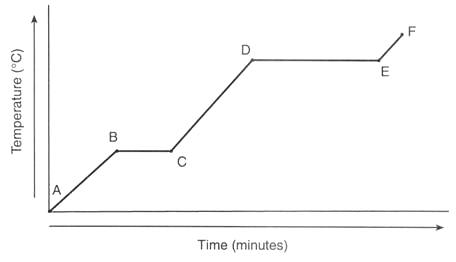
What state/phase is the object likely from points A to B?

a)

Solid

b)

Liquid

c)

Gas

d)

Plasma

99.

What is happening to the particles in the substance between points A and B?

a)

Melting

b)

Freezing

c)

Speeding Up

d)

Slowing Down

100.

What is happening to the particles in the substance between points D and E?

a)

Melting

b)

Freezing

c)

Vaporizing

d)

Sublimating

101.

Is the substance gaining or losing energy?

a)

Gaining

b)

Losing

102.
What is the phase change of a solid to a liquid?
a)
freezing
b)
melting
c)
boiling
d)
condensation
103.
All changes in the state of matter of a substance requires
a)
vibration
b)
water
c)
permission
d)
energy
104.
What happens to particles when they are heated?
a)
They speed up and spread out
b)
They slow down and compress
c)
They stop moving
d)
They move closer together and speed up
105.

Between which two points is the solid cooling?

a)

A <---- B

b)

B <----> C

c)

C <---- D

d)

D <----> E

e)

E <---- F

106.

Between which two points is the gas heating up?

a)

A ----> B

b)

B <---- C

c)

C ----> D

d)

D ----> E

e)

E ----> F

107.

Between which two points is the gas condensing?

a)

A <---- B

b)

B <---- C

c)

C <---- D

d)

D <---- E

e)

E <---- F

108.
Between which points is the temperature of the substance remaining constant?
a)
A-B only. 
b)
A-B, C-D, E-F
c)
B-C only. 
d)
B-C, D-E
109.
A substance's heating curve is shown in the graph.  What is its boiling point?
a)
100 C
b)
60 C
c)
80 C
d)
20 C
110.
The graph shows a cooling curve for an unknown substance.  What is happening during segment DE?
a)
boiling
b)
condensation
c)
freezing
d)
melting
111.
In which segment is the kinetic energy remaining constant?
a)
A-B
b)
B-C
c)
C-D
d)
E-F
112.

Where on the graph are phase changes taking place?

a)

1

b)

2

c)

3

d)

4

e)

5

113.
5. What is it called when a solid turns directly into a gas?
a)
Sublimation
b)
Condensation
c)
Liquid
114.
7. All phase changes (changing states) requires energy to be added or taken away.
a)
True
b)
False
115.
Change from Gas to Solid is called........
a)
Sublimation
b)
Deposition
c)
Fusion
d)
condensation
116.

What happens to particles when energy is taken away (cooled)?

a)

They speed up and spread out

b)

They slow down and contract

c)

They stop moving

d)

They move closer together and speed up

117.

Matter is anything that has mass and takes up space

a)

True

b)

False

118.

As temperature increases, intermolecular forces decrease

a)

True

b)

False

119.

What type of relation does temperature and intermolecular forces have?

a)

direct

b)

inverse

c)

complex

d)

symbiotic

120.

The forces in chemical bonds are weaker than intermolecular forces

a)

True

b)

False