
 Worksheets
Chapter 2: Chemistry in Living Systems
Total questions: 115
Worksheet time: 58hrs 30mins
Why is water considered crucial for life on Earth?
Because it is the only liquid on Earth
Because it supports all known forms of life
Because it is always found in solid form
Because it is not needed by organisms
Which property of water makes it important to organisms?
Its ability to dissolve many substances
Its solid state at room temperature
Its lack of interaction with other chemicals
Its inability to change temperature
How is matter changed in chemical reactions?
Matter disappears completely
Matter is rearranged to form new substances
Matter remains exactly the same
Matter turns into energy only
How do organisms use chemistry to survive?
By ignoring chemical reactions
By using chemical reactions to obtain energy and build materials
By avoiding all chemical changes
By only using physical changes
What materials are organisms made of?
Only water
Only metals
A variety of chemical compounds
Only gases
What role do chemical reactions play when food encounters gastric juice in your stomach?
They help break down the food.
They make the food taste better.
They cool down the food.
They change the color of the food only.
Which of the following best describes what happens to food when it undergoes a chemical reaction in the stomach?
The food is physically mixed but not changed.
The food is broken down into simpler substances.
The food is frozen.
The food is turned into gas only.
Why is it important for food to undergo chemical reactions in the stomach?
To make it easier for the body to absorb nutrients.
To make the food look more appealing.
To keep the food whole for longer.
To increase the temperature of the food.
What is the smallest basic unit of matter?
Atom
Molecule
Element
Compound
Which of the following best describes an element?
A substance made of one type of atom that cannot be broken down into simpler substances by chemical reactions
A mixture of different atoms
A combination of molecules
A substance that can be separated into simpler substances by physical means
Why can't an element be broken down into simpler substances by chemical reactions?
Because it is made of only one type of atom
Because it is made of many types of atoms
Because it is a mixture
Because it is a compound
Every physical thing you can think of is made of which of the following?
Atoms
Cells
Molecules
Compounds
A student claims that water is an element because it is important for life. Using your knowledge of elements and atoms, explain why this claim is incorrect.
Water is made of more than one type of atom, so it is not an element.
Water is made of only one type of atom, so it is an element.
Water cannot be broken down by chemical reactions, so it is an element.
Water is not made of atoms, so it is not an element.
According to the learning material, how many elements are important to life?
About 10
About 20
About 30
About 50
Why is it significant that only about 30 elements are important to life, even though there are more than 100 elements?
It shows that all elements are equally important.
It suggests that life depends on a small subset of elements.
It means that elements are not important for life.
It indicates that elements are not found in nature.

What does the diagram at the bottom of the page represent?
A map of the world
The periodic table of elements
A food pyramid
A solar system chart
What is the central region of an atom made up of protons and neutrons called?
Electron
Proton
Nucleus
Neutron
Which subatomic particle is positively charged and found in the center of an atom?
Electron
Neutron
Proton
Nucleus
Which particle in the atom is neutrally charged and located in the center?
Electron
Proton
Nucleus
Neutron
Which of the following best describes an electron?
Positively charged particle in the nucleus
Neutrally charged particle in the nucleus
Very small, negatively charged particle that moves around the nucleus
Central region of an atom
If you were to represent the charge of a neutron, which symbol would you use?
+
-
0
*
Explain how the location and charge of protons, neutrons, and electrons differ within an atom.
Protons and neutrons are in the nucleus and have positive and neutral charges, while electrons are outside the nucleus and have a negative charge.
Protons and electrons are in the nucleus and have positive and negative charges, while neutrons are outside the nucleus and have a neutral charge.
All three particles are in the nucleus and have the same charge.
Protons are outside the nucleus, neutrons are in the nucleus, and electrons are in the nucleus.

Which subatomic particle is found in the nucleus of an atom and has a positive charge?
Proton
Electron
Neutron
Photon

What is the region called where electrons are most likely to be found in an atom?
Nucleus
Electron cloud
Proton zone
Neutron shell

Compare the locations of protons, neutrons, and electrons in an atom based on the models shown. Which statement is correct?
Protons and neutrons are in the nucleus, electrons are outside the nucleus.
Protons and electrons are in the nucleus, neutrons are outside.
Neutrons and electrons are in the nucleus, protons are outside.
All three are found only in the electron cloud.
What is an isotope?
Atoms of the same element with different numbers of neutrons
Atoms of different elements with the same number of neutrons
Atoms of the same element with the same number of neutrons
Atoms of different elements with different numbers of protons
How many protons are present in Carbon-12?
12
6
8
14
How many neutrons are present in Carbon-14?
6
7
8
14
Which of the following statements best explains why Carbon-12, Carbon-13, and Carbon-14 are considered isotopes of each other?
They have the same number of protons but different numbers of neutrons.
They have different numbers of protons and neutrons.
They have the same number of neutrons but different numbers of protons.
They have different numbers of electrons.
What is a compound?
A substance made up of atoms of two or more elements in fixed proportions
A single element in its pure form
A mixture of any substances in any proportion
A gas that cannot be separated
Which of the following statements is true about the physical properties of compounds?
Compounds have the same physical properties as their component elements
Compounds have different physical properties than their component elements
Compounds are always gases
Compounds cannot be separated into elements
How many hydrogen atoms are present in a molecule of water (H2O)?
1
2
3
0
How many oxygen atoms are present in a molecule of water (H2O)?
2
3
1
0
Why does water (H2O) have different properties than hydrogen and oxygen gases?
Because it is a mixture, not a compound
Because compounds always have the same properties as their elements
Because the combination of hydrogen and oxygen in fixed proportions forms a new substance with different properties
Because water is not made from hydrogen and oxygen

What does the diagram in the image illustrate?
The separation of water into hydrogen and oxygen
The combination of flammable gases oxygen and hydrogen to make nonflammable water
The mixing of two liquids to form a gas
The freezing of water into ice
How many carbon atoms are present in the compound with the formula C₁₂H₂₂O₁₁?
12
22
11
2
How many hydrogen atoms are present in the compound with the formula C₁₂H₂₂O₁₁?
11
12
22
10
How many oxygen atoms are present in the compound with the formula C₁₂H₂₂O₁₁?
12
22
11
10
Given the formula C₁₂H₂₂O₁₁, which element is present in the greatest quantity?
Carbon
Hydrogen
Oxygen
Nitrogen
What is a covalent bond?
When two atoms share two or more pairs of electrons
When two atoms transfer electrons
When two atoms lose electrons
When two atoms gain electrons
Each electron pair shared between two atoms forms what?
A bond
An ion
A molecule
A proton
Why are covalent bonds important in the formation of molecules like water and methane?
They allow atoms to share electrons, creating stable molecules.
They cause atoms to lose electrons, making them unstable.
They involve the transfer of protons between atoms.
They only occur in metals.
What happens when atoms with less than 8 valence electrons come close to each other and neither wants to give up an electron?
They share their electrons
They lose all their electrons
They form ionic bonds
They become unstable
What type of bond is formed when electrons are shared between atoms?
Covalent bond
Ionic bond
Metallic bond
Hydrogen bond
Why are both atoms considered 'happy' when they share electrons?
Because they both achieve a stable electron configuration
Because they lose all their electrons
Because they become negatively charged
Because they repel each other

Based on the diagram, what is the main idea illustrated about covalent bonds?
Electrons are shared between two atoms
Electrons are transferred from one atom to another
Atoms lose all their electrons
Atoms do not interact with each other
What is the simplest part of a substance that retains all the properties of that substance called?
Atom
Element
Molecule
Compound
Which of the following is an example of a molecule?
A single oxygen atom
A water molecule (H₂O)
A gold bar
A sodium ion
Why does a water molecule (H₂O) retain all the properties of water?
Because it is made of only one type of atom
Because it is the simplest part of water that still has all its properties
Because it is a mixture of hydrogen and oxygen gases
Because it is a solid at room temperature

Based on the diagram, how many hydrogen atoms are present in a single water molecule?
One
Two
Three
Four
What is an ionic bond?
A bond where atoms share electrons equally
A bond where one atom takes electrons from another, resulting in one positive and one negative atom that bond
A bond formed by overlapping orbitals
A bond that only occurs between metals
What is an ion?
An atom with no electrical charge
An atom that has an electrical charge to it
An atom that only forms covalent bonds
An atom that cannot bond with others
Why do atoms bond in an ionic bond?
Because both atoms become neutral
Because one atom becomes positive and the other becomes negative, causing attraction
Because both atoms lose electrons
Because both atoms gain electrons
Explain how the transfer of electrons leads to the formation of an ionic bond.
The transfer of electrons causes both atoms to become neutral, so they repel each other.
The transfer of electrons causes one atom to become positive and the other negative, so they attract and bond.
The transfer of electrons causes both atoms to become negative, so they attract each other.
The transfer of electrons has no effect on bonding.

Which element has 11 total electrons, 2 filled shells, and 1 extra electron?
Sodium
Magnesium
Oxygen
Fluorine

How many extra electrons does magnesium have according to the diagram?
1
2
3
0
What is the main difference between atoms that have just over “8” electrons and those that have just under “8” electrons?
Atoms with just over “8” have extra electrons, while those with just under “8” need more electrons.
Atoms with just over “8” have missing protons, while those with just under “8” have extra protons.
Atoms with just over “8” are always metals, while those with just under “8” are always nonmetals.
Atoms with just over “8” have more neutrons, while those with just under “8” have fewer neutrons.
What type of bond holds negative ions and positive ions together?
Covalent bond
Metallic bond
Hydrogen bond
Ionic bond

Which of the following best describes the process shown in the diagram?
Sharing of electrons between atoms
Transfer of electrons from one atom to another
Formation of metallic bonds
Breaking of chemical bonds
Why do atoms form ionic bonds?
To share electrons equally
To achieve a stable electron configuration by transferring electrons
To form molecules with covalent bonds
To increase their atomic mass

Which of the following best describes a compound?
A substance made of only one type of atom
A mixture of different elements and compounds
A substance made of two or more different elements chemically bonded together
A physical blend of two or more substances
What does the term "valence electrons" refer to?
Electrons found in the innermost shell of an atom
Electrons that are shared between atoms in a compound
Electrons in the outermost shell of an atom
Electrons that are lost during radioactive decay
How many valence electrons does carbon have?
2
4
6
8
Why is it important to know the number of valence electrons when studying chemical bonding?
It determines the color of the element
It helps predict how atoms will bond with each other
It tells you the atomic mass of the element
It shows the melting point of the element
What are valence electrons?
The electrons found in the innermost shell of an atom.
The electrons found in the nucleus of an atom.
The electrons found in the outermost shell (level) of an atom.
The protons found in the outermost shell of an atom.
How can you determine the number of valence electrons in an atom using the periodic table?
By looking at the atomic mass.
By looking at the group number.
By looking at the period number.
By looking at the atomic number.

Refer to the periodic table diagram. If an element is in group 7, how many valence electrons does it have?
2
5
7
8

How many valence electrons are generally needed in the outermost shell of an atom for it to be considered stable (except for Hydrogen and Helium)?
Eight
Six
Four
Ten
Why do Hydrogen and Helium only need 2 valence electrons to be stable?
Because their first shell can only hold 2 electrons
Because they are metals
Because they have no electrons
Because they are in Group 8
Which of the following statements best explains the stability of elements in terms of valence electrons?
Elements are stable when their outermost shell has eight valence electrons, except for Hydrogen and Helium, which are stable with two.
Elements are stable when they have an odd number of electrons.
Elements are stable when their outermost shell is empty.
Elements are stable when they have more protons than electrons.
Which of the following is a correct example of a compound?
Iron (Fe)
Water (H2O)
Gold (Au)
Oxygen gas (O2)
What is the main difference between an ionic bond and a covalent bond?
Both bonds involve only protons.
Both bonds occur only in metals.
Ionic bonds involve transferring electrons, covalent bonds involve sharing electrons.
Ionic bonds involve sharing electrons, covalent bonds involve transferring electrons.
Which subatomic particle determines the identity of an element?
Electron
Neutron
Proton
Photon
Which of the following particles is found outside the nucleus of an atom?
Electron
Neutron
Proton
Nucleus
What is formed when two or more different elements chemically combine in fixed proportions?
A compound
A mixture
A molecule of a single element
An isotope
Which property allows water to act as a universal solvent in biological systems?
Its inability to form bonds
Its metallic nature
Its ability to dissolve many substances
Its high melting point
Which subatomic particle is responsible for the chemical properties of an element?
Proton
Nucleus
Electron
Neutron
What is the chemical formula for a molecule composed of two hydrogen atoms and one oxygen atom?
HO2
CO2
O2H
H2O
Which of the following best describes a compound?
A group of molecules with the same physical properties
A substance formed when two or more elements are chemically bonded
A mixture of different elements
A substance made of only one type of atom
Which of the following best describes an element?
A substance that can be broken down into simpler substances
A combination of molecules and ions
A mixture of different compounds
A substance made of only one type of atom
What is the charge of a proton?
No charge
Negative
Positive
Neutral
Which of the following is a chemical change?
Melting ice
Burning wood
Boiling water
Breaking glass
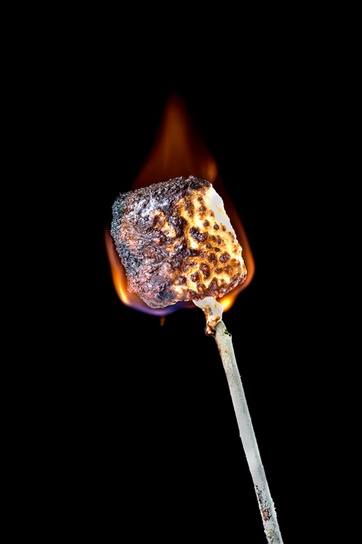
A chemical change happens when...
substance is changed at the atomic level
bonds are broken and formed
new substance is made
all of the above!
Which arrow points to the protons?
Which arrow points to the neutrons?
Label this atom's particles.
Protons
Electrons
Nucleus
Neutrons
Label the two parts of the atom here.

Match of each of these parts with its correct explanation.
Proton
Positively charged subatomic particle
Neutron
Neutrally charged subatomic particle
Electron
Negatively charged subatomic particle
Electron Cloud
Region outside of the nucleus
Nucleus
Most Dense part of the atom - center of the atom.
Atomic Number
Element Symbol
Element Name

How many neutrons are in the nucleus of a potassium atom with a mass number of 39?

The mass number of this atom is (a) and the atomic number of this atom is (b) ?
4
6
none of the above
2
1
Where would the protons be located?
Drag the correct term over the question mark.
Mass Number
Identity Number
Atomic Number
Periodic Number
Identify the products and reactants
reactants
products
Identify the reactant(s) and product(s) in the chemical reaction, CO₂ + H₂O ---> H₂CO₃.
products
H₂CO₃
reactants
CO₂ + H₂O
equals
---->
A (a) occurs when atoms found in the (b) rearrange to form new (c) (called the (d) )
Electron loss and gain creates (a)
Label the following item

Beryllium has how many protons?

How many protons are in an atom of iron?

Protons and Electrons = (a)
Neutrons = (b)

How many electrons are there in Boron? (a)

Zirconium has how many Protons?
How many neutrons are there in the most common isotope of Boron? (a)

The lithium atom has:
(a) protons
(b) neutrons




The meniscus in a graduated cylinder or glass of water is due to.....
The water molecules being attracted to the glass and adhering to it
The water molecules being attracted to the glass and cohering to it
The water molecules being non-polar and repelling the glass
Because water is hydrophilic

