
 Worksheets
Cycle Test 3 February 2023
Total questions: 120
Worksheet time: 1hrs 9mins
Which of the following is NOT considered a terrestrial-planet?
Mars
Venus
Neptune
Mercury
The largest of the terrestrial planets is
Jupiter
Earth
Mars
Uranus
According to scientists, the solar system formed from
colliding planetesimals.
rotating stars.
colliding nebulae.
a rotating disk of dust and gases.
The fact that Mercury has no atmosphere is evidence that it
reflects almost all of the sunlight that strikes it.
is composed almost entirely of gases.
is much farther from the sun than it appears.
reflects a small percentage of the sunlight that strikes it.
When viewed from Earth, Mars appears to change colors. This most likely happens because
gases in the dense Martian atmosphere are constantly changing.
volcanic activity produces thick gas clouds.
dust storms lasting for weeks cause the atmosphere to change color.
active volcanoes on the Mars surface intermittently flood the surface with lava.
What is the mass of Jupiter?
2.5 times the mass of Earth
twice the mass of all the terrestrial planets
about half the mass of all the Jovian planets
2.5 times the mass of all the other planets and their moons
Which planet has the lowest surface temperature of any planet and an atmosphere comprised mostly of nitrogen?
Jupiter
Saturn
Neptune
Uranus
Which planet has an axis of rotation parallel with the plane of its orbit?
Jupiter
Saturn
Neptune
Uranus
Most asteroids lie between the orbits of
Jupiter and Saturn.
Mars and Jupiter.
Jupiter and Neptune.
Mars and Earth.
How many known planets are in our solar system?
4
7
8
9
What dwarf planet was downgraded from planetary status in 2006?
Mercury
Uranus
Neptune
Pluto
According to the nebular theory, did the planets start forming before or after the Sun ignited?
The planets started forming during the time the Sun ignited.
The planets started forming before the Sun ignited.
The planets started forming after the Sun ignited.
What happens to the amount of the Sun's mass as it "burns"?
The mass of the Sun is constant.
It is converted into kinetic energy of the Sun.
It is converted into radiant energy.
It is converted into gravitational energy.
What is the age of the Sun?
Nearly 5 billion years old.
Nearly 500 million years old.
Nearly 1 billion years old.
Nearly 10 billion years old.
Because Pluto has not cleared its orbital path of debris, it was reclassified from a planet to a . . .
asteroid.
meteor.
moon.
dwarf planet.
This is the first planet from the Sun; it is very hot in the day and very cold in the night.
Mercury
Neptune
Earth
Jupiter
The fourth planet from the Sun; also known as the "red planet."
Neptune
Mercury
Earth
Mars
The sixth planet from the Sun; known for its large rings.
Saturn
Mercury
Earth
Mars
This is the eighth (last) planet from the Sun; it is deep dark blue in color.
Earth
Neptune
Mercury
Jupiter
These are the four planets the Sun; Jupiter, Saturn, Uranus, and Neptune are classified as
terrestrial planets
gas giants
solar planets
the best planets
Which planet has the most gravity?
Earth
Mars
Neptune
Jupiter
What factor causes one planet to have more gravity than other planets
The planets mass
The planets size
Terrestrial planets have more gravity
Gas giants have more gravity
What are the stages in the life cycle of star much larger than the Sun?
nebula → protostar → main sequence → red giant → supernova → neutron star or black hole
nebula → protostar → main sequence → red giant → white dwarf → black dwarf
nebula → protostar → main sequence → red supergiant → supernova → neutron star or black hole
protostar → nebula → main sequence → red supergiant → neutron star or black hole → supernova
In what stage of its life cycle is the Sun?
Red giant
Main sequence
White dwarf
Protostar
Where do all naturally occurring elements heavier than iron come from in the universe?
Supernovae
The core of stars
Black holes
Quasars
What is the ultimate fate of the Sun?
White dwarf
Black dwarf
Brown dwarf
Black hole
In which stage of the Sun’s life cycle does fusion take place?
Nebula
Protostar
Red giant
White dwarf
Which stage of the stellar life cycle has never been seen?
Neutron star
Red supergiant
Black hole
Black dwarf
What process is happening in the core of main sequence stars?
Nuclear Fusion
Nuclear Fission
Chemical reactions
Photosynthesis
Who said, “We are a way for the universe to know itself”?
Brian Cox
Neil deGrasse Tyson
Carl Sagan
Stephen Hawking
What force balances gravity in a star?
Friction
Radiation pressure
Upthrust
Normal contact
What determines whether a star will eventually form a black hole or a neutron star?
Its mass
Its temperature
Its colour
Its age
How do we know our Solar System formed from the remnants of a supernova?
The presence of hydrogen in the Solar System
Because the Sun is very small
The presence of elements heavier than iron in the Solar System
Because there are no other stars near us
Which star stage is the smallest?
Main sequence
Neutron star
White dwarf
Red giant
The densest form of matter is found in these small but extremely hot stars. They are the remnants of a supernova
Black hole
Neutron star
White dwarf
Planets
What is found at the centre of most galaxies?
A supermassive black hole
A nebula
A supernova
We don't know

Shown as number 1 on the diagram. All stars begin life in the same way forming from a cloud of dust and gas, also known as a ...
Stellar nebula
Planetary nebula
Massive star
Black hole
Shown as number 1 on the diagram. All stars begin life in the same way forming from a cloud of dust and gas, also known as a ...
Stellar nebula
Planetary nebula
Massive star
Black hole

Shown as number 2 on the diagram, this type of star forms from a stellar nebula and spends most of its time on the main sequence as an orange, yellow, or blue-white dwarf star. It is known as ...
average star
massive star
main sequence star
massive star

Shown as number 3, this type of star has exhausted the supply of hydrogen in its core and has begun
thermonuclear fusion of hydrogen in a shell surrounding the core. It is called ....
Red giant
Red super giant
Massive star
Neutron star

Shown as number 4 on the diagram, this is what stars like the Sun become after they have exhausted their nuclear fuel.
White dwarf
Neutron star
Red giant
Super red giant

Shown as number 5 on the diagram, these types of stars are born in the same way as other stars. They are the most luminous stars and have a mass have a mass 3 - 50x that of the Sun. They are called
Massive stars
Average stars
White dwarfs
Super red giants

Shown as number 6 on the diagram, these stars are the largest known stars in the universe measuring more than a 1000x the size of our Sun. They are known as ....
Red super giants
Massive stars
White dwarfs
Neutron stars

Shown as number 7 on the diagram, this is a powerful and luminous stellar explosion. This event occurs during the last stellar evolutionary stages when a massive star is triggered into runaway nuclear fusion. It is known as a ....
Supernova
Stella nebula
Big Bang
Black hole

Shown as number 8 on the diagram, these stars are the collapsed core of a massive supergiant star, which had a total mass of between 10 and 25 solar masses. They result from a supernova explosion. They are called ....
Neutron stars
White dwarfs
Massive stars
Red giants

Shown as number 9 on the diagram, this is a region of spacetime where gravity is so strong that nothing (no particles or even electromagnetic radiation such as light) can escape from it. It is called ...
Black hole
Neutron star
White dwarf
Supernova

A star's lifecycle is determined by its ....
Mass
Temperature
Brightness
Luminosity

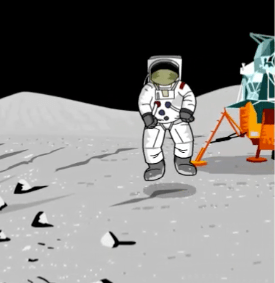


What is the SI unit used to measure mass?
pounds
kilogram
newtons
friction
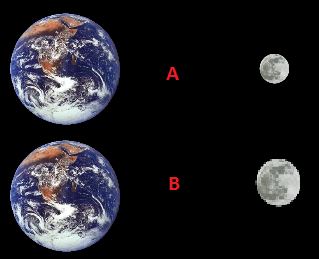
A girl weighs 300 N what is her mass here on Earth?
40.8 kg
41 kg
30 kg
300 N
You fly to Venus and research if life can exist there. Your mass is 100 kg and have a weight of 90 N what is the Gravitational strength of Venus?
900 N/kg
9 N/kg
0.9 N/kg
9000 N/ kg
What are the units for Weight?
Kg
N
N/kg
Joules
You fly to an unknown planet and research if life can exist there. A banana has a mass 0f 75g and have a weight of 50 N what is the Gravitational strength of this planet?
0.67 N/kg
66.7 N/kg
666.7 N/kg
9000 N/ kg
What would a 1.5 kg bag of chicken nuggets weigh on Jupiter? units NOT needed
(a)
What would a 750g steak weigh on Mars? units NOT needed
(a)
If the mass of a rhino is 1,080 kilograms on Earth , what is its weight?
2,400 Newtons
10,800 kg
10,800 Newtons
10,584 kg
A girl weighs 300 N what is her mass here on Earth?
40.8 kg
41 kg
30 kg
300 N
You fly to Venus and research if life can exist there. Your mass is 100 kg and have a weight of 90 N what is the Gravitational strength of Venus?
900 N/kg
9 N/kg
0.9 N/kg
9000 N/ kg
What are the units for Weight?
Kg
N
N/kg
Joules
You fly to an unknown planet and research if life can exist there. A banana has a mass 0f 75g and have a weight of 50 N what is the Gravitational strength of this planet?
0.67 N/kg
66.7 N/kg
666.7 N/kg
9000 N/ kg
What would a 1.5 kg bag of chicken nuggets weigh on Jupiter? units NOT needed
(a)
What would a 750g steak weigh on Mars? units NOT needed
(a)
If the mass of a rhino is 1,080 kilograms on Earth , what is its weight?
2,400 Newtons
10,800 kg
10,800 Newtons
10,584 kg
Which planet would a 65 kg person weight less on?
Mars
Jupiter
Earth
Venus
Which planet would a 65 kg person weight the most on?
Mars
Jupiter
Earth
Venus
On which planet (out of them all) would the queen weight the least?
(a)
On which planet (out of them all) would a carrot weigh the most?
(a)
What would the weight of a 10 kg crate be on Uranus?
(a)
When can you perform experiments?
Anytime I want
When nobody is looking
When the teacher gives me permission
When my friends says I can
Who should you report all lab accidents to?
My friend
My parents
My pet
My teacher
What type of shoes should you wear to lab?
flip flops
socks and sandals
closed toed shoes
no shoes required
Tasting chemicals ____________________
Is allowed for solutions that are very dilute.
Is never allowed in chemistry labs.
Is allowed for lab chemicals that we know are "common chemicals" (such as Vitamin C) .
Is allowed for chemicals that are known to be non toxic.
Both animal and plant cells have cell membranes that enclose the cell.
True
False
Both animal and plant cells have a nucleus.
True
False
Only plant cells have cell walls to provide structure.
True
False
Animal cells have chloroplasts for photosynthesis.
True
False
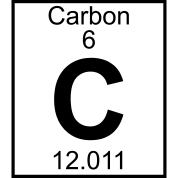
the basic structural unit of matter
atom
matter
element
nucleus
the positively charged subatomic particle contained in the nucleus of an atom
proton
neutron
electron
matter
a subatomic particle, contained in the nucleus of an atom, having the same mass as a proton but no electrical charge
proton
neutron
electron
matter
a negatively charged subatomic particle that orbits the nucleus of an atom
proton
neutron
electron
matter


