wayground logo

Free Printable Worksheets

Font size

S
M
L
XL
Worksheets

SCIENCE STAAR REVIEW

Total questions: 125

Worksheet time: 3hrs 44mins

Name
Class
Date
1.

Which of the particles in the chart is a neutron?

a)

Particle A

b)

Particle B

c)

Particle C

d)

Particle A and B

2.

Which statement is correct about protons and valence electrons?

a)

The number of valence electrons determines the identity of the element, while the number of protons determines its reactivity.

b)

The number of valence electrons plus the number of protons is equal to the atomic mass of an element.

c)

The number of protons minus the number of valence electrons is equal to the number of neutrons

d)

The number of protons determines the identity of an element, while the number of valence electrons determines its reactivity.

3.

Which list of characteristics best describe the properties of neon, argon, and krypton?

a)

Conducts heat and electricity, shiny, and solid

b)

Brittle metalloids, reactive with oxygen, and melt at low temperatures

c)

Gaseous at room temperature and chemically stable

d)

Magnetic, highly reactive, and flammable

4.

Mara is creating a model of ammonium phosphate, (NH₄)₃PO₄. She will use blue beads for nitrogen atoms, red beads for hydrogen atoms, orange beads for phosphorus atoms, and green beads for oxygen atoms. How many beads will she need of each color?

a)

3 blue, 12 red, 1 orange, and 4 green

b)

1 blue, 4 red, 1 orange, and 4 green

c)

1 blue, 4 red, 3 orange, and 4 green

d)

3 blue, 4 red, 4 orange, and 1 green

5.

Mrs. Taylor's class created four mixtures with eight different substances. After mixing two of the substances in each beaker, the class recorded their observations in the chart.

In which beakers did a chemical reaction most likely occur?

a)

1 and 2

b)

2 and 3

c)

2, 3, and 4

d)

1, 3, and 4

6.

What is the net force acting on this balloon?

a)

7N to the right

b)

10N to the right

c)

6N to the left

d)

4N to the right

7.

Which of the particles in the chart is a neutron?

a)

Particle A

b)

Particle B

c)

Particle C

d)

Particle A and B

8.

Which statement is correct about protons and valence electrons?

a)

The number of valence electrons determines the identity of the element, while the number of protons determines its reactivity.

b)

The number of valence electrons plus the number of protons is equal to the atomic mass of an element.

c)

The number of protons minus the number of valence electrons is equal to the number of neutrons

d)

The number of protons determines the identity of an element, while the number of valence electrons determines its reactivity.

9.

Which list of characteristics best describe the properties of neon, argon, and krypton?

a)

Conducts heat and electricity, shiny, and solid

b)

Brittle metalloids, reactive with oxygen, and melt at low temperatures

c)

Gaseous at room temperature and chemically stable

d)

Magnetic, highly reactive, and flammable

10.

Mara is creating a model of ammonium phosphate, (NH₄)₃PO₄. She will use blue beads for nitrogen atoms, red beads for hydrogen atoms, orange beads for phosphorus atoms, and green beads for oxygen atoms. How many beads will she need of each color?

a)

3 blue, 12 red, 1 orange, and 4 green

b)

1 blue, 4 red, 1 orange, and 4 green

c)

1 blue, 4 red, 3 orange, and 4 green

d)

3 blue, 4 red, 4 orange, and 1 green

11.

Mrs. Taylor's class created four mixtures with eight different substances. After mixing two of the substances in each beaker, the class recorded their observations in the chart.

In which beakers did a chemical reaction most likely occur?

a)

1 and 2

b)

2 and 3

c)

2, 3, and 4

d)

1, 3, and 4

12.

What is the net force acting on this balloon?

a)

7N to the right

b)

10N to the right

c)

6N to the left

d)

4N to the right

13.

The data chart indicates how carts of different mass accelerate when a constant force is applied. Using the data, determine the amount of force used in Newtons.

a)

1N

b)

2N

c)

4N

d)

8N

14.

The Earth is tilted at an angle of 23.5º relative to its position to the Sun.

The tilting of the Earth on its axis contributes to:

a)

The different phases of the moon we see

b)

The changing of seasons

c)

High and low ocean tides

d)

An increase in the gravitational force from the Sun

15.

Karen observes the moon phase to be waxing gibbous. What is the next moon phase to occur?

a)

Waning Gibbous

b)

Full Moon

c)

Waxing Crescent

d)

New Moon

16.

The Hertzsprung Russell diagram is labeled with specific stars.

Based on the diagram, which of the following is a true statement?

a)

Betelgeuse, Antares, and Aldebaran are white dwarfs.

b)

The Sun is hotter and brighter than Spica.

c)

Regulus, Sirius A, and Procyon are all on the main sequence

d)

Sirius B is a red giant.

17.

Some parts of the Himalayas are growing as much as 1cm/year. What is causing the fast, vertical growth?

a)

A Subduction zone is near the mountain chain.

b)

Huge underground geysers create pressure to push the mountains higher

c)

Sediments from eroded materials are being deposited on top of the mountains

d)

Two continental plates are colliding

18.

If you were located at Point X, which path would be the steepest path to the shoreline?

a)

Path A

b)

Path B

c)

Path C

d)

Path D

19.

How might clearing forest areas for the construction of factories potentially affect the stability of the carbon cycle?

a)

A greater amount of oxygen will be released into the atmosphere by the construction of the factories while a decreased amount of carbon dioxide is produced by the remaining forest areas.

b)

A lesser amount of carbon dioxide will be taken in and used for food production by forests while more carbon dioxide is produced by factories.

c)

The amount of carbon dioxide available for photosynthesis in the remaining forest areas will be decreased due to the construction of factories.

d)

The amount of oxygen in the atmosphere available for animal respiration will likely increase due to deforestation.

20.

The arctic hare in the picture is shown camouflaged in the snow from possible predators.

What would happen if the arctic hare was introduced into a new environment without snow and ice?

a)

The species would become overpopulated.

b)

The chance of young hares surviving to adulthood and reproducing would be greatly diminished.

c)

The hare would be a popular target for game hunters.

d)

All of the above.

21.

Which statement describes the energy changes that occur when water in a tea kettle is heated on a stove that uses natural gas?

a)

Some of the chemical energy in the natural gas transforms into thermal energy, which heats the water. Then some of the thermal energy changes into sound energy when the water forms steam and the steam leaves the kettle.

b)

Some of the thermal energy in the natural gas transforms into sound energy when the water becomes hot. Then some of the sound energy changes into light energy when the kettle becomes warm.

c)

Some of the electrical energy in the natural gas transforms into thermal energy, which causes the water to form steam. Then some of the thermal energy changes into sound energy and light energy when the steam leaves the kettle.

d)

Some of the light energy in the natural gas transforms into chemical energy in the water. Then some of the chemical energy changes into kinetic energy when steam leaves the kettle and into sound energy when the water boils.

22.

What is the primary function of the body system shown?

a)

The protection of vital organs from injury

b)

The chemical breakdown of food into smaller pieces

c)

The transport of nutrients, water, and oxygen to body cells

d)

The production of hormones that regulate growth and metabolism

23.

Which statement does NOT correctly compare silicon with another element?

a)

Silicon is a better conductor of electricity than sulfur.

b)

Silicon conducts electricity as well as copper does.

c)

Silicon is a solid at room temperature, but argon is a gas.

d)

Silicon is less malleable than silver.

24.

A marble is given potential energy by being placed at Location W. When the marble is released, it rolls down the track.

At which location does the marble have maximum kinetic energy?

a)

Location W

b)

Location X

c)

Location Y

d)

Location Z

25.

Both the esophagus and the small intestine are involved in the digestion of food. The esophagus squeezes food into the stomach by wave-like muscle contractions. Peptidase enzymes in the small intestine break food molecules into smaller molecules.

Which statement best describes changes to food during digestion?

a)

The muscle contractions result in physical changes, while the action of the peptidase results in chemical changes.

b)

The muscle contractions and the action of the peptidase both result only in physical changes.

c)

The muscle contractions result in chemical changes, while the action of the peptidase results in physical changes.

d)

The muscle contractions and the action of the peptidase both result only in chemical changes.

26.

Students slid a small wood block along a flat tabletop for a distance of 1.6m. The data show the motion of the block of wood.

Which graph displays the motion of the wood block?

a)
b)
c)
d)
27.

What keeps planets in the solar system from moving in straight lines through the galaxy?

a)

Light Energy

b)

Gravity

c)

Inertia

d)

Potential Energy

28.
What is a mixture?
a)
some thing that can be separated
b)
something that is difficult to some something that is difficult seperate 
c)
hey:)
29.
Which of these is an example of precipitation?
a)
snow
b)
air
c)
clouds
d)
vapor
30.
When a space shuttle was launched, the astronauts onboard experienced an acceleration of 29 m/s. If one of the astronauts has a mass of 20 kg, what net force in Newtons did the astronaut experience? Force = mass x acceleration 
a)
5800
b)
580
c)
58
d)
5.8
31.
When a space shuttle was launched, the astronauts onboard experienced an acceleration of 29 m/s. If one of the astronauts has a mass of 20 kg, what net force in Newtons did the astronaut experience? Force = mass x acceleration 
a)
5800
b)
580
c)
58
d)
5.8
32.
A student uses a magnet to move a 10.0 g metal ball. The magnet exerts a force of 5N, which causes the ball to begin to move. What is the acceleration of the ball when it begins to move? Force = mass x acceleration.
a)
0.5 m/s/s
b)
500 m/s/s
c)
50 m/s/s
d)
0.005 m/s/s
33.
A car is moving  at a constant speed of 3 m/s when a force of 25N is acting on it. What will happen if the force is changed to 35N?
a)
The car will move at a constant speed of 13 m/s
b)
The speed of the car will not change.
c)
The speed of the car will increase.
d)
The speed of the car will decrease to 1 m/s
34.
Which of the following best describes the velocity of an object?
a)
150 m/s
b)
150 m/s east
c)
150 m east
d)
30 m/s/s
35.
Which of the following best describes the acceleration of an object
a)
A car maintains a constant speed
b)
A car is sitting still
c)
A car turns the corner
36.
What is the difference between the velocity and the speed of an object?
a)
Velocity is the change in distance over time, while speed is the change in velocity over time.
b)
Velocity has a direction associated with it, while speed has no specific direction.
c)
Velocity has no direction associated with it, while speed has a specific direction. 
d)
Velocity is the change in speed over time, while speed is the change in distance over time.
37.
Two cars with different masses travel at the same speed down a hill toward a stop sign. What will happen when both cars apply brakes at the same time to stop?
a)
The car with the smaller mass will require less force to stop than the car with the larger mass
b)
The car with the larger mass will maintain its velocity while traveling down the hill.
c)
The car with the smaller mass will take longer to stop than the car with the larger mass
d)
The car with the larger mass will have less inertia than the car with the smaller mass.
38.
Which way will the box in the picture accelerate? (Click on the question to see the picture more clearly!)
a)
Left
b)
Right
c)
Stay Stil
d)
Up and Down
39.
Which of Newton's Three Laws?
A person is pushed forward into their seatbelt when a car stops. 
a)
Newton's First Law
b)
Newton's Second Law
c)
Newton's Third Law
40.
Which of Newton's Three Laws?
A large car takes more force to accelerate at the same speed as a small car.
a)
Law of Inertia
b)
Law of Force and Acceleration
c)
Law of Action/Reaction
41.
Which of Newton's Three Laws?
A rocket is launched into space.
a)
Newton's First Law
b)
Newton's Second Law
c)
Newton's Third Law
42.

In the case of a car crash, the body’s inertia will continue to carry it to the right. However, if the person is wearing a seatbelt, in which direction will this force act?

a)

to the right

b)

to the left

c)

upward

d)

downward

43.

Suppose you pull Nick, who is standing on a skateboard, using a rope at a constant acceleration. What happens when you double the mass and add a friend?

a)

There will be no change to the required amount of force.

b)

The amount of force required is slightly increased.

c)

The amount of force required is doubled.

d)

The amount of force required is four-times as great.

44.

Once in orbit, the space shuttle used very little, if any, rocket power to maintain its speed despite traveling over 15,000 mph! How were NASA engineers able to do this?

a)

More mass equals more acceleration

b)

The space shuttle was able to use a special coating in order to achieve its fast speed in space.

c)

Gravity provides the necessary force to keep the space shuttle traveling at a high rate of speed.

d)

More force at liftoff equals more acceleration

45.
At what point on a roller coaster does the train have the highest kinetic energy? 
a)
at the bottom of the first drop
b)
at the top of the second hill
c)
when the train first leaves the loading station 
d)
at the top of the first drop 
46.
Samuel kicks a soccer ball across a grassy field and it eventually comes to a stop. If Newton’s law of inertia is true, why did the ball stop? 
a)
Newton’s law only applies to objects at rest. 
b)
The mass of the ball is not great enough to have inertia. 
c)
Friction with the grass applies a net force on the ball causing it to decrease its speed. 
d)
Gravity slowed the ball until it came to a stop. 
47.
What energy transformations are occurring in this scenario? 
a)
electrical energy --> mechanical energy --> light energy 
b)
solar energy --> electrical energy --> light energy
c)
solar energy --> mechanical energy --> light energy 
d)
solar energy --> electrical energy --> mechanical energy 
48.

A ball at the top of a hill has ________ ________ because if pushed it will roll down the hill.

a)

Mechanical Force

b)

Unbalanced Energy

c)

Potential Energy

d)

Unbalanced Force

49.

When a student runs and kicks a ball, they have applied an ___________ force to move the ball.

a)

Balanced

b)

Magnetic

c)

Spring

d)

Unbalanced

50.

Standing in line is an example of a ________ ________ since you are not moving forward, backward, or sideways.

a)

negative acceleration

b)

balanced force

c)

unbalanced force

d)

1st law of motion

51.

Which is newtons 3rd law

a)

for every thing there is reaction

b)

for every reaction there is a unusual action

c)

For every reaction there is an equal and opposite reaction

d)

for every reaction there is an good action

52.

Which is newtons 2nd law

a)

Acceleration is a change in speed

b)

Acceleration is a change in action

c)

Acceleration is a change in name

d)

Acceleration is a change in velocity

53.

Which type of force(s) will cause a change in an object's motion?

a)

gravity

b)

balanced forces

c)

unbalanced force

d)

net force

54.

Newton's third law states that any action will have a(n) _______ and ______ reaction

a)

equal and same

b)

equal and opposite

c)

equal and equal to

55.

What are the appropriate units to describe acceleration?

a)

m/p

b)

m/h

c)

m/s

d)

m/s square

56.

The tendency of objects to resist a change in motion is called:

a)

Friction

b)

Inertia

c)

Gravity

d)

Velocity

57.
Organisms who receive their energy by consuming other organisms.
a)
Chloroplast
b)
Heterotroph
c)
Autotroph
d)
Phototropism
58.
The part of a cell that contains the chromosomes (wound up DNA) in eukaryotic cells.
a)
Chloroplasts
b)
Cell Wall
c)
Nucleus
d)
Homeostasis
59.
The genetic code for all of your traits.
a)
Nucleus
b)
DNA
c)
Chloroplast
d)
Recessive gene
60.
The organelle inside a plant cell that converts sunlight into energy.
a)
Chloroplast
b)
Photosynthesis
c)
Parasite
d)
Cell Wall
61.
The part of a plant cell that is rigid & permeable.
a)
Chloroplast
b)
Turgor Pressure
c)
Cell Wall
d)
Phototropism 
62.
The term used to define a cell that has a nucleus containing DNA.
a)
Prokaryote
b)
Eukaryote
c)
Autotroph
d)
Homeostasis
63.
A force exerted outward on a cell wall by the water contained on a cell.
a)
Turgor Pressure
b)
Adaptation
c)
Cell Wall
d)
Photosynthesis
64.
The building up of an ecosystem after lava or glaciers have left nothing but rock.
a)
Secondary Succession
b)
Primary Succession 
c)
Natural Selection
d)
Adaptation
65.
A cell without a nucleus.
a)
Eukaryotic
b)
Prokaryotic
c)
Heterotroph
66.
Organisms who receive energy from dead or decaying matter.
a)
Prokaryotic
b)
Omnivore
c)
Heterotrophic
d)
Decomposers
67.
Rebuilding an ecosystem after a catastrophic event has occurred and soil is present.
a)
Primary Succession
b)
Secondary Succession
c)
Natural Selection
d)
Adaptations
68.
The trait that is always expressed.  It will hide or mask the other trait.
a)
Recessive
b)
Dominant
c)
Natural Selection
d)
Homeostasis
69.
Behavior patterns, or internal and external structures which allow an organism to survive and reproduce in their environment successfully.
a)
Adaptations
b)
Homeostasis
c)
Recessive traits
d)
Natural Selection
70.
The trait that is hidden or masked by the other trait. 
a)
Dominant
b)
Eukaryotic
c)
Recessive 
d)
Homeostasis
71.
Organisms who make their own energy by taking in light or chemicals.
a)
Heterotroph
b)
Phototropism
c)
Autotroph
d)
Heterotroph
72.
Successful traits are passed onto offspring through natural circumstances. 
a)
Natural Selection
b)
Primary Succession
c)
Secondary Succession
d)
Dominant
73.
The response of a plant due to the stimuli of light energy.
a)
Parasitic
b)
Chloroplast
c)
Photosynthesis
d)
Phototropism 
74.
This type of organism feeds on a host organism, causing harm to the host. 
a)
Decomposer
b)
Parasite
c)
Heterotroph
d)
Carnivore
75.
The organism's ability to maintain equilibrium in their body.
a)
Homeostasis
b)
Heterotroph
c)
Prokaryotic
d)
Autotrophic
76.
The process where plants use the light from the sun to convert carbon dioxide and water into glucose. 
a)
Phototropism
b)
Chloroplast
c)
Photosynthesis
d)
Prokaryotic
77.
If the last full moon was on April 4th, when can you expect to see the next full moon? 
a)
April 29th
b)
July 4th
c)
May 4th
d)
September 12th
78.
What is the net force and the direction of movement?
a)
50 Newtons, Left
b)
50 Newtons, Right
c)
500 Newtons, RIght
d)
450 Newtons, LEft
79.
What is Newtons 1st law of motion?
a)
Force= Mass multiplied by acceleration 
b)
An object at rest stays at rest unless acted on an unbalanced force. (inertia)
c)
For every action there is a equal and opposite  re-action.
d)
law of gravity 
80.
What is the net force and the direction of movement?
a)
50 Newtons, Left
b)
50 Newtons, Right
c)
500 Newtons, RIght
d)
450 Newtons, LEft
81.
What is Newtons 1st law of motion?
a)
Force= Mass multiplied by acceleration 
b)
An object at rest stays at rest unless acted on an unbalanced force. (inertia)
c)
For every action there is a equal and opposite  re-action.
d)
law of gravity 
82.
What law of motion does this picture represent?
a)
Newtons 3rd law
b)
Newtons 4th law
c)
Newtons 1st law
d)
Newtons 2nd law 
83.
What is Newtons 2nd law of motion?
a)
Pancakes 
b)
Force= Mass multiplied by acceleration
c)
For every action there is a equal and opposite  re-action.
d)
Law of gravity 
84.
What law of motion does this picture represent?
a)
Newtons 1st law
b)
law of gravity 
c)
Newtons 4th law 
d)
Newtons 2nd law
85.
What law of motion does this picture represent?
a)
Newtons 1st law
b)
Newtons 4th law 
c)
Newtons 3rd law 
d)
Newtons 2nd law
86.
A net force of 15 N is exerted on an encyclopedia to cause it to accelerate at a rate of 5 m/s2. Determine the mass of the encyclopedia?
a)
 m = 3.0 kg
b)
m = 4.0 kg 
c)
m = 3.0 ml 
d)
m = 30.0 g
87.
Determine the accelerations that result when a 12-N net force is applied to a 3-kg object. 
a)
3 m/s
b)
4 ft/s 
c)
13 m/s
d)
4 m/s 
88.
For every action there is a equal and opposite...
a)
action
b)
movement 
c)
re-action 
d)
Newtons law of inertia 
89.
What Newtons law does this picture represent
a)
Newtons 2nd law 
b)
Law of gravity 
c)
Newtons 1st law
d)
Newtons 5th law
90.
Mass is a measure of an object's inertia. Objects with greater mass have a greater inertia; objects with less mass have less inertia.
a)
true 
b)
false 
91.
__________ is the sum of all forces acting on an object. It is capable of accelerating a mass. 
a)
velocity
b)
gravity
c)
net force
d)
distance
92.
A unbalanced force means that an object is 
a)
zero net force
b)
changing its motion
c)
sitting still
d)
object at rest
93.
What is the tendency of an object to resist a change in motion?
a)
coffee
b)
motion
c)
inertia
d)
gravity
94.
Which car is accelerating?
a)
A car that is not moving
b)
A  car that rounds a curve at a constant speed
c)
A car traveling  at a constant speed 
d)
A car that has a set speed of 60mph
95.
The image illustrates what type of boundary?
a)
Divergent
b)
Convergent
c)
Transform
d)
Emergent
96.
The image illustrates what type of boundary?
a)
Divergent
b)
Convergent
c)
Transform
d)
Emergent
97.
The image illustrates what type of boundary?
a)
Divergent
b)
Convergent
c)
Transform
d)
Emergent
98.
What takes place because of sea-floor spreading?
a)
Crust is recycled.
b)
Crust is created.
c)
The ocean is evaporated.
d)
The sea floor remains unchanged.
99.
If a force of 50 Newton's was applied to an object with a mass of 500 grams, what will the object's acceleration be?
a)
10 m/s^2
b)
.1 m/s^2
c)
100 m/s^2
d)
1 m/s^2
100.
45 m/s2 is the... 
a)
Mass
b)
Force 
c)
Acceleration
d)
weight
101.
If a force of 26 N is exerted on two balls, one with a mass of 0.52 kg and the other with a mass of 0.78 kg, which ball will have the greater acceleration?  (F=ma)
a)
The one with a mass of .78 kg will have the greatest acceleration.
b)
The one with a mass of .52 kg will have the greatest acceleration.
c)
They will both accelerate at the same rate.
102.
Bill jogs 400 meters to Andy's house, turns around, and runs 400 meters back home.  He does so in 267 seconds.  What is Bill's average speed?
a)
about 3 m/s
b)
about 1.5 m/s
c)
0
d)
about 4 m/s
103.
What is the formula to calculate speed?
a)
S = t/d
b)
S = d/t
c)
S = d x t
d)
S = t x d
104.
Dave runs a 400 m race with a speed of 4 m/s. What time will it take him to finish the race?
a)
400 minutes
b)
100 minutes
c)
100 seconds 
d)
.25 seconds 
105.
Which of the following is a unit of time?
a)
sec
b)
mi
c)
m/s
d)
km
106.
a)
2
b)
8
c)
3
d)
13
107.
a)
2
b)
3
c)
5
108.
a)
12
b)
7
c)
8
d)
14
109.
a)
7
b)
8
c)
9
d)
10
110.
Valence electrons are the...
a)
Innermost electrons
b)
Middle electrons
c)
Outermost electrons
d)
Any electrons
111.

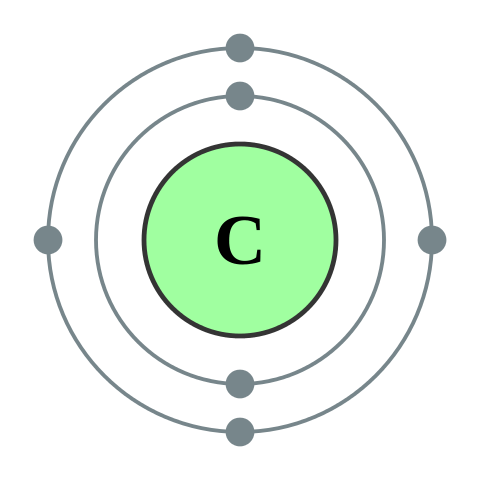
How many valence electrons does carbon have?

a)

4

b)

5

c)

6

d)

7

112.

USE THE PERIODIC TABLE

How many valence electrons does sodium have?

a)

1

b)

2

c)

3

d)

4

113.

USE THE PERIODIC TABLE

How many valence electrons does Phosphorus have?

a)

31

b)

5

c)

15

d)

4

114.

USE THE PERIODIC TABLE

How many valence electrons does Phosphorus have?

a)

31

b)

5

c)

15

d)

4

115.
Elements in the same column of the periodic table always have the same # of _______ as one another.
a)
Protons
b)
Neutrons
c)
Electrons
d)
Valence Electrons
116.
How many valence electrons are found in atoms of group 14?
a)
4
b)
3
c)
14
d)
16
117.
Which group has the greatest number of valence electrons?
a)
1
b)
14
c)
18
d)
16
118.

Which elements have the most similar chemical properties?

a)

boron and carbon

b)

oxygen and sulfur

c)

aluminum and bromine

d)

argon and silicon

119.
Valence electrons are: 
a)
Electrons farthest away from the nucleus
b)
Electrons closest to the nucleus
c)
Electrons that just come and go - they don't stay with the atom
d)
Electrons in the second shell
120.
How many valence electrons are in an atom of Ba?
a)
2
b)
8
c)
4
d)
1
121.
As you move down the first group, reactivity _________.
a)
Increases
b)
Decreases
c)
Stays the same
d)
They are all inert
122.
Which two groups on the Periodic Table are the MOST reactive?
a)
Group 1 and Group 17
b)
Group 2 and Group 16
c)
Group 13 and Group 15
d)
Group 17 and Group 18
123.
Which group on the Periodic Table is inert?
a)
Group 1
b)
Group 2
c)
Group 17
d)
Group 18
124.
How many valence electrons are elements trying to reach in their outer shells?
a)
1
b)
2
c)
5
d)
8
125.
What determines the reactivity of an element?
a)
Size of its nucleus
b)
Number of total electrons
c)
Number of valence electrons
d)
Number of shells