
 Worksheets
PSci Unit 9 & 10- Work, MA, Simple Machines, and Waves
Total questions: 125
Worksheet time: 4hrs 44mins


C = λν
If an AM radio station broadcasts at
9.95 x 10⁵ Hz, what is the wavelength of this radiation?
Calculate the wavelength of light that has a frequency of 5.2 x 10¹² Hz
5.8 x 10 -5 m
5.8 x 10 -7 m
5.19 x 10 14 m
1.56 x 10 23 m
IRAS, the Infrared Astronomy Satellite launched by NASA in 1983, had a detector that measured infrared or heat radiation from different regions of space. What is the frequency of infrared light that has a wavelength of
1.10 X 10⁻⁶ m?
3.67 x 10⁻¹⁵ Hz
3.67 x 10⁻³ Hz
2.73 x 10² Hz
2.73 x 10¹⁴ Hz
A wave has a frequency of 10 hz and a wavelength of 4 m. What is the velocity of the wave?
24 m/s
40 m/s
2.5 m/s

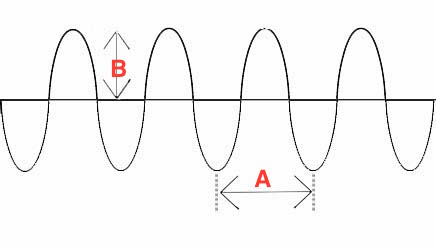
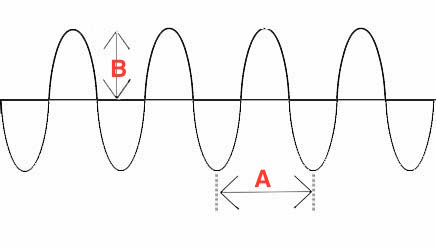
What kind of wave is pictured below?
compressional wave
transverse wave
sound wave
mechanical wave


All waves carry ______________.
Sound
Light
Matter
Energy

What kind of wave is pictured below?
compressional wave
transverse wave
sound wave
longitudinal wave

What type of wave is pictured?
Transverse wave
Longitudinal wave
Wave, what wave?
Slinky wave
How would you describe the movement of energy in a transverse wave?
Perpendicular
90ₒ to the movement of the source
Parallel
Same direction as the movement of the source
How would you describe the movement of energy in a longitudinal wave?
Perpendicular
90ₒ to the movement of the source
Parallel
Same direction as the movement of the source

What is A?

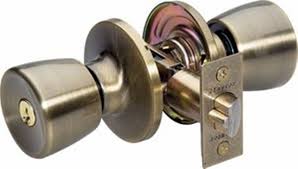

Lever
Wedge
Pulley
Inclined Plane

It changes the direction of the input force.
It changes the distance over which the input force is applied.
It changes the amount of the input force applied
It changes direction and increases the effect of your input force

What is the formula for calculating work done when a force is applied to move an object a certain distance?
W=F×d
W=dF
W=F+d
W=F−d
A lever is used to lift a 200 N weight. If the effort force applied is 50 N, what is the actual mechanical advantage of the lever?
2
3
4
5
Explain why the ideal mechanical advantage of a machine is always greater than the actual mechanical advantage.
Because of friction and other losses
Because ideal conditions are always met
Because machines are perfect
Because effort force is always greater
Calculate the work done if a force of 10 N is applied to move an object 5 meters.
15 J
25 J
50 J
100 J
A pulley system has an ideal mechanical advantage of 5. If the resistance force is 100 N, what is the effort force required?
10 N
20 N
25 N
50 N
Describe how the resistance distance affects the mechanical advantage of a lever.
Longer resistance distance increases mechanical advantage
Shorter resistance distance decreases mechanical advantage
Resistance distance does not affect mechanical advantage
Longer resistance distance decreases mechanical advantage
What is the resistance force if a machine has an actual mechanical advantage of 3 and an effort force of 30 N?
60 N
90 N
100 N
120 N
Identify the simple machine that consists of a wheel with a rope or cable wrapped around it.
Lever
Pulley
Inclined Plane
Wedge
A ramp is used to lift a box to a height of 2 meters. If the length of the ramp is 10 meters, what is the ideal mechanical advantage of the ramp?
2
3
4
5
Discuss the factors that can cause the actual mechanical advantage to be less than the ideal mechanical advantage in a pulley system.
Friction and weight of the pulley
Ideal conditions are always met
Effort force is always greater
Machines are perfect
What is the effort distance if a lever has an actual mechanical advantage of 4 and a resistance distance of 2 meters?
0.5 meters
1 meter
4 meters
8 meters
Which of the following is a type of simple machine?
Engine
Pulley
Battery
Circuit
A screw is an example of which type of simple machine?
Lever
Inclined Plane
Wedge
Wheel and Axle
If a machine has an ideal mechanical advantage of 6 and the effort force is 10 N, what is the resistance force?
10 N
30 N
60 N
100 N
What is the actual mechanical advantage of a first-class lever with a 80 lb resistant force and 20 lb effort force applied 8 m from the fulcrum?
2
4
6
8
Calculate the length from the fulcrum of an 80 lb resistance force in a first-class lever where a 20 lb effort force is located 8 m from the fulcrum. (Draw it out if it helps.)
2 m
4 m
6 m
10 m
A construction crew lifts approximately 600 lb of material several times during a day from a flatbed truck to a 50 ft rooftop. A block and tackle system with 45 lb of effort force is designed to lift the materials. What is the required actual mechanical advantage of the system?
1.1
13.3
12
11
A construction crew lifts approximately 600 lb of material several times during a day from a flatbed truck to a 50 ft rooftop. A block and tackle system with 45 lb of effort force is designed to lift the materials. How many supporting strands will be needed in the pulley system?
11
12
13
14
Machines can change the of a force.
(a)
There are how many simple machines? (spell out your answer)
(a)
You push against the back of your friends car that is stuck. You push and be become very tired, but the car does not move. Did you do work?
Yes, work was done
No, work wasn't done
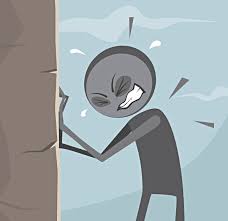
Is this an example of work?
Yes
No
What is the unit of measurement for work?
meters
newtons
m/s
Joules

Is this an example of work?
Yes
No!
Newtons are the unit for _____________.
Work
Distance
Acceleration
Force
A push or a pull
Work
Force
Acceleration
Speed
For work to be done on an object, the direction and force have to be going the same direction.
True
False
Picking up a box is an example of____________
Work
Not Work
Pushing a box across the floor is an example of
Work
Not Work
You exert 200 J of work by pulling on an object with 20 N of force. What distance is the object moved?
.01 m
10 m
10 J
4,000 m
You throw a baseball a distance of 20 meters.
Work
Not Work
You lift a suitcase to put in the overhead luggage compartment of a plane.
Work
Not work
You push against a brick wall until you are exhausted. The wall does not move.
Work
Not work
You carry a heavy bag of cat litter home from the pet store.
Work
Not work
You slam a tennis ball across the net and score the winning point.
Work
Not work
You study all night for the science SOL.
Work
Not work
Your finger pushes down on the RETURN key on a computer.
Work
Not work
You move a shovelful of snow from the driveway to the lawn.
Work
Not work
You and a friend push a heavy piano, causing it to move about 10 centimeters.
Work
Not work
You stand for half an hour in the freezing cold waiting for the bus to come.
Work
Not work
Carrying groceries into the house.
Work
Not work
Sitting on a bar stool.
Work
Not work
Holding a baby.
Work
Not work
Pushing a box 10 meters across the floor.
Work
Not work
Lifting weights 5 meters over your head.
Work
Not work
Pushing on a car but it does not move.
Work
Not work
Picking up a book off a table.
Work
Not work
A man pulling his boat out of the water from a boat launch.
Work
Not work
A child pushing his baby brother in a stroller.
Work
Not work
A brother carries his little sister, who weighs 24kg, across a field 20 meters.
Work
Not work
When you lift a 10 lb object up 1 m and then carry it 100 m forward, which direction is your force?
Down
Up
Forward
Backward
When you lift a 10 lb object up 1 m and then carry it 100 m forward, which distance matches the direction of your force?
1 m up
1 m down
100 m forward
100 m backward
When you lift a 10 lb (44.5 N) object up 1 m and then carry it 100 m forward, what work is done?
1000 J
4450 J
10 J
44.5 J
For work to occur, what two things must happen?
The object must move.
Energy is exerted (you get tired).
The movement and force must be in the same direction (parallel).
The object must apply an equal and opposite force.
Johnny picks up and carries his bookbag to class. When is work being done?
When Johnny picks up his bag.
When Johnny carries his bag to class.
Both when Johnny picks up his bag and when he carries his bag.
No work is being done as there is no force.
Sarah picks up her 45N chihuahua, Pookie, from the floor, which is a distance of 1.2 m. She carries Pookie to the kitchen, 70 m away, to get her a snack. How much work did Sarah do?
3780 J
54 J
3150 J
3204 J
Chad is the ultimate green flag. He has a date with Meg. They arrive at the restaurant and he notices the entire parking lot is covered in potholes filled with muddy water. Chad looks at Megs feet, clad in the best red bottom stilettos. Chad decides the only thing that can be done is to carry Meg from the car to the restaurant door. Meg jumps into Chad's outstretched arms and Chad carries her away. If Meg weighs 533.8 N and the car is parked nearly an entire football field away (91.44 m), how much work did Chad do to be the most chivalrous date around?
0 J
48,811 J
5.8 J
0.17 J
Sort the examples into the appropriate category.
Weight
The force the screwdriver applies to a paint can to remove the lid.
Force required to push a friend in a wheel chair up a ramp.
Height of a ramp
Length of a ramp
The displacement of an object.
The total distance you move an object
The force you apply to the screwdriver for the screwdriver to remove the lid of a paint can.
The weight of a box being lifted.
The gravitational force acting on an object at rest.
The force applied to lift a heavy box.
The force needed to pull a cart up a hill.
The force exerted when using a lever to lift a weight.
Distance an object falls before hitting the ground.
The distance a box is lifted off the ground.
The distance an object is lifted with a pulley.
The distance you pull a sled across the snow.
The distance a person walks while carrying a box.
The length of a lever arm from the fulcrum to you.

