
 Worksheets
Geosphere Study Deck
Total questions: 123
Worksheet time: 5hrs 15mins
What is the core of the Earth primarily composed of?
Silicate minerals
Water and air
Nickel and iron metals
Organic matter
What is the lithosphere composed of?
The crust and the topmost portion of the mantle
The outer core and inner core
The mesosphere and asthenosphere
The entire mantle
What are the three compositional layers of the Earth based on chemical composition?
Crust, Mantle, Core
Crust, Lithosphere, Asthenosphere
Inner Core, Outer Core, Crust
Mantle, Lithosphere, Core
What is the outermost solid layer of Earth called?
Mantle
Core
Crust
Lithosphere
What are the main elements that make up both types of Earth's crust?
Oxygen, silicon, and aluminum
Iron, calcium, and magnesium
Hydrogen, nitrogen, and carbon
Sodium, potassium, and chlorine
Where is the mantle located in relation to Earth's layers?
Above the crust
Between the crust and the core
Below the core
Inside the crust
What is the composition of the mantle compared to the crust?
More aluminium and silicon
More magnesium and less aluminium and silicon
Less magnesium and more aluminium
Equal amounts of magnesium and aluminium
What is the state of the rock in the mantle?
Liquid and fast-flowing
Solid and fast-flowing
Solid and slow-flowing
Liquid and slow-flowing
What is convection in the context of Earth's mantle?
The movement of heated material due to differences in density.
The process of rock formation in the mantle.
The cooling of Earth's core.
The sinking of oceanic plates.
Where does the core extend from and to?
From below the mantle to the center of Earth
From the crust to the outer atmosphere
From the surface to the mantle
From the outer core to the crust
What are the five physical layers of the Earth?
Crust, Mantle, Core, Ocean, Atmosphere
Lithosphere, Asthenosphere, Mesosphere, Outer Core, Inner Core
Crust, Lithosphere, Mantle, Outer Core, Inner Core
Lithosphere, Crust, Mantle, Core, Ocean
What is the outermost, rigid layer of Earth called?
Asthenosphere
Lithosphere
Mesosphere
Inner Core
The lithosphere is made up of which two parts?
Outer core and inner core
Crust and lower mantle
Crust and upper mantle
Upper mantle and lower mantle
What is the asthenosphere?
A layer of the mantle made of solid rock that moves very slowly
The outermost layer of the Earth
The innermost core of the Earth
A layer of water above the lithosphere
Where is the asthenosphere located?
Above the lithosphere
Below the lithosphere
Inside the inner core
Above the outer core
What moves on top of the asthenosphere?
Ocean currents
Tectonic plates
Atmospheric winds
River sediments
What is the state of matter of Earth's outer core?
Solid
Liquid
Gas
Plasma
Where is the outer core located in relation to the mantle and inner core?
Above the mantle and inner core
Beneath the inner core and above the mantle
Beneath the mantle and surrounds the inner core
Above the mantle and surrounds the inner core
What is the inner core of the Earth?
A liquid layer surrounding the outer core
The solid, dense center of our planet
The outermost layer of the Earth
A gaseous layer above the crust
What are the three main types of faults?
Normal fault, Reverse fault, Strike-slip fault
Normal fault, Lateral fault, Oblique fault
Reverse fault, Lateral fault, Transform fault
Strike-slip fault, Oblique fault, Transform fault
What is the state of matter of Earth's outer core?
Solid
Liquid
Gas
Plasma
What does the thickest part of the Earth's crust contain?
Water and air
Landforms, rocks, and minerals
Lava and magma
Ice and snow

True or False: The continental plates move so quickly that we can feel them.
True
False

Most geologists think that the movement of Earth's tectonic plates is caused by
the rotation of the Earth.
the Earth's magnetic field.
subduction.
convection currents.

When plates collide we get ________.
crumbles
volcanos
trenches
mountain ranges


Which layer of Earth flows slowly and causes the crust to move?
Crust
Mantle
Inner Core
Outer core

What is the correct order (starting from the surface) of Earth’s layers?
crust, outer core, inner core, mantle
mantle, outer core, inner core, crust
crust, mantle, outer core, inner core
outer core, inner core, crust, mantle

When tectonic plates slide against each other causing the earth to move.

Subduction means.....
one plate goes under another plate
two plates slide past each other
two plate collide and form folded mountains

Sea-floor spreading explains how.....
new crust is created at a divergent boundary
volcanoes are formed on continents
deep sea trenches are formed
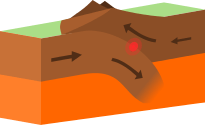
What type of plate boundary is this?
Plate
Divergent
Convergent
Transform


Which is the process that breaks up rock on Earth’s surface?
deposition
melting
compaction
weathering
Geologists have classified rocks into three major groups of rocks which are:
inorganic, organic and chemical rocks
igneous, sedimentary and metamorphic rocks
metamorphic, chemical and non chemical rocks
sedimentary, inorganic and igneous rocks
A rock that forms from many small fragments of other rocks is a(n)
igneous rock
metamorphic rock
sedimentary rock
extrusive rock
The process by which metamorphic rock changes to igneous rock begins with
melting
erosion
deposition
crystallization
Which rock cycle process causes many sedimentary rocks to have visible layers?
eruption
intrusion
crystallization
deposition
What is underground molten rock?
Lava
Magma
Soil
Intrusive

Granite is an example of...
Igneous
Metamorphic
Sedimentary

Coal is an example of...
Igneous
Sedimentary
Metamorphic
This is a natural solid that is made of one or more minerals.
Mineral
Fossil
Rock
Sediment
This is the continuous process of rock changing from one type to another.
Igneous rocks
Sedimentary rocks
Metamorphic rocks
Rock Cycle
Which of the following lists the steps an igneous rock undergoes in order to become a sedimentary rock, in the correct order?
Deposition, erosion, melting, cooling
Erosion, weathering, eruption, cooling
Dissolving, deposition, cooling, fracture
Weathering, erosion, deposition, cementation

According to the diagram, what process is shown by letter B?
compaction & cementation
weather & erosion
heat & pressure
melting
According to the diagram, what process is shown by letter A?
extrusion
erosion
crystallization
intrusion
What is a landmass?
A body of water surrounded by land
A small island in the ocean
A mountain range
A large, unbroken area of land
What is a supercontinent?
A continent that is larger than all others
A single landmass that includes two or more continents
A continent found under the ocean
A continent that has a superabundance of biodiversity
The theory that continents have moved and are still moving slowly across the Earth's surface is known as what?
Plate Tectonics
Continental Drift
Sea Floor Spreading
Earth's Rotation
What is the name of the layer that contains the upper layer of the upper mantle and crust?
Asthenosphere
Mesosphere
Lithosphere
Transosphere


Which one of the following is NOT an advantage of volcanoes?
Acid Rain
Scenery
New Habitat
Hot Springs

Which type of plate boundary does not typically produce volcanoes?
Transform
Diverging
C-O converging
O-O Converging
What is the force inside the mantle that causes the Earth's Plates to move ?
subduction
radiation
conduction
convection
What geologic feature will occur at a hot spot ?
volcano
folded mountain
deep sea trench
crevasse
A prime example of an area over a hot spot is :
Japan
the Andes Mountains
the East African Rift
the Hawaiian Islands
The formula for density is
volume/mass
mass/volume
mass x volume
density x mass


A mountain that builds up where magma pushes up through Earth's crust is a ____.
volcano
lava burst
fault
seismograph
The shaking of Earth from rocks suddenly moving along a fault is a(n) _____
fault
cinder cone
earthquake
epicenter
Circular movements of heated liquid or gas are _____?
plate tectonics
lava flows
convection currents
P waves
The three types of faults are ____, ____, and _____.
obtuse
normal
reverse
strike-slip
layered
normal
reverse
normal
strike-slip
strike-slip
obtuse
reverse
What is one piece of evidence that supports Wegener's theory of continental drift?
There are similar fossils found where the continents would fit together
Early ocean fishers logged the continents locations
Each valley on opposite continents is identical
The tapes of ancient seismographs
What is the epicenter of an earthquake?
The point deep in the Earth where the earthquake starts
The area of a circle where the earthquake might be felt
The area outside where the earthquake was felt
The point on Earth's surface directly above where the Earthquake occurred

Based on the figure, the difference in arrival times between which pair of waves can be used to determine the distance of the recording station to the epicenter?
C and D
B and C
A and D
A and B
What is the tool that records earthquakes?
A. Seismograph
B. Seismologists
C. Seismic wave
D. Seismogram
What is the zig-zag record made by a seismograph called?
A. Seismograph
B. Seismologist
C. Seismic wave
D. Seismogram


This is considered as the fastest kind of seismic waves.
Love waves
Body waves
Primary waves
Secondary waves
Main type of waves that can travel through the earth's inner layer.
surface waves
body waves
Love waves
Rayleigh waves
Which of the following is an effect of ash or ash clouds. (Select all that applies.)
Covers a large area from sunlight
Particulate matter can enter the respiratory tract causing infections
It may fertilize the soil
It calms the volcano
It can damage infrastructures
This refers to the molten material that has reached the surface and has less amount of dissolved gas.
(a)
What is the only substance with a neutral pH of 7?
Milk
Orange Juice
Pure Water
Blood
All Water
In a test of pH levels, a baking soda has a pH of 9 and bleach has a pH of 12. What is true about there relationship?
Both of the solution are bases
Both of the solution are acids
The Baking soda is an acid and the Bleach is a base
The baking soda is a base and the Bleach is an acid.
A chemical has a pH = 6. It would be best described as
Strong acid
Strong base
Weak acid
Weak base
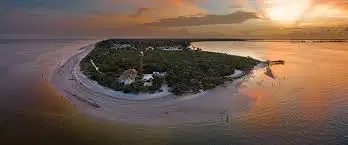
After a hurricane, William noticed that the coastline near his home on Sanibel Island had increased. Which of the following processes is the most likely reason for this change?
Physical weathering
Deposition
Chemical weathering
Erosion
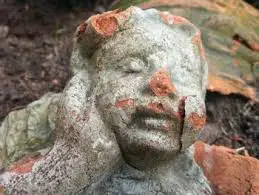
Which of the following is an example of chemical weathering?
A tree root growing into a rock and splitting it
Water flowing over rocks and smoothing them
Iron in rocks reacting with oxygen to form rust
Wind blowing sand against a rock surface
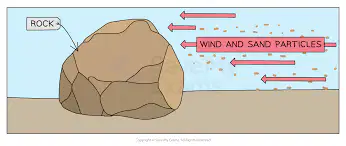
While hiking in the desert, Mason noticed that some rocks had smooth surfaces. How are these rocks weathered by wind?
Rocks are weathered when wind is coming from a certain direction
Rocks are weathered by sediment or smaller pieces of rock carried by wind
Rocks are weathered only by strong winds
Rocks are weathered only by storms
water, ice, wind or gravity
moves fragments of rock
and soil.
water, ice, wind or gravity
deposit rock sediments
and soil in a new place.
Earth’s crust into smaller
and smaller pieces.
Root Action
water, ice, wind or gravity
moves fragments of rock
and soil.
water, ice, wind or gravity
deposit rock sediments
and soil in a new place.
Earth’s crust into smaller
and smaller pieces.

Which statement best explains why this process results in weathering?


water, ice, wind or gravity
moves fragments of rock
and soil.
water, ice, wind or gravity
deposit rock sediments
and soil in a new place.
Earth’s crust into smaller
and smaller pieces.


New oceanic crust (sea floor) is created at this boundary.
Divergent Oceanic
Divergent Continental
Convergent Oceanic
Transform

The process where oceanic crust slides under another plate and is melted is called ___________.
seafloor spreading
subduction
continental drift
recycling

What two geologic features occur near every subduction zone?
Volcanoes and Trenches
Rift Valleys and Mid Ocean Ridges
Volcanoes and Rift Valleys
Mid Ocean Ridges and Trenches

A divergent boundary on land creates what feature?
Mid Ocean Ridge
Rift Valley
Subduction Zone
Deep Ocean Trench

When two continental plates converge (collide) what type of crustal feature is formed?
Mid Ocean Ridge
Subduction Zone
Rift Valley
Folded Mountains
If an earthquake occurs at the bottom of the ocean floor what could form as result?
Volcano
Tsumani
Tidal Wave
Hurricane
What is the only event associated with ALL plate boundaries?
Volcanoes
Earthquakes
Subduction
Deep Trenches

The Himalayas in Asia are an example of what type of plate boundary?
divergent
continent-to-continent convergent
ocean-to-continent convergent
transform

A long narrow deep depression in the ocean bed
ridge
fault
trench
rift

A deep crack in the Earth's surface associated with divergent boundary
lava
rift
ridge
trench
A mid-ocean RIDGE is located at the boundary of two tectonic plates. Which diagram correctly models the relative plate motion on each side of a mid ocean ridge?



