
 Worksheets
The Sun and Stars
Total questions: 118
Worksheet time: 2hrs 42mins

A self-luminous celestial body consisting of a mass of gas held together by its own gravity and emitting energy that is generated by nuclear reactions in its interior
Star
Planet
Comet

A large, bright feature extending outward from the Sun's surface
Flares
Star
Prominence

The second gaseous layer of the Sun's atmosphere; has a reddish color
Chromosphere
Radiation Zone
Photosphere
Convection Zone

The area of the Sun where energy is transported by convection; occurs in the outer layer of the Sun
Chromosphere
Radiation Zone
Photosphere
Convection Zone

A layer of a star's interior where energy is primarily transported toward the exterior by means of radiative diffusion and thermal conduction, rather than by convection
Chromosphere
Radiation Zone
Photosphere
Convection Zone

A sudden eruption of radiation from the surface of the Sun
Prominence
Solar Flare
Suns Core

A nuclear reaction in which two lighter nuclei combine to form a single heavier nucleus and some of the original mass is converted to energy
Fusion
Fission

Stable stars in the middle developmental phases that plot along a continuous diagonal belt on the Hertzsprung-Russell diagram
Dual Phase
Main Sequence
Duplication

A cloud of interstellar gas and dust created by a dying, low-mass star
Planetary Nebula
Solar Nebula
Space

An aging, giant star that has consumed its core's supply of hydrogen fuel
Old Giant
Red Supergiant
Red Super Dwarf

A stellar remnant roughly the size of Earth of a star similar in mass to our Sun
Red Giant
White Dwarf
Red Dwarf
White Giant

A very large star of high luminosity and low surface temperature
Red Dwarf
Red Giant
Red Supergiant
In which area of the sun does gas rise as it heats up, then fall back down as it cools?
the core
the radiative zone
the convective zone
the corona


Which one is the meaning of plasma?
Plasma is where two elements fuse together to form another element
Plasma is the outer most layer of the atmosphere
Plasma is what the core produces
Plasma is a hot, electrically conducting gas
What is the Order of the visible portion of the Electromagnetic System?
Red,Yellow,Orange,Green,Blue,Indigo,Violet
Red,Orange,Yellow,Green,Blue,Indigo,Violet
Violet,Indigo,Green,Blue,Red,Orange,Yellow
Violet,Blue,Red,Orange,yellow,green,Indigo
Longest Wavelengths and Lowest Frequencies?
Visible Light
Microwaves
X-Rays
Radio Waves
Shorter Wavelengths have ____Energy,Longer Wavelengths___Energy?
Lower,Higher
Higher,Lower
Astronomers have invented telescopes that allow us to "see" beyond the visable range?
True
False
Which color has the longest wavelength?
Red
Orange
Yellow
Blue
Which color has the shortest wavelength?
Red
Orange
Yellow
Blue

Which of the following has the most energy?
Red
Blue
Green
Violet

Which of the following has the most energy?
X-rays
The color green
Microwaves
ultraviolet

Which of the following has the highest frequency?
TV
Microwaves
the color indigo
ultraviolet rays

Which of the following has the lowest energy?
The color yellow
The color blue
The color indigo
The color orange

Which of the following has the lowest frequency?
The color blue
The color green
The color yellow
The color violet

Which term means the distance from the crest of one wave to the next crest?
Amplitude
Frequency
Wavelength

Increasing the amplitude of a wave ______ the wave’s energy.
Increases
Decreases
Does not change

Which has the LONGEST wavelength and therefore the lowest frequency/energy? These waves are used in broadcasting, wifi, and texting.
Gamma rays
Visible light
Radio waves
Infrared rays

Which section of the electromagnetic spectrum is the ONLY part humans can see?
X-Rays
Gamma Rays
Visible Light
Ultraviolet Rays

Electromagnetic waves that help your body produce vitamin D are called ___. Hint: These waves are invisible to humans but some insects can see them.
Gamma Rays
Ultraviolet Rays
X-Rays
Visible Light

Which wave has a low frequency, a long wavelength, and low energy?
A
B
Not enough information to determine

Which wave has a high frequency, a short wavelength, and high energy?
A
B
Not enough information to determine

Emission spectra emitted by an element (or compound) will produce ___ through a spectroscope.
bright lines
a continuous rainbow
dark lines
white light

By passing starlight light through a ___the light is spread out into its component colors.
spectrograph or spectrometer
telescope
prism or diffraction grating
mirror

Spectral lines that are observed to be narrower & blue-shifted indicates that an object is
moving away from Earth.
showing transverse motion.
moving towards Earth.
showing radial motion.


What kind of spectrum is this?
absorption spectrum
continuous spectrum
emission spectrum


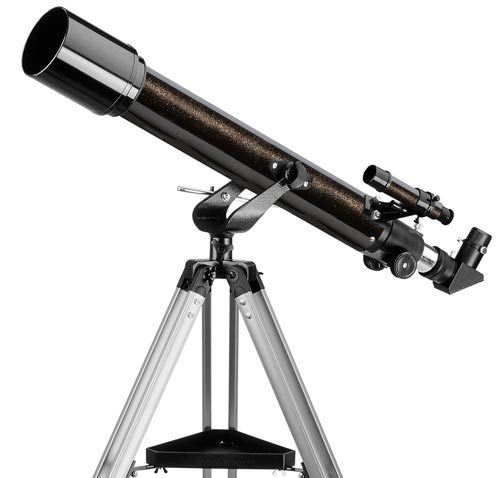
A refracting telescope uses _______ to focus light.
Lenses
Mirrors
Lasers
Water
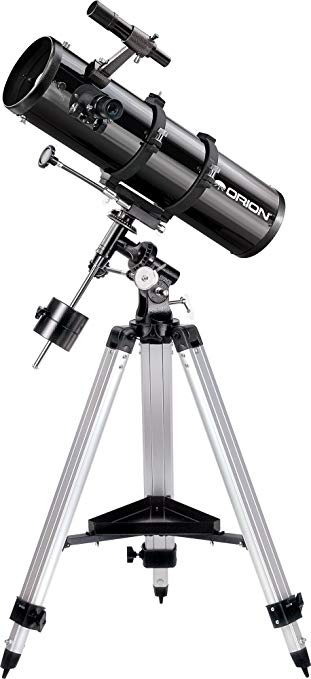
Reflecting telescopes use _______ to focus light.
Lenses
Flat mirrors
Curved Mirrors
A lens and lasers
Modern telescopes are reflecting because: (Choose all that apply)
Lenses are difficult to manufacture
Lenses are heavy and fragile
lenses absorb light that passes through them
Lenses require only 1 perfect surface


Why is the Hubble telescope located in space?
So it can be closer to the stars it magnifies
They have very large optical lenses
So its images aren't distorted by Earth's atmosphere
So it can be operated by astronauts
What is the main advantage of reflecting telescopes over refracting telescopes?
More powerful
Less powerful
Cheaper
Heavier
Who improved the design of a telescope in 1609?
Isaac Newton
Albert Einstein
Galileo Galilei
Nicolaus Copernicus




As objects move in space, their wavelengths change. This phenomenon is called the...
Coriolis Effect
Doppler Effect
Movement Effect
Black Hole Effect

When objects move towards you, the wavelength....
Increases (gets longer)
Decreases (gets shorter)

When objects move away from you, the wavelength....
Increases (gets longer)
Decreases (gets shorter)

When objects move away from an observer, what color shift is happening?
Red Shift
Blue Shift

When objects move towards the observer, what color shift is happening?
Red Shift
Blue Shift


Most of the stars on the HR diagram are classified as which type of star?
White Dwarfs
Main Sequence
Giants
Supergiants
The HOTTEST stars are usually what color
yellow
orange
blue
pink
What is apparent magnitude in relation to stars?
The actual size of a star
How bright a star appears from Earth
The temperature of a star's surface
The mass of a star relative to the sun
What is absolute magnitude?
The actual size of a star.
The brigthness of a star compared to the sun.
The brightness of stars as if viewed at the same distance from Earth.
the total energy output of a star
How do scientists typically determine a star's temperature?
by measuring its mass
by analyzing its color
by calculating its density
by measuring its diameter


What is plotted on an H-R diagram?
A star's temperature and brightness
A star's distance from Earth
A star's color and distance from its planets
A planet's amount of water

What characteristics are used to classify stars on HR diagrams?
Flammability, weight, and reactivity
Temperature/color and brightness
Conductivity, luster, and density
Malleability, distance, and viscoscity
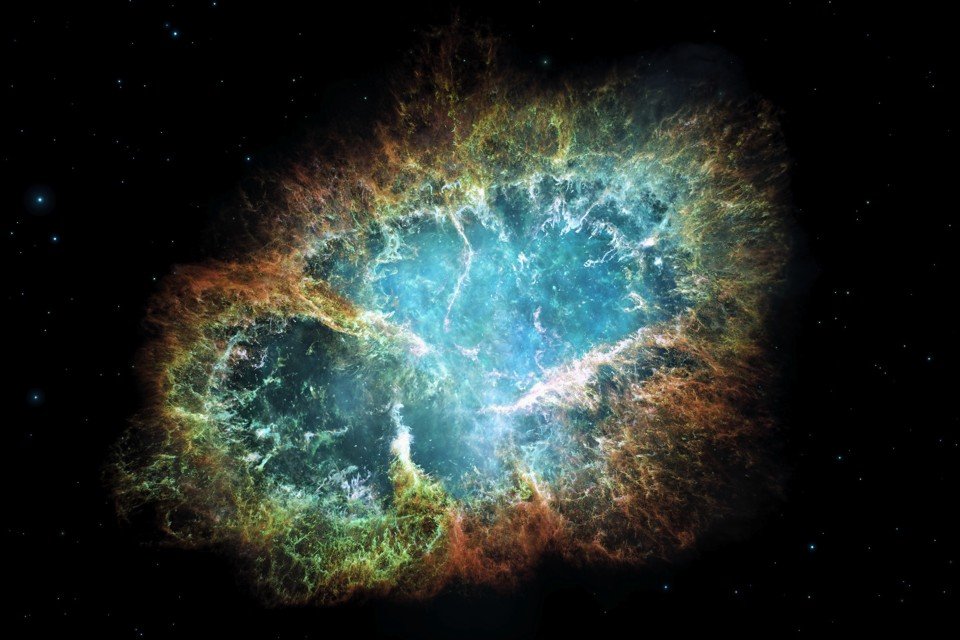
Brightness determined by DISTANCE from the earth
Amazing magnitude
Absolute magnitude
Apparent magnitude
Awesome magnitude
The brightness of a star as seen from earth
Apparent magnitude
Awesome magnitude
Absolute magnitude
Amazing magnitude

What is meant by the term luminosity?
Luminosity is the amount of energy generated in the star as electromagnetic radiation.
Luminosity is how bright a star seems to an observer far away.
Luminosity is the color at which a star burns.
Luminosity is the determinant of whether a star is approaching an observer or receding,

