
 Worksheets
SY 24-25 Life Science 8 Final Exam Practice Questions
Total questions: 117
Worksheet time: 4hrs 54mins
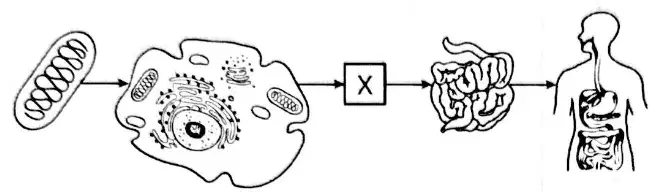
Which choice below best completes the diagram with a correct label and definition for the box labeled X?
cell: the basic structural, functional, and biological unit
organ: a group of tissues with a common function
tissue: a group of cells with a similar structure and function
organ system: a collection of organs with a common function
Which sequence represents structures organized from least complex to most complex?
nerve cell → nucleus → nervous system → brain
nucleus → nerve cell → brain → nervous system
brain → nervous system → nucleus → nerve cell
nervous system → brain → nerve cell → nucleus
Which sequence best represents increasing complexity?
tissues → cells → organelles → organs
cells → organelles → organs → organism
organelles → cells → tissues → organs
organism → cells → tissues → organelle
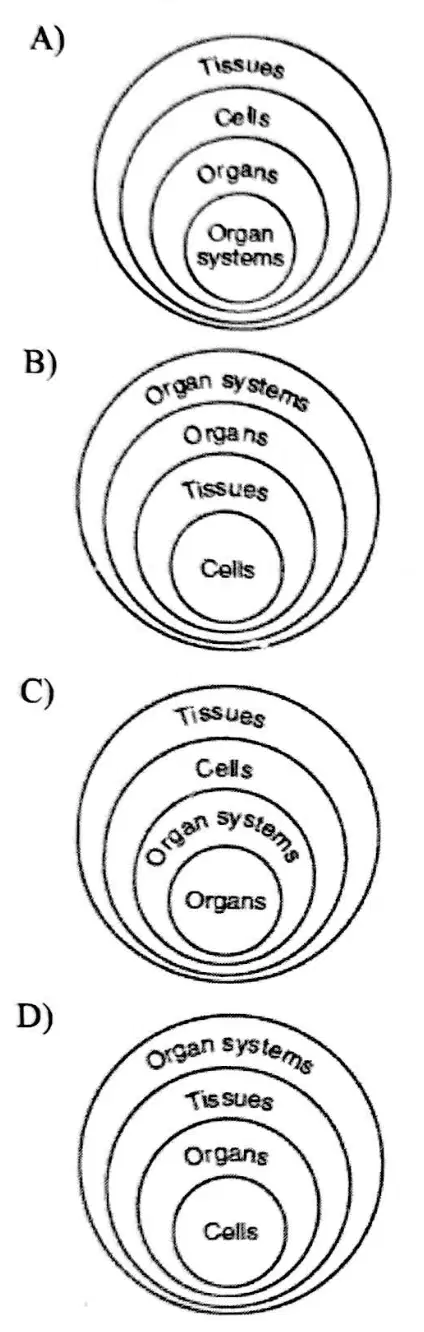
Which diagram best represents the levels of organization in the human body?
A
B
C
D
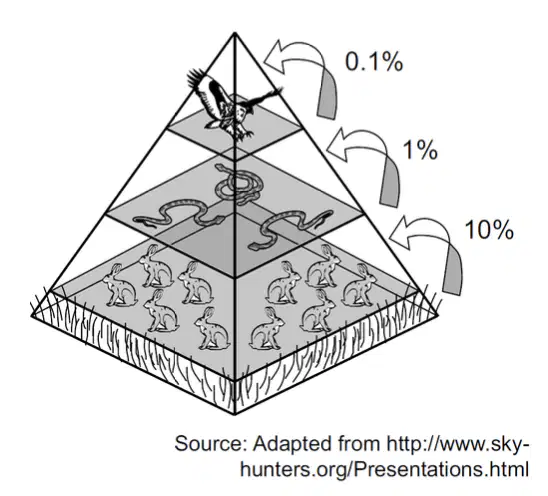
The diagram pictured represents the energy relationships in a forest ecosystem. The best explanation for the decrease in the amount of energy available as one moves up the pyramid is that...
producers require more energy than consumers to survive
decomposers recycle nutrients at each level
much of the energy at each level is lost as heat
animals use less energy than plants
Which two human systems work together to provide glucose for the cells of the body?
nervous and reproductive systems
nervous and respiratory systems
circulatory and digestive systems
circulatory and respiratory systems
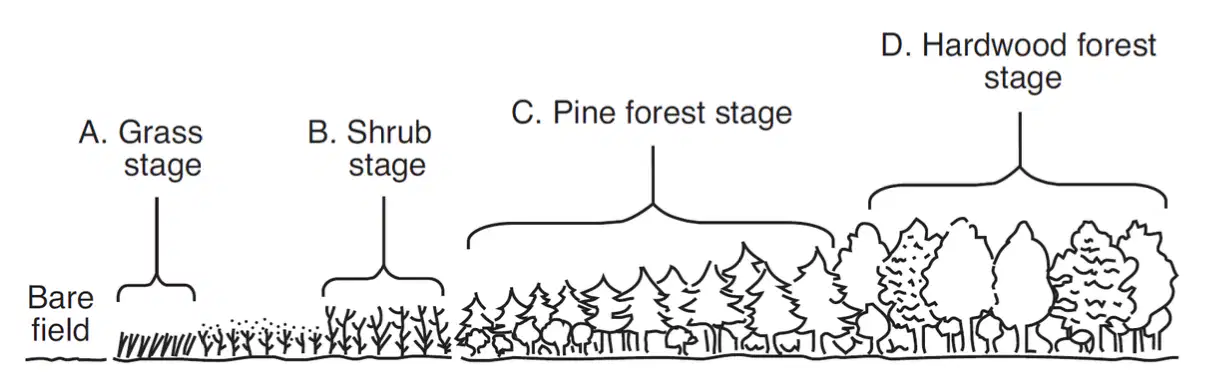
The diagram below represents the various stages of ecological succession in New York State. If the ecosystem is not altered, which stage would be the most stable?
grass
shrub
pine forest
hardwood forest
All of the following are organs of the digestive system except
the stomach
the mouth
the intestines
the heart

Changes in an ecosystem over a long period of time are shown in the diagram. These changes will most likely lead to a...
stable ecosystem that can last for many years
loss of heterotrophs that cannot be recovered
long-term rise in environmental temperatures
forest consisting of only producers and decomposers
Which two terms are opposite processes?
autotrophic nutrition and photosynthesis
asexual reproduction and mitosis
digestion and synthesis
natural selection and evolution
Three days after an organism eats some meat, many of the organic molecules originally contained in the meat would be found in newly formed molecules of
glucose
protein
starch
oxygen
Veins are blood vessels that
deliver blood to the cells of the body
contain striated muscle
carry blood toward the heart
readily exchange materials between the blood and body cells
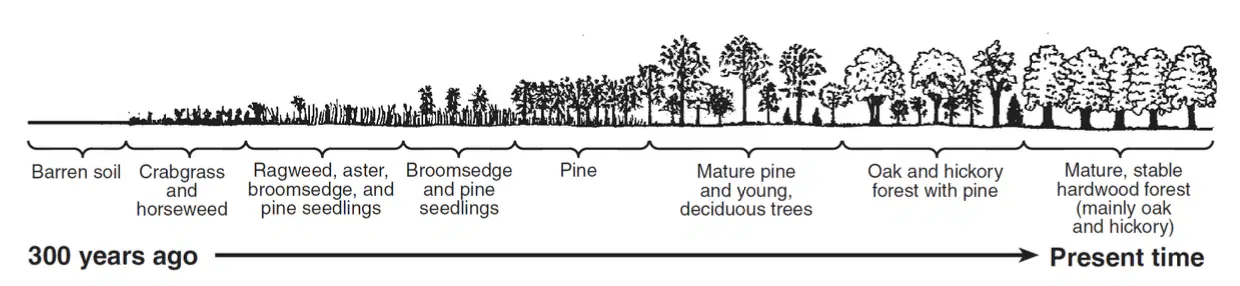
Base your answer to this question on the diagram, which shows the changes over time of land that was left barren 300 years ago, and on your knowledge of biology. Which plant species represent pioneer organisms?
broomsedge and pine seedlings
ragweed and aster
crabgrass and horseweed
oak and hickory trees
The thick, muscular vessels that transport blood away from the heart are the
atria
arteries
veins
ventricles
Human body systems interact with each other. The list below illustrates the results of one body system functioning normally. • Muscle cells receive oxygen. • Nerve cells receive glucose. • Lungs get rid of carbon dioxide. • Some gland cells send chemical signals to organs. Which body system most directly enables all these functions to occur?
circulatory system
excretory system
digestive system
immune system
In humans, two organ systems work together to move oxygen throughout the body and deliver it to cells. Which system directly delivers oxygen to body cells?
nervous
digestive
respiratory
circulatory
Although the digestive system is primarily responsible for the breakdown of food, this process can be disrupted if the circulatory system malfunctions. The best explanation for this disruption is that
A) human body systems interact with each other to perform life functions
B) the circulatory system is the control center of the body
C) the digestive system and the circulatory system have many organs in common
D) the circulatory system is responsible for the coordination of life functions, including the breakdown of food

An Adirondack Mountain ecosystem is represented in the picture. An abiotic factor in this ecosystem is the...
pH of the soil where the trees grow
different species of grass present
number of deer of reproductive age
balance between predators and prey
The cellular process which uses oxygen and sugar to produce energy is called
photosynthesis
cell division
cellular respiration
DNA replication
What is the main function of gas exchange
To remove carbon dioxide and supply oxygen to the body
To remove oxygen from the body
To supply carbon dioxide and remove oxygen from the body
To supply water to the body cells
Anhidrosis is the inability to sweat normally. If the human body cannot sweat properly, it cannot cool itself, which is potentially harmful. Anhidrosis most directly interferes with
a feedback mechanism that maintains homeostasis
an immune system response to harmless antigens
the synthesis of hormones in the circulatory system
the enzymatic breakdown of water in cells
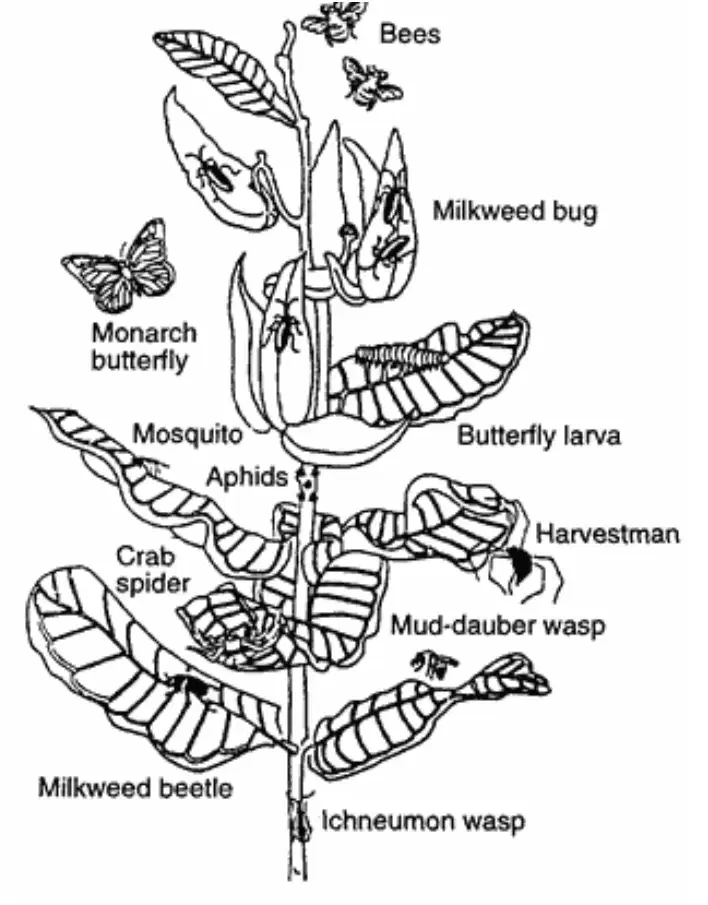
The diagram shows a milkweed plant and some of the insects that live on it or visit it. Which term best describes the group of organisms in the diagram?
biosphere
community
habitat
biome
Which of the following is removed by the excretory system?
Cells
Blood
Excess heat
Large proteins
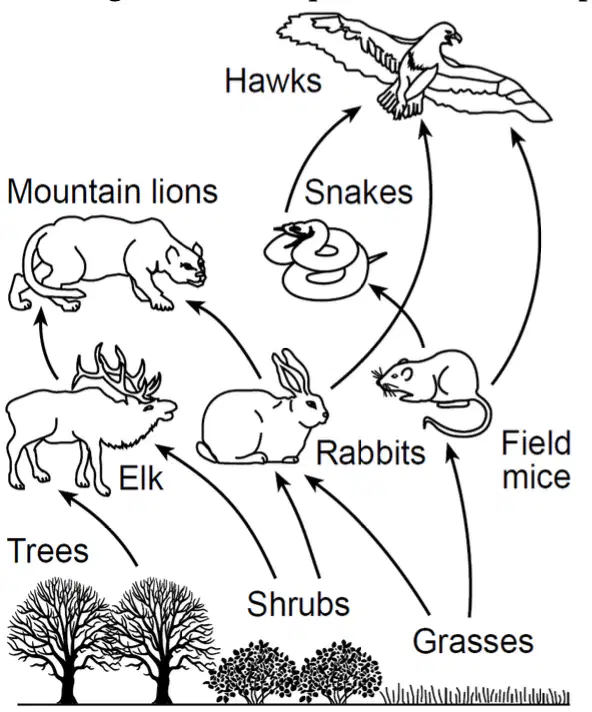
The diagram represents relationships in an ecosystem. What is the primary source of energy in this environment?
cellular respiration in the plants
energy from minerals in the soil
fossil fuels
solar energy
When the carrying capacity for a species in a habitat is reached, the population of the species levels off. This slowing of the rate of growth is most likely due to
limited resources
renewable energy
an increase in decomposers
a lack of competition
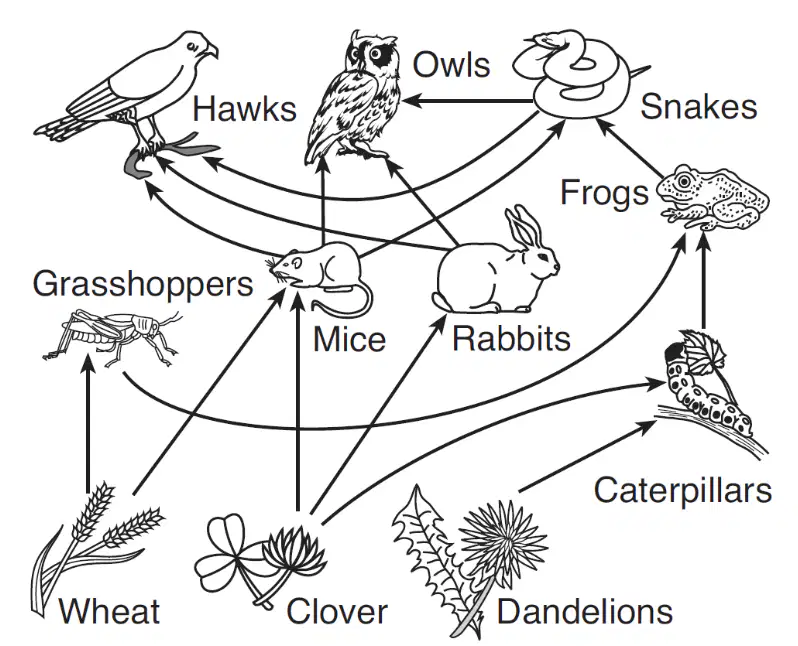
The diagram represents a food web in an ecosystem. Missing from the diagram of this ecosystem are the
biotic factors and decomposers
abiotic factors and decomposers
autotrophs, only
heterotrophs, only
The study of the interactions between organisms and their interrelationships with the physical environment is known as...
ecology
cytology
embryology
physiology
The portion of Earth in which all life exists is known as...
the climax stage
the biosphere
a population
a biotic community
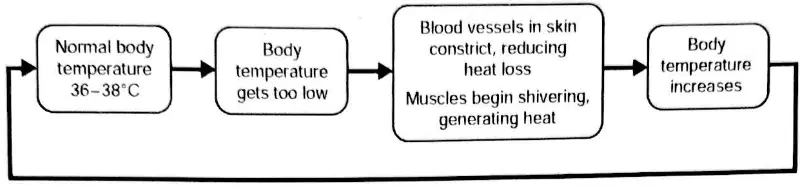
The diagram below shows information about human body temperature regulation. These events can be best described as an example of
a feedback mechanism that maintains homeostasis
a cycle that regulates cellular communication
an immune system response to increasing heart rate
a body system regulating hormone production
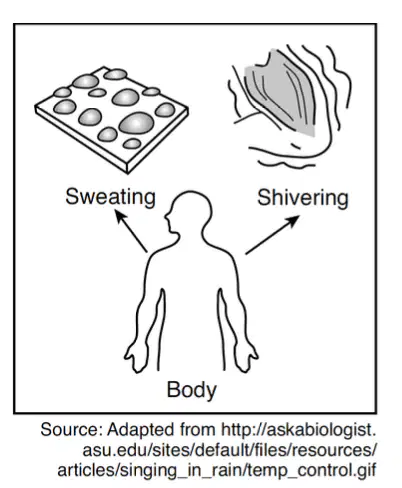
Changes in external temperatures often result in a person either sweating or shivering, as represented in the diagram. These responses are one way...
to counteract feedback mechanisms that would otherwise be beneficial
to make the body release insulin to control blood circulation
the body is able to maintain homeostasis
skin and muscle cells are able to disrupt homeostasis
Homeostasis in single-celled organisms is maintained through the proper functioning of...
organelles
estrogen
guard cells
antibodies
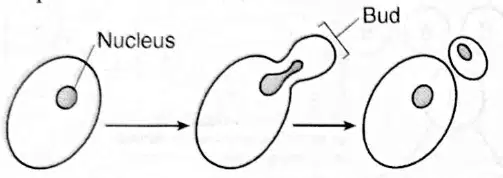
The diagram below represents reproduction in a yeast cell. The genes in the bud are identical to the genes in the parent. This type of production of offspring is a form of
sexual reproduction
asexual reproduction
gene manipulation
genetic engineering
Organisms combine simple molecules to form complex molecules by the process of...
ingestion
synthesis
regulation
hydrolysis
Two kittens in a litter are genetically different from each other and from their parents. These genetic differences are most directly due to
sexual reproduction
asexual reproduction
cloning
evolution
Which term is defined as all the chemical reactions that are required to sustain life?
metabolism
nutrition
regulation
synthesis
Which of the following is removed by the excretory system?
Cells
Blood
Excess heat
Large proteins
The paramecium is a single-celled organism that reproduces asexually. The offspring of a paramecium usually contain
only half of the genes of the parent cells
more DNA than the parent cell
genetic material identical to that of the parent cell
fewer mutations than the parent cell
What is the main function of gas exchange?
To remove carbon dioxide and supply oxygen to the body
To remove oxygen from the body
To supply carbon dioxide and remove oxygen from the body
To supply water to the body cells
The thick, muscular vessels that transport blood away from the heart are the...
atria
arteries
veins
ventricles
Structures specialized for returning blood to the heart are known as...
lacteals
arteries
bronchioles
veins
The primary function of the human male reproductive system is to
provide a site for fertilization
produce and transport gametes
protect and nourish the embryo
prevent urine from leaving the body
The inability of sperm cells to move normally could prevent the production of offspring by interfering with
meiosis
mitosis
fertilization
differentiation
Which structure is correctly paired with its function?
ovary — provides milk for newborns
testis — development of sperm
placenta — storage of released eggs
uterus — produces estrogen
The reproductive structure in a female mammal that produces sex cells is the
ovary
testes
uterus
placenta
In humans, egg cells are usually fertilized in the
vagina
uterus
ovary
fallopian tube
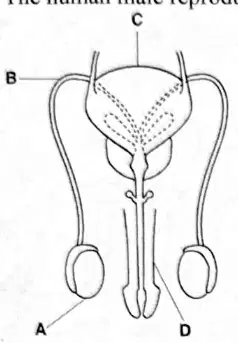
The human male reproductive system is represented below. Which structure produces sperm cells?
A
B
C
D

Identify the structure within which the egg cell is normally fertilized.
A
B
C
D
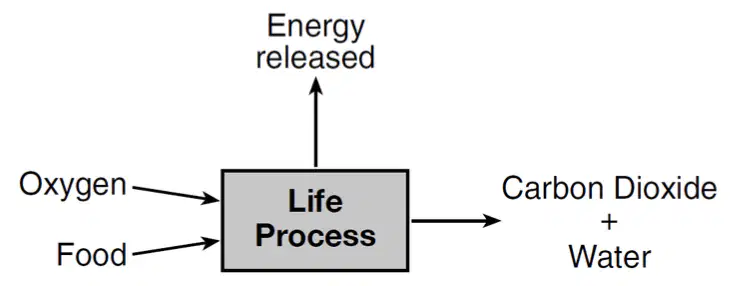
Which life process carried out by a green plant is represented in the diagram below?
respiration
photosynthesis
digestion
replication
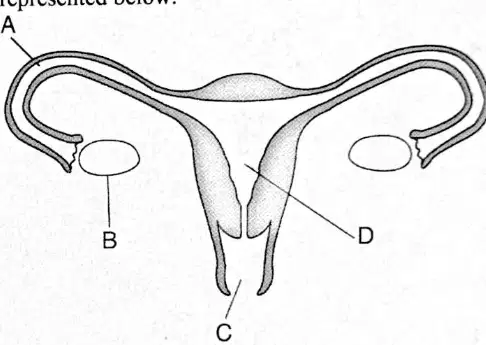
The human female reproductive system is represented below. Within which structure does the placenta normally develop?
A
B
C
D
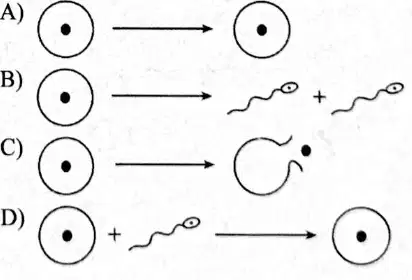
Which diagram best illustrates an event in sexual reproduction that would most directly lead to the formation of a human embryo?
A)
B)
C)
D)
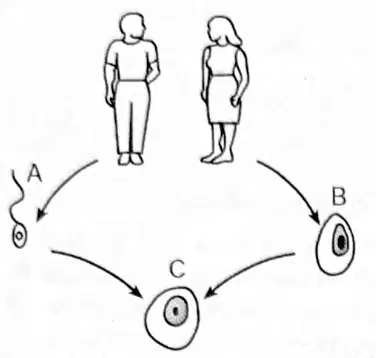
The diagram below represents events that occur during sexual reproduction. The stages labeled A, B, and C are necessary to ensure that the offspring will inherit
half of their chromosomes from each parent
double the amount of chromosomes from each parent
pairs of chromosomes from each parent
double the amount of chromosomes from one parent
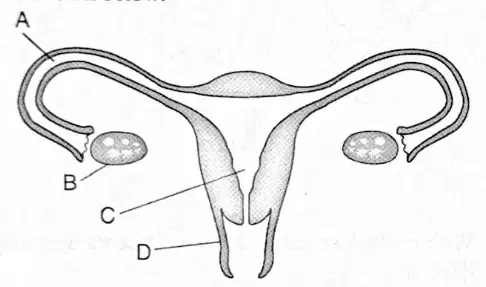
A diagram of human female reproductive structures is shown below. Which structure is correctly paired with its function?
A) A – releases estrogen and progesterone
B) B – produces and releases the egg
C) C – provides the usual site for fertilization
D) D – nourishes a developing embryo
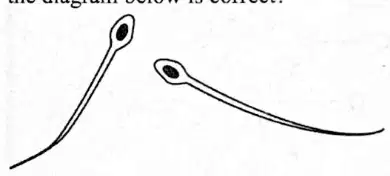
Which statement about the gametes (sex cells) represented in the diagram below is correct?
They are produced by females.
They are fertilized in an ovary.
They transport genetic material.
They are produced by mitosis.
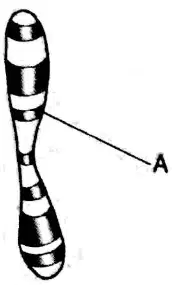
Human genetic material is represented in the diagram below. The region labeled A is made up of a section of
a protein that becomes an enzyme
DNA that may direct protein synthesis
a carbohydrate made from amino acids
glucose that may be copied to make DNA
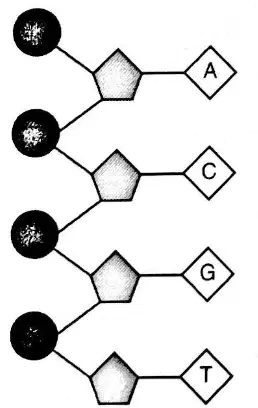
The diagram below represents a portion DNA molecule. The letters represent different types of
sugar molecules
molecular bases
enzymes
proteins
Chromosomes can be described as
large molecules that have only one function
folded chains of bonded glucose molecules
reproductive cells composed of molecular bases
coiled strands of genetic material
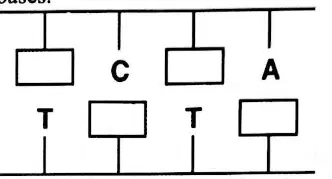
The diagram below represents an incomplete section of a DNA molecule. The boxes represent unidentified bases. When the boxes are filled in, what will the total number of bases represented by the letter A (both inside and outside the boxes) be?
1
2
3
4

A portion of a molecule is shown in the diagram below. Which statement best describes the main function of this type of molecule?
It is a structural part of the cell wall.
It stores energy for metabolic processes.
It determines what traits may be inherited.
It transports materials across the cell membrane.
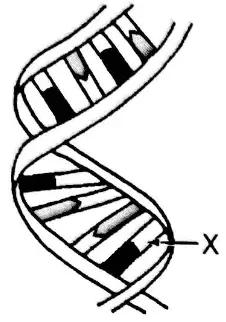
The diagram below represents a portion of a nucleic acid molecule. The part indicated by arrow X could be
adenine
ribose
deoxyribose
phosphate
In a portion of a gene, the nitrogenous base sequence is T-C-G-A-A-T. Which nitrogenous base sequence would normally be found bonded to this section of DNA?
A-C-G-T-A-A
A-C-G-U-U-A
A-G-C-T-T-A
U-G-C-A-A-U
All of the following are organs of the digestive system except...
the stomach
the mouth
the intestines
the heart
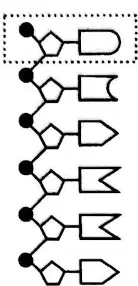
Base your answer to the following question on the diagram below and on your knowledge of biology. The diagram represents a portion of a strand of a DNA molecule. The entire structure enclosed within the dotted line represents a
deoxyribose molecule
nitrogenous base
phosphate
nucleotide
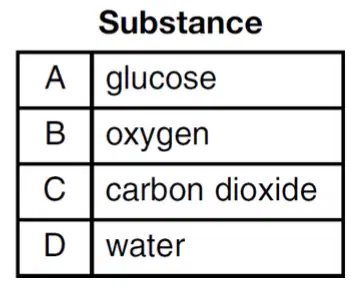
The chart lists substances involved in the process of photosynthesis. Which statement best describes how these substances interact in photosynthesis?
A and B combine to produce C and D
B and C combine to produce A and D
C and D combine to produce A and B
A and C combine to produce B and D
Which substances are required for the production of carbohydrates in
green plants?
oxygen & nitrogen
carbon & glucose
carbon dioxide & water
hydrogen & starch
Which base is normally used in the synthesis of RNA but not in the synthesis of DNA?
adenine
uracil
cytosine
guanine
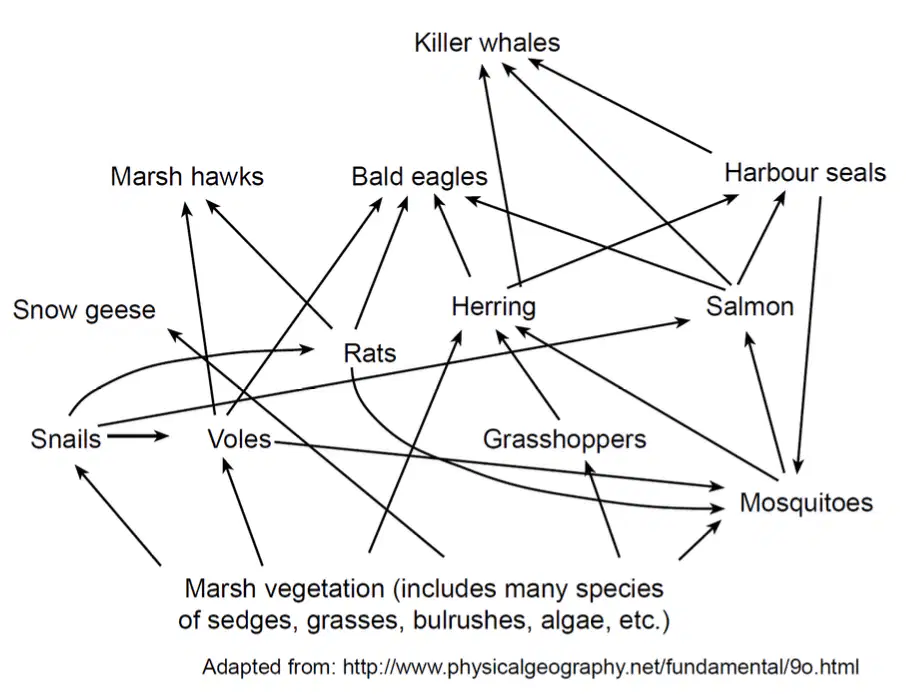
The diagram represents a food web illustrating some relationships in a tidal marsh
ecosystem. Examples of autotrophs in this food web are...
killer whales and grasses
sedges and bulrushes
mosquitoes and grasshoppers
snails and seals
The diagram represents a series of events that occur in living cells. Which molecule does "x" represent?
ATP
glucose
protein
DNA
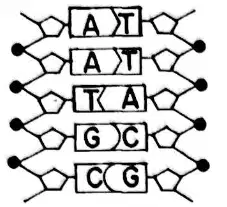
This DNA molecule acts as a template for RNA construction in the process of
gene replication
protein synthesis
osmosis
synapsis
Materials are transported within a single-celled organism by the
nucleus
cytoplasm
mitochondrion
ribosome
In an animal cell, all of the organelles work together to carry out
photosynthesis
diffusion
metabolic processes
information storage
Which term is defined as all the chemical reactions that are required to sustain life?
metabolism
nutrition
regulation
synthesis
The diagram illustrates the movement of materials involved in a process that is vital for the energy needs of organisms. Where does this process occur within a cell?
chloroplasts
mitochondria
ribosomes
vaculoes
Which statement concerning simple sugars and amino acids is correct?
They are both wastes resulting from protein synthesis.
They are both building blocks of starch.
They are both needed for the synthesis of larger molecules.
They are both stored as fat molecules in the liver.
In humans, digestion depends on a variety of organs, such as the stomach, small intestine, and liver. The interactions of these organs provide evidence that
each organ in the human body plays a role in only one life function
organs in humans work together, resulting in the survival of the individual
the most important life function in humans is the breaking down of food
each life function is carried out by at least four different systems in humans
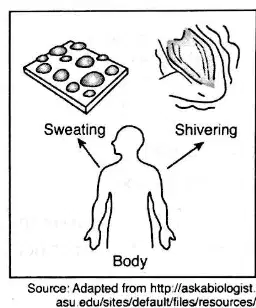
Changes in external temperatures often result in a person either sweating or shivering, as represented in the diagram below. These responses are one way
to counteract feedback mechanisms that would otherwise be beneficial
to make the body release insulin to control blood circulation
the body is able to maintain dynamic equilibrium
skin and muscle cells are able to disrupt homeostasis
The process that removes metabolic waste products from an organism is known as
egestion
secretion
excretion
oxidation
The life function responsible for the coordination and control of all life activities in an organism is known as
regulation
reproduction
excretion
nutrition
During an experiment you want to view the nucleus of a cell. How would you most easily view this organelle?
With a microscope
With the naked eye
Using a magnifying glass
You could not see the nucleus with any of this instruments
Which statement concerning the functioning of cells is correct?
Mitochondria transfer energy from organic compounds to form ATP molecules.
Vacuoles are the sites of DNA synthesis.
The nucleus stores genes that will later be removed from the cell.
The cell membrane prevents the diffusion of all poisons into a cell from its environment.
Homeostasis in single-celled organisms is maintained through the proper functioning of
organelles
estrogen
guard cells
antibodies

Base your answer to the following question on the diagram below and on your knowledge of biology. The diagram represents a series of events that occur within living organisms. Cell structure X is a
ribosome
vacuole
cell membrane
mitochondrion
The respiratory system of an elephant functions in a similar way to which organelle in a single celled organism?
cell membrane
nucleus
vacuole
chloroplast
The diagram represents a structure involved in cellular respiration. The release of which substance is represented by the arrows?
glucose
carbon dioxide
oxygen
DNA
In single-celled organisms, materials are stored primarily in
ribosomes
mitochondria
nuclei
vacuoles
One primary function of the cell membrane is
regulating the flow of simple sugars into or out of the cell
synthesizing substances by breaking down cell organelles
storing carbohydrates, water, and starches for future use
digesting carbohydrates, fats, and protein
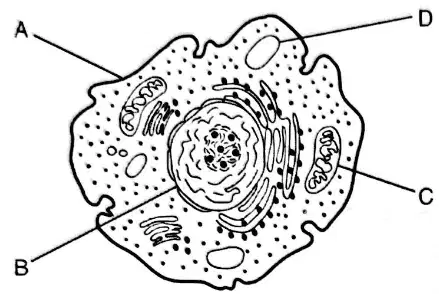
Which structure is responsible for the synthesis of ATP?
A
B
C
D
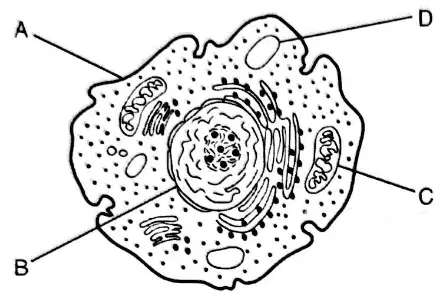
Which structure is responsible for the passage of materials into and out of the cell?
A) A
B) B
C) C
D) D
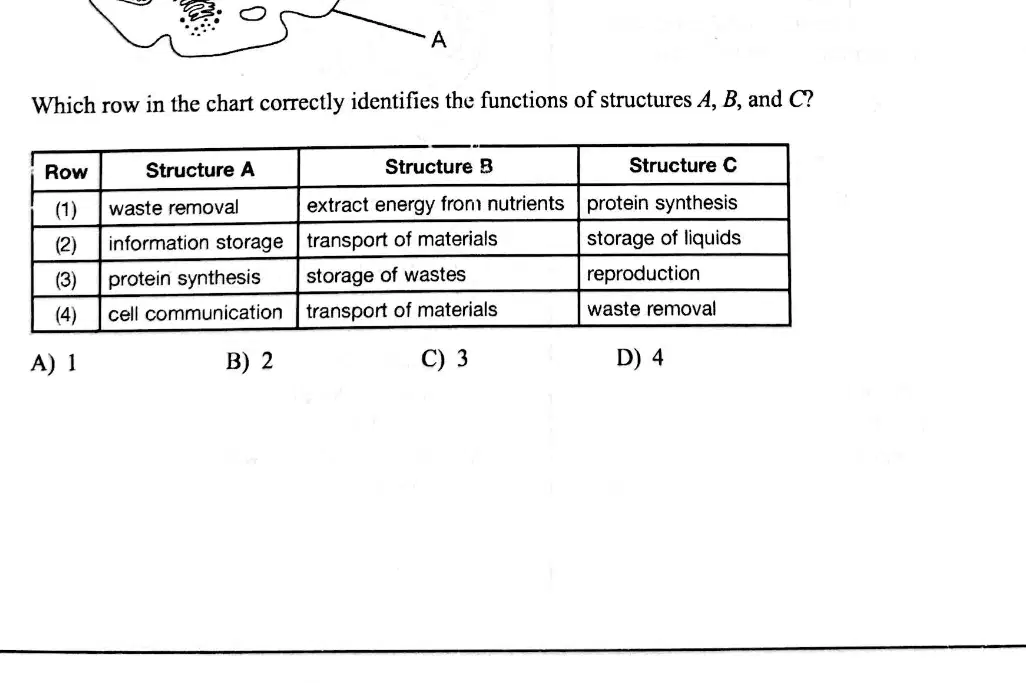
Which row in the chart correctly identifies the functions of structures A, B, and C?
1
2
3
4
Energy from organic molecules can be stored in ATP
molecules as a direct result of the process of...
cellular respiration
cellular reproduction
diffusion
digestion
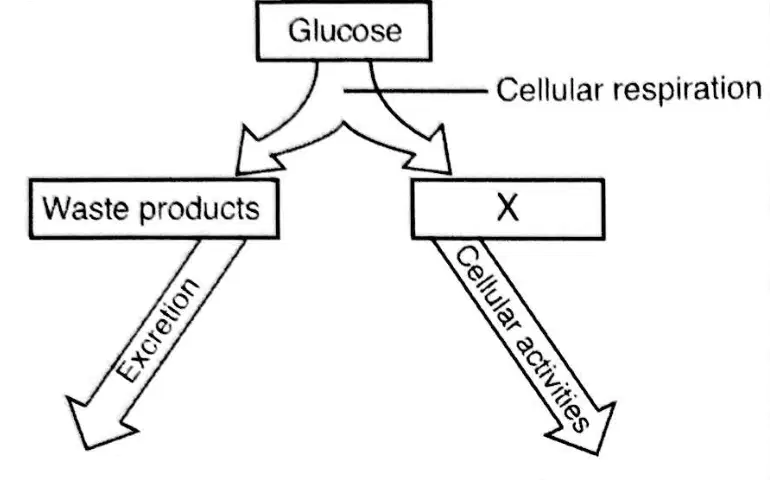
In the diagram representing a biological process, Which molecule is represented by X?
DNA
starch
Protein
ATP
Which dissolved substance do aquatic animals remove from their external environment for use in cellular respiration?
Carbon dioxide
ATP molecules
oxygen molecules
nitrogen gas
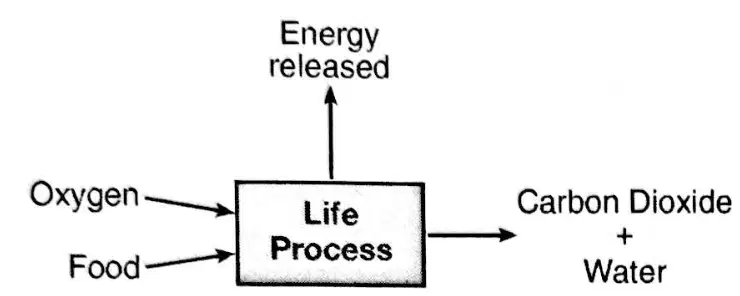
Which life process is represented in the diagram?
respiration
digestion
replication
photosynethsis
Which organelle is correctly paired with its specific function?
cell membrane—storage of hereditary information
chloroplast—transport of materials
ribosome—synthesis of proteins
vacuole—production of ATP
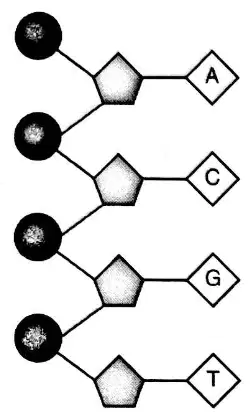
The diagram below represents a portion DNA molecule. The letters represent different types of
sugar molecules
molecular bases
enzymes
proteins
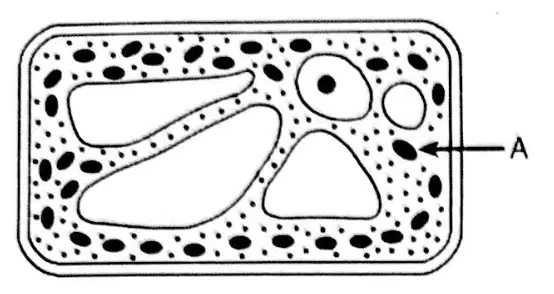
For the process of photosynthesis, the arrow labeled A in the diagram of the plant cell would most likely represent the direction of movement of...
carbon dioxide, water, and solar energy
oxygen, sugar, and solar energy
carbon dioxide, oxygen, and heat energy
sugar, water, and heat energy
Chromosomes can be described as
large molecules that have only one function
folded chains of bonded glucose molecules
reproductive cells composed of molecular bases
coiled strands of genetic material
The genetic code of a DNA molecule is determined by a specific sequence of
ATP molecules
sugar molecules
chemical bonds
molecular bases
In the diagram, which organism carries out autotrophic nutrition?
frog
snake
plant
grasshopper
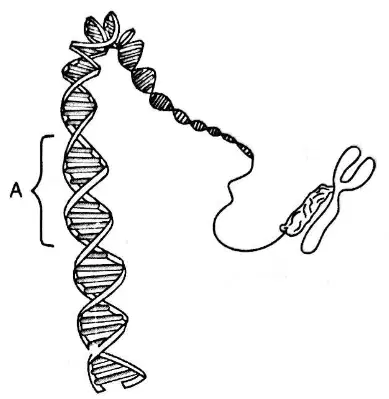
The section labeled A in the diagram is most likely a
protein composed of folded chains of base subunits
biological catalyst
part of a gene for a particular trait
chromosome undergoing a mutation
Which type of organism helps to reduce atmospheric
carbon dioxide?
carnivores
producers
decomposers
herbivores
Autotrophs might survive when heterotrophs cannot, because autotrophs are able to...
reproduce asexually
become dormant
exist without respiration
make their own food
The basic building blocks of a protein are...
glucose molecules
amino acids
fats
hormones
Butter and oil are examples of food composed of...
proteins
carbohydrates
nucleotides
lipids
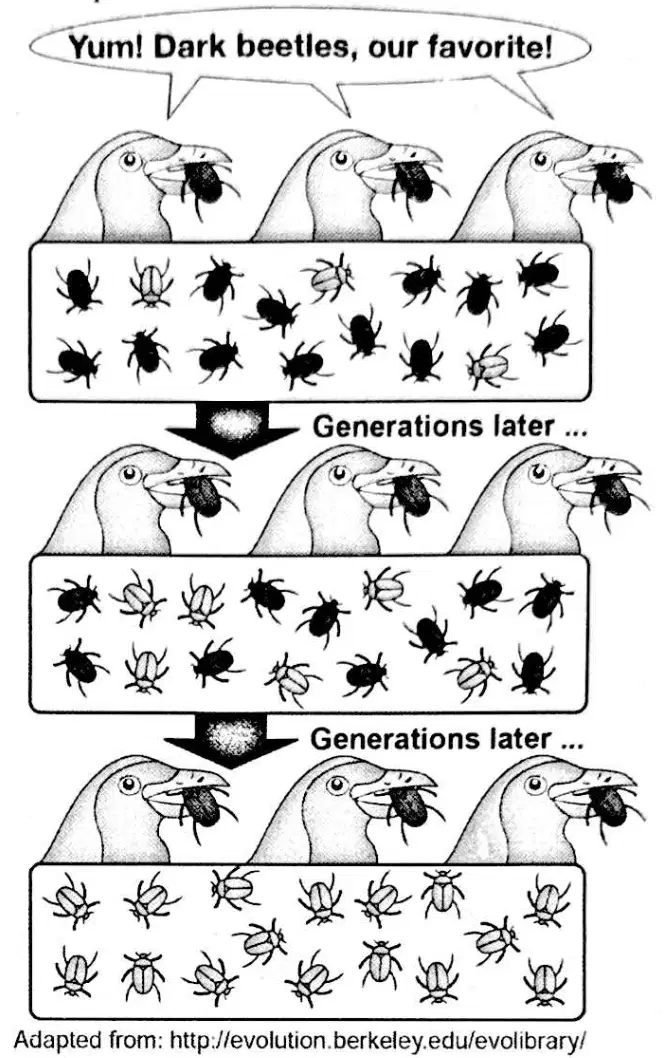
What important biological concept is being represented in the diagram?
overproduction
natural selection
homeostatsis
ecological succession
Male turkeys are birds that naturally strut and
display their large tail feathers, which attracts female
turkeys. This display is an example of...
selective breeding
asexual reproduction
a learned behavior
a behavioral adaptation
The term "evolution" is best described as...
a process of change in a population through time
a process by which organisms become extinct
the reproductive isolation of members of certain
species
the replacement of one community by another
Many scientists believe that the earliest cells on Earth were relatively simple, lacking nuclear membranes and other organized cellular structures. Over time, more complex cells developed from these simple cells. These statements describe the concept of...
dominance
evolution
photosynthesis
A varicty of species of Galapagos finches evolved from one original species long ago through the process of...
ecological succession
selective breeding
natural selection
asexual reproduction
A decrease in the biodiversity of an ecosystem usually leads to...
an increase in predator and prey populations
the elimination of material cycling
a decrease in stability
an increase in dynamic equilibrium

The diagram below shows organisms in and around a pond. Which ecological term refers to all the organisms shown in the diagram?
producer
population
heterotroph
community
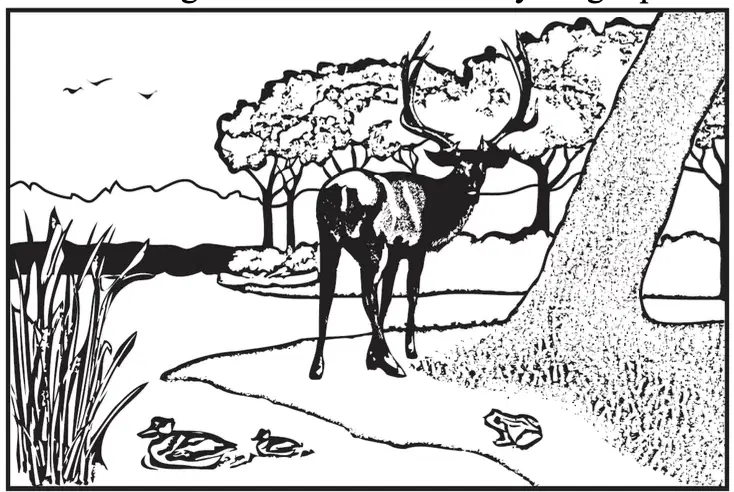
Which ecological term includes everything represented in the illustration below?
community
ecosystem
population
species
Which group of organisms is an example of a population?
leopard frogs in a stream
reptiles in the Sahara Desert
birds in Colorado
trees in a forest
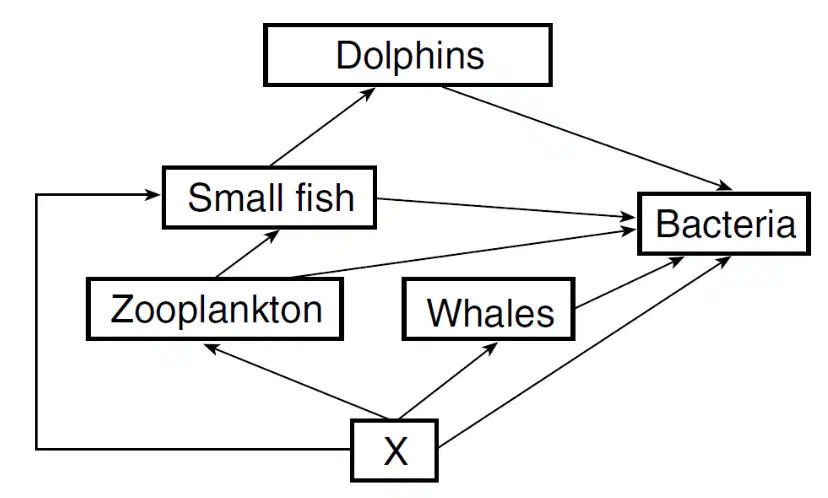
The diagram below represents a marine food web. The organisms represented by X are
decomposers
producers
carnivores
scavengers
For a producer to maintain itself, which factor must be present in its environment?
carnivores
herbivores
sunlight
parasites
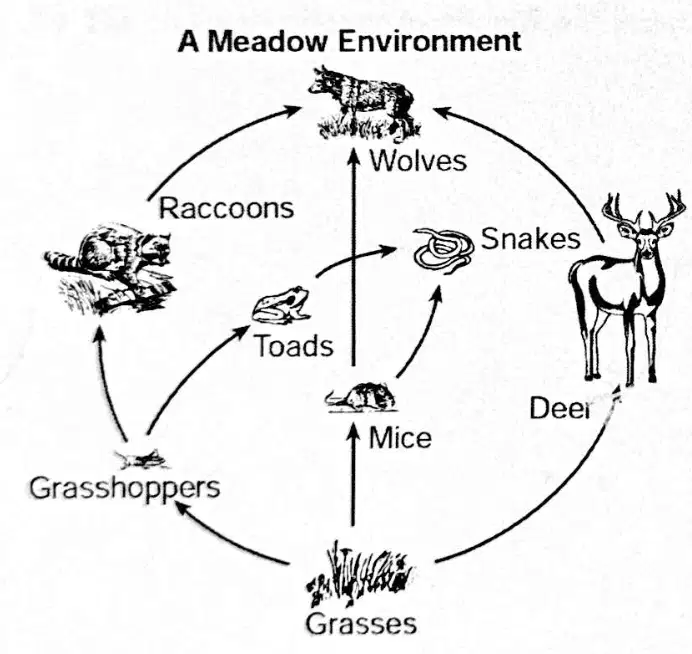
The diagram represents a food web. Two carnivores represented in this web are...
deer and mice
grasses and grasshoppers
deer and wolves
toads and snakes
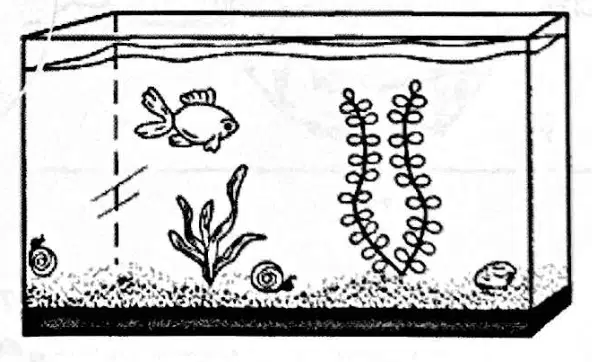
An aquarium ecosystem is shown in the diagram. A community in this aquarium consists of the...
plants and gravel
fish, water, and snails
fish, plants, and snails
water and gravel
All of Earth's water, land, and atmosphere
within which life exists is known as...
a population
a community
a biome
the biosphere

