wayground logo

Free Printable Worksheets

Font size

S
M
L
XL
Worksheets

Year 7 ESS

Total questions: 110

Worksheet time: 1hrs 10mins

Name
Class
Date
1.

Each rotation of the Earth is one...

a)

day

b)

year

2.

The process by which plants release water vapor through the pores in their leaves is called...

a)

transpiration

b)

precipitation

c)

infiltration

d)

sublimation

3.
The path one object takes as it revolves around another object in space.
a)
rotate
b)
revolve
c)
orbit
d)
axis
4.
An imaginary line that a sphere rotates around.
a)
revolution
b)
rotation
c)
orbit
d)
axis
5.
Making a complete spin on an axis.
a)
rotation
b)
revolution
c)
axis
d)
orbit
6.
Making a complete turn or orbit around an axis or center.
a)
Revolution
b)
rotation
c)
orbit
d)
axis
7.
A natural satellite that orbits a planet, some planets have none and others have over 60.
a)
sun
b)
moon
c)
atmosphere
d)
Earth
8.

The center of our solar system that supplies heat and light to Earth; its enormous gravity keeps the solar system in orbit.

a)

Earth

b)

sun

c)

moon

d)

Jupiter

9.
The planet that all known life exists on.
a)
Mars
b)
Earth
c)
Venus
d)
Saturn
10.

How many planets are in our solar system?

a)

7

b)

8

c)

9

d)

10

11.
What causes night and day?
a)
The Earth's revolving 
b)
The rotation of the Earth
c)
The atmosphere
12.
How long does it take the Earth to revolve around the Sun one time?
a)
365 hours
b)
24 hours
c)
24 days
d)
365 days
13.
How long does it take the Earth to make one rotation?
a)
365 days
b)
24 day
c)
365 hours
d)
24 hours
14.
What makes Earth special?
a)
It's blue
b)
It has lots of different rock and minerals
c)
It's the only planet with water, oxygen, and life.
d)
It's the only planet that Santa Claus visits.
15.

The moon revolves or rotates around the Earth?

a)

revolve

b)

rotate

c)

orbit

d)

floats

16.
Earth is the ____ planet from the Sun.
a)
4th
b)
6th
c)
5th
d)
3rd
17.
What season is it in the southern hemisphere?
a)
Winter
b)
Spring
c)
Summer
d)
Fall
18.
What season is it in the Northern Hemisphere?
a)
Winter
b)
Summer
c)
Spring
d)
Fall
19.
Why do we have seasons?
a)
The earth's rotation on its axis
b)
The earth's revolution around the sun
c)
The moon's gravity pull on the earth
d)
The Earth's tilt as it revolves around the sun
20.
What causes day and night?
a)
The sun rises and sets
b)
The Earth rotating on its axis
c)
The Earth revolves around the sun
d)
The tilt of the Earth
21.
What two things cause our tides?
a)
the seasons and moon phases
b)
the earths gravity and rotation
c)
Moon's gravity and earth's rotation
d)
moon's gravity and earth's revolution
22.
In the waxing phase, the moon appears to
a)
get bigger
b)
get smaller
23.
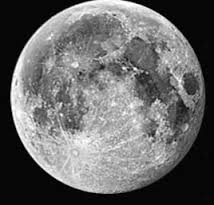
What moon phase is shown in the picture?
a)
waxing gibbous
b)
waxing crescent
c)
waning gibbous
d)
waning crescent
24.
In the waning phase, the moon appears to
a)
get bigger
b)
grow smaller
25.
Why are there 365 1/4 (365.25) days in a year?
a)
Earth's rotation takes this long.
b)
The tilt of the Earth.
c)
Earth's revolution takes this long.
d)
Our tilt is 23 degress.
26.
In a solar eclipse the moon is...
a)
between the sun and earth
b)
directly behind the earth
27.
In a lunar eclipse the moon is...
a)
directly between the sun and earth
b)
behind the earth
28.
What is this diagram showing?
a)
tides
b)
lunar eclipse
c)
revolution
d)
solar eclipse
29.
What is this diagram showing?
a)
tides
b)
solar eclipse
c)
lunar eclipse
d)
rotation
30.
What moon phase is shown in the picture?
a)
waxing gibbous
b)
waxing crescent
c)
waning gibbous
d)
waning crescent
31.

The spinning of an object on its axis is called

a)
Rotation
b)
Orbiting
c)
Spinning
d)
Revolution
32.

Day and night is caused by the ​ (a)   of earth.

Choose from the below words
rotation
revolution
tilt
33.

The earth's ​ (a)   is an imaginary line that goes from the North Pole to the South Pole. 

Choose from the below words
axis
equator
meridian
34.

The different shapes of the moon you see from Earth are called ​ (a)  

Choose from the below words
phases
colors
sizes
new moons
35.

What is gravity? 

a)
Gravity is the force that pushes objects away from a planet's center.
b)
Gravity is the force that attracts objects to the moon.
c)
Gravity is the force that causes objects to float in space.
d)
Gravity is the force by which a planet or other body draws objects toward its center.
36.

The cycle of the moon lasts about a ​ (a)  

Choose from the below words
month
day
year
week
37.

What is responsible for the moons illumination?

a)
Moon dust emitting light
b)
Alien technology
c)
Sunlight reflecting off the moon's surface
d)
Bioluminescent organisms on the moon
38.

Seasons are a result of _____? 

a)
Earth's distance from the Moon
b)
The rotation of Mars
c)

The moon blocking the sunlight from the Earth

d)
Earth's axial tilt and its orbit around the Sun
39.

What is the equinox?

a)
The equinox is when the sun is closest to the Earth.
b)
The equinox is when day and night are of equal length.
c)
The equinox is when the moon is directly overhead.
d)
The equinox is when the Earth is farthest from the sun.
40.

Label the Moon Phases

41.

Could half of the Moon that faces Earth ever be completely dark?

a)

Yes

b)

No

42.

What is the SI unit used to measure weight?

a)

pounds

b)

grams

c)

newtons

d)

friction

43.
The force of gravity acting on an object is the object's ______.
a)
mass
b)
matter
c)
weight 
d)
friction 
44.
The amount of matter in an object is 
a)
pressure
b)
weight
c)
mass
d)
force
45.
Which of the following never changes no matter where in the universe?
a)
weight
b)
force
c)
mass
d)
pounds
46.
A person would weigh less on on the Moon than on the Earth because . . .
a)
Moon has more mass, and therefore more gravity
b)
Moon has less mass, and therefore more gravity
c)
Moon has more mass, and therefore less gravity
d)
Moon has less mass and therefore less gravity
47.
If Earth's mass was cut in half, what would happen to your mass?
a)
increase because gravitational force increases
b)
decrease because gravitational force decreases
c)
decrease because gravitational force increases
d)
nothing, mass is not affected by gravitational force
48.

What did the Noongar people do in the colder months?

a)
Build igloos
b)

Move to the hills

c)
Hunt in the forests
d)
Travel to the desert
49.

Kambarang is in which months? - Warming with rains finishing

a)

Jan to Feb

b)

Mar to April

c)

July to August

d)

Oct to Nov

50.

What months is Djilba in? Cold with lessening rain

a)

Mar to Apr

b)

Feb to Mar

c)

Aug to Sept

d)

Apr - May

51.

What months is Birak in? Hot and Dry

a)

Jan to Feb

b)

Dec to Jan

c)

Mar to Apr

d)

June to July

52.

Bunnuru is in which months? - Warm easterly winds

a)

Dec to Jan

b)

Oct to Nov

c)

Feb to Mar

d)

Aug to Sept

53.

Makuru is in which months? - Cold and Wet

a)

May to Jun

b)

Aug to Sept

c)

July to Aug

d)

Jun to July

54.

Djeran is in which months - Cool and Pleasant

a)

Apr to May

b)

May to June

c)

Aug to Sept

d)

Mar to Apr

55.

Wildflower season is (a)  

56.

Which is the correct order of Noongar seasons?

a)

Birak, Boonaroo, Djiran, Mookaroo, Djilba, Kambarang

b)

Birak, Mookaroo,Boonaroo, Djiran,

c)

Summer, Spring, Autumn, Winter

d)

Birak, Djiran, Djilba, Kambarang

57.

What is a common activity during the Noongar season of Djeran?

a)
Building shelters
b)
Planting crops
c)
Fishing for salmon
d)

Collecting seeds and plant foods

58.

Look at the calendar. On which date in June 2020 did the new moon appear in the Southern Hemisphere?

a)

1st June

b)

5th June

c)

21st June

d)

13th June

59.

Look at the calendar. On which date in June 2020 did the full moon appear in the Southern Hemisphere?

a)

1st June

b)

5th June

c)

21st June

d)

13th June

60.

Look at the image. When the moon is in position 5, the name of the phase visible from Earth is:

a)

New Moon

b)

Full Moon

c)

First quarter

d)

Wazing gibbous

61.

Look at the image. When the moon is in position 1, the name of the phase visible from Earth is:

a)

New Moon

b)

Full Moon

c)

First quarter

d)

Wazing gibbous

62.

Look at the image. When the moon is in position 3, the name of the phase visible from Earth is:

a)

New Moon

b)

Full Moon

c)

First quarter

d)

Wazing gibbous

63.

Why does the Moon have phases?

a)

The Earth's shadow falls on the Moon differently at different times of the month.

b)

We see different amounts of the sunlit side of the Moon as it orbits the Earth.

c)

The Moon reflects different amounts of sunlight as it orbits the Earth.

d)

The Moon's orbit is not a perfect circle.

64.

During a new moon phase, the Moon appears dark because:

a)

It loses its ability to reflect light.

b)

It lies in Earth's shadow.

c)

It lies between the Sun and Earth so we can only see its shaddowed side.

d)

Someone drew the curtains.

65.

When the Moon is at the one-quarter or the three-quarter points of its orbit around Earth, we see:

a)

a half moon

b)

a crescent moon

c)

a gibbous moon

d)

a full moon

66.

How long dos it take the Moon to orbit around the Earth?

a)

29.5 days

b)

27.5 days

c)

23.5 days

d)

30 days

67.

Name this phase of the Moon.

a)

Full moon

b)

Gibbous moon

c)

Crescent moon

d)

Third quarter moon

68.

Name this phase of the Moon.

a)

Last quarter moon.

b)

Gibbous moon

c)

Crescent moon

d)

Smiley moon

69.
How many phases does the moon have?
a)
7 phases
b)
5 phases
c)
I do not know
d)
8 phases
70.
Name the moon phase
a)
First Quarter
b)
Last Quarter
c)
New Moon
d)
Full Moon
71.

In order to achieve sustainability, what two things need protecting for the future?

a)

Environment and resources

b)

People and resources

c)

Environment and People

72.

What is the official definition for sustainability?

a)

Understanding how to meet the needs of the present generation

b)

Understanding how to meet the needs of the present without compromising the needs of the future generation

c)

Understanding how to meet the needs of future generations

73.

__________ Resources are forms of energy that will not run out in the next several hundred years.

a)

Renewable

b)

Non-Renewable

c)

Fossil Fuels

d)

Forever Fuels

74.

__________ Resources are a form of energy that will run out in the next several hundred years.

a)

Fossil Fuels

b)

Non-Renewable

c)

Renewable

d)

Forever Fuels

75.

Coal is a __________ .

a)

Renewable

b)

Non-Renewable

76.

Solar Power is __________ .

a)

Non-Renewable

b)

Renewable

77.

Natural Gas is __________ .

a)

Renewable

b)

Non-Renewable

78.

Oil is _________ .

a)

Renewable

b)

Non-Renewable

79.

Wind is _________ .

a)

Non-Renewable

b)

Renewable

80.

Hydropower is __________

a)

Renewable

b)

Non-Renewable

81.

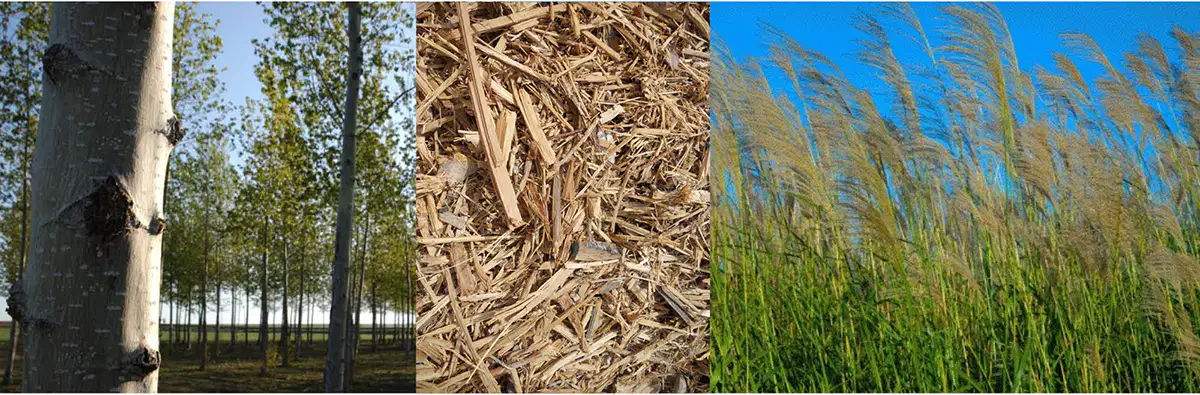
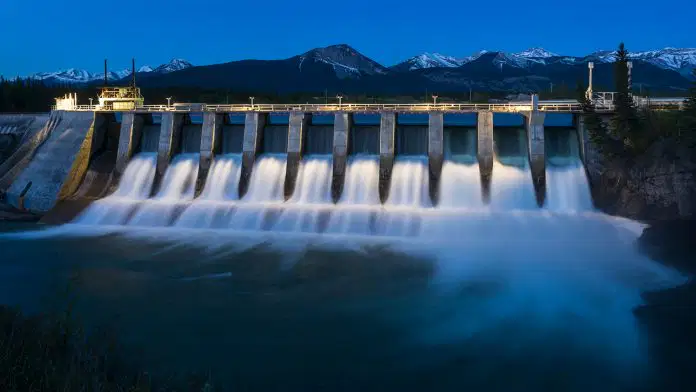
Which renewable resource is presented in the image provided?

a)

Solar

b)

Wind

c)

Hydroelectric

d)

Biomass

e)

Geothermal

82.

Which renewable resource is presented in the image provided?

a)

Solar

b)

Wind

c)

Hydroelectric

d)

Biomass

e)

Geothermal

83.

What is the main environmental result of burning fossil fuels?

a)

Mainly contributes to sustainability

b)

Contributes to air pollution

c)

Emits carbon dioxide

d)

Reduces greenhouse gases

84.

What is the main environmental advantage of solar energy?

a)

Creates greenhouse gases

b)

Does not create greenhouse gases

c)

nonrenewable resource

d)

Release harmful pollutants

85.

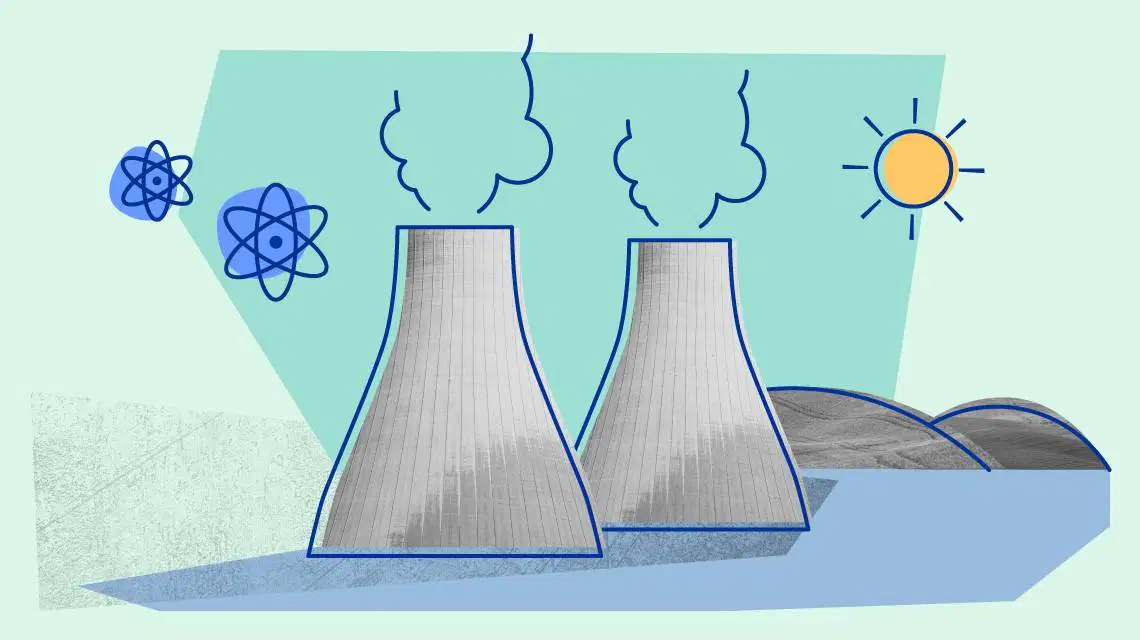
Match the following terms to the pictures
a)

1.

Hydropower

b)

2.

Wind Power

c)

3.

Solar Power

d)

4.

Nuclear Power

e)

5.

Biomass

86.

Sustainable resource management is important because it:

a)

Ensures the availability of resources for future generations

b)

Makes resources more expensive

c)

Depletes resources faster

d)

Is not necessary

87.

A machine with blades that turns because of wind or water.

a)

Turbine

b)

Power plant

c)

Lawnmower

88.
Besides coal and natural gas, another fossil fuel  is
a)
petroleum/oil
b)
biomass
c)
electricity
d)
uranium
89.
Fossil fuels are nonrenewable  resources because they
a)
take millions of years to form
b)
are easily replaced
c)
are in high demand
d)
don't pollute the air
90.
Which of the following is an example of biomass?
a)
food crops
b)
flowing water
c)
coal
d)
uranium
91.
The original source of energy for fossil fuels comes from the
a)
sun
b)
Earth's crust
c)
geothermal energy
d)
oceans
92.
When steam or water are used to turn a turbine, it can generate
a)
electricity
b)
oil
c)
geothermal energy
d)
uranium
93.
Approximately how much energy does the transportation sector use?
a)
27%
b)
52%
c)
14%
d)
8%
94.

gases in an atmosphere that absorb and retain heat energy. High amounts cause air pollution and overheat the planet

a)

greenhouse gases

b)

conservation

c)

landfill

d)

recycling

95.
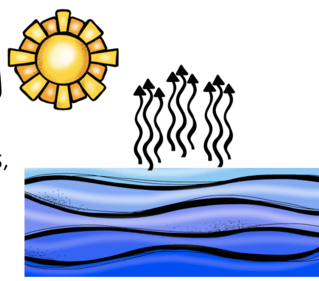
What part of the water cycle does this picture show?
a)
condensation
b)
precipitation
c)
evaporation
96.
Which best explains why runoff is important?
a)
It returns water to other locations on Earth
b)
It increases the chance of flooding
c)
It makes evaporation occur faster
d)
It increases condensation
97.
Which is the opposite of condensation?
a)
runoff
b)
evaporation
c)
precipitation
d)
transpiration
98.
Snow, sleet, hail, and rain are all examples of  ________________. 
a)
evaporation
b)
condensation
c)
accumulation
d)
precipitation
99.
Precipitation happens when clouds of water droplets are too ______________.
a)
cold
b)
light
c)
heavy
d)
hot
100.
Evaporation happens when the sun ___________ water and turns it into vapor.
a)
cools
b)
heats up
c)
freezes
d)
lights up
101.
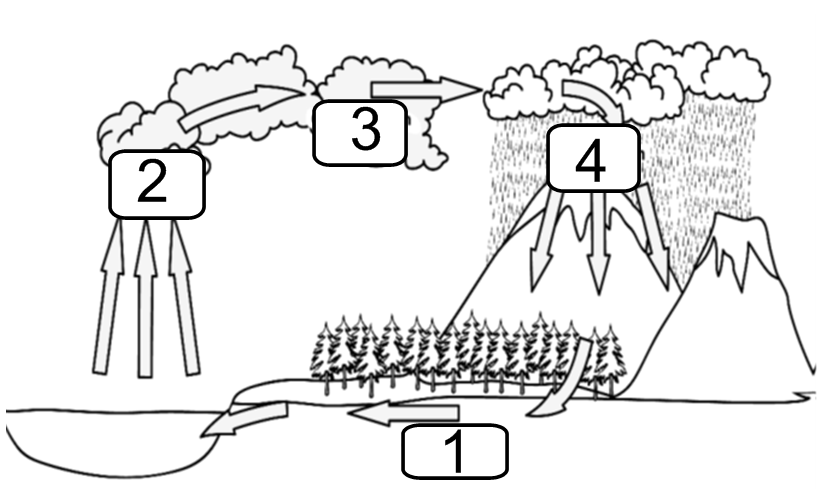
Which stage does the #2 show in the diagram?
a)
condensation
b)
evaporation
c)
precipitation
d)
run off
102.
what does the #4 show in the diagram?
a)
condensation
b)
evaporation
c)
precipitation
d)
run off
103.
The sun will cause water in the puddle to change from
a)
a gas to a liquid
b)
a liquid to a gas
c)
solid to a liquid
d)
a liquid to a solid
104.

As water evaporates it enters the air as

a)

clouds

b)

rain

c)

water vapor

105.
What is the water cycle?
a)
the 3 forms of water
b)
the movement of water on, above, or below the surface of the Earth
c)
when water melts
d)
when clouds form
106.

Who is this?

a)

Bella

b)

Renee

c)

Jane

d)

Esme

107.

Who is this?

a)

Laurent

b)

James

c)

Nahuel

d)

Mialigha

108.

Who reports Renesmee, thinking she's an immortal child?

a)

Victoria

b)

Irina

c)

Esme

d)

Tanya

109.

What is the name of the vampire leader group?

a)

Vampires

b)

Volturi

c)

Cullens

d)

Amazon clan

110.

How many movies of Twilight are there?

a)

1

b)

2

c)

4

d)

5