
 Worksheets
EOC Final Exam - U.S. Government, Civics and Economics
Total questions: 100
Worksheet time: 2hrs 34mins
What established the US Government?
Bill of Rights
Federalism
Constitution
Declaration of Independence
Which is the highest body of the Judicial Branch in the US Government?
Senate
Cabinet
Supreme Court
House of Representatives
Paying taxes, serving on a jury, and defending the Constitution are examples of citizen's what?
duties
rights
freedoms
responsibilities
Who is next in line for president after the vice-president?
Chief Justice
President Pro Tempore
Speaker of House
Attorney General
What is the absence of governemnt?
Totalitarianism
Anarchy
Republic
Dictatorship
There are ___ Senators in Congress
50
100
435
535
The number of representatives in the House is based on:
Population
Area of the State
Political View of the State
None of the Above
This government is ruled by a king or queen:
Anarchy
Direct Republic
Monarchy
Dictatorship
The ___ is the highest ranking office in the Executive Branch.
Speaker of the House
Chief Justice
President
President Pro Tempore
Separation of Powers best matches:
Shared powers between the state and federal government
Division of authority to specific branches of the government
Making sure one branch does not have too much power
Restriction through the Constitution
Checks and Balances best matches
Shared powers between the state and federal government
Division of authority to specific branches of the government
Making sure one branch does not have too much power
Restriction of power through the Constitution
What establishes the structure of our government and is the Supreme Law of the Land?
The Declaration of Independence
The Bill of Rights
The Preamble
The Constitution
The first 10 Amendments of our Constitution are called:
The Declaration of Independence
The Bill of Rights
The Preamble
The Constitution
1. What is one right of everyone living in the United States?
Freedom of religion
The right to swear in public
The right to not pay taxes
Freedom to discriminate
How old do citizens have to be to vote for President?
18
21
17
16
What is one way that Americans can participate in their democracy?
Voting
Read posts on Facebook and Twitter
Not voting
Ignore the news and current events
Who lived in America before the Europeans arrived?
The Spanish
The Native Americans
The French
The Aztecs
What group of people was taken to America and sold as slaves?
Native Americans
Indentured Servants
Portuguese
African Americans
When was the Declaration of Independence adopted?
June 19, 1776
July 4, 2006
July 4, 1776
January 4, 1776
Which of the following was NOT one of the original 13 states?
N. Carolina
Georgia
California
Massachusetts
What happened at the Constitutional Convention?
Constitution was created
Constitution was constipated
The Articles of Confederation were Amended
State of Pennsylvania was created
Who was the first President?
Abraham Lincoln
Benjamin Franklin
George Washington
James Madison
Name the U.S. war between the North and the South.
The Civil War
The Union War
The Confederate War
None of the Above
Name one problem that led to the Civil War.
slavery
oppression
language differences
all of the above
Countries have the right to do what it wants in its own country, without other countries interfering because they have...
Sovereignty
A Strong Civil Society
Respect
Self-Determination
Which of the following has unlimited governmental power?
Dictatorship
Republic
Theocracy
Which characteristic is necessary for a theocracy?
One single ruler
Legal system based on religion
Protection of individual rights
Which of the following is NOT in our Bill of Rights?
Freedom of speech
Freedom of religion
Right to an attorney
Right to vote
What amendment gives you freedom of speech, religion, press, assembly, and petition?
1st
5th
10th
16th

Who would be considered a US citizen?
Only people who are naturalized in the US
Anyone with good moral character
Only people born in the US
Anyone who has been born or naturalized in the US

How can a citizen become an informed voter?
By volunteering in public schools to support a child
By reading about various topics from a variety of new sources
By fundraising for a political campaign
By enlisting in the military
Which U.S. citizen obligation would help us live together peacefully?
petition the government
attend school
obey laws
pay taxes

In order to have an effective government, Thomas Jefferson said, "citizens need to understand their rights and responsibilities".
What does this quote best represent?
People should be able to do whatever they want to
Informed citizens are better at making wise decisions about government
There is no way to have an effective government
Only smart people should vote

What does Naturalization refer to?
A person that is natural and free
the legal process to become a citizen
the study of the rights of citizens
people who want to return to their country

Something done for the benefit of all is...
common good
rule of law
civics
immigrant

Which is an example of a U.S. citizens obligation?
community service
getting a job
obeying the law
graduating from high school
There are two ways to become an American citizen, by birth or a naturalization process.
False
True
A form of government in which citizens govern themselves.
Democracy
Republic
Dictatorship
Federal Government
The 1st amendment protects which of the following?
Freedom from unreasonable searches and seizures.
Freedom of religion, speech, press assembly and petition.
Right to trial by jury.
No quartering of soldiers.
The 2nd amendment protects which of the following rights?
Right to keep and bear arms.
Rights of accused persons (speedy and public trial).
Powers reserved to the states.
Other rights of the people.
The 4th amendment protects which of the following rights?
Powers reserved to the states.
Freedom from unreasonable searches and seizures.
Freedom from excessive bail, cruel and unusual punishments.
Right to due process of law, freedom from self-incrimination, and double jeopardy.
The 5th amendment protects which of the following rights?
Right to due process of law, freedom from self-incrimination, and double jeopardy.
Rights of accused persons (speedy and public trial).
Other rights of the people.
Right to keep and bear arms.
Which of the following rights and freedoms is specifically guaranteed by the first 1st amendment?
right to privacy
freedom of press
right to vote
freedom of marriage
The Fifth Amendment states that a person cannot be
tried for the same crime twice
forced to give evidence against himself or herself
deprived of life, liberty, and property without due process of law
All the above
According to the Fourth Amendment, the police can search and seize a person's property only if
judge issues a warrant
police ask to come in
the neighbor gives permission
People sign a petition
What historic document is the Bill of Rights a part of?
Declaration of Independence
Articles of Confederation
British Law
US Constitution
How many amendments are included in the Bill of Rights?
4
6
10
8
A warrant must describe the places to be searched.
true
false
What are reserved powers?
The federal government’s ability to establish rules
Powers held by the states
Powers given to the Federal government
Concurrent powers
Powers that show differences
States that run side by side
Powers held by both federal and state governments
What does bicameral mean?
Legislative with one house
Legislature divided into two houses
Two-humped camel
Who is the leader of the State Government's executive branch?
President
Governor
Mayor
City Council Member
Who is the leader of the local Government's executive branch?
President
Governor
Mayor
City Council Member
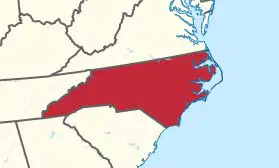
The highest court in North Carolina is the __________ court.
Court of Appeals
District Courts
Superior Court
Supreme Court

The General Assembly of North Carolina makes laws and is divided into a __________________________.
Three court system
unicameral system
executive branch
Senate and House of Representatives
The legislative branch of NC is bicameral. Bills must be approved by both chambers in order to become law. Which principle does this represent?
federalism
checks and balances
limited government
The official name for North Carolina's Legislative branch is:
The General Assembly
Congress
The Capitol
NC Lawmaking Coalition
The willingness of people to hand over their rights to rules in exchange for law and social order is called...
method of government
enlightenment agreement
social contract
US Constitiution
What are the 3 branches of the NC government?
Executive, judicial and governor
Executive, congress and the house of representatives
Executive, judicial and legislative
Judicial, executive and supreme court
The Governor and Lt. Governor of the state make up the Executive branch. They see that the laws are being carried out or enforced.
true
false
The Legislative branch makes the laws.
true
false
What is the largest problem usually facing state government?
Police Funding
Government Assistance
School Funding
None of the Above
Lexington is a _______. Davidson is a _______.
City, County
County, City
State, County
City, Precinct
A group of people who use resources to influence the government and public policy is called a what?
Political Party
Political Action Committee (PAC)
Interest Group
Watchdog
Working with "at risk" youth or running for city council are examples of:
political activism
civic involvement
participation in jury duty
participation in the judicial process

True or False: The purpose of political parties is to promote policy positions and elect candidates.
True
False
The oldest form of media is...
Radio
Internet
Television
Which racial segregation is enforced by law
de facto segregation
de jure segregation
This racial segregation happens by individual preference
de facto segregation
de jure segregation
What is a boycott?
A form of protesting. Refusing to buy something or participate in an action.
A violent form of protesting
Taking a knee
Where did the first sit-in take place?
Montgomery, Alabama
Greensboro, South Carolina
Little Rock, Arkansas
Greensboro, North Carolina
An attempt to put a slant on a story for a specific purpose.
Canvassing
Propaganda
Lobbying
Incumbent
Your due process rights can be found in the...
Bill of Rights and/or the Constitution
Magna Carta
Articles of Confederation

SBI stands for...
Several Bunch Investigations
State Bureau of Investigation
Fancy Bureau that Investigates
National State Agents
when a person is injured
when property is damaged
when a person's reputation is harmed
all of the above
What are the freedoms guaranteed by the 1st Amendment?
speech, religion, press, assembly, petition
bear arms, due process, equal protection
fair trial, no excessive bail, no cruel & unusual punishment, right to an attorney
equal protection, free exercise, equal rights for men & women, no housing discrimination
Why do some states have more Representatives than others?
representation in the House of Representatives is based on the state's economic output.
representation in the House of Representatives is based on the state's geographic size.
representation in the House of Representatives is based on the state's population
representation in the House of Representatives is based on the state's political party affiliation.
Where is the capital of the U.S. located?
Philadelphia
Boston
Washington D.C.
New York
What is an amendment to the Constitution?
President's power to deny a law
a law that has been rejected
a change to the Bill of Rights
a change to the Constitution
What movement tried to end racial discrimination?
civil rights movement
women's suffrage movement
westward expansion
Chinese Exclusion Act
What stops 1 branch of govt. from becoming more powerful than the others?
checks & balances
a bill becoming a law
the Supreme Court
the President
Who is the head of the executive branch?
Prime Minister
Chief Justice
President
Speaker of the House
The majority vote needed by the legislative branch to override a Veto from the President.
-
El voto mayoritario que necesita el poder legislativo para anular un veto del presidente.
1/4
2/3
6/5
1/2
Bicameral means
-
medios bicamarales
1 house / 1 casa
2 houses / 2 casas
camello de 2 jorobas / camel with 2 humps
two cameras / dos cámaras
What is the absence of governemnt?
Totalitarianism
Anarchy
Republic
Dictatorship
In order to have an effective government, Thomas Jefferson said, "citizens need to understand their rights and responsibilities".
What does this quote best represent?
People should be able to do whatever they want to
Informed citizens are better at making wise decisions about government
There is no way to have an effective government
Only smart people should vote
What does Naturalization refer to?
A person that is natural and free
the legal process to become a citizen
the study of the rights of citizens
people who want to return to their country

