
 Worksheets
Earth Science Final Review 2
Total questions: 103
Worksheet time: 1hrs 4mins
Would it have been helpful to spend time in class going over any of the following?
Figuring out how to navigate the course itself, finding lessons, help materials, etc.
Using applications like Word documents, PowerPoint, taking screenshots
How to make charts or graphs
How to make various types of models
How to revise previous work
What skills do you feel you needed the most help with this year?
Making models
Reading and understanding charts or graphs
Understanding the content (such as how the solar system formed).
Observing natural phenomenon and asking questions, making predictions, or observations
Using a simulation to understand the topic better
What would have helped most on the projects if we could add something below?
Simpler/clearer directions
More resources provided on the document to help you answer the questions
More examples
Videos walking you through the instructions
Videos or text attached covering the content you need to know

The thing I enjoyed learning about most in this course was:
Space and the Universe-
sun, solar system, galaxies, origin of the universe, etc.
Weather and Natural Disasters-
wind, water, hurricanes, tornadoes, earthquakes, volcanoes, etc.
Earth's Past-
plate tectonics/ Pangea, how mountains, etc formed over time, early atmosphere, how life has changed- dinos, etc.
Natural Cycles-
rock cycle, soil, nitrogen cycle, carbon cycle, water cycle, etc.
Human Influence the on Earth-
water pollution, climate change, human population growth, renewable and non renewable energy, biodiversity and habitat loss

What is plagiarism?
coming up with your own ideas or way of writing the concept down
putting data in graphical form
using writing or part of the writing of another person as your own
giving credit to others for their work

Why should you not plagiarize or use AI (unless specifically approved for an assignement)?
It's someone else's work
It's against school policy
I won't learn as much
All of these

metamorphic
sedimentary
igneous
all of these

Rocks that have formed from magma that has cooled
Sedimentary
Igneous
Volcanic
Metamorphicc

Rocks that have formed from being compacted and made up of sediment that have cemented together
Sedimentary
Metamorphic
Igneous

Rocks that have been changed from other rocks by heat and pressure
Metamorphic
Sedimentary
Igneous

The process that BREAKS DOWN rocks into smaller pieces caused by wind, rain, ice, chemicals, freezing, or thawing
Erosion
Weathering
Deposition
The Hulk

Which of the following is a distinguishing difference between rocks and minerals
Minerals are made of rocks combined in different combinations.
Crystals are a type of rock and granite is a type of mineral.
Minerals have specific chemical compositions, but rocks do not.
Minerals are aggregates of different rocks and elements.

The continents were once joined in a super-continent and have moved over time due to convection currents
Continents are stationary and do not move
The Earth is broken into lithospheric plates that move due to the spin of the Earth on its axis
none of the above

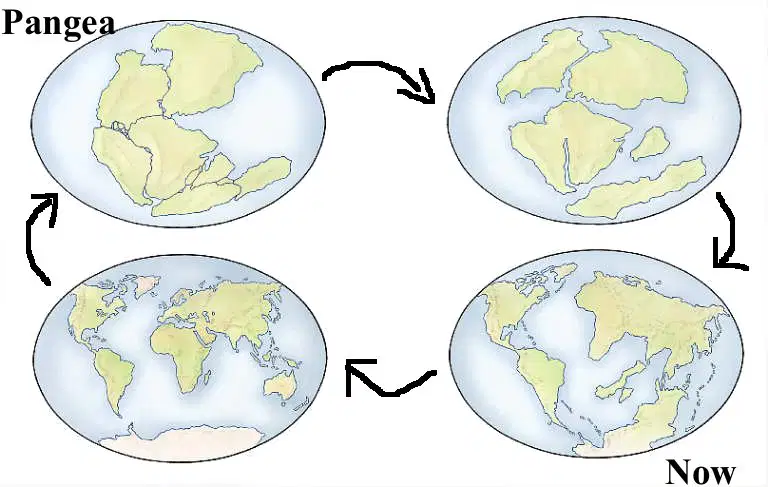
Why was Wegener’s theory of continental drift almost completely discarded?
It didn’t explain how mountains formed.
It wasn’t supported by fossil evidence.
It didn’t have a mechanism for how drift occurred.
It didn’t explain how continents fit together.

lava
volcano
earthquake
tsunami

Hotspots are volcanoes that form...
at convergent plate boundaries.
at divergent plate boundaries.
at transform plate boundaries.
in the middle of a tectonic plate.
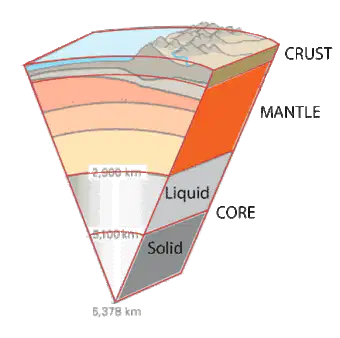
Which of the following sources provides detailed information about only the upper mantle’s composition?
Seismic waves
Earth’s magnetic field
Volcanic activity
Meteorites

where it is found (above or below the surface)
how hot the molten rock is (lava is hotter than magma)
the type of boundary where it forms
the viscosity of the molten rock (lava has a lower viscosity)

What are two categories of seismic waves?
body and surface waves
P and S waves
Love and Rayleigh waves
Transverse and compression waves

Which wave can travel through solids, liquids, and gases?
P-Waves
S-Waves
Surface (L) Waves
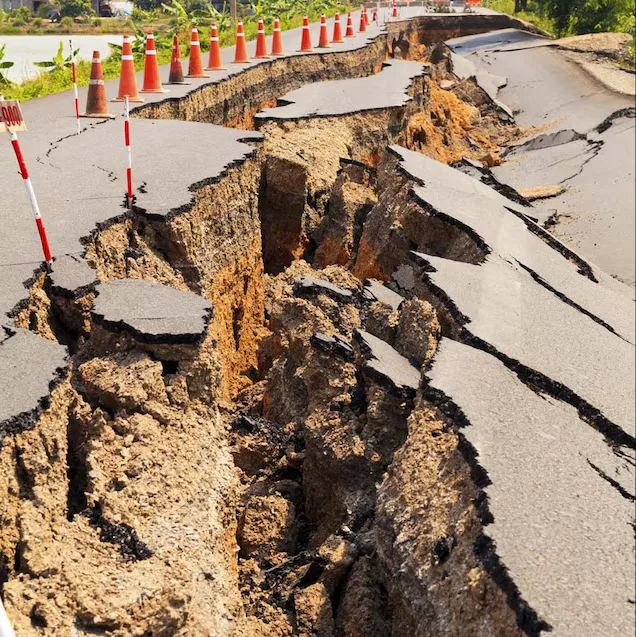
Which of the following does NOT cause an earthquake?
Nuclear testing
Volcano
Tsunami
Geological Faults

In some areas of the world, like California and Japan, earthquakes are a common occurrence. Why?
The strong ocean currents are causing earthquakes.
Unstable sand on the coast causes earthquakes.
Both areas are subjected to strong ocean wind and waves.
Both areas are on the boundary of tectonic plates.

What type of tectonic plate boundary is this?
divergent boundary
convergent boundary
transform boundary

What type of tectonic plate boundary is this?
divergent boundary
convergent boundary
transform boundary

What type of tectonic plate boundary is this?
divergent boundary
convergent boundary
transform boundary

What geological process generates the world's longest undersea mountain chain called the Mid-Atlantic Ridge?
folding and breaking of undersea layers until they form ridges or mountains
subduction of pulled plate boundaries beneath neighboring plates
divergent plates spreading apart and magma pushing up and creating undersea mountains
deep areas of bedrock breaking into faults leaving steep vertical displacements
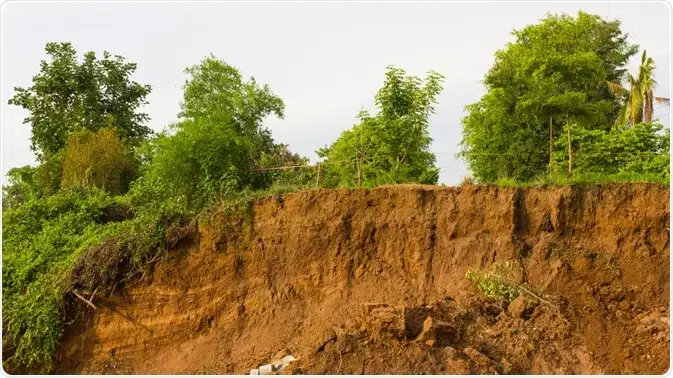
bare and exposed to wind and rain.
covered with grass.
plowed along the contour of the land
covered with forest.

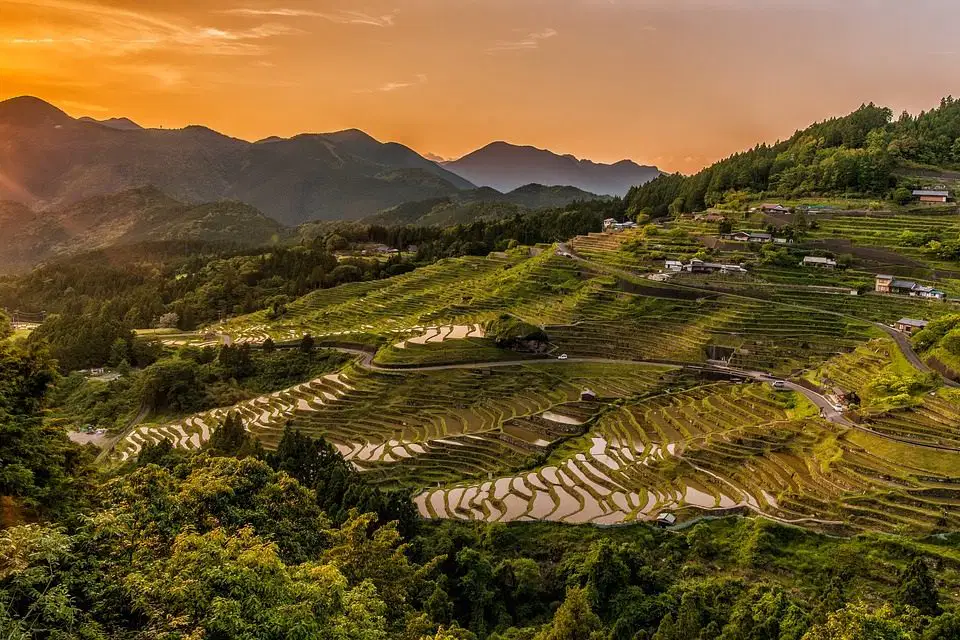
What soil conservation method refers to forming steps in a hill to prevent water erosion?
windbreaks
contour plowing
terrace farming
strip cropping

formed
created
changed
the same
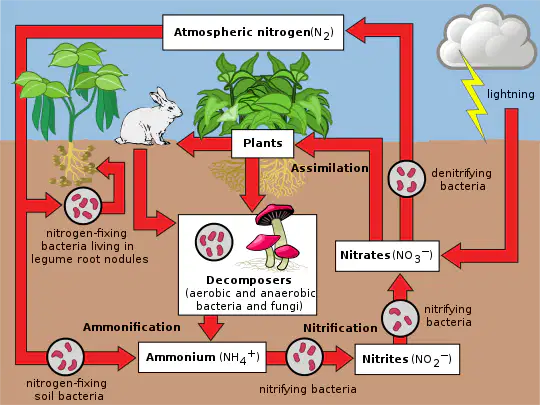
the atmosphere
eating other organisms
rainwater
lightning
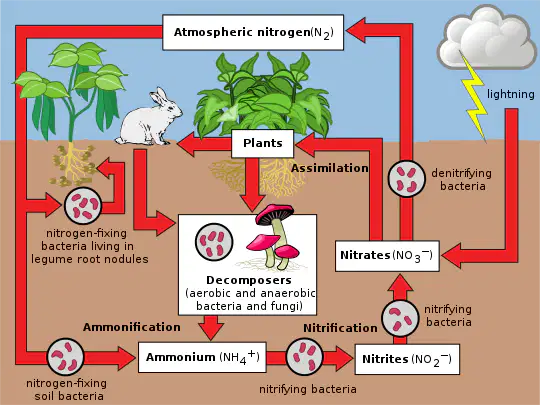
Nitrogen is a critical component of what organic compounds?
proteins and carbohydrates
lipids and carbohydrates
proteins and DNA
lipids and DNA
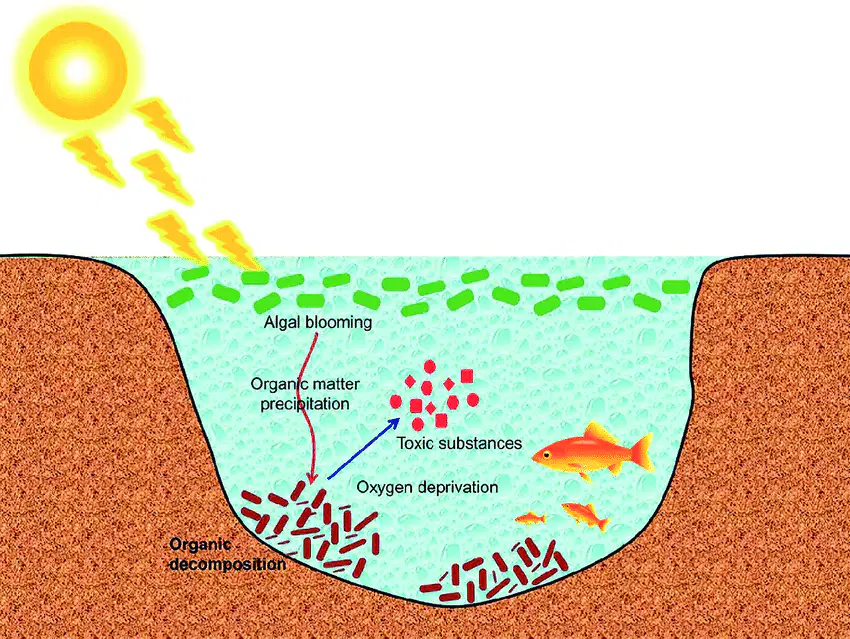
Which term refers to consequences of extra nutrients being added to a body of water?
"eutrophication"
"decomposers"
"parasites"
"nitrogen fixing"
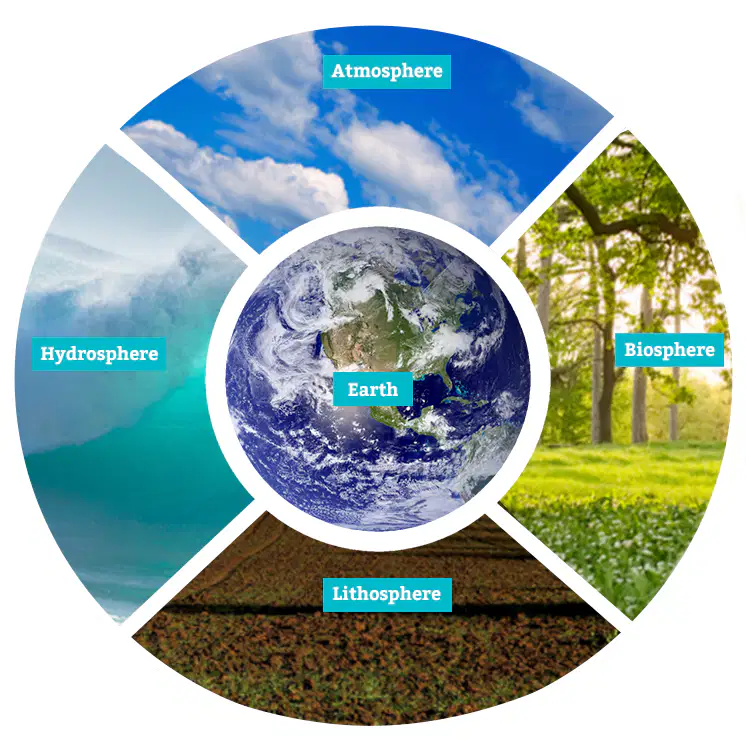
Extra fertilizer in water can cause algae to reproduce and bloom out of control. What type of interaction in the Earth system is this?
Hydrosphere-Lithosphere
Atmosphere-Biosphere
Hydrosphere-Biosphere
Atmosphere-Lithosphere

How is the atmospheric oxygen that is taken in by living things for respiration replaced?
Weathering releases oxygen that is locked in rocks due to sedimentation.
Oxygen that is dissolved in water such as oceans is released.
Photosynthesis uses the carbon dioxide that is exhaled by living things to make oxygen.
After living things use oxygen for respiration, they exhale the oxygen back to the atmosphere.
Which of the following is NOT considered a renewable resource
Natural Gas
Wind
Solar
Hydropower (water)

Which one of these does not add CO2 to the atmosphere?
cooking with gas
planting trees
burning wood
riding in a bus
What pollutant forms when automobile emissions react with oxygen gas and ultraviolet rays?
Smog/ ground level ozone
carbon dioxide
radon
sulfur dioxide
colon cancer
hearing loss
asthma
sun burn
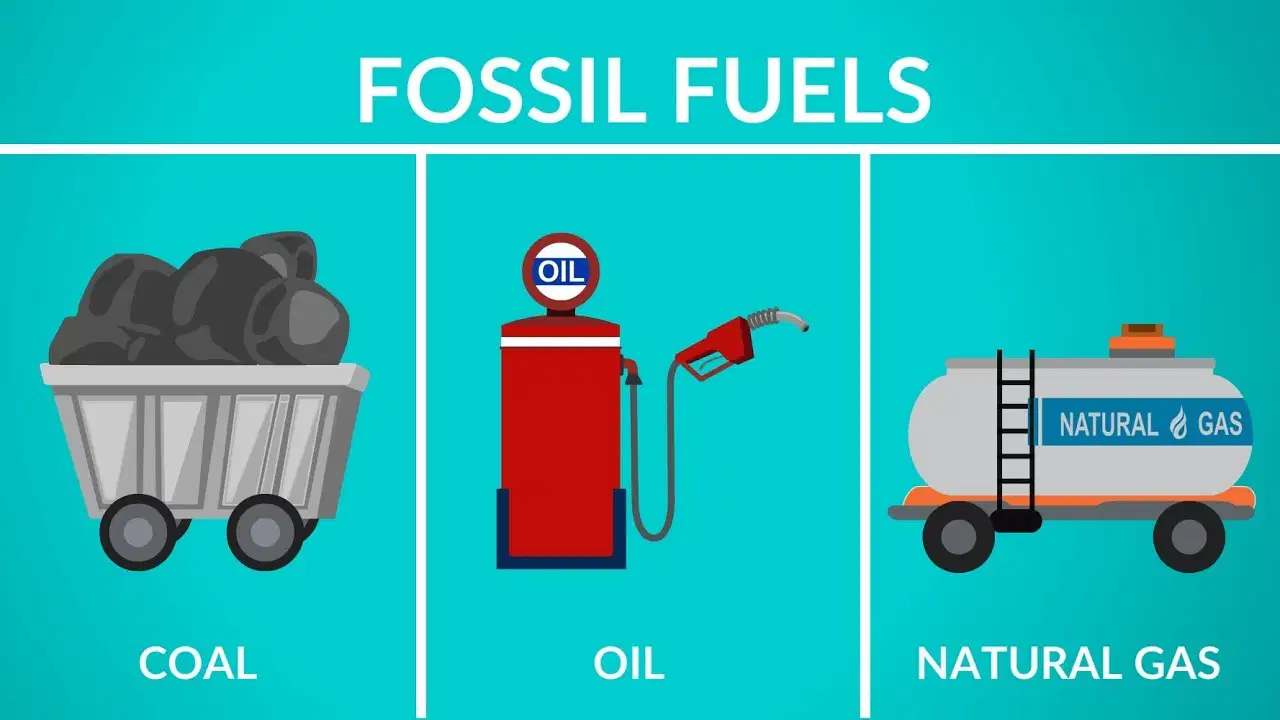
What is the biggest way that fossil fuel use impacts the environment?
water use
soil degredation
invasive species
global climate change
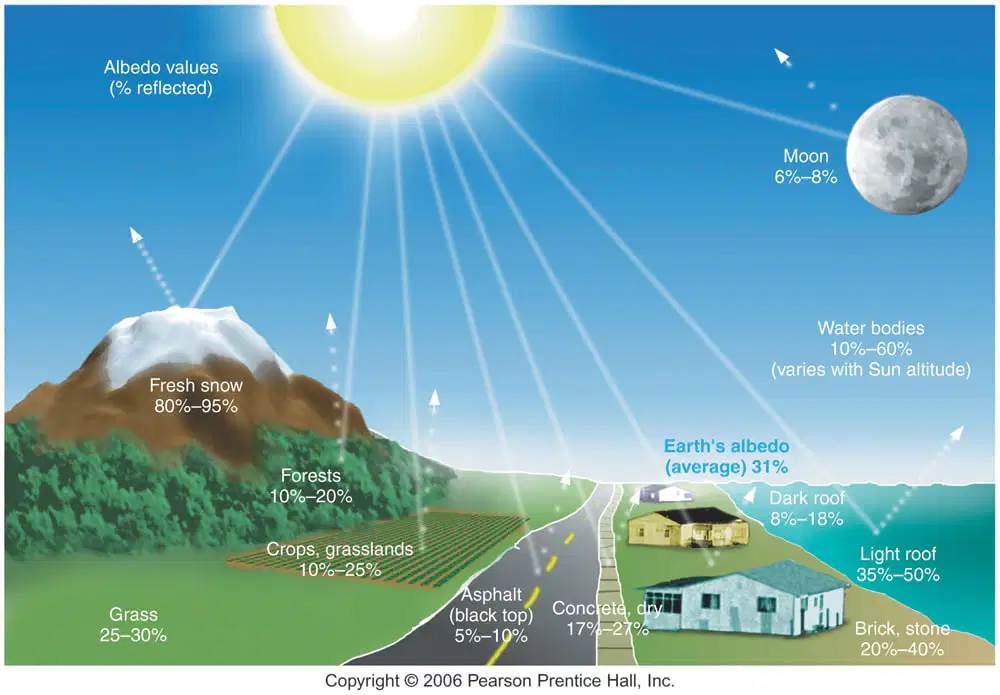
Which of the following would be most effective at reflecting sunlight from earth’s surface?
forest
jungle
snow-covered field
dark-colored parking lot
What best defines biodiversity?
Amount of biomass
Total # of organisms
Variety and number of organisms
Animals & plants dying
Why is biodiversity important?
To create stable ecosystems
To decrease predator numbers
To increase atmospheric temperatures
To stabilize non-renewable resources

A group of puppies have different fur colors. This is an example of
species diversity
ecosystem diversity
genetic diversity
organism diversity
What is the geological time scale ?
A clock
A calendar
Something that divides Earths history into groups
What era did dinosaurs go extinct ?
Paleozoic
Mesozoic
Cenozoic

How do scientist think that early atmosphere was probably formed?
Gases from volcanoes
Lava from volcanoes
Gases released from bacteria
They are unsure how it is formed
What evidence do scientists have that large quantities of oxygen entered the atmosphere?
comets
fossils
the rings in trees
banded-iron formations
True or False: The first organisms in the ocean did not use oxygen.
True
False

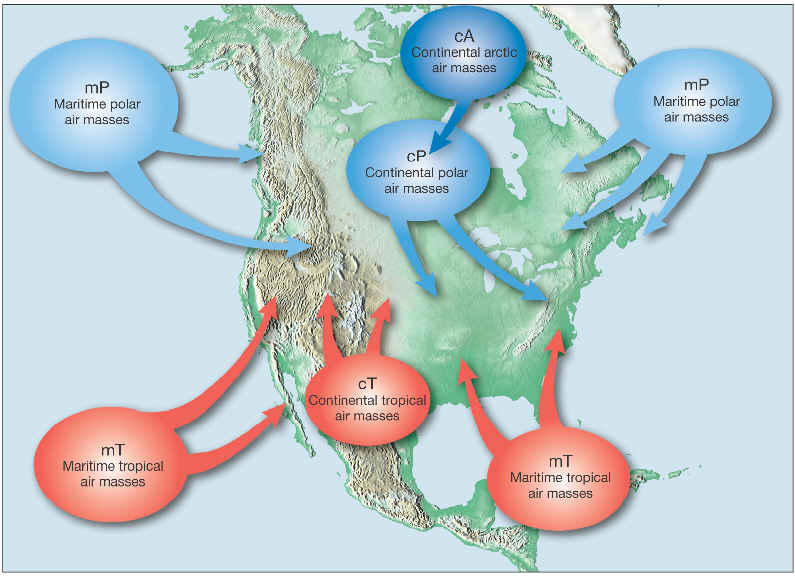
An air mass is a large mass of air that is defined by its temperature and ____________________.
Elevation (altitude)
Water vapor content (humidity)
Strength
Weather
How do oceans influence the temperature of the tropics and poles?
They keep it warm by brining more rain.
They help to distribute heat to the poles.
The oceans do not play a role in temperature.
They cool the poles by creating wind.
The energy and motion from waves is caused by
currents
tides
wind
gravity
Where is most of the freshwater located on Earth?
in the oceans
in polar ice and glaciers
in rivers, streams, and lakes
under the ground
25%
72%
97%
100%
What does salinity measure?
ocean temperature
amount of salt in water
ratio of mass to volume
Temperature and salinity together are called the _______ circulation.
hot-salt
Coriolis Effect
wind currents
thermohaline

Warm air tends to ______
Rise
Sink
How are air masses form into clouds? Clouds are form when
cold moist air rises and then cools
warm moist rises, expands and then cools
cold air reaches the lifted condensation level

The Sun is...
a planet
only one planet away from Earth
Earth's moon
a star in the center of our solar system

The life cycle of a star is determined by:
mass
temperature
color
shape

Stars are born in nebulae. Which best describes a nebula?
a collection of gas and dust
a belt of asteroids
a collection of older stars
an empty space

nuclear fission
nuclear fusion
nuclear reaction
nuclear core

What two measurements are used to classify stars in an HR diagram?
location & distance
size & location
brightness & distance
temperature & brightness

gas
dust
stars
gravitational attraction

Galaxies are classified according to:
shape
size
color
temperature

M38
Milky Way Galaxy
Andromeda Galaxy
Pinwheel Galaxy

The initial explosion that resulted in the formation and expansion of the universe is called __________________.
the Big Bang
the start of the universe
the beginning
the formation of space

What evidence best proves the expansion and separation of galaxies that has occurred since the theorized Big Bang?
Gravity
Red Shifting
the EM Spectrum
Light Years

Why do planets orbit the Sun?
The Sun is the only celestial object that has a gravitational pull.
The Sun’s chemical composition makes it attract planets.
Only celestial bodies that emit light, like the Sun, can be at the center of an orbit.
The Sun is the most massive object in our solar system, so it exerts the greatest gravitational pull.

What must happen in order for a satellite to orbit Earth?
The satellite's forward motion must be less than the gravitational pull on it from Earth
The forward motion of the satellite must be balanced by the pull of gravity from Earth
It's not possible for a satellite to orbit Earth
Earth's gravity must be stronger

Their mass and the distance between them
The distance between them
The sum of their masses
The mass of the large object

Due to rotation, only one side of the Earth faces the Sun at a time. This causes...
seasons
climate changes
day and night
months of the year


spring
summer
fall
winter

A bright object with a tail, moving slowly across the sky is most likely a _________.
asteroid
comet
meteor
UFO

A rocky/metal object in space that orbits the Sun between Mars & Jupiter is called a(n) _______________.
asteroid
comet
meteor
planet

What do the inner planets have in common?
They are all the same size
They are made of gas.
They rotate at the same speed.
They are all rocky.

What is the definition of a dwarf planet?
A dwarf planet is a solar system body that has a spherical shape and an orbit around the Sun that is not cleared of other objects.
A dwarf planet is a small planet that is smaller than Mars.
A dwarf planet is a planet that is further than 2 AU from its orbiting star.

