
 Worksheets
space and planet
Total questions: 129
Worksheet time: 2hrs 38mins
What is the artifical satellite that orbits Earth
Hubble Telescope
Spirit
Opportunity
Challenger
the moon orbiting the earth is an example of:
natural satellite
artificial satellite
What science tool advanced space exploration by allowing humans to see better and farther into space?
microscope
telescope
camera
hand lens

What is the smallest planet?
Earth
Venus
Mercury
Mars
What is the largest planet?
Saturn
Jupiter
Uranus
Neptune
Saturn has the most moons out of all the planet in our solar system. How many are there?
63
27
51
82

What causes a black hole?
Planets colliding
Stars that are just starting to form
Big Bang
Large stars that have exploded and collapsed on themselves

How many planets are there in the solar system ?
11
9
8
10
What is the largest planet in our solar system
Neptune
Jupiter
Saturn
Mars
What is the largest type of star in the universe?
Blue Giant Stars
Red Supergiant Stars
Red Giant Stars
Black Dwarf Stars
How are Black Holes created?
When massive stars collapse at the end of their life cycle
When tiny stars collapse at the end of their life cycle
When 2 stars bump into eachother
When 2 atoms collide

The sun is the _________________________________________.
4th planet from Mars.
the 2nd planet from the sun.
center of our solar system.

The planets move ________________________________________.
around the earth
around the sun.
around the planets.

The first planet from the sun is _______________________.
Mars
Earth
Mercury

Venus is the __________________________ plant.
brightest
biggest
smallest
Earth is the only planet in our Solar System that ______ _________.
travels around the moon.
travels around the sun.
supports life.
Uranus is the _______________________ planet.
hottest
coldest
oldest
Our galaxy is called
Centaurus A
Andromeda
the Milky Way
Triangulum
According to latest theories, the Big Bang happened
3 million years ago
about 13.8 billion years ago
3 billion years ago
4.5 billion years ago
Our Sun is just one of many millions of stars in a group of stars called a
universe
solar system
cosmos
galaxy
Our universe is made up of at least a
million galaxies
million stars
billion galaxies
hundred planets

How long does it take for the Earth to orbit the Sun?
24 hours
29 days
360 days
365.25 days
______ keeps the planets in _____ of the sun.
(a)
What is a dwarf planet?
A small planet
A planet that is far away
A planet without the ability to clear it's path
A planet which was previously a comet
Which is bigger?
The galaxy
The Earth
The universe
I mean... they're all pretty big....
What is a true statement?
The universe is never-ending with no doubt.
There is such theory called the 'Big Crunch'.
The big band never happened
I'm unsure
What are planets outside our solar system officially called?
Ecoplanets
Exoplanets
Alien Worlds
Exoworlds
What is the most successful way to discover exoplanets?
Transits
Spacecraft fly-bys
Direct pictures
Doppler Shift

What is the habitable zone (Goldilocks Zone)?
A zone with the correct distance away from a star
A zone in space where water turns into vapor
A zone where life can not be sustained
A zone in space where water is frozen

What is an astronomical unit (A.U.)?
the time it takes light to travel one year
the distance between the Earth and the Moon
the distance between the Earth and the Sun
the distance between the Earth and the Neptune
Why do we use light years and astronomical units to measure distances in space?
Scientists want to sound smart.
Hubble discovered these units and wanted to use them.
Space is too small to use km, it wouldn't make sense.
Space is too big, vast, enormous to use traditional units, like miles.

They orbit around the sun and don't give off their own light. What are they?
Moons
Fruits
Blinging rings
Planets

What is the center of the solar system that planets revolve around?
Sun
Milky Way
Universe
Earth

What are the loose collection of rocks and frozen gases that orbit between planets?
Asteroids
Comets
Baby planets
Infinity stones
Which planet has rings?
Saturn
Earth
Venus
Mars
A building in space where astronauts work and live
House
Apartment
International Space Station
Tractor

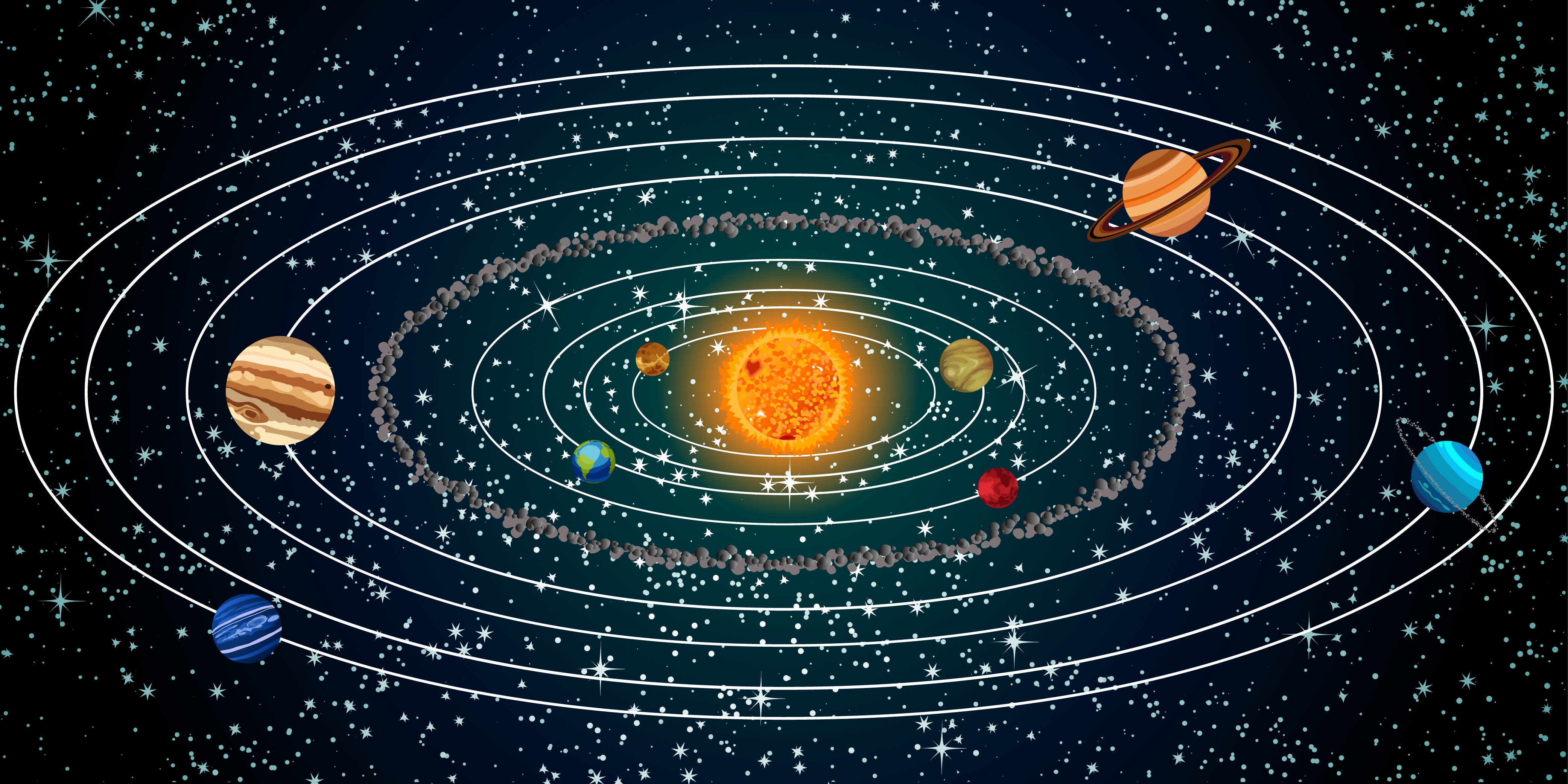
Which Italian is known as the 'Father of Modern Physics'?
Berlusconi
Da Vinci
Versace
Galileo


What is missing
g
D
L
n
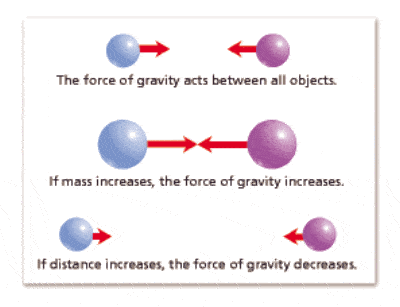
______________ is how heavy an object is. It is determined by the pull of gravity
Weight
Mass
There are more stars in the universe than grains of sand on earth.
True
False
What is the closest galaxy to the Milky Way?
Proxima Centauri
Spiral
Andromeda
Elliptical
A light year is a measure of time.
True
False
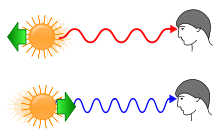
Which unit of measurement is used to measure distances within our solar system?
inches
kilometers
miles
Astronomical units
What is the time taken for the light to travel between the Sun and Earth?
4 minutes
8 minutes
12 minutes
2 minutes
Proxima Centauri is ______ light years away.
6.8
2.5
4.3
5.4
What galaxy do we live in?
Andromeda
Milky Way
Solar System
Parallax
An astronomical unit is...
The average distance between the Earth and the Sun
The average distance between the Sun and Neptune
The diameter of the sun
The time it takes light to travel across our solar system
Reflecting telescopes focus light using a...
mirror.
lens.
spectrometer.
filter.
Refracting telescopes focus light using a...
mirror.
lens.
spectrometer.
filter.
Which distance is larger: 1 astronomical unit or 1 light-year?
1 AU
1 LY
Modern telescopes are reflecting because: (Choose all that apply)
Lenses are difficult to manufacture
Lenses are heavy and fragile
lenses absorb light that passes through them
Lenses require only 1 perfect surface
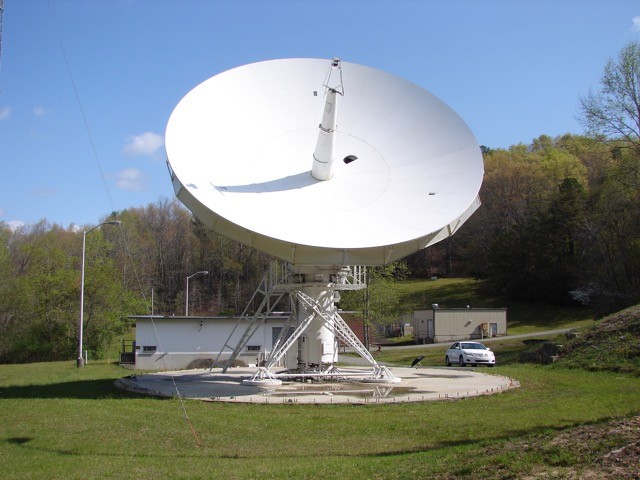
What type of telescope can work 24 hours a day and even be used in the rain?
Refracting Telescope
Radio Telescope
Newtonian Telescope
Solar Telescope
The three conditions that allow us to sustain life on Earth are -
Choose all that apply.
liquid water
distance from the Sun / temperature
atmospheric conditions
stars
In order for life as we know it to exist, the planet must also be in the _______________.
greenhouse effect
Milky Way galaxy
solar system
habitable zone
The habitable zone is also known as the ___________________.
Goldilocks Zone
Milky Way
Andromeda
Goldilocks and the Three Bears
In the Habitable Zone, the planet has just the right __________________ for life to exist.
temperature
bubble
greenhouse
aliens
Is Mars in the habitable zone?
yes
no
Water must be __________ in order to support life as we know it.
liquid
gas
froze
Why can't we inhabit Venus?
It is too hot due to its thick atmosphere
It is too cold due to its thin atmosphere
It has too many rainstorms
Aliens live there and would fight is off!
What does it mean when a planet is in the Goldilocks zone?
READ ALL CHOICES CAREFULLY!!
it has water vapor and is at just the right distance from the sun
it's at just the right distance and temperature and we know life lives on it
It is the area around a star where a planet, with a proper atmosphere might be able to maintain liquid water on its surface
It has just the right land masses and water to support life
Which of these are theories of the origin of the universe?
Big Bang Theory
Heliocentric Model
Steady State Theory
Red Shift
Which theory does this statement apply to?
The Universe has no beginning or end.
Big Bang Theory
Steady State Theory
Both
Which theory does this statement apply to?
The Universe started at a single point.
Big Bang Theory
Steady State Theory
Both
According to the Big Bang theory, what is the approximate age of the Universe?
13.8 thousand years
13.8 million years
13.8 billion years
13.8 trillion years
Which of the following planets feels the weakest pull from the Sun?
Neptune
Mercury
Venus
Earth

A super giant explodes in a supernova...
1. has no effect on anything
2. that always lasts millions of years
3. and hydrogen, helium and other heavier elements are ejected
1, 2, and 3 occur.
In which list are celestial features correctly shown in order of increasing size?
galaxy, solar system, universe, planet
solar system, galaxy, planet, universe
planet, solar system, galaxy, universe
universe, galaxy, solar system, planet
Stars form in giant clouds of gas and dust. What are these clouds called?
Black Hole
White Dwarf
Super Nova
Nebula
Where did the Sun form?
From a nebula outside of the Milky Way Galaxy
From a large cloud of gas and dust in a nebula called the Milky Way Galaxy
Near the outer edge of the Milky Way Galaxy. After its formation, it interacted with other planets to form comets
The Sun was formed in a nebula in the Milky Way Galaxy.
Which describes the Sun and the Milky Way?
The Sun is a medium sized star near the edge of a disc shaped galaxy
The Sun is a massive star near the edge of a disc shaped galaxy
The Sun is a dwarf sized star near the edge of a disc shaped galaxy
The Sun is medium sized star near the middle of a disc shaped galaxy
With regard to a star's life cycle, all stars begin as what thing?
A nebula
A red giant
A supernova
Ashes
Only high mass stars have this in their life cycle.
A red giant
A nebula
A white dwarf
A supernova
How might a high mass star's life cycle end? (check all that apply)
white dwarf
neutron star
black hole
red giant
Main sequence stars have what in common?
They are primarily fusing hydrogen into helium
They are red in color
They are larger than most other stars
They are the hottest stars

What is stage A?
Protostar
Black Dwarf
Nebula
White Dwarf & Planetary Nebula
Main Sequence
What is stage B?
Protostar
Black Dwarf
White Dwarf & Planetary Nebula
Main Sequence
Red Giant
What is stage C?
Protostar
Nebula
White Dwarf & Planetary Nebula
Main Sequence
Red Giant
What is stage D?
Protostar
Nebula
White Dwarf & Planetary Nebula
Main Sequence
Red Giant
What is stage E?
Black Dwarf
Nebula
White Dwarf & Planetary Nebula
Main Sequence
Red Giant
What is stage F?
Black Dwarf
Nebula
White Dwarf & Planetary Nebula
Main Sequence
Red Giant

What is stage D?
Neutron Star
Supernova
Red Super Giant
Black Hole
Main Sequence
What is stage E?
Neutron Star
Supernova
Red Super Giant
Black Hole
Main Sequence
If G is more massive than F, what is G?
Neutron Star
Supernova
Red Super Giant
Black Hole
Main Sequence
If G is more massive than F, what is F?
Neutron Star
Supernova
Red Super Giant
Black Hole
Main Sequence

