
 Worksheets
Animal Biology Review
Total questions: 137
Worksheet time: 2hrs 32mins
Flatworms support their shape with three tissue layers but don't have any kind of skeleton.
True
False
Flatworms and Round worms have bilateral symmetry
True
False
Sponges, Jellies, Flatworms and Roundworms all get their oxygen through:
simple diffusion
gills
lungs
Amazon Prime
How many openings do Cnidarians have to their Gastrovascular Cavity?
one
two
three
four
Flatworms and Roundworms both have:
radial symmetry
a gastrovascular cavity
cephalization
A flatworm that produces both egg cells and sperm cells is called a:
hermaphrodite
gastrovascular cavity
parasite
Nematode
Some worms live in or on a host - and do harm to that host. They are:
hermaphrodites
vertebrates
parasites
asymmetrical

Cnidarian tentacles grow in a ring around their mouths, what kind of symmetry is that?
(seen in starfish too)
Radial
Bilateral
Asymmetry
Helix
Cnidarians have cell layers organized into
shelter
hydra
colonies
tissue
Flatworms have what kind of body cavity?
Acoelomate
Pseudocoelomate
Coelomate
The structure that acts as a kidney in a planarian flatworm is called:
pharynx
ganglia
flame cell
Round worms have a _______________. Meaning food enters the mouth and waste exits the anus.
one way digestive system
two way digestive system
roundworms have _________________
complex digestive systems (4 openings)
simple digestive systems (2 openings)
no digestive systems (Like a a flatworm)
doesn't excrete waste
roundworms ___________
use diffusion for gasses
don't take in gasses
take gasses in and don't release them
Just have their gasses go through their digestive system
roundworms use _____________________
sexual reproduction
asexual reproduction
spores
no reproduction

How many cell layers do Rotifera have?
none
one
two
more than two
Rotifera have ______ body symmetry
Radial
usymmetrical
Asymmetrical
Bilateral
eukaryotic, multicellular, chitin cell wall, absorptive heterotroph
protist
animal
plant
fungi
which taxon contains the most organisms?
kingdom
phylum
genus
species
what taxon contains the least amount of organisms?
kingdom
phylum
genus
species
which two taxons are used to give an organism their scientific name?
kingdom/phylum
phylum/class
genus/species
kingdom/species
which domain contains eukaryotic organisms?
eukarya
bacteria
archaea

The embryo layer that forms the skin and nervous tissue is the _____.
endoderm
mesoderm
ectoderm
deuterostome
The animal's digestive tract forms from the
endoderm
extoderm
mesoderm
protostome
The embryo layer that forms the skin and nervous tissue is
endoderm
ectoderm
mesoderm
protostome
Describes an animal that lacks a backbone.
vertebrate
invertebrate
chordate
vertebrae
Which is a similarity between worms and mollusks?
Some have gills
They are invertebrates
Land dwelling organisms must stay moist to survive
All of the above
Can be found in both terrestrial and marine environments.
Worms
Mollusks
Both
Neither
Has aquatic organisms breathe through their gills.
Worms
Mollusks
Both
Neither
Has terrestrial organisms breathe through their skin.
Worms
Mollusks
Both
Neither
In which organisms would you find a pharynx?
Worms
Mollusks
What kind of symmetry do annelids have?
Bilateral
Radial
None
Asymmetrical
Which of the following is an example of an Annelida?
Earthworm
Tapeworm
Pinworm
Hookworm
What is the organ used to accomplish excretion?
Clitellum
Nephridia
Septa
Setae
Waste piles from a segmented worm
crop
setae
castings
gizzard
Bristle-like structures on the outside of each body segment of earthworms used to hold onto soil and move
crop
gizzard
setae
aerate
Storage sac to which soil moves into
crop
gizzard
setae
castings
structure behind the crop that grinds the soil and organic matter in a worm
crop
gizzard
setae
aerate
What do earthworms use to "breathe"?
skin
lungs
gills
setae
The blood of earthworms is contained in vessels, thus have a(an)
fluid filled cavity
water vascular system
closed circulatory system
open circulatory system


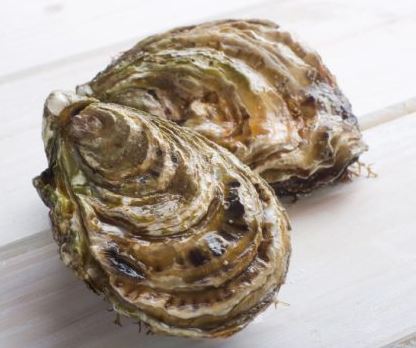
What are filter feeders?
A large pile of living organisms and the animals that live among them.
An organism that attaches onto another organism and feeds off of it.
Animals that feed by removing tiny bits of food from the water.
Animals that use sunlight to obtain nutrients.
Squids move by
walking/creeping on their tentacles
shortening and lengthening their tentacles
jet populsion
fins
Most mollusks have what type of symmetry?
Radial
Bilateral
Asymmetry
No symmetry
Which of the following is NOT a characteristic of arthropods?
Open circulatory system
Jointed appendages
Segmented body
Endoskeleton
Which of the following is NOT a function of the exoskeleton.
Protection
Prevents water loss
Attachment of muscles
Flexibility of movement
Since the exoskeleton limits the growth of arthropods, they have to shed their exoskeletons and form a new one. This is called ____.
defecating
molting
morphing
excreting
Which of the following correctly describes a crayfish's body regions?
head, thorax, abdomen
head, abdomen
cephalothorax, abdomen
head, cephalothorax
Which of the following crayfish appendages contain the claws?
Uropods
Telson
Maxillipeds
Chelipeds
Which of the following crayfish structures is used for gas exchange?
Malpighian tubules
Green glands
Gills
Book lungs
Why do arthropods molt?
It happens for no reason
The females don't like the one that they had
The exoskeleton doesn't grow with the arthropod
They are done hibernating
In which type of environments do arthropods live?
Marine
Freshwater
Land
All of these
Millipedes are different from centipedes because millipedes ___.
have more legs per segment
secrete venom
are predators
hae flattened bodies
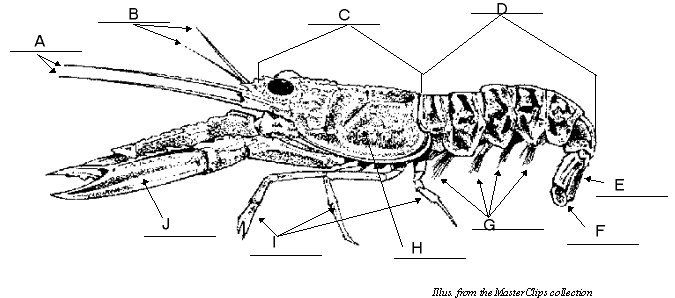
Letter C is identifying what part of a crayfish?
abdomen
cephalothorax
cheliped
telson
Letter D is identifying what part of a crayfish?
abdomen
cephalothorax
cheliped
telson
Letter G is identifying what part of a crayfish?
abdomen
maxilliped
pleopods
cheliped
Letter E is identifying what part of a crayfish?
abdomen
maxilliped
pleopods
telson
Which word is associated with the spider brain?
cloaca
spiracle
pericardial sac
ganglion
cecum
Insects that live in a hive work together, but their leader is usually a ______.
worker
queen
pupa
drone
What is an advantage of having a compound eye?
having a narrower field of vision
being able to see behind you
having a wider field of vision
scaring your predators


How many stages are in an incomplete life cycle?
1
2
3
4
A tetrapod is an organism with ...
Two Limbs
Four Eyes
Four Limbs
Four Toes
Amphibians were the first organisms with four limbs.
True
False
Which is not an adaptation of amphibians that helped them live on land and in water?
Large shoulder and hip bones to support more weight.
Interlocking projections on vertebrae.
A mobile, muscular tongue to catch food.
Scales and large fins for swimming.
Amphibians have a ____-chambered heart.
1
2
3
4
A tadpole growing into an adult frog is an example of ...
Complete Metamorphosis
Molting
Brooding
Amphibian
Which is not a group of amphibians?
Frogs
Salamanders
Toads
Lizards
The largest group of living amphibians is ...
Salamanders
Toads
Frogs
Lizards
Caecelians look and move very similar to ...
Snakes
Earthworms
Tadpoles
Frogs
All amphibians require moist environments for ________.
making sounds
feeding
reproduction
temperature regulation

Amphibians are ____________ which means they have a backbone.
Invertebrates
Vertebrates
Skeletons
Amphibians do not have any bones
The earliest fish in the oceans were:
sponges
corals
jawless fish
sharks
Lampreys and hagfish lack
teeth
heads
mouths
jaws
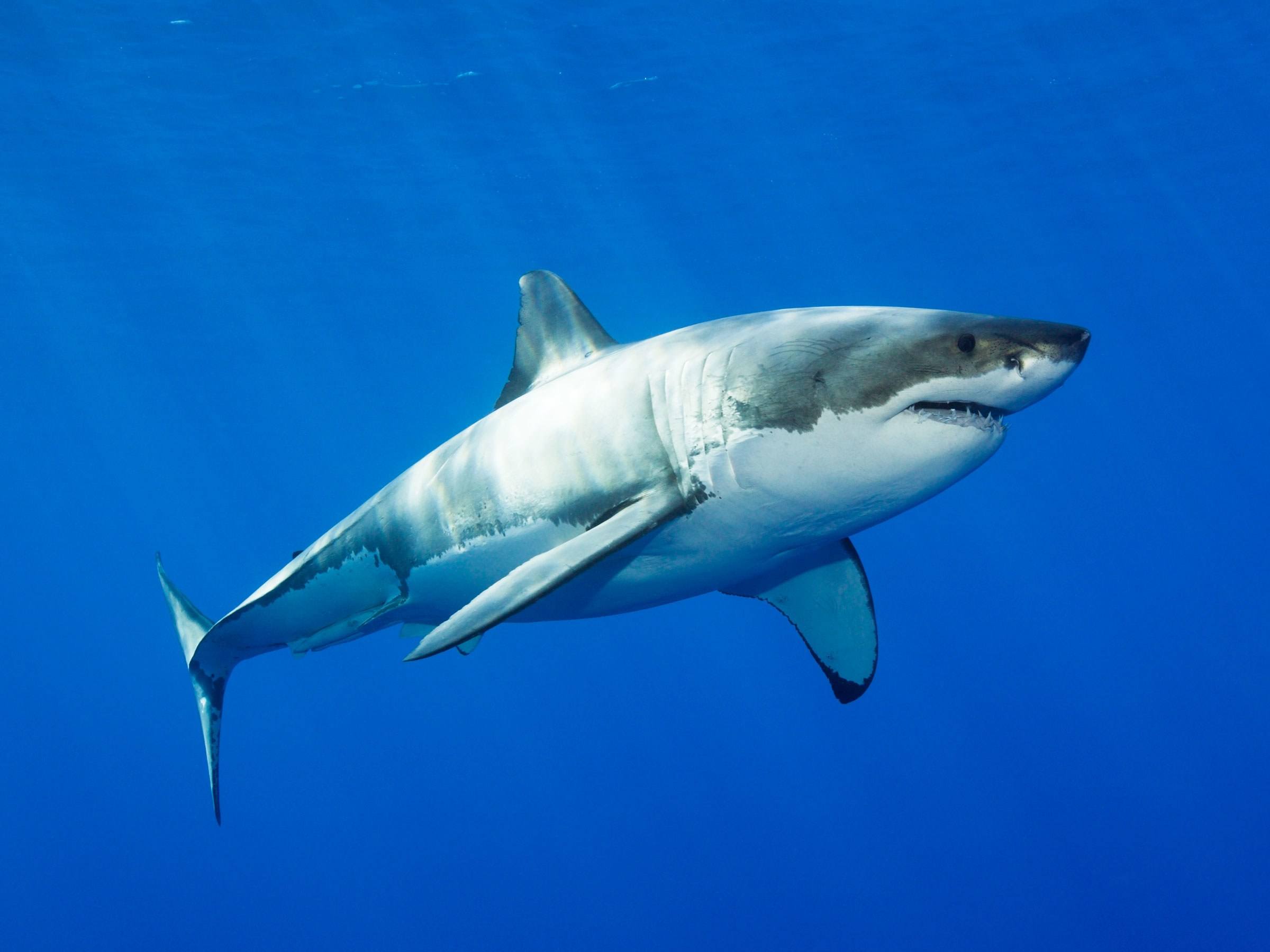
In what CLASS does this species belong?
Agnatha
Chondrichtyes
Osteichtyes
How many chambers does a fish heart have?
1
2
3
4
This is the organ where gas exchange occurs in fish.
Gills
Lungs
Heart
Operculum
Thought to be the ancestors to amphibians
Ray finned fish
Lobe finned fish
skates and rays
Lamprey
What is the name of the internal structure that controls a bony fish's depth/buoyancy in the water?
Liver
Air Pocket
Lung Bladder
Swim Bladder

The structure labeled #5 is the
dorsal fin.
gill filament.
operculum.
lateral line.
Sharks have a swim bladder
True
False
Fishes in the class Osteichthyes (boney fish ) are classified because they have _____ skeletons.
jawless
cartilage
bony
no

96% of all fish are
agnatha
osteoicthyes
chondricthyes
What might happen to a fish if its swim bladder were injured?
It could not move forward through the water
It could not regulate its depth in the water
It could not breathe underwater
It could not release waste from its body
Most fish are ectothermic or cold blooded, which means:
That they can't sleep
They can't make vitamin D from sunlight
They can't generate their own body heat
They can't eat sugars

Most birds bodies are designed for........
Walking
Flying
Swimming
Singing

All BIRDS lay _________________________.
Hard-shelled eggs
Soft Jelly-Like eggs
Leathery/ Rubbery Eggs
Bird circulatory system
4 chambered heart
3 chambered heart
2 chambered heart
Since birds don't have a bladder, a bird's kidneys release its nitrogenous wastes into its ____.
crop
gizzard
cloaca
syrinx
Bird circulatory system
4 chambered heart, 2 loops
3 chambered heart, 1 loop
4 chambered heart, 1 loop
3 chambered heart, 2 loops

two characteristics birds are adapted for flight
thin/hollow bones
amniotic egg
scales
claws

how birds regulate their body temperature
endothermy
ectothermic
cold blooded
How did reptiles make a complete transition to land?
by laying eggs that have a protective shell
by going to the water and laying their eggs
by developing lungs so they could breath
The body temperature of ectotherms is determined primarily by their environment
True
False
Which of these is an advantage of ectothermy?
provides enough energy for sustained exertion
enables reptiles to live in cold climates
requires little energy
results in high metabolism
Unlike the skin of amphibians, the skin of reptiles
has bony scales like those of fishes
is moist, thin, and watertight
is thick, scaly, and not watertight
is thick, scaly, and watertight
Which order of reptiles stay behind to protect and care for their young?
Rhyncocephalia
Crocodilia
Squamata
Cheloni
Which of the following is true about a crocodile's heart?
it doesn't allow deoxygenated and oxygenated blood to mix
is has one ventricle
its atrium is partially divided by a septum
it only pumps deoxygenated blood
What are the two basic parts of a turtle's shell called?
septum and amnion
carapace and plastron
chorion and keratin
keratin and columella
The tissue that partially divides the ventricle in the reptilian heart is the
cloaca
septum
chorion
caparace
Are mammals warm-blooded or cold-blooded
warm-blooded
cold-blooded
Which of the following is a characteristic that all mammals share?
they all lay eggs
they all have gills
they all have hair/fur
they all eat other animals/meat
TRUE or FALSE: Some scientists believe that mammals are the most interesting/complex group of vertebrates.
True
False
How do newborn mammals eat?
They hunt
They eat plants
They drink milk from their mothers
How do mammals breathe?
They breathe with their lungs
They breathe with their gills
How many chambers do mammals have in their heart?
2
3
4
Mammals have the most advanced brains for social behaviors.
true
false
The muscle that helps mammals use their lungs is called
diaphragm
abs
biceps
hamstring
Mammals have different teeth types to help them eat diverse foods.
true
false
Animals that eat only plants
Carnivores
Herbivores
Omnivores
Insectivores
Mammals have the largest ____ of all vertebrates.
brain
heart
liver
lungs
What is a marsupial?
an animal that eats leaves
an animal with a pouch to carry its babies
an animal that loves to run
an animal that has a pouch to carry its food
What type of birth is typical for most mammals?
Egg-Laying
Placental
Pouch
Mammals that lay eggs are in the order:
Marsupiala
Monotremata
Pilosa
Chiroptera

Is the platypus a mammal?
yes
no
Most mammals give live birth called
viviparous
oviparous
ovoviparous
One of 2 egg laying mammals called monotremes.
duck-billed platypus
wallaby
wombat
uakari

