wayground logo

Free Printable Worksheets

NEW

Font size

S
M
L
XL
Worksheets

Earth Science Final 23

Total questions: 75

Worksheet time: 50mins

Name
Class
Date
1.

Meteorology is the study of

a)

wheat

b)

worms

c)

smiles

d)

weather

2.

What is a warm front

a)

slow

b)

mass of warm air taking over where cold air has been

c)

fast

d)

mass of cold air taking over where warm air has been

3.

Moisture falling from the sky is

a)

rice

b)

cotton

c)

petals

d)

precipitations

4.

Mass of cold air taking over where warm air has been is

a)

stationary front

b)

cold front

c)

warm front

d)

funny

5.

A thermometer measures

a)

distance

b)

temperature

c)

height

d)

weight

6.

This instrument measures the amount of rain

a)

wind vane

b)

barometer

c)

rain gauge

d)

anemometer

7.

An anemometer measures

a)

wind speed

b)

air pressure

c)

amount of rain

d)

temperature

8.

This instrument measures air pressure

a)

thermometer

b)

rain gauge

c)

anemometer

d)

barometer

9.

A wind vane measures

a)

wind height

b)

wind direction

c)

wind color

d)

wind speed

10.

Name the front

a)

cold front

b)

warm front

c)

flags

d)

stationary front

11.

Name the front

a)

cold front

b)

hot seat

c)

stationary front

d)

warm front

12.

Name the front

a)

warm front

b)

stationary front

c)

cold front

d)

ice cream cones

13.

What does the "H" on the weather map mean

a)

hot pressure

b)

happy pressure

c)

high pressure

d)

handy pressure

14.

What does the "L" on a weather map mean

a)

low pressure

b)

lonely pressure

c)

lumpy pressure

d)

lucky pressure

15.

The type of cloud the is feathery

a)

cumulus

b)

cirrus

c)

cumulonimbus

d)

stratus

16.

What season would it be at position A in the northern hemisphere?

a)

winter

b)

spring

c)

summer

d)

fall

17.

Why do we have seasons on earth?

a)

The tilt of the Earth means that the angles of the sun’s rays change.

b)

The Earth gets closer to the sun during summer.

c)

The sun gets hotter during summer.

d)

There are more clouds during winter

18.

Why is the sun important to the water cycle?

a)

The sun is the source of energy that powers the water cycle.

b)

The sun gives light so that people can see the water cycle happening.

c)

The sun's gravity causes the tides which are important to the water cycle.

d)

The sun isn't important to the water cycle.

19.

Which is caused by differences in air pressure?

a)

Snow

b)

Rain

c)

Clouds

d)

Wind

20.

Why does sand heat up faster than water during the daytime, and then cool off faster at night?

a)

Water has a higher heat capacity than sand.

b)

Water moves around more.

c)

Water starts of colder than sand.

d)

Water evaporates allowing it to cool.

21.

Climate is different than weather because

a)

Weather is short term, climate is over long periods of time

b)

Weather deals with precipitations, climate with temperature

c)

Climate deals with precipitations, weather with temperature

d)

Weather and climate are the same

22.

What type of weather is associated with a cumulonimbus cloud?

a)

Thunderstorms

b)

drizzle

c)

Tsunamis

d)

drought

23.
How do we name air masses?
a)
Water and temperature
b)
Air pressure
c)
Humidity and temperature
d)
Cold and warm
24.
What types of air masses form over oceans?
a)
Maritime
b)
Continental
c)
Polar
d)
Tropical
25.
What is the name of the atmospheric layer we live in?
a)
troposphere
b)
mesosphere
c)
stratosphere
d)
thermosphere
26.
What is dew point?
a)
Temperature when gas become a liquid
b)
water vapor
c)
relative humidity
d)
humidity
27.
What is the cause of Earth's change of seasons throughout the year?
a)
Rotation of the Earth
b)
Revolution of the Earth
c)
Tilt of the Earth's axis
d)
Earth's temperature & weather
28.
Deep Ocean currents are a result of
a)
Global Wind Patterns
b)
Earth's Rotation
c)
Density
d)
All of the above
29.
Warm ocean currents generally come from
a)
The North Pole
b)
The South Pole
c)
The Equator
d)
Both A and B
30.
As you go deeper in the ocean, the water is colder and less salty.
a)
True
b)
False
31.
Sunlight strikes this planet most directly at the_____________.
a)
mesosphere
b)
tundra
c)
equator
d)
south pole
32.
Compared with surface currents, deep currents are
a)
colder and less dense.
b)
warmer and less dense.
c)
warmer and denser.
d)
colder and denser.
33.
Which of the following causes water from deep currents to rise to the surface to replace warm currents?
a)
evaporation
b)
freezing of the surface of the water
c)
upwelling
d)
squeezing solids out of the ice down into the water below
34.
What is the cause of rising surface temperatures of the Pacific Ocean, drought in the western United States, and flooding on the Pacific coast of South America?
a)
the Gulf Stream
b)
the Jet Stream
c)
La Nina
d)
El Nino
35.
What is the only part of the ocean floor without tectonic activity?
a)
continental slope
b)
continental margin
c)
seamount
d)
abyssal plain
36.
Sea levels rise when glacial ice caps-
a)
grow
b)
melt
c)
migrate
d)
hit the Titanic
37.
Why is there high salinity in the Mediterranean Ocean?
a)
precipitation
b)
evaporation
c)
volcanoes
d)
deposition
38.
What sea floor feature is created by erosion and deposition?
a)
continental rise
b)
submarine canyon
c)
Marianas trench
d)
seamount
39.
What part of the ocean floor would be most affected by sea level change?
a)
abyssal plain
b)
continental shelf
c)
continental slope
d)
trench
40.
What major feature of the ocean floor circumnavigates the Earth?
a)
mid oceanic ridge
b)
continental slope
c)
trench
d)
sea mount
41.
A trench is formed at what zone?
a)
subduction
b)
divergent
c)
convergent
d)
strike-slip
42.
What first accurately mapped the ocean floor?
a)
The Spanish armada
b)
Chinese army
c)
Magellan
d)
sonar
43.
An estuary is an area where-
a)
there is only fresh water
b)
there is only salt water
c)
pond water and river water mix
d)
fresh water and salt water mix
44.

How much of earth's surface is covered by oceans?

a)

More than 70%

b)

Less than 20%

c)

50% exactly

d)

23% exactly

45.

Which of the following has the greatest impact on tides?

a)

The rotation of the Earth

b)

The moon

c)

Salinity and temperature

d)

None of these options

46.

What is salinity?

a)

The measure of the water's temperature

b)

The measure of the dissolved salt in water

c)

The measure of the speed of currents

47.

Besides hydrogen and oxygen, what are the other two MAIN elements found in ocean water?

a)

Sodium and chlorine

b)

Sodium and potassium

c)

Magnesium and chlorine

d)

Sulfur and calcium

48.

How much of Earth's water in in the oceans?

a)

3%

b)

97%

c)

50%

d)

75%

49.

What is one way we depend on the oceans?

a)

Food

b)

Jobs

c)

Recreation

d)

All of these

50.

What is one way we harm the oceans?

a)

Overfishing

b)

Bycatch

c)

Pollution

d)

All of these

51.

What is the name of the deepest part of the ocean?

a)

Marianas Trench

b)

Submarine Valley

c)

The Dead Sea

d)

This doesn't exist yet

52.
What type of tides would this arrangement of earth-moon-sun create?
a)
neap tide
b)
spring tide
c)
new moon tide
d)
full moon tide
53.

What type of tide would this arrangement of earth-moon-sun create?

a)
full moon tide
b)
new moon tide
c)
neap tide
d)
spring tide
54.
Which phase of the moon is represented in this diagram?
a)
new moon
b)
first quarter
c)
full moon
d)
last quarter/third quarter
55.
What causes tides?
a)
gravity
b)
wind
c)
spring
d)
neap
56.
What type of tide will occur at 9:30 a.m.?
a)
low 
b)
high 
c)
none
d)
high and low
57.

This image is showing us a.....

a)

solar eclipse

b)

lunar eclipse

c)

phases of the moon

d)

earth eclipse

58.

This model is showing us a...

a)

lunar eclipse

b)

solar eclipse

c)

phases of the moon

d)

earth eclipse

59.
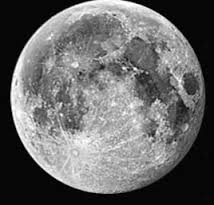
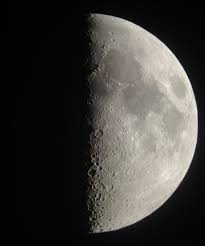
Name the moon phase
a)
First Quarter
b)
Last Quarter
c)
New Moon
d)
Full Moon
60.
Name the moon phase
a)
First Quarter
b)
Last Quarter
c)
New Moon
d)
Full Moon
61.
What is illuminating the Moon?
a)
Nuclear Fusion
b)
Sunlight
c)
Mirrors
d)
Flood Lights
62.
The cycle of the moon lasts about a _.
a)
day
b)
year
c)
week
d)
month
63.
Which of the following words describe the phases of the moon?
a)
none, quarter, half, three quarters, full
b)
new, crescent, quarter, gibbous, full
c)
dark, light, half, quarter, blue
d)
first quarter, second quarter, third quarter, fourth quarter
64.
The Earth's movement around the sun
Lasts 365 1/4 days
a)
rotation
b)
revolution/orbit
c)
eclipse
d)
tide
65.
When the Earth spins around its own axis one whole time, it is called a ....
a)
Revolution
b)
Rotation
c)
Hemisphere
d)
Seasons
66.
It takes the Earth ___ hours to complete a rotation.
a)
12
b)
24
c)
50
d)
365
67.
The rotation of the Earth causes . . .
a)
day & night
b)
summer & winter
c)
fall & spring
d)
Leap Year
68.
The earth's tilt is ______________degrees.
a)
0
b)
90
c)
23.5
d)
41
69.
Which of the following pictures represents low tide? 
a)
A
b)
B
c)
C
d)
D
70.
The first landing on the moon occurred?
a)
In 1967
b)
In 1969
c)
In 1971
d)
In 1975
71.
Who said "This is one small step for man, it is one giant leap for mankind"?
a)
Lance Armstrong
b)
Buzz Aldrin
c)
Jim Lovell
d)
Neil Armstrong
72.

The largest single object in the solar system is ______.

a)

Saturn

b)

Jupiter

c)

Earth

d)

The Sun

73.

The largest structure in the entire Universe is the

a)

Universe itself.

b)

Orion Nebula.

c)

Milky Way Galaxy.

d)

Virgo Supercluster.

74.
Waxing means...
a)
Growing
b)
Dying
c)
Losing light
d)
Moving
75.
Which planet is farthest from the sun?
a)
Neptune
b)
Pluto
c)
Earth
d)
Uranus