
 Worksheets
Cumulative Quiz Bio23B
Total questions: 93
Worksheet time: 2hrs 33mins
The cell theory states that the cell is the most basic unit of life; all organisms are made of cells; and all cells come from cells. What makes the cell theory a scientific theory?
It is based on a scientific publication that is read by scientists worldwide.
It is based on the work of many scientists and leads to accurate predictions.
It is based on ideas that have been proven true and that are not subject to revision.
It is based on preliminary evidence but still needs to be confirmed with evidence.

A student observes four cells with a microscope and records their observations in the table shown. Based on the data, how should the cells be classified?
Cells 1 and 3 are prokaryotic; 2 and 4 are eukaryotic
All four cells are prokaryotic
Cell 3 is prokaryotic; 1, 2, and 4 are eukaryotic
All 4 cells are eukaryotic
Which statement was NOT included in cell theory?
All living things are made of cells.
Living cells come only from other living cells.
Each cell contains a cell membrane, cytoplasm, and a nucleus.
Cells are the basic unit of life.
All cells -----
come from other dead cells
come from other living cells
come from terrestrial origins
come from a nucleus and membrane-bound organelles
What are the main differences between plant and animal cells?
animal cells are eukaryotes and plant cells are not
plant cells are eukaryotes and animal cells are not
ONLY animal cells have cells walls and chloroplasts
ONLY plant cells have cell walls and chloroplasts
Match the organelle to its function
Store fluids and other materials
Vacuoles
Transport proteins and other materials
Vesicles
Supply energy for plant and animal cells
Mitochondria
Supply energy for plant cells
Chloroplasts
Produce proteins by linking amino acids
Ribosomes

Which organelle contains and protects DNA?
Nucleus
Mitochondria
Chloroplast
Cell Wall
TRUE or FALSE: Ribosomes are responsible for phospholipid synthesis
TRUE
FALSE
Which phrase best describes passive transport?
(a)
Which phrase best describes active transport?
(b)
Which model did scientists develop to describe the cell membrane?
phospholipid model
atomic model
fluid mosaic model
transport model
Gives a cell shape, support, and strength.
cytoplasm
cytoskeleton
framework
centriole

To provide protection and form for the plant cell is a function of the .
cell wall
cell membrane
lysosome
vacuole
During osmosis...
water moves from high to low concentration.
large or oddly shaped molecules move across a cell membrane.
water moves when energy is used.
proteins are built.
The general name for movement of substances across cell membranes without need of energy input
passive transport
active transport
Active transport (a) and is the movement of a substance from (b) concentration to (c) concentration.

endocytosis
exocytosis
osmosis
passive transport
The products of photosynthesis are (a) .
The products of cellular respiration are (b) .
Put the following steps of photosynthesis in their correct order.
Light-Dependent Reactions
Calvin Cycle
Gluconeogenesis
Put the following steps of cellular respiration in their correct order.
Glycolysis
Krebs Cycle
Electron Transport Chain
usable energy
diatomic oxygen
sugars like glucose
proteins
Chemical energy is carried in what molecule?
glucose
My main goal is to produce a lot of ATP.
Chloroplast
Mitochondria
Nucleus
Vacuole
True or False. The Krebs Cycle takes place within the mitochondrial matrix.
True
False

What are the two products of photosynthesis that are needed for the cellular respiration?
NADP+ and Sugar
NADPH and ATP
Oxygen and NADPH
Oxygen and Sugar
Cellular respiration is called an aerobic process because.
It requires carbon dioxide
It requires oxygen
It is extremely flexible
It requires sugars
Where do the light-independent reactions occur?
thylakoid membrane
stroma
mitochondrial matrix
lumen
Choose ALL the options that DO NOT need light energy to happen
Light-Independent reactions
Light-Dependent Reactions
Glycolysis
Krebs Cycle
What is the smallest, basic unit of ALL LIVING THINGS?
(a)
A scientific theory does not require much evidence.
True
False
The purpose of an experiment is to
form a hypothesis
form a conclusion
test a hypothesis
analyze data
An (a) is a particular type of atom.
A scientific hypothesis is a proposed (a) , whereas a scientific theory is a proposed (b) .
What is the largest system containing all life?
Biosphere
Biodiversity
Ecosystem
Atom
Choose the most correct definition of homeostasis.
staying comfortable
maintenance of internal conditions
owning a house
surviving
Choose the list with the correct order of size from smallest to largest
cell, atom, population, community
cell, organ, community, biosphere
biosphere, cell, atom, individual
Reorder the following from smallest to largest
cell
population
atom
organism
organ
Which of the following characteristics do ALL LIVING THINGS share?
Response, Cells, Energy, Growth
Atoms, Water, Compounds, Solution
Life, Liberty, Pursuit of Happiness
Moving, Talking, Breathing, Eating

What compound is this?
(a)
Solute + (a) = Solution
Is Vinegar an Acid or a Base?
Acid
Base
Is Baking Soda an Acid or a Base?
Acid
Base
Name ONE of the FOUR Carbon-based molecules found in living things.
(a)
How can an understanding of biology play a role in your health? In the health of your environment?
An individual living things, such as animals or plants, is called an
Animal
plant
Organism
Nutrition

Cells that have completed pairs of chromosomes are called this. One chromosome from each parent.
homologous pairs
replicated chromosomes
haploid
diploid
An organism has 2 of every chromosome, one from each its parents. Which term means 1 of each chromosome?
Meiosis
Mitosis
Haploid
Diploid

What type of cells does meiosis produce? What is the end product of meiosis?
2 Genetically identical diploid cells
4 genetically identical haploid cells
4 genetically unique haploid cells
4 genetically unique diploid cells

What happens to a cells DNA amount at the end of Telophase I/cytokinesis I?
DNA/ genetic material stays the same amount
DNA/genetic material is divided into two.
DNA/genetic material is doubled
There is NO DNA/genetic material
The human male gamete is called?
sperm
egg
pollen
ovary

What phase is the picture showing?
Metaphase I
Metaphase II
Prophase II
Anaphase I
An organisms collection of alleles, written as AA, Aa, or aa is called their ____


In humans, brown eyes (B) is dominant over blue eyes (b). If a person has brown eyes, what can you conclude about their genotype? Choose 2 possible.
It is BB.
It is Bb
It is recessive
It is bb.
How many chromosomes does the typical human have?
22
42
23
46
Mom always gives an X chromosome. Dad can give___.
an X or a Y chromosome
two X chromosomes
two Y chromosomes
only a Y chromosome
What happens If chromosomes fail to separate properly during anaphase?
Has an abnormal number of chromosomes.
Nothing happens
Not produce daughter cell
Goes into Mitosis

Interphase
Mitosis
Synthesis
Cytokinesis
Put the following stages of the cell cycle in order:
Gap 1
Synthesis
Gap 2
Mitosis
Cytokinesis

What phase of mitosis is shown in this image?
Anaphase
Telophase
Cytokinesis
Synthesis

What phase of mitosis is shown in this image?
(a)

What phase of mitosis is shown in this image?
(a)
During anaphase
DNA lines up in the middle of the cell and DNA attaches to spindle fibers
centrioles and spindle fibers appear
Each DNA gets pull to the opposite sides of the cell
DNA gets copied
Why is DNA important
it provides the instructions/blueprint for a cell
it makes energy
it stores wastes
it is responsible for making food
Why do cells go through mitosis?
to make food from sunlight
to create proteins
to get air into the cells
to reproduce, grow and repair/replace
Why is the metaphase important?
The DNA gets copied and the cell grows and develops
The DNA lines up so exact copies can be pulled to each side
The nuclear membrane disappears and the spindle fibers appear
Two identical daughter cells are formed
In mitosis, the two resulting cells are
different from the starting cell and identical to each other.
different from the starting cell and different from each other.
identical to the starting cell and different from each other.
identical to the starting cell and identical to each other.
Human body cells have 46 chromosomes. After mitosis, you would expect a resulting human body daughter cell to have -
(a)
the division of the cytoplasm is called
mitosis
interphase
cytokinesis
somatic
What happens during the S phase of Interphase?
The nucleus disappears
The DNA replicates
The organelles double
The cell grows and does its normal functions

What phase of Mitosis is the picture showing?
Prophase
Interphase
Cytokinesis
Metaphase
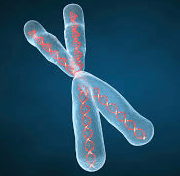
Each coiled side of a duplicated chromosome is called the...
centromere
chromatin
centriole
chromatid
A continuous thread of DNA is called a...
(a)
Which sequence shows the progression from least complex structure to most complex structure?
cell → organ → tissue → organ system
cell → tissue → organ → organ system
organ system → tissue → organ → cell
organ system → organ → tissue → cell
During Gap 1 of the cell cycle, a cell...
splits into two identical cells
carries out normal function
duplicates its DNA
divides its cytoplasm
Which of the following limits the maximum size of a cell?
the stage of the cell cycle
the ratio of cell surface area to volume
the number of mitochondria in the cell
the size of the organism
What is the relationship between a molecule of DNA and a chromosomes?
A chromosome is made of one continuous molecule of DNA
A chromosome is tightly packed DNA
A chromosome is a fragment of DNA
A molecule of DNA is made of multiple chromosomes

