
 Worksheets
Unit 6 - the Cold War (Advanced)
Total questions: 75
Worksheet time: 1hrs 14mins
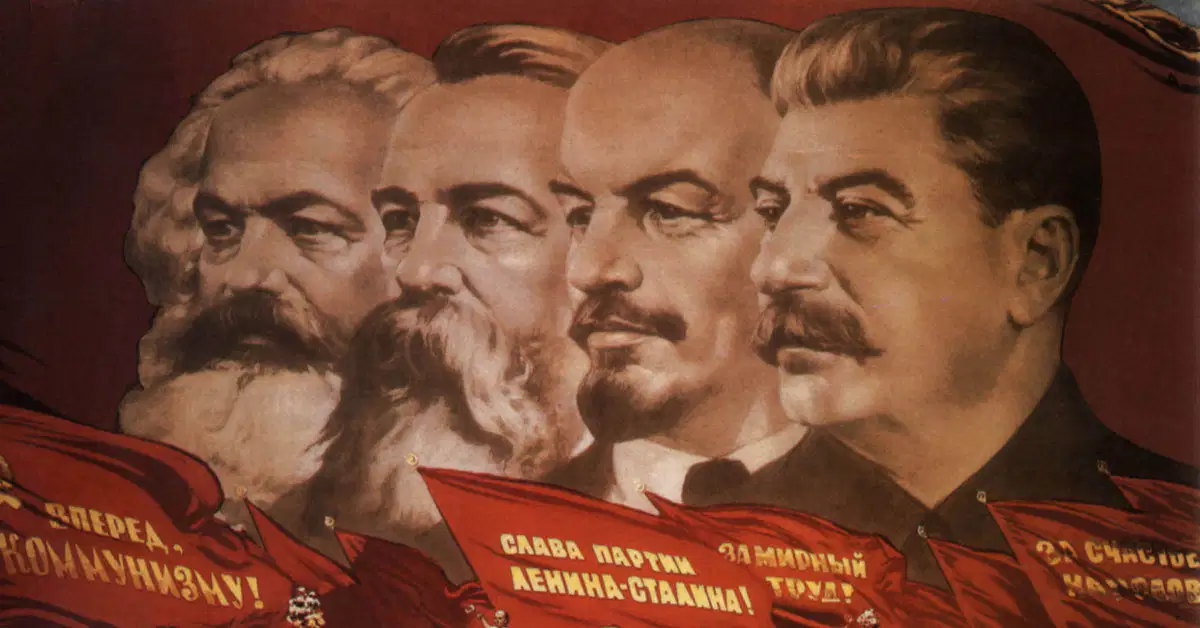
Which of the following best describes the idea of communism?
an economic system with free markets
an economic system with no social classes
an economic system based on supply and demand
an economic system based on capitalism
Who was the founder of the idea of communism?
VI Lenin
Josef Stalin
Karl Marx
Mao ZeDong
Otto Von Bismarck
Which characteristic is true of communism but not capitalism?
People can make money investing in the stock market.
People can buy whatever they can afford.
Businesses are owned by individuals.
Wealth is evenly distributed among people.
Heavy military losses in World War I, food and fuel shortages, and opposition to the czar led to the
French Revolution
Russian Revolution
Chinese Revolution
Cuban Revolution
Which slogan is associated with the Bolshevik (Russian) Revolution?
"An eye for an eye"
"Liberty, Equality, Fraternity"
"Take up the White Man's Burden"
"Peace, Land, Bread"
Who were the Bolsheviks
a group of revolutionaries
Communists
a group led by Vladimir Lenin
all choices are correct
Which aspect of the economy was emphasized in Joseph Stalin’s five-year plans?
heavy industry
consumer goods
famine relief
private landownership
Which of the following did Joseph Stalin do to stay in power?
He encouraged citizens to spy on each other.
He expanded the powers of the secret police.
He had millions of people killed or sent to the Gulag, labor camps.
He created a Cult of Personality and had history books rewritten.
All answer choices are correct.
Forced famine in Ukraine (1932–1933) was a direct result of...
Czar Nicholas’s involvement in World War I
Vladmir Lenin’s New Economic Policy
Joseph Stalin’s collectivization
Nikita Khrushchev’s removal from power

Hitler’s actions as expressed by this cartoon led Stalin to
adopt a policy of appeasement
take over Germany’s industry
join the Allies in the fight against Germany
reduce the size of the Soviet army

Which two nations emerged as superpowers after WWII?
Soviet Union and Germany
US and Great Britain
France and Great Britain
US and Soviet Union

What happened to many eastern European countries after WWII?
They were dependent on the Marshall Plan
They developed democratic governments
They became economic world powers
They became Soviet satellite states

After WWII, Josef Stalin made sure that all countries in Eastern Europe had free and fair elections to choose their new governments
True
False

Churchill called the imaginary line between Soviet satellite states and western Europe.....
NATO
The Iron Curtain
The Berlin Wall
The Great Wall

Eastern Europe's Political / Economic System was (a) and they created an alliance called the (b) . Western Europe's Political / Economic System was (c) and their alliance was (d) .

What is the name of the two alliances of the Cold War divided by the 'iron curtain'?
NATO / Warsaw Pact
Triple Alliance / Central Powers
The Allies / The Axis
The UN / League of Nations

Which of the following best describes Germany after WWII?
They were forced to pay reparations based on the Treaty of Versailles
They remained a fascist country ruled by the Nazis
They were forced to switch to a Communist government under Stalin
The country was divided into two separate countries

How did Truman help the people of West Berlin?
By airlifting supplies, such as fuel and food, into the city
He didn't
He sent American troops and tanks to break into the city
He protested in the United Nations

Why did the Berlin Airlift take place?
America needed to help people escape from Communism
The United States was dropping bombs on Communist positions
The United States had to supply West Berlin after Stalin's blockade
The United States was flying people into West Berlin to live

Why was the Berlin Wall built?
Soviets built it to keep West Berliners out of East Germany
America built it to keep Communists out of West Berlin
Soviets built it to stop people from escaping Communism
The Berlin Wall was part of a much bigger wall, called the Iron Curtain.

To which event is this political cartoon referring?
Domino Theory
Containment
Iron Curtain speech
Molotav Plan
U.S. fears about the spread of communism were increased when _______ became a Communist nation in 1949.
Yugoslavia
East Germany
South Korea
China
The Emperor lost power in 1911 leading to the Chinese Civil War. The Nationalist Army was led by (a) and the Communists were led by (b) . The (c) won the civil war and the (d) fled to Taiwan.

Which of the following best describes the 'Long March'?
Although Mao lost most of his army, the Long March turned Mao into a LEGEND
The Long March was a complete and total failure for Mao ZeDong
During the Long March, Chiang Kai Shek's army fled to Taiwan to escape destruction
During the Long March, Mao ZeDong died in an avalanche

Which of the following were policies of Mao ZeDong?
Gulags, 5-Year Plans
Great Leap Forward, Cultural Revolution
Cultural Revolution, 5-Year Plans
Great Leap Forward, 5-Year Plans
Which was a significant social change Mao Zedong brought to China?
Requiring arranged marriages
Adopting the practice of foot binding
Eliminating wealthy landowners
Mandating Confucianism as the state philosophy

Match the following. One of the definitions does not match either.
The Great Leap Forward
Mao's plan to modernize China. Led to mass famine
The Cultural Revolution
Mao's plan to eliminate anyone who went against his ideas
Put the answer that doesn't match either here
Mao ZeDong's plan to fix China's economy by introducing capitalism

China is great exploring / trading power (Zheng He, Silk Road)
China isolates and falls behind
China conquered during age of imperialism
Mao takes power after civil war
Mao launches the Great Leap Forward

Which of the following terms was used for government run farms that led to starvation in the Soviet Union and China?
Collectivization
The Great Leap Forward
Cultural Revolutions
Gulags
5 Year Plans
A comparison of the five-year plans of Joseph
Stalin and of the Great Leap Forward of Mao
Zedong would show that both leaders...
encouraged individual rights and freedoms
implemented some aspects of capitalism
supported the involvement of wealthy
entrepreneurs in the economy
focused on increasing industrial and
agricultural output
What did Mao create in 1966 to stop opposition to the Communist Party?
The Nationalist Party
The Cultural Revolution
The Great Leap Forward
Universal Healthcare
George Kennan helped to champion the idea that communism should be stopped where ever it pops up to prevent its spread. This policy was known as
Containment
Regan Doctrine
Anti-Communism Plan
Domino Theory
The theory that if one country fell to communism then neighboring countries would fall as well
Domino Theory
Containment
Truman's Theory
Eisenhower Doctrine

Name the two countries where wars were fought to stop the spread of communism?
China and Japan
Korea and Vietnam
India and Thailand
Cambodia and Myanmar

Why did the Korean War begin?
Communists from the North invaded the Non-Communist South.
Korean Communists threatened to invade Japan
Korean Communists blew up an American warship
The Soviet Union was planning to launch missiles from Korea

What was the main goal of the United States when they invaded Korea?
To stop the spread of communism
To spread freedom to all people in Asia
To weaken the power of Mao ZeDong
To create a base to attack the Soviet Union
What was the result of the Korean War?
South Korea won and joined with North Korea.
Communist China won the Korean War.
Neither side won the Korean War.
North Korea won and joined with South Korea.

He declared independence for Vietnam in 1945, then led successful wars against France and America. He was a communist
Ngo Dinh Diem
Ho Chi Minh
Mao ZeDong
Kim Jong IL
How was the United States involved in the Vietnam War?
They sent supplies to aid South Vietnam’s fight against the Soviet Union.
They fought to help South Vietnam overthrow communism.
They fought to help North Vietnam overthrow democracy.
They sent supplies to aid North Vietnam’s fight against the Soviet Union.
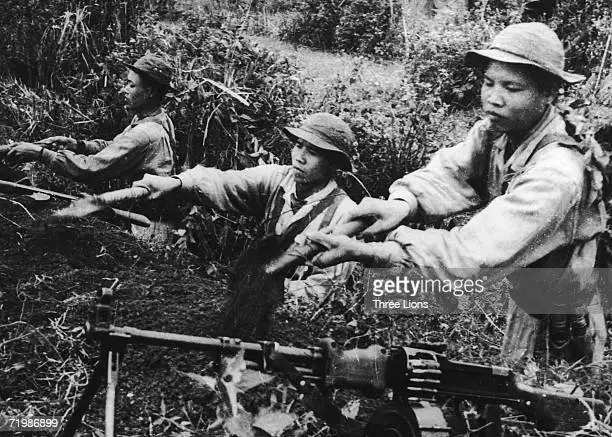
Which of the following is a style of warfare used by the Viet Cong?
Trench Warfare
Guerilla Warfare
Limited Warfare
Conventional Warfare

Which of the following was NOT used by the American military in Vietnam?
Aerial attacks (regular bombs)
Agent Orange
Napalm
Nuclear bombs
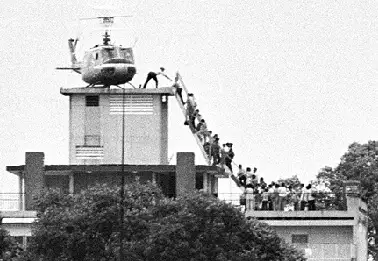
United States
Soviet Union
South Vietnam
North Vietnam
Which of the following is true about the Korean War AND the Vietnam War?
Both countries remained divided at the end of the war
The US was completely defeated in both wars
Both wars were fought to contain communism
America used nuclear weapons in both wars
What was the United States response to the Soviet Union being the first country to launch a man into space?
The U.S. created the National Aeronautics and Space Administration (NASA).
The U.S. created a joint space program with the Soviet Union.
The U.S. increased efforts to stop the spread of communism.
The U.S. reduced funding for the development of rockets.

The US and the Soviet Union were stockpiling weapons in an effort to have more weapons than the other side. This was called...
the Korean War
the Manhattan Project
the arms race
disarmament talks

Why weren't nuclear weapons used during the Cold War?
The Domino Theory
The Marshall Plan
Mutually assured destruction
Strategic defensive initiative
Which communist country was nearest to the US in the 1960s?
Cuba
Soviet Union
North Korea
China

The failed US attempt to overthrow the communist Cuban government in 1961 was called the:
Bay of Pigs Invasion
Cuban Missile Crisis
Project to Eliminate Cuban Communism (PECC)
Havana Uprising
Anti-Totalitarian Takeover (ATT)

Which of the following events brought us closest to nuclear destruction?
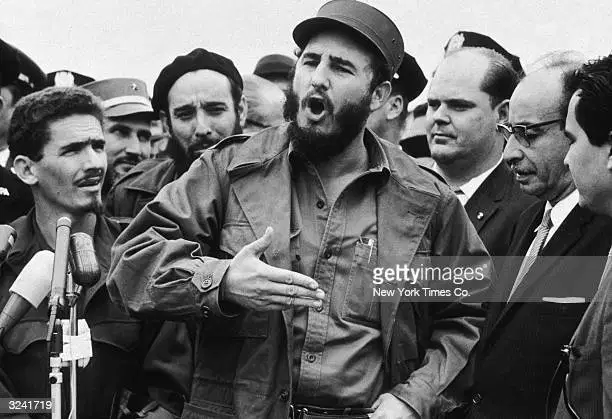
Who was the leader of Cuba during the Cuban Missile Crisis?

Who was the leader of the US during the Cuban Missile Crisis?
Lyndon B. Johnson
John F. Kennedy
Robert Kennedy
Harry S. Truman

How did JFK respond to the news that the Soviets had placed nuclear weapon installations in Cuba?
Asking the United Nations to approve economic sanctions for Cuba
Blockading ships from entering or exiting Cuba
Closing the US border
Asking Congress to declare war on Cuba

Who is the man on the right?
Nikita Khrushchev
Fidel Castro
Vasili Arkhipov
John F. Kennedy
Yuri Gagarin
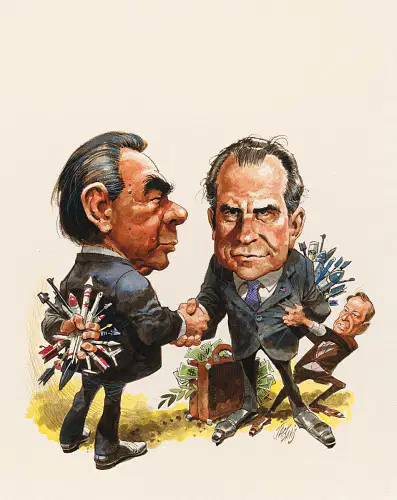
The time period in the 1970s that saw relative peace and the signing of treaties between the United States and the Soviet Union
Detente
Glasnost
Perestroika
Cultural Revolution
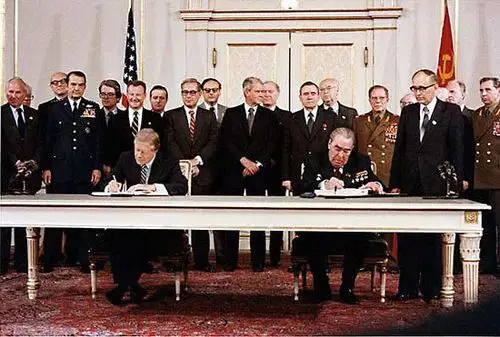
These treaties were signed during during the detente period that limited nuclear arms between the US and the Soviet Union
SALT Treaties
Missile Defense Moratorium
Treaty of Yalta
Moscow Accords
The period of detente ended in 1979 when the Soviet Union invaded (a) . Both America and Osama Bin Laden supported the (b) who defeated the Soviet Union and eventually became the (c) .
John F Kennedy
Leader during the Cuban Missile Crisis
Bay of Pigs
Failed invasion of Cuba to overthrow Castro
Vasili Arkhipov
Saved the world during Cuban Missile Crisis
MAD (Mutually Assured Destruction)
What would happen if 2 nuclear countries went to war
Cuban Missile Crisis
The closest the world has ever come to nuclear war

Nuclear bombing of Japan ends WWII
Winston Churchill 'iron curtain' speech
The Cuban Missile Crisis
Detente
Fall of the Berlin Wall

Mikhail Gorbachev
Glasnost and Peristroika, allowed Berlin Wall to be torn down. End Cold War
Nikita Krushchev
Lead the Soviet Union through Cuban Missile Crisis. Alleged 'shoe banger'
Fidel Castro
Communist Revolution in Cuba. Cuban Missile Crisis
Deng Xiaoping
Four Modernizations, some capitalism but NO democracy. Tiananmen Square
Mao ZeDong
Communist revolution, Great Leap Forward, Cultural Revolution, Red Book

1940s
WWII Ends, Iron Curtain Speech, Europe Divided, Berlin Airlift
1950s
Soviets get a nuke, Korean War, arms race, space race, Cuban Revolution
1960s
Cuban Missile Crisis, Vietnam War begins
1970s
America leaves Vietnam, Detente, Soviet Union doing well
1980s
Soviet War Afghanistan, Protests E. Europe, 4 Modernizations, Fall of Berlin Wall, Tiananmen Square
Deng Xiaoping, leader of China after Mao, changed which aspect of China the most?
government
religion
economy
social freedoms

Hundreds of people were killed while protesting against communism in this place in China 1989?
The Great Wall of China
Tiananmen Square
communes
Shanghai
What was the Chinese government's response to the Tiananmen Square protest?
They met the protesters' demands and instituted democratic reforms.
They engaged in peaceful negotiations with the protesters to resolve the issue.
They declared martial law and sent in troops to forcibly remove the protesters.
They ignored the protest and allowed it to continue without intervention.
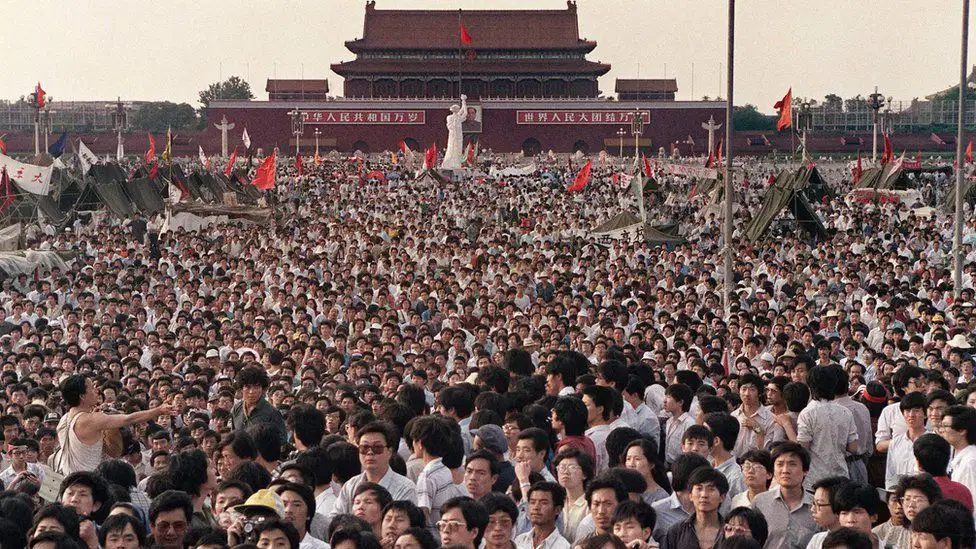
Following the Tiananmen Square Massacre in 1989, and continuing today, China's political system continues to be a (a) but their economy is mostly (b) .

Who is the current president of China?
Mao Zedong
Deng Xioaping
Xi Jinping
Chiang Kai-shek

Today, Taiwan is separate from China, but the Chinese Communist party would like to take it back
True
False

Which political leader introduced programs that moved the USSR away from totalitarianism, and increased economic freedom and political rights?
Mikhail Gorbechev
Joseph Stalin
Boris Yeltsin
Vladimir Putin
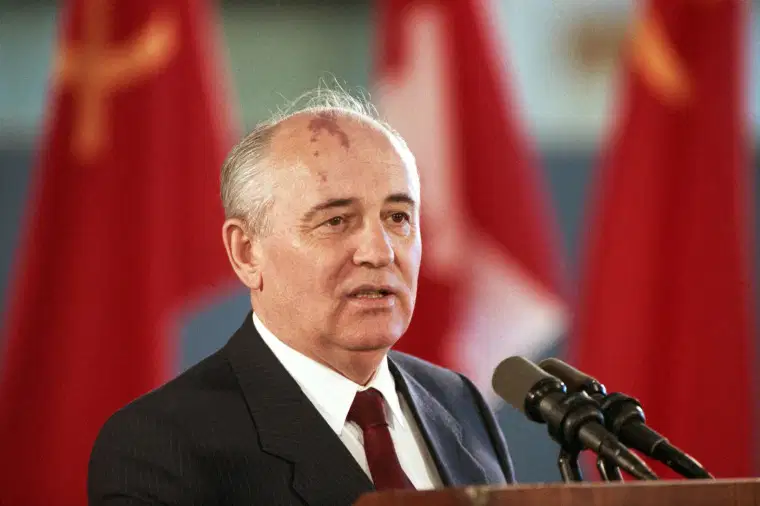
Which new Soviet policies of Mikhail Gorbachev granted the people of the USSR both more freedom and openness as well as more capitalism, eventually leading to the fall of communism?
perestroika
glasnost
collectivization
the Great Leap Forward
5 Year Plans
The (a) in 1989 marked the symbolic end of the Cold War
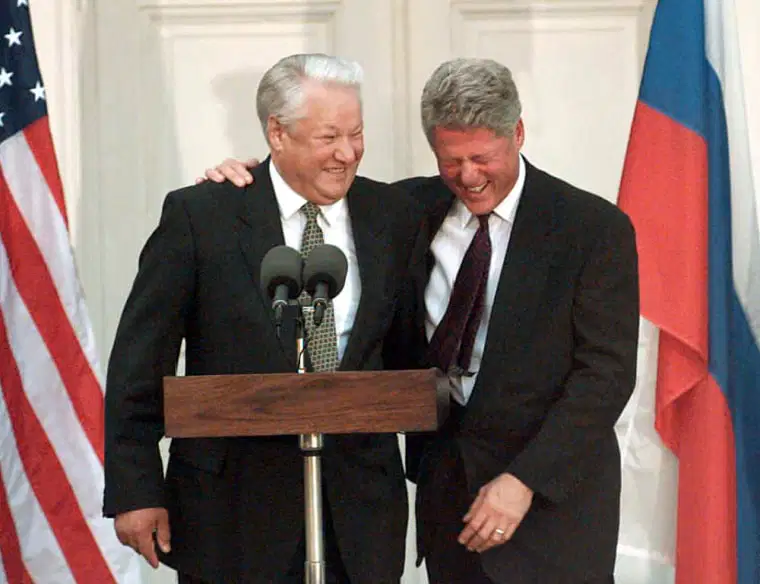
Who was the 1st directly elected president of the Russian Federation?
Mikhail Gorbachev
Joseph Stalin
Boris Yeltsin
Vladimir Putin
Ukraine used to be apart of the Soviet Union
True
False
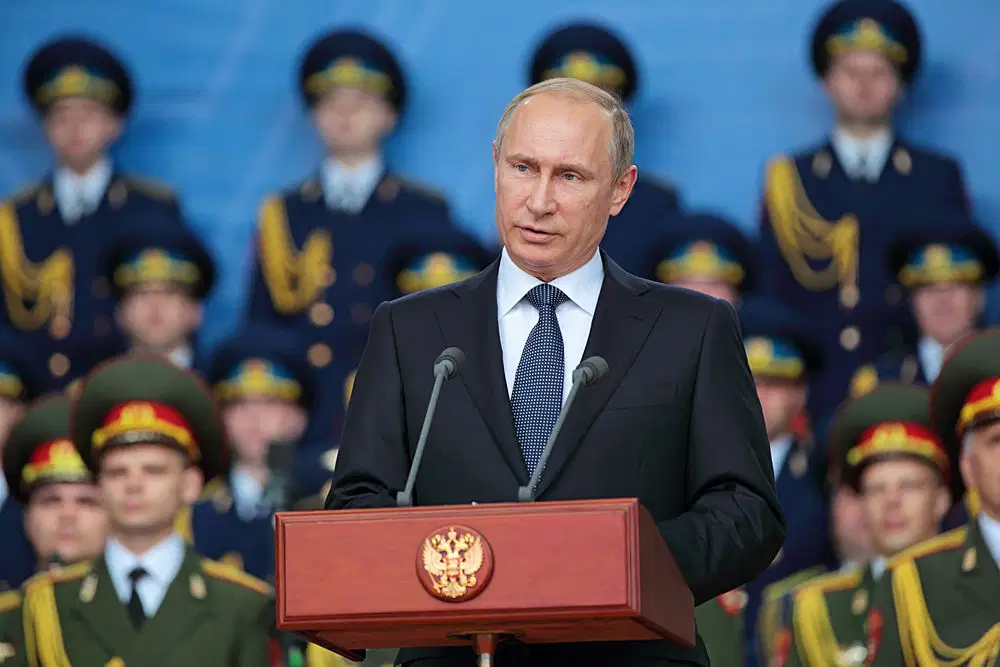
________ took control of Russia in 1999.
Mikhail Gorbachev
Vladimir Lenin
Vladimir Putin
Joseph Stalin

