
Font size
 Worksheets
g10 phy
Total questions: 106
Worksheet time: 2hrs 32mins
Formula for workdone is
force x distance
Average force / Distence
Total force x Total Time
None of the above

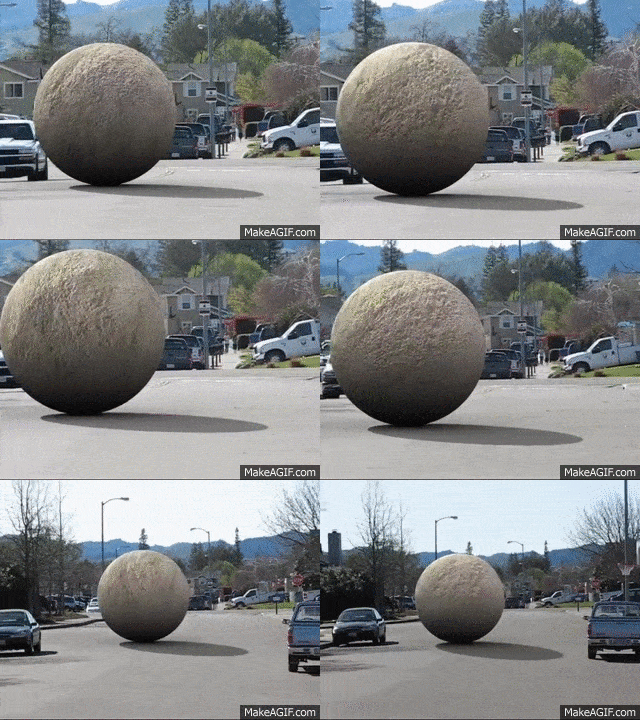


Which of the following has the MOST momentum? (they are all rolling at the same velocity)
rolling ping-pong ball
rolling bowling ball
rolling soccer ball
rolling basketball

Consider this elastic collision between two spheres. They collide and then bounce apart. Sphere A has a mass of 8-kg. Sphere B has a mass of 5-kg. Before the collision, Sphere A is travelling to the right at 3 m/s and Sphere B is travelling to the left at 4 m/s. After the collision, Sphere A is travelling 2 m/s. How fast is Sphere B travelling after the collision?
about 5.6 m/s
about 3.2 m/s
about 7.4 m/s
about 8.1 m/s

What is the unit for velocity?
m/sec
kg/sec
kg/m
kg x m/sec

What is the unit for momentum?
m/sec
kg/sec
kg/m
kg x m/sec
The equation to calculate momentum is
p = m x v
p = 1/2 m x v2
p = m x g x h
p = m x g
If an object has a momentum of 40 kg x m/s and a mass of 60 kg, what is it's velocity?
2400 m/s
1.5 m/s
240 m/s
.67 m/s
When two objects collide, the Pbefore is ____________ the Pafter.
more than
less than
equal to
unrelated to

Which of the following is the unit for momentum?
kg·m/s
kg·m
kg·m/s2
Momentum has no unit.
Which of the following is the formula for momentum?
p = mv
M = mv
F = ma
g = mc2

Which statements are true? (There are 3 correct answers.)
Mass is the amount of matter in an object.
Weight never changes.
Mass is a measure of the pull of gravity on an object.
Weight is a measure of the pull of gravity on an object.
Mass never changes.


What happens to an astronaut's weight when he goes to outer space and lands on the moon?
It increases.
It decreases.
It stays the same.
What do you use to measure the weight of an object?


What would happen to your mass if you went to outer space and landed on the moon?
It would increase.
It would decrease.
It would stay the same.

What is missing?
D
N
W
L

A ballet dancer who has a weight of 480 N stands on her toes during a performance with 25 cm2 in contact with the floor. The pressure exerted by the dance on the floor is (a) Pa.

The vertical height of the mercury column above the mercury level in the trough when the tube is tilted through an angle of about 10 o is (a) cm.
SAME box different orientation, which one has big pressure


The pressure inside the balloon will:
Decrease
Increase
Remain the same
Not enough information to formulate an answer

Pressure of gas is in cm-Hg
56
96
120
76

In which one the ballon will burst for sure
With a small force on a nail
on many nails with a small force
On many nails with a big force
On a single nail with a big force
Which information is not correct about the pressure?
When you dive into water, pressure increases because the amount of water increases above us
Barometer shows smaller values up to the peak of a mountain
Water flows from high pressure to low until the pressures are equal
The pressure of atmosphere increases when you rise in air

This is an example of the everyday application of pressure in:
Solids
Liquids
Gases
Plasma

The diagram shows a mercury barometer. Which distance is used to calculate the pressure of the atmosphere?
25cm
75cm
80cm
100cm
A pencil is 15 cm from the plane mirror, what is the distance from the image to the mirror ?
15 cm
30 cm
35 cm
60 cm
The image formed in a plane mirror is
real image
the same size as the object
bigger than the object
virtual image
in front of the mirror.
What is the distance of your image from you if you stand 1.5 m in front of a plane mirror?
1.5 m
2.0 m
3.0 m
4.5 m
8. White light consists of different colors.
TRUE
FALSE
7. The color red has the lowest energy and frequency
TRUE
FALSE

The number of protons in the nucleus of an atom (two words)
(a)
The list of all known atoms in the universe.
(a)

the negatively charged particle in an atom, moves freely, can be released, shared, or “stolen” from an atom
proton
neutron
electron
This is when electrons move from one object to another through touch
Friction
Conduction
Induction
Metal sphere A is neutral. Metal sphere B is negatively charged. The two spheres come into contact briefly. What type of charge does sphere A have after contact?
neutral
positive
negative
These allow electrons to pass through them easily
Conductors
Insulators
Atoms
Nucleus
The SI unit of charge is ___________.
the ampere
the newton
the coulomb
the joule
the positively charged particle in an atom, never leaves the nucleus, determines the element
proton
neutron
electron
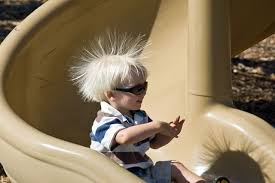

When the electroscope is charged by touching it with a charged object, this is called ____.
charging by conduction
charging by induction
energizing
grounding


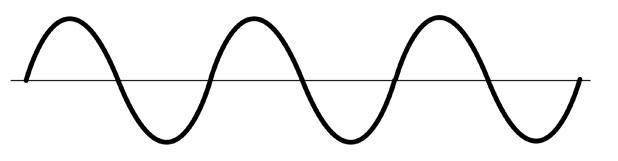
What part of the wave are the arrows pointing to?
Crest
Trough
Amplitude
Origin
True or False: Sound waves are produced when something vibrates.
True
False

4. What do we hear thunder after we see a flash of lightning , usually some time later?
Sound travels at a speed of 300,000,000 m/s. while light travels at a speed of 330 m/s.
Sound travels at a speed of 330 m/s while light travels at a speed of 3,000,000 m/s.
Sound travels at a speed of 330 m/s while light travels at a speed of 300,000,000 m/s.
Because imagine dragons thunder, feel the thunder.

Sound waves travel the fastest through ---
Liquids
Gases
Solids
True or False: Sound waves can travel through space.
True
False
Units for rotational kinetic energy, K
N⋅m
J
s2kg⋅m2
W
The SI units of science are based on the __________ system
Emperical
Standard
Metric
Science

Units for torque, τ
N⋅m
T
θ
Iα
Units for coefficient of friction, μ
none
N
kgN
N⋅m
Chose the TWO conditions are NOT correct for total internal reflection to take place
The incident angle should be less than the critical angle
The incident angle should be greater than the critical angle
Light should travel from a denser to a lighter medium
Light should travel from a lighter to a denser medium

Which diagram correctly describes the critical angle c for air-water surface?
A
B
C
D

_____ cables transmit beams of light without allowing any of the light to escape until it gets to the end of the cable.
Ethernet
Fiber optic
Armored
Coaxial

What happens to light during total internal reflection?
The light reflects back into the original medium at the same angle.
The light refracts closer to the normal line.
The light refracts farther away from the normal line.
The light reflects at the angle it would have refracted at.
What is total internal reflection
Where a wave is refracted at the boundary between a dense medium and a less dense medium when the angle of incidence is greater than the critical angle.
Where a wave is refracted at the boundary between a dense medium and a less dense medium when the angle of incidence is smaller than the critical angle.
Where a wave is reflected at the boundary between a dense medium and a less dense medium when the angle of incidence is greater than the critical angle.
Where a wave is reflected at the boundary between a dense medium and a less dense medium when the angle of incidence is smaller than the critical angle.

What is the refractive index of a fibre optic pipe if the critical angle is 30 degree?
Outside is air.
2.0
1.7
2.4

Why does the pencil appear bent?
Light rays travelling from parts of the pencil above the water bend away from the normal and appear closer to the horizontal surface, thus making the pencil appear broken.
Light rays travelling from parts of the pencil above the water bend towards from the normal and appear closer to the horizontal surface, thus making the pencil appear broken.
Light rays travelling from parts of the pencil under the water bend away from the normal and appear closer to the horizontal surface, thus making the pencil appear broken.
Light rays travelling from parts of the pencil under the water bend towards from the normal and appear closer to the horizontal surface, thus making the pencil appear broken.
What happens to the speed of light in a more optically dense medium?
it slows down
it speeds up
stays the same because all light travels at the speed of light

What happens when light hits a shiny or smooth surface?
It disappears.
It is refracted.
It is absorbed.
It is reflected.

Give a reason why the signal changes direction at A
its a flat surface
the density of the glass is greater than the density of the air
the angle of incidence is more than 90 degrees
The density of the glass is less than the density of the air

flint glass n=1.70
barium glass n=1.60
crown glass n=1.523
water n=1.33
diamond n=2.45


The diagram shows a ray of light going from medium A into medium B. Which one of the following statements cannot be correct?
A is air and B is glass.
A is water and B is vacuum.
A is water and B is air.
A is glass and B is vacuum.


A ray of light is shone on a rectangular glass block as shown. Identify A, B and C.
A = Refracted ray, B = Incident ray, C = Normal
A = Incident ray, B = Refracted ray, C = Normal
A = Normal, B = Refracted ray, C = Incident ray
A = Refracted ray, B = Angle of incidence, C = Angle of refraction
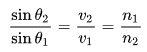
If light travels from a lower to a higher index of refraction medium the light will
bend away from the vertical axis
bend closer to the vertical axis
not bend
answer is not here
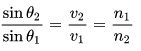
Light travels from water (n = 1.333) into an unknown medium. If the angles of incidence and refraction are 45oand 24º respectively. what is the index of refraction of the unknwon medium? Round off your values to 3 sig. figs.
2.32
2.31
0.77
0.76
flint glass n=1.70
barium glass n=1.60
crown glass n=1.523
water n=1.33
diamond n=2.45

The diagram shows a ray of light AB striking the interface of medium X and medium Y. BC is the refracted ray. Which one of the following statements is correct?
Medium X is optically less dense than Y and ray BC travels faster than AB.
Medium X is optically denser than Y and ray BC travels slower than AB.
Medium X is optically denser than Y and ray BC travels faster than AB.
Medium X is optically less dense than Y and ray BC travels slower than AB.

A ray of red light from a laser passes into a semi- circular glass block.What is shown at M?
Dispersion
Rarefaction
Reflection
Refraction
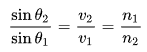
Light travels from air (n = 1.000) into an optical fiber. If the angles of incidence and refraction are 22oand 15º respectively. what is the index of refraction inside the fiber? Round off your values to 3 sig. figs.
1.45
1.44
0.69
0.70

