
Font size
S
M
L
XL
 Worksheets
Regents Exam #1
Total questions: 53
Worksheet time: 27mins
Name
Class
Date
1.
In single-celled organisms, materials are stored primarily in
a)
(1) ribosomes
b)
(2) mitochondria
c)
(3) nuclei
d)
(4) vacuoles
2.
The human female reproductive cycle is regulated primarily by the
a)
(1) white blood cells of the circulatory system
b)
(2) muscle cells of the skeletal system
c)
(3) enzymes of the digestive system
d)
(4) hormones of the endocrine system
3.

A photograph of a Siamese cat is shown below. Siamese cats have dark fur on areas of the body that are cooler and light fur on parts of the body that are warmer. The color differences in this Siamese cat are most likely due to
a)
(1) a decrease in glucose produced in areas with light fur
b)
(2) more DNA molecules being produced in areas with light fur
c)
(3) gene expression being influenced by the environment
d)
(4) mutations in the genes for eye color
4.
When deciding on new environmental policies and laws, which term is used to describe the comparison between benefits and costs of human activities?
a)
(1) technology
b)
(2) trade-off
c)
(3) climate change
d)
(4) industrialization
5.
If the grass in the front yard of an abandoned house is not cut for several years, the yard may become overgrown with taller grasses, bushes, and shrubs. This is an example of the process of
a)
(1) evolution
b)
(2) homeostasis
c)
(3) ecological succession
d)
(4) direct harvesting
6.

The northern snakehead is a type of Asian fish that eats smaller fish and is adapted to a freshwater habitat. The presence of these fish in American waters is of concern because it might offer too much competition to native
a)
(1) herbivores
b)
(2) predators
c)
(3) decomposers
d)
(4) producers
7.
In a food web, which type of organism receives energy from the other three types?
a)
(1) producer
b)
(2) carnivore
c)
(3) decomposer
d)
(4) herbivore
8.
An ameba is a single-celled, heterotrophic organism. In order to meet its energy needs, it relies directly on the interaction of which cell structures?
a)
(1) chloroplasts and the cell membrane
b)
(2) the cell membrane and mitochondria
c)
(3) nucleus and ribosomes
d)
(4) vacuoles and the nucleus
9.
Recently, oil from a wrecked tanker resulted in a disaster in ecosystems containing many unique species. The potential loss of these species could result in
a)
(1) an increase in the variety of genetic material available
b)
(2) a decrease in organisms available for scientific research
c)
(3) an increase in the stability of the affected ecosystems
d)
(4) a decrease in pollution affecting the land and water
10.
Which process occurs at each link in a food chain?
a)
(1) All the energy is stored in a newly made structure.
b)
(2) Some energy is released into the environment as heat.
c)
(3) Chemical energy is recycled.
d)
(4) Atoms cycle among living organisms, producing energy.
11.
Genetic recombination, production of more offspring than can survive, and struggling with the challenges of the environment are all concepts associated with
a)
(1) natural selection
b)
(2) mitotic division
c)
(3) selective breeding
d)
(4) genetic engineering
12.
Mistletoe is a plant that lives on the branches of trees. The mistletoe plant sends its roots in through the bark of trees and takes away water and minerals that the tree needs. In this situation, the mistletoe plant is
a)
(1) a parasite
b)
(2) a predator
c)
(3) a decomposer
d)
(4) an autotroph
13.
An example of a population in which evolution could take place in a relatively short period of time could be
a)
(1) pathogenic bacteria exposed to antibiotics
b)
(2) oak trees in a stable ecosystem
c)
(3) elephants living in a wildlife preserve
d)
(4) algae grown under constant conditions
14.
Butterflies exposed to radiation leaking from a damaged nuclear power plant in Japan have been observed to have malformed legs, antennae, and wings. For future butterfly generations to have these similar structural abnormalities, gene mutations must be present in the affected butterflies’
a)
(1) wing cells
b)
(2) body cells
c)
(3) antenna cells
d)
(4) sex cells
15.
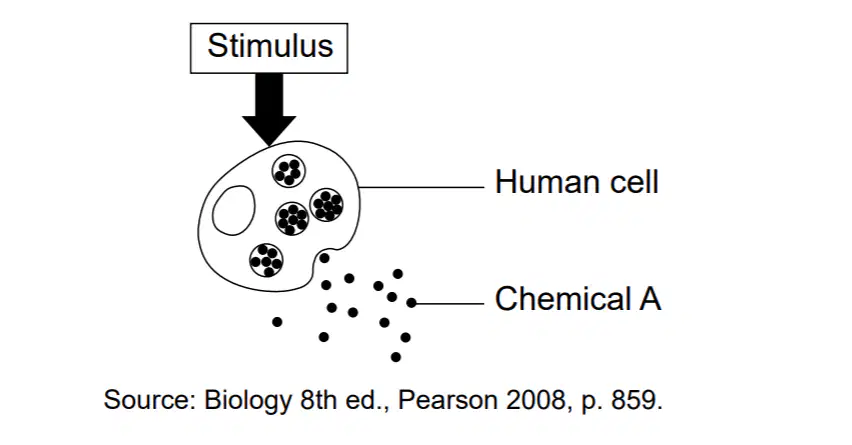
The diagram below illustrates the release of chemical A from a human cell in response to a specific stimulus. Which cell structure plays a direct role in the release of this chemical from the cell?
a)
(1) nucleus
b)
(2) ribosome
c)
(3) chloroplast
d)
(4) cell membrane
16.
A rich variety of genetic material in an ecosystem will
a)
(1) reduce the biodiversity of the ecosystem
b)
(2) decrease the carrying capacity of the ecosystem
c)
(3) reduce the likelihood of future medical discoveries
d)
(4) increase the chances that some organisms will survive change
17.
The process of sexual reproduction is an important part of the process of evolution. One reason for this is that meiosis and fertilization directly produce many new
a)
(1) antigens
b)
(2) variations
c)
(3) species
d)
(4) pathogens
18.
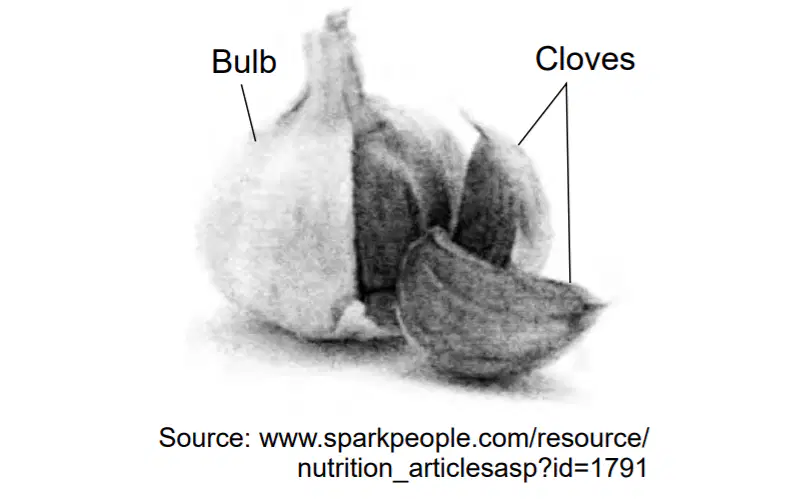
A garlic bulb consisting of several smaller sections called cloves is shown below. If cloves are separated from the bulb and later planted in a garden, a new garlic bulb will grow from each. In this way, a home gardener could grow a whole crop of genetically identical garlic plants starting with one bulb. As a result of this procedure, the gardener would
a)
(1) soon have several varieties of garlic growing in his garden
b)
(2) need to buy new garlic cloves each year in order to keep growing garlic
c)
(3) have to fertilize the female garlic plants each year so the garlic plants could produce their own cloves
d)
(4) need to be aware that if any of his garlic plants became diseased, it could very likely infect the entire crop
19.
When humans place grass clippings and other yard waste in landfills, they are most directly interfering with the natural process of
a)
(1) recycling energy
b)
(2) the production of energy
c)
(3) recycling organic compounds
d)
(4) the production of organic compounds
20.
Which statement is an example of a feedback mechanism in humans?
a)
(1) An increase in the level of blood sugar results in the pancreas increasing the amount of insulin it secretes.
b)
(2) Increased exposure to pathogenic bacteria results in an increase in the number of red blood cells produced.
c)
(3) An increase in exercise results in a decrease in the rate of respiration.
d)
(4) Increased muscle activity results in a decrease in heart rate.
21.
Many disorders are due to the inability of an individual to break down a particular chemical. Sometimes these disorders can be treated by giving the affected individual the appropriate
a)
(1) enzymes
b)
(2) antigens
c)
(3) chromosomes
d)
(4) organelles
22.
The removal of the predator populations from an ecosystem would most likely result in
a)
(1) a decrease in all the prey populations
b)
(2) an increase in all the producer populations
c)
(3) an increase in ecosystem diversity
d)
(4) a decrease in ecosystem diversity
23.
Two new wind turbines have recently been built within the Eiffel Tower in Paris. The power that these turbines generate will be enough to power the entire first floor of the tower, including the restaurants, shops, and exhibits. A benefit of using wind power as an alternative source of energy is that it
a)
(1) is nonrenewable, so additional resources will be depleted by tower businesses
b)
(2) is renewable, so it will decrease the environmental impact of the tower businesses
c)
(3) increases the use of resources that cannot be renewed in the future
d)
(4) decreases the amount of fossil fuels available for future generations
24.
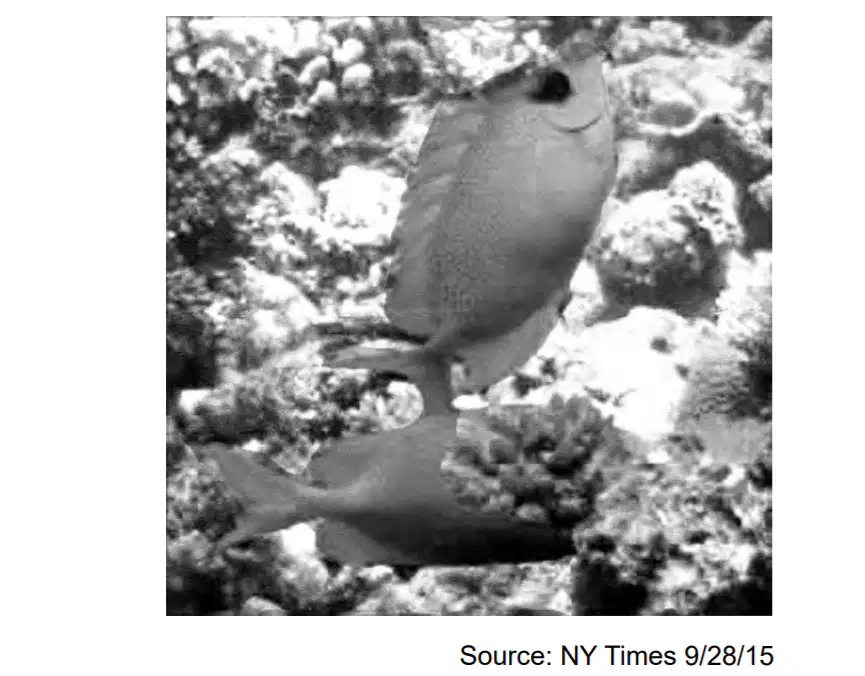
In the photograph below, two fish are displaying a behavior commonly observed among pairs of rabbitfish. While one has its head down feeding on coral, the other remains upright, alert for predators. This behavior continues to be present in the rabbitfish population because
a)
(1) this behavior was learned by observing other fish species
b)
(2) both fish could not fit into the small spaces in the coral
c)
(3) this behavior increases their chance of survival
d)
(4) the fish species needed to become alert to survive
25.
The fast food industry in the United States buys many russet potatoes from farmers. Therefore, most potato farmers grow russet potatoes. If farmers continue to plant the same crop in the same fields year after year without putting additives into the soil, the end result could be
a)
(1) smaller yields in future years due to the loss of nutrients
b)
(2) larger potatoes because they will adapt to the soil
c)
(3) new varieties of potatoes because they will reproduce sexually
d)
(4) genetically engineered potatoes that are resistant to disease
26.
A cornfield includes corn plants, mice, hawks, and various insects, fungi, and bacteria. Which nutritional role is correctly paired with organisms that carry out that role?
a)
(1) heterotrophs – corn and bacteria
b)
(2) producers – insects and fungi
c)
(3) consumers – mice and insects
d)
(4) decomposers – hawks and bacteria
27.
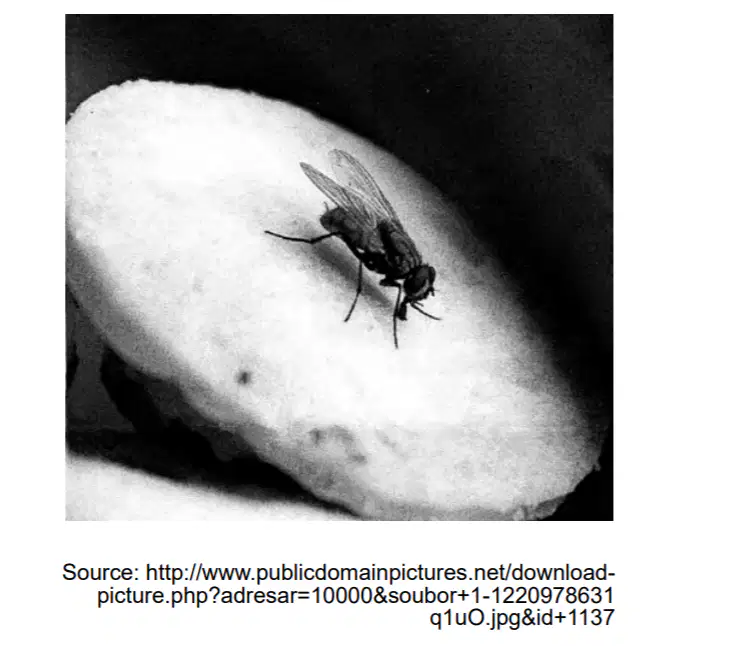
Each female housefly can lay approximately 500 eggs in a lifetime. She does this in several batches of about 75 to 150 eggs. Within a day, larvae (maggots) hatch from the eggs. They live and feed on organic material, such as garbage and feces. Scientists have calculated that a pair of flies beginning reproduction in April could be the ancestors of 191,010,000,000,000,000,000 flies by August. Which statement best explains why this does not happen?
a)
(1) Mutations develop in the young flies.
b)
(2) Environmental factors keep the population in check.
c)
(3) Flies continue to reproduce in large numbers.
d)
(4) More female flies survive than male flies.
28.
Which sequence best represents the levels of organization in a paramecium, a single-celled organism?
a)
(1) cells → tissues → organs → organ systems → organism
b)
(2) organelles → organ systems → organism
c)
(3) cells → organs → organ systems → organism
d)
(4) organelles → organism
29.
More than 100 years ago, Earth’s atmosphere contained about 280 parts per million (ppm) of carbon dioxide. It is predicted that by the year 2050, the level of carbon dioxide in the atmosphere could reach 700 ppm, greatly increasing Earth’s temperature. It has been suggested that growing more green plants would help to slow this increase. The best explanation for why increased numbers of plants would help is that plants
a)
(1) serve as food for herbivores
b)
(2) serve as a nonrenewable energy resource
c)
(3) remove carbon dioxide from the atmosphere during respiration
d)
(4) remove carbon dioxide from the atmosphere during photosynthesis
30.
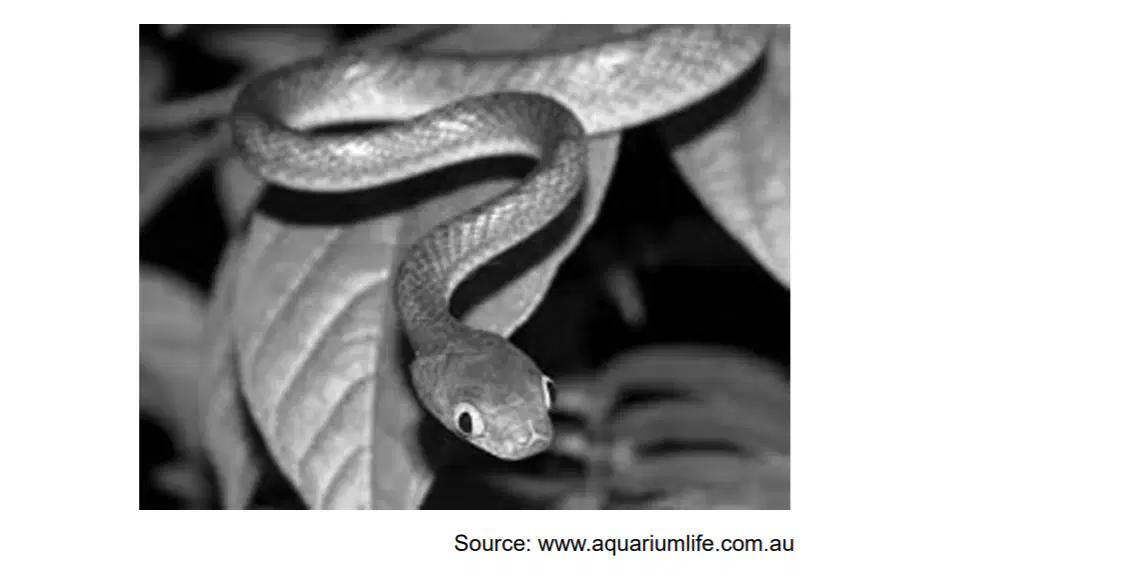
The brown tree snake was accidentally introduced to the island of Guam during World War II. Since then, this snake has caused the extinction of twelve native bird species by eating their eggs and young. One negative result of this snake’s introduction was most likely
a)
(1) an increase in diversity as new species evolved to replace extinct species
b)
(2) an increase in mosquitoes due to an increase in bird species in the environment
c)
(3) a disruption of food chains and food webs in Guam’s ecosystems
d)
(4) an abundance of brown tree snakes as a food source for humans
31.
Which factor contributed least to the extinction of the passenger pigeon species?
a)
(1) laws that banned the hunting of passenger pigeons to sell in new markets
b)
(2) improved communication technology, which tracked the pigeon flocks
c)
(3) expansion of the railroads, which opened up new markets for selling pigeons
d)
(4) increased use of the passenger pigeons as a food source for humans
32.
A direct result of the rapid decline of the passenger pigeon population was most likely
a)
(1) an increase in owl and falcon populations
b)
(2) an increase in chipmunk and squirrel populations
c)
(3) a decrease in fox and chipmunk populations
d)
(4) a decrease in squirrel and chestnut tree populations
33.
The extinction of the passenger pigeon illustrates that
a)
(1) humans are the only cause of species extinctions
b)
(2) it takes hundreds of years for a species extinction
c)
(3) the benefits of technology always outweigh the ecological risks
d)
(4) human activities can irreversibly affect ecosystems
34.
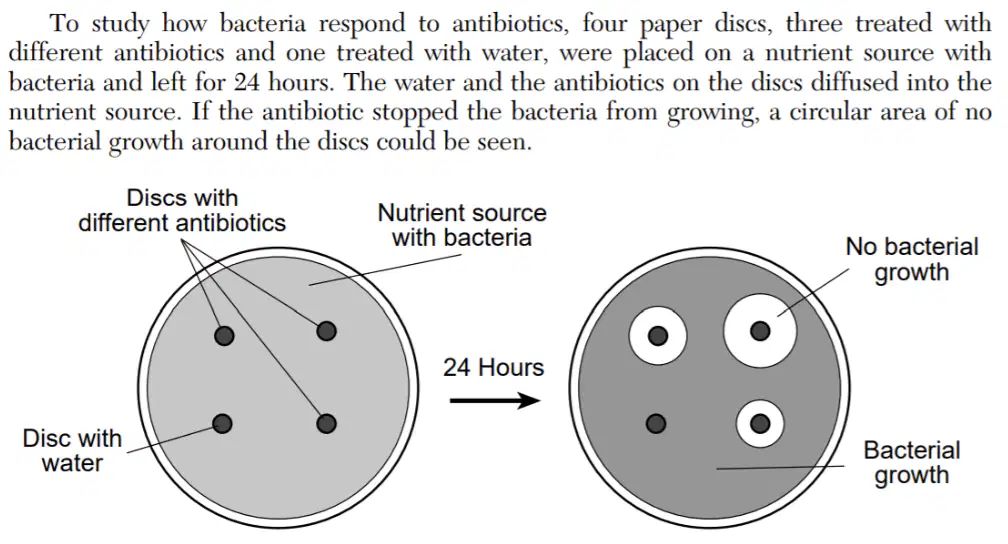
After 24 hours, the results represented by the diagram demonstrate
a)
(1) which of these antibiotics most effectively stopped bacterial growth
b)
(2) the nutrient source that resulted in the most bacterial growth
c)
(3) whether the bacteria were resistant to most antibiotics or not
d)
(4) that these bacteria were harmful to antibiotics
35.
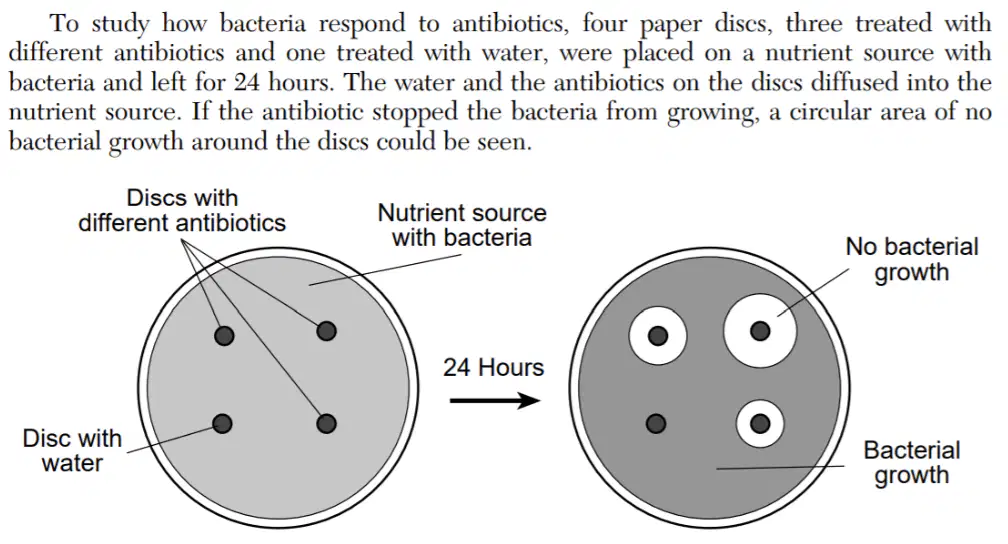
In this experiment, the purpose of using a disc treated with water is that it
a)
(1) serves as the conclusion for the experiment
b)
(2) is needed to provide additional moisture
c)
(3) serves as a control for the experiment
d)
(4) is needed as a standard safety procedure
36.
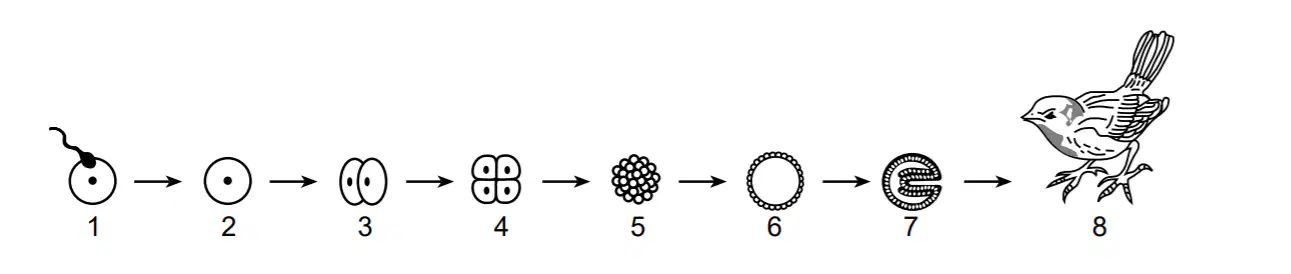
The diagram below represents some stages in the process of development. Stage 2 represents a cell that
a)
(1) contains half the genetic material of an adult cell
b)
(2) shows clear evidence of tissue differentiation
c)
(3) has the complete genetic information to form an adult
d)
(4) is genetically identical to one of the parents that produced it
37.
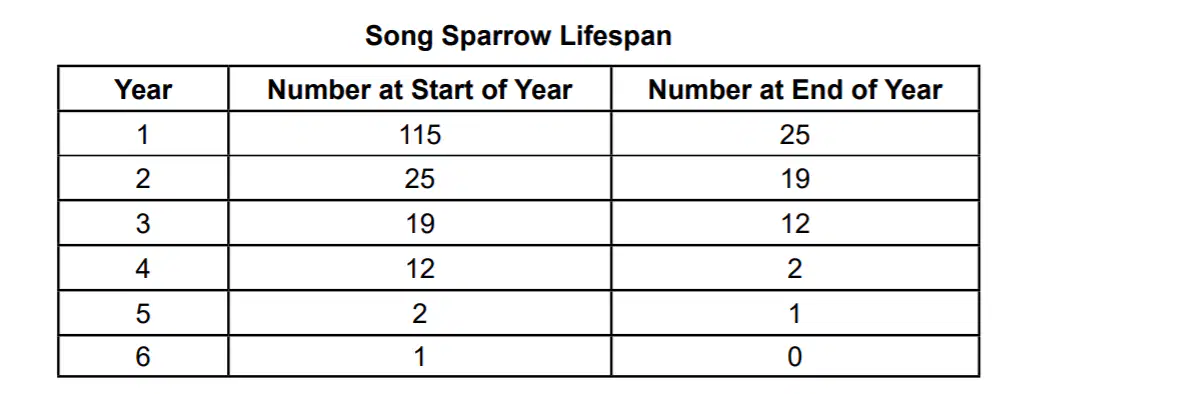
The table below shows the results of a study on the lifespan of 115 individual song sparrows. The two most likely factors contributing to the decline in the number of these 115 sparrows during year 1 were
a)
(1) favorable climate and a rapid reproduction rate
b)
(2) lack of predators and an expanding habitat
c)
(3) lack of mating and loss of nesting sites
d)
(4) disease and predation
38.
The diagnostic test for HIV, the virus that causes AIDS, involves testing the blood for antibodies associated with this pathogen. Antibodies are produced when the body
a)
(1) stimulates enzyme production
b)
(2) secretes specific hormones
c)
(3) detects foreign antigens
d)
(4) synthesizes microbes
39.
Body cells include nerve cells and muscle cells. Each makes a number of different proteins. For example, nerve cells make cholinesterase and muscle cells make myosin. Which statement best compares the DNA normally found in these two types of cells in an individual?
a)
(1) The two cells have identical DNA sequences and use the same section of the DNA to make these two proteins.
b)
(2) The two cells have identical DNA sequences, but use different sections of the DNA to make these two proteins.
c)
(3) The two cells have different DNA sequences, but use the same section of the DNA to make these two proteins.
d)
(4) The two cells have different DNA sequences and use different sections of the DNA to make these two proteins.
40.

The chart below compares the greenhouse gas emissions of several fuel sources. An accurate prediction that could be made regarding the information shown in the chart is that
a)
(1) a total change from gasoline to ethanol as a fuel would have no effect on greenhouse gas emissions
b)
(2) fossil fuels emit the least amount of greenhouse gases
c)
(3) the use of any one of the ethanol sources for fuel will each produce less greenhouse gases than the use of gasoline for fuel
d)
(4) the use of biomass-based fuels instead of fossil fuels will greatly increase the production of greenhouse gases
41.
Studies have shown that children are especially vulnerable to the effects of ultraviolet (UV) radiation. Tanning beds expose the skin to nearly ten times as much UV radiation as natural sunlight. With that knowledge, a law was passed in New York State to prevent individuals under the age of 18 from using tanning beds. Which statement best explains why UV radiation is so harmful?
a)
(1) Certain environmental factors can increase the occurrence of harmful gene mutations.
b)
(2) Diseases are all caused by exposure to environmental factors.
c)
(3) Homeostasis in an organism is increased by the presence of radiation.
d)
(4) Radiation decreases the likelihood that infectious agents cause mutations.
42.

The errors indicated by * could affect a cell by
a)
(1) altering the number of chromosomes present in the cytoplasm
b)
(2) converting the original cell into a different type of cell
c)
(3) converting sugar molecules into molecules of protein
d)
(4) changing the sequence of amino acids during the formation of a specific protein
43.

The process by which a cell copies its DNA before it divides is
a)
(1) mutation
b)
(2) diffusion
c)
(3) replication
d)
(4) respiration
44.
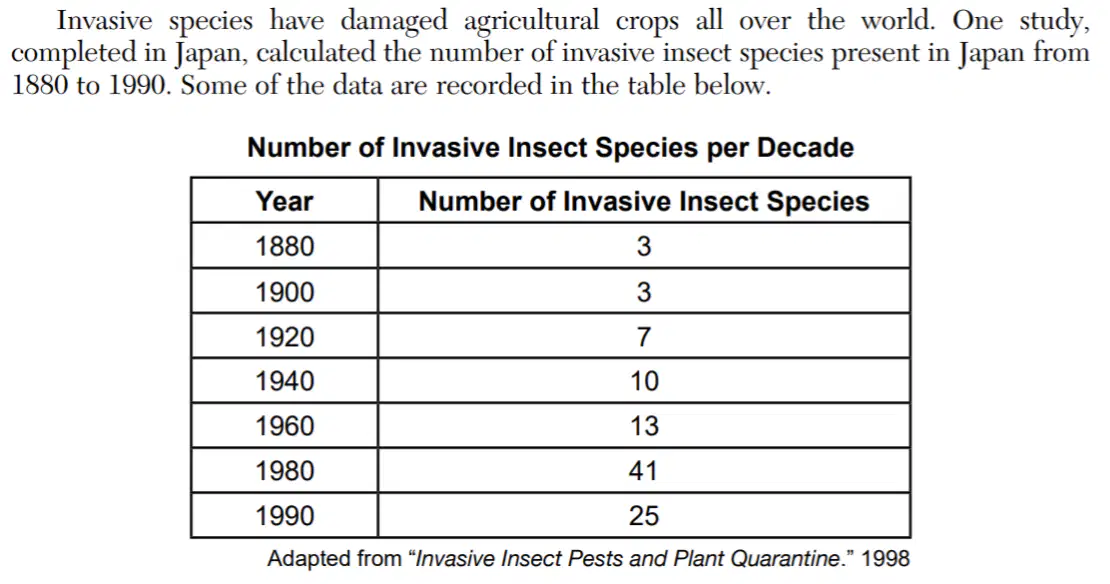
In the last decade of this study, there was a decrease in the number of invasive insects that entered Japan. One likely reason for this decrease is that people have
a)
(1) produced insecticides that are strong enough to kill every insect that is present in crops going from one country to another
b)
(2) improved inspections of crops that are transported from one area of the world to another area of the world
c)
(3) genetically altered all insects so they don’t feed on crops that humans use
d)
(4) stopped the transportation of all food crops from other countries, requiring each area to use only locally grown crops
45.

Which row in the chart below correctly identifies the structure labeled Y in both diagrams and the process it performs?
a)
(1)
b)
(2)
c)
(3)
d)
(4)
46.
Which technique could be used to make the structures in the cells more visible when using a compound light microscope?
a)
(1) paper chromatography
b)
(2) staining
c)
(3) electrophoresis
d)
(4) gene manipulation
47.
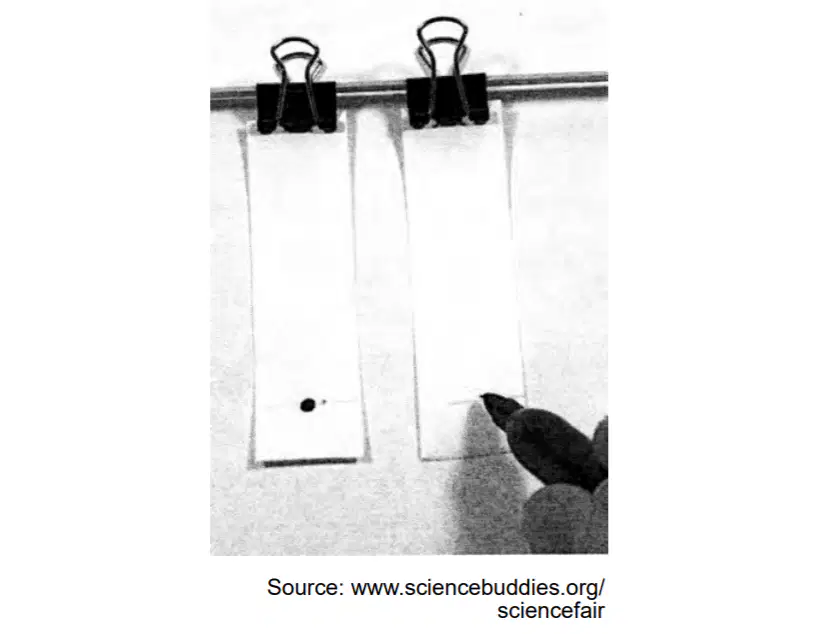
A procedure used in paper chromatography is represented below: The student is preparing two strips of paper for a chromatography activity. After adding a dot of the ink from the marker pen to the line on the paper on the right, the next step should be to place the strips in a beaker of solvent with the solvent level
a)
(1) between the bottom of the paper and the dot of ink
b)
(2) even with the dot of ink on the paper
c)
(3) just below the bottom edge of the paper
d)
(4) slightly above the dot of ink on the paper
48.

Based on these results, it can be concluded that the specific protein that was added to the samples was
a)
(1) a salt solution
b)
(2) a new indicator
c)
(3) a pancreatic hormone
d)
(4) a biological catalyst
49.
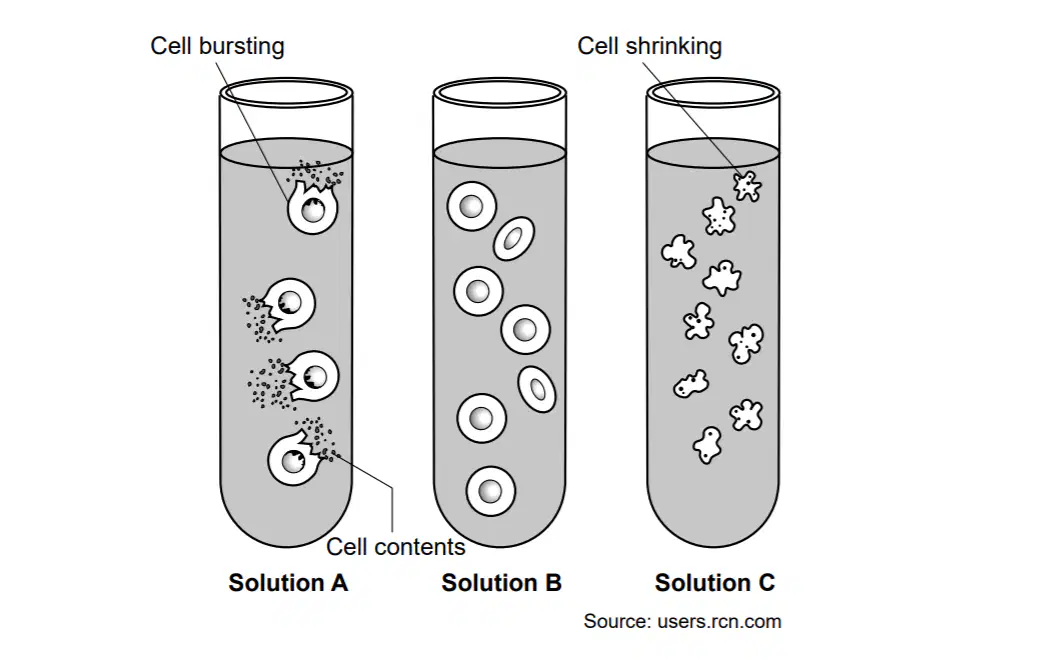
Base your answers to questions 75 and 76 on the information and diagram below and on your knowledge of biology.
4 lines
50.
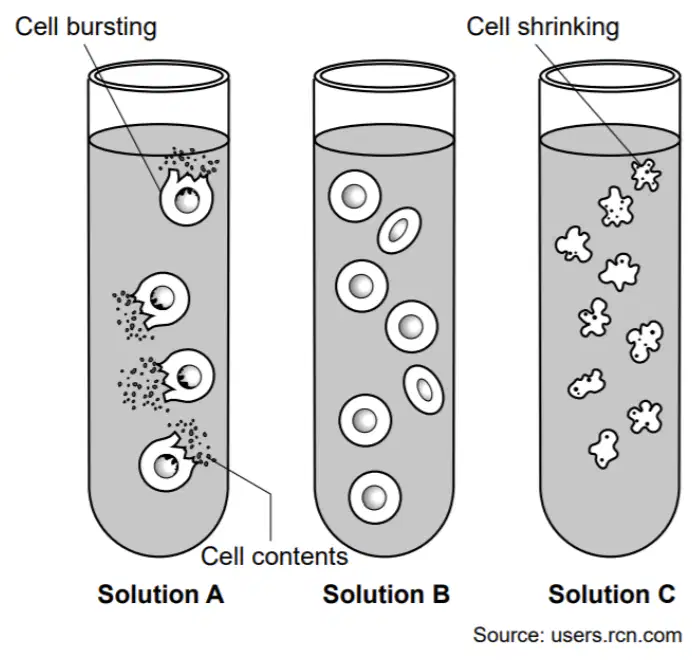
The diagram represents red blood cells placed in three test tubes, each containing a different salt solution Which statement best describes solution C?
a)
(1) The concentration of dissolved salt in the solution is greater than the concentration in the cells.
b)
(2) The concentration of dissolved salt in the solution is less than the concentration in the cells.
c)
(3) The concentration of water in the solution is greater than the concentration in the cells.
d)
(4) The concentration of water in the solution is equal to the concentration in the cells.
51.
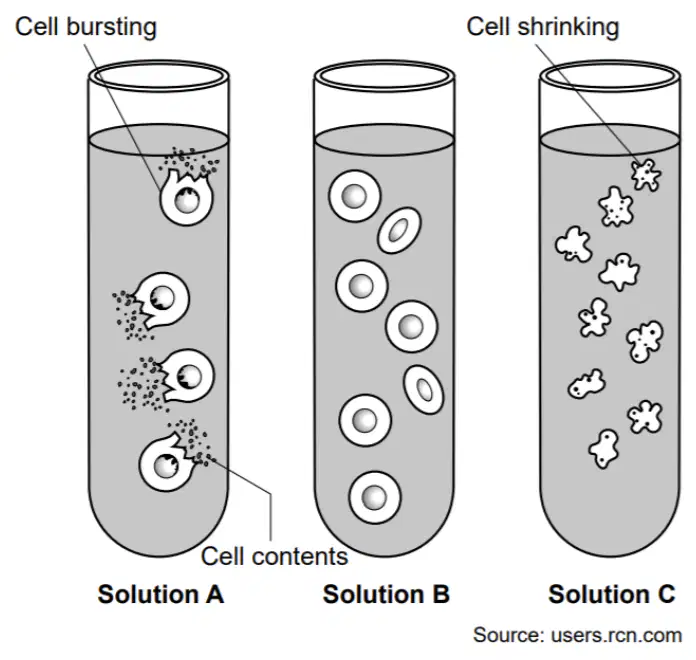
The diagram represents red blood cells placed in three test tubes, each containing a different salt solution Which solution would be most similar in concentration to the normal internal environment of the human circulatory system?
a)
(1) solution A, only
b)
(2) solution B, only
c)
(3) solutions A and B
d)
(4) solutions A and C
52.
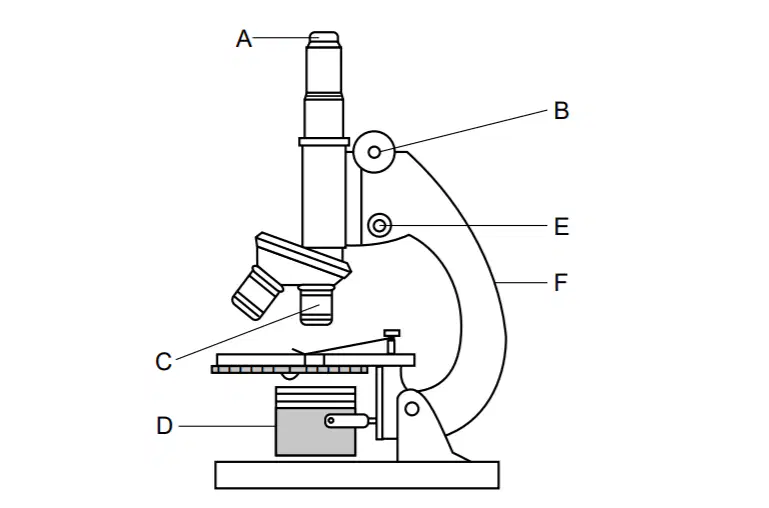
A student is viewing a plant stem cross-section using a compound light microscope. What parts of the microscope should the student use to bring the image into focus?
a)
(1) A and F
b)
(2) B and E
c)
(3) C and D
d)
(4) D and F
53.
A rare tropical plant was found to have medicinal properties. A search was conducted to find other plants that are closely related to the rare plant. Which combination of characteristics would best identify the plant most closely related to the original one?
a)
(1) shape of seeds, number of flower petals, leaf pigments
b)
(2) number of flower petals, positive reaction to a specific enzyme
c)
(3) leaf pigments, sequence of DNA bases, positive reaction to a specific enzyme
d)
(4) presence of DNA bases, internal stem structure, shape of seeds
Reset

