
Font size
 Worksheets
Laws of motion
Total questions: 104
Worksheet time: 2hrs 40mins
Newton's First Law States........
Objects at rest tend to stay at rest unless acted on by an outside force.
Objects accelerate often and it is difficult to know when or how they will accelerate.
Objects in motion tend to stay in motion unless acted on by an outside force.
Both A & C
What is inertia?
An object that is accelerating
Gravitational force
An objects tendency to stay at rest or in motion
An unbalanced force
Inertia depends on __________.
Weight
none of these
Mass
Acceleration
What formula is used to calculate force?
Acceleration = Force x Mass
Force = Mass x Acceleration
Work = Force x Distance
Mass = Force + Acceleration
A force of 40 N acts upon a 2 kg block. Calculate the acceleration of the object.
20 m/s2
20 m/s
80 m/s2
80 m/s
Newton's third law states.......
For each action there is a larger reaction associated with it.
None of these choices
For each action there is an equal and opposite reaction.
For each action there is a smaller reaction associated with it.
The tendency of an object to just keep doing what it is doing.
Laziness
F=MA
No Clue
Inertia

Newton's 3rd Law

Newton's 3rd Law


The ratio of force and acceleration measures :
Velocity
impulse
momentum
none of the above
A body moving in a circular path with constant speed has :
constant retardation
variable acceleration
radially outward acceleration
constant acceleration
Rate of change of momentum is equal to
acceleration
work done
force
impulse
When an object undergoes acceleration
Its speed always increases
Its velocity always increases
It always falls towards the earth
A force always acts on it.
A rocket or jet engine works on the principle of
Conservation of energy
Conservation of mass
Conservation of momentum
Newton’s second law of motion.
Newtons first law of motion is also known as..........
Law of force
Law of friction
Law of inertia
Law of momentum
The S.I. unit of force is
N/S
N.S
N.M
Newton
When a 12 N force acts on 3 kg mass for a second, the change in velocity is (in m/s)
36
4
2
8
Among the equal-sized stone and a football, the inertia will be higher of:
football
stone
both
none of them
if a boy pushes a wall with a force of 10N towards east then the force exerted by the wall on the boy is .......
10N towards EAST
10N towards WEST
20N towards east
10N towards NORTH
The linear momentum of an object is 250 g cm/s. If the velocity of the object is 5 m/s, then the mass of the object is
0.5g
0.5kg
5kg
5g
Force F=...............
ma
m(v-u/t)
mv/t
Both A and B
Effect of action of no net force acting on an object
First law of motion
Second law of motion
Third law of motion
None of these
Direction of momentum is direction of ......
speed
velocity
accelaration
force
Newton used the word 'mass in motion' to represent
Linear momentum
Inertia of motion
Velocity
inertia at rest

A fielder pulls his hands backwards after catching the cricket ball. This enables the fielder to:
exert larger force on the ball
reduce the force exerted by the ball
increase the rate of change of momentum
keep the ball in hands firmly
The inertia of an object tends to cause an object
to increase its speed
to decrease its speed
to resist a change in its state of motion
to decelerate due to friction
The rockets work on the principle of conservation of (a) .
Newton's first law of motion is also called Galileo's law of (a) .
When we talk of a force acting on a body, it usually means:
electrical force
balanced force
unbalanced force
nuclear force
Forces in a Newton's third law pair have equal magnitudes but act in opposite (a) .

Which of the following has the greatest momentum?
a scurrying cockroach
a parked semi-truck
more information is needed

The harder you hit a baseball, the faster it accelerates.
Newton's
1st
Law of Motion
Newton's
2nd
Law of Motion
Newton's
3rd
Law of Motion

? = mass x acceleration
or
? = m x a
is used to find
Complete the law:
For every action, there is an ____________ reaction.
equal and opposite
equal
opposite
bigger and better

Keeping applied force constant ,if you increase the mass on an object, its acceleration
decreases
stays the same
also increases
stops

What would be the reaction force, if the action force is 60 N to the right?
60 N to the right
60 N to the left
30 N to the left
9.8 N to the right

Cricketer use to pull his hands backwards/downwards while catching ball , this is to ________
Reduce the acceleration of ball
increase time duration to reduce momentum to zero so that force decreases
as he is afraid of ball
none of the above
V= ______
1/2 gt2
2gh
gt
The highest point of reach, final velocity is equals to ________________
u = 0
v = 0
the motion of a freely falling body from a height or the motion of a body thrown vertically upwards is called as _________________________.
two dimensional motion
one dimensional motion
three dimensional motion
The __________ of a body is the quantity of the matter it contains
velocity
volume
mass
weight
h = __________________ (for both retardation and acceleration
ut - 1/2 gt2
ut + 1/2 gt2
u + 1/2 at2
The S.I. unit of weight is __________
dyne
newton
kgf
kg
1kgf = _____________N
9.8
9.89
10
10.8
____________ force is the force due to gravity on a mass of 1 kg.
One 100 gram
One gram
One kilogram
One quintal
Mass and weight are ____________ and ___________________ quantities respectively.
vector, scalar
scalar, scalar
scalar, vector
None of the above
1gf= ____________ dyne
Speed of light is __________
985
3 x10⁷ m/s
980
3 x10⁸ m/s
9800
3 x10⁸ m/s
98
3 x10⁸ m/s


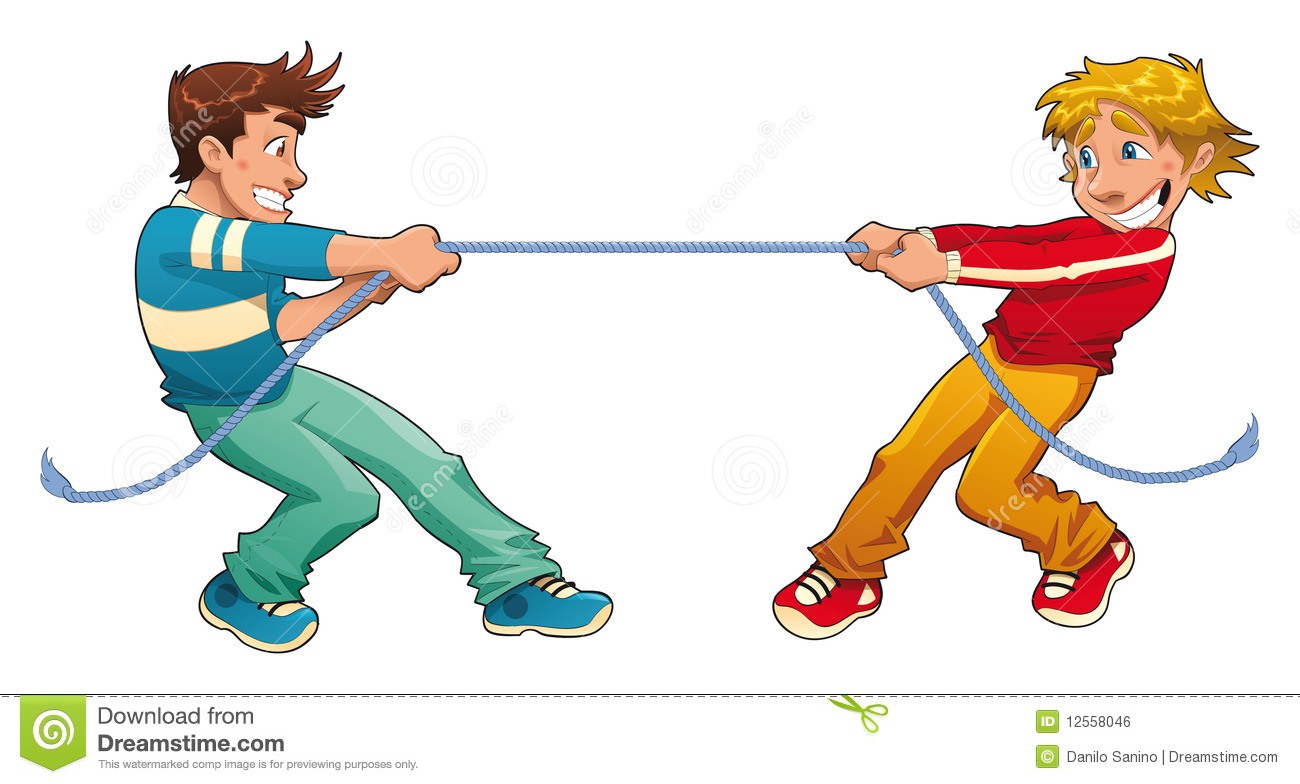

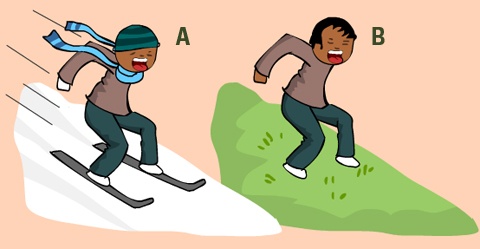
1st
Law of Motion
2nd
Law of Motion
3rd
Law of Motion


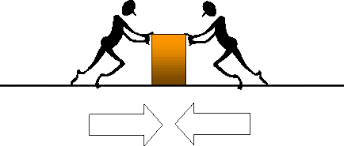
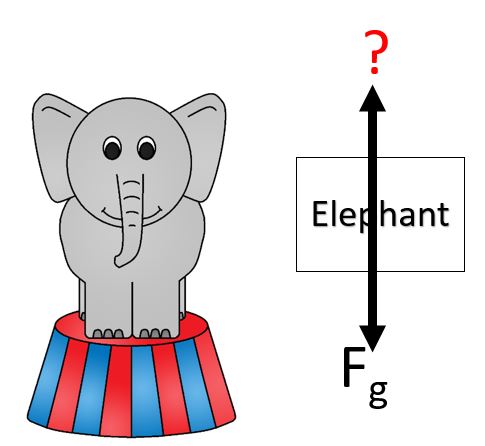


A squirrel sits on the ground and eats a donut. We know the forces on him must be balanced because...
Forces are always balanced
the squirrel is not accelerating
squirrels are projectiles
he's eating a donut

On a stationary sail boat, air is blown from a fan attached to the boat. The boat
moves in opposite direction in which the air is blown
does not move
moves in the same direction in which air blows
spins around

