Wayground logo

Free Printable Worksheets

Font size

S
M
L
XL
Worksheets

Unit 8: Ecology Quiz

Total questions: 60

Worksheet time: 2hrs 0mins

Name
Class
Date
1.
The non living parts of an ecosystem
a)
abiotic factors
b)
biotic factors
c)
oxygen
d)
soil
2.
All of the different populations that live in a specific area.
a)
ecosystem
b)
habitat
c)
ecology
d)
community
3.
The place where an organism lives that provides it with shelter, food and water.
a)
ecosystem
b)
population
c)
community
d)
habitat
4.
All the members of one type of species in a specific area.
a)
habitat
b)
community
c)
population
d)
ecosystme
5.
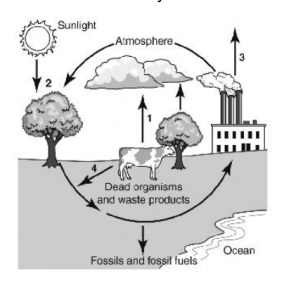
All of the different populations that live in a specific area.
a)
community
b)
habitat
c)
ecosystem
d)
village
6.
Series of steps in which organisms transfer energy by eating and being eaten
a)
foodweb
b)
consumer
c)
food chain
d)
omnivore
7.
Organisms that relies on other organisms for food; consumer
a)
herbivore
b)
decomposer
c)
heterotroph
d)
species
8.
All the organisms in a particular location, including their nonliving environment
a)
ecosystem
b)
carnivore
c)
niche
d)
population
9.
What may happen if the snowshoe hare was removed from the food web pictured?
a)
The insects in the habitat would increase.
b)
The shrew population would decrease due to being only hawk food source.
c)
The willow tree population would decrease.
d)
Foxes would dies due to no food source. 
10.
In the energy pyramid here, how much of the energy in the producers gets passed to the herbivores?
a)
10%
b)
20%
c)
80%
d)
90%
11.
Barnacles attach themselves to whales. The whales are so large that they are seemingly unaffected. The barnacles get a habitat and food when the whale enters an area with abundant food resources. What type of relationship exists between the whale and the barnacle?
a)
mutualism
b)
commensalism
c)
parasitism
d)
predation
12.
Animals, such as fiddler crabs, advertise the size of their enlarged claw to intimidate their rivals. This territorial display is an example of what type of relationship?
a)
predation
b)
commensalism
c)
competition
d)
mutualism
13.
Which scenario would best allow the long-term survival of a native herbivore in a grassland ecosystem? 
a)
New producer species immigrates to the ecosystem and increases the diversity of producers. 
b)
The population size of the herbivore's predators and the grasses they eat remain constant. 
c)
Humans in the ecosystem reduce the number of predators in the area. 
d)
A new herbivore that feeds on the same plants immigrates to the ecosystem 
14.
Oxpeckers are birds that sit on zebras and rhinos and eat ticks and other parasites that live on their skin. The oxpeckers get food and in return the zebras and rhinos get pest control. When there is danger, the oxpeckers fly upward and scream a warning to help the zebras and rhinos.  Which of the following correctly identifies the symbiotic relationship between the oxpeckers and the zebras? 
a)
parasitism
b)
commensalism
c)
mutualism
d)
competition
15.
A food chain contains oak trees (producer), mice (herbivore), black rat snakes (carnivore), and bald eagles (carnivore). If these organisms were placed in an energy pyramid, which organism would be in the energy level with the second-most amount of energy available? 
a)
Mice
b)
Oak Trees
c)
Bald Eagles
d)
Black Rat Snakes
16.
What are the likely long-term effects on ecosystems if greenhouse gas emissions combined with human over-exploitation of land continue to increase? 
a)
no long-term effects on population numbers and species diversity. 
b)
temporary effects on population numbers and species diversity 
c)
an increase in population numbers and species diversity 
d)
a decrease in population numbers and species diversity 
17.

What converts nitrogen gas into a usable form for plants and animals?

a)

bacteria

b)

rain

c)

fungi

d)

car exhaust

18.
The rabbit in this food web would be considered a:
a)
Decomposer
b)
Producer
c)
Secondary Consumer
d)
Primary Consumer
19.
What is the term for each step in the transfer of energy and matter within a biological community?
a)
energy path
b)
food web
c)
trophic level
d)
food pyramid
20.
The diagram below depicts the water cycle.  Which process is represented by the number 2?
a)
precipitation
b)
evaporation
c)
surface runoff
d)
condensation
21.
An increase in the atmospheric levels of carbon dioxide (CO2) is the biggest contributor to which of the following?
a)
El Nino
b)
global warming
c)
wind storms
d)
ozone depletion
22.

An organism that retrieves its energy from dead and decaying material in the environment is best know as a/an

a)

Decomposer

b)

Omnivore

c)

Predator

d)

Herbivore

23.

T/F: Adaptations are most often a result of Limiting Factors and Competition a species experiences.

a)

True

b)

False

24.

What level of organization does this image best represent

a)

Organism

b)

Population

c)

Community

d)

Biome

25.

What level of organization does this image best represent

a)

Organism

b)

Population

c)

Community

d)

Biome

26.

What level of organization does this image best represent

a)

Community

b)

Ecosystem

c)

Biome

d)

Biosphere

27.

Which of the following descriptions about the organization of an ecosystem is correct?

a)

communities make up species, which make up populations

b)

populations make up species, which make up communities

c)

species make up communities, which make up populations

d)

species are grouped in populations, which make up communities

28.

The simplest grouping of MORE than one organism in the biosphere is a(n)

a)

population

b)

community

c)

ecosystem

d)

species

29.

An organism that uses energy to produce its own food supply from inorganic compounds is called a(n)

a)

heterotroph

b)

consumer

c)

detritivore

d)

autotroph

30.

The total amount of living tissue within a given trophic level is called the

a)

organic mass

b)

trophic mass

c)

energy mass

d)

biomass

31.

Which animals are both producers and consumers?

a)

herbivores

b)

carnivores

c)

omnivores

d)

autotrophs

32.

A frog that has eaten an insect that fed on a plant is a

a)

producer

b)

primary consumer

c)

secondary consumer

d)

tertiary consumer

33.

The branch of biology dealing with interactions among organisms and between organisms and their environment is called

a)

economy

b)

modeling

c)

recycling

d)

ecology

34.

Green plants are

a)

producers

b)

consumers

c)

herbivores

d)

omnivores

35.

All the interconnected feeding relationships in an ecosystem make up a food

a)

chain

b)

interaction

c)

web

d)

network

36.

The symbiotic relationship between a flower that gets its pollen spread and the insect that feeds on the nectar is an example of

a)

mutualism

b)

commensalism

c)

parasitism

d)

predation

37.

Each of the following is an abiotic factor in the environment EXCEPT

a)

plants

b)

soil

c)

rainfall

d)

temperature

38.

An interaction in which one organism captures and feeds on another organism is called

a)

competition

b)

symbiosis

c)

mutualism

d)

predation

39.

When individuals in a population reproduce at a constant rate and their numbers increase, it produces a growth pattern called

a)

logistic growth

b)

growth density

c)

exponential growth

40.

Any factor in an environment that causes population growth to decrease is a

a)

carrying capacity

b)

limiting nutrient

c)

limiting factor

d)

growth factor

41.

Ecosystems that have LESS space allow for more species to coexist, increasing biodiversity.

a)

true

b)

false

42.

Warmer climates generally support more plant life, which will support larger and more complex food webs, increasing biodiversity.

a)

true

b)

false

43.

In which stage of the nitrogen cycle is atmospheric nitrogen converted into biologically usable forms?

a)

nitrogen fixation

b)

cellular respiration

c)

precipitation

d)

carbon fixation

44.
Barnacles grow on whales.  Whales give the barnacles a place to live but the barnacles do not help or harm the whale.  Which type of relationship is this?
a)
commensalism
b)
mutualism
c)
parasitiesm
45.
Which is an example of a parasitic relationship?
a)
a bee pollinates a flower
b)
a tapeworm takes nutrients from a dog
c)
an orchid lives in a tree but does not harm the tree
46.
What would most likely happen if the rabbit population was removed from the food chain grass —› rabbit —› fox?
a)
their would be more grass
b)
there would be less rabbits
c)
there would be more fox
47.

What is the greenhouse effect?

a)

It is a phenomenon where the sun’s rays are absorbed by clouds.

b)

It is a phenomenon that occurs when heat escapes into space.

c)

It is when heat is trapped by gases, then sent back to earth’s surface.

d)

It describes the atmosphere’s composition.

48.
What is it called when water is changed from a liquid to a gas?
a)
EVAPORATION
b)
PRECIPITATION
c)
TRANSPIRATION
49.

How does the energy flow in an energy pyramids?

a)

up the pyramid

b)

down the pyramid

50.
Which is the smallest level of an ecosystem?
a)
organsism
b)
population
c)
community
d)
ecosystem
51.
This term means life/living things
a)
Bio-
b)
Eu-
c)
-Ology
d)
Pro-
52.
The particular role an organism plays in an ecosystem. 
a)
Consumer
b)
Predator
c)
Niche
d)
Symbiosis
53.
Identify an a example of an Abiotic Factor?
a)
Panda
b)
Turtle
c)
Butterfly
d)
Sunlight
54.

Evaporation and Transpiration will most likely appear in which of these cycles?

a)

Nitrogen

b)

Carbon

c)

Water

55.

Photosynthesis will most likely appear in which of these cycles?

a)

Nitrogen

b)

Carbon

c)

Water

56.
What is happening at 1?
a)
respiration: releasing CO2
b)
decomposing CO2 in the soil
c)
photosynthesis: absorbing CO2
d)
turning CO2 from the atmosphere into organic molecules
57.

What is happening at 2?

a)

respiration: releasing CO2

b)

decomposing CO2 in the soil

c)

photosynthesis: absorbing CO2

d)

turning CO2 from the atmosphere into organic molecules

58.

What is happening at 4?

a)

respiration: releasing CO2

b)

decomposing CO2 in the soil

c)

photosynthesis: absorbing CO2

d)

turning CO2 from the atmosphere into organic molecules

59.

The process in which nitrogen circulates and is recycled is called

a)

The nitrogen cycle

b)

The carbon cycle

c)

The water cycle

d)

The phosphorus cycle

60.

What is the formula for atmospheric nitrogen?

a)

N

b)

N2

c)

NH3

d)

NO3