
 Worksheets
CHEM 241- NSU-Ch3 - Intro to Organic Compounds and Nomenclature
Total questions: 120
Worksheet time: 3hrs 37mins

The functional group shown is .

The organic family for propanamine is (a) .

The organic functional group for this structure is (a) .
(a) and (b) make up the amino- functional group.

Aiden need to name this compound based on the functional group present. What would its name be?
ethanamine
methanamine
amino acid
propanamine
A functional group is defined as .

Classify the compound based on the functional group present.
Ketone
Carboxylic acid
Ester
Ether

Classify the compound based on the functional group present.
Ether
Ketone
Ester
Carboxylic acid


The name of the substance in the image is...
ethanol
propanol
ethane
propane


What functional group is shown?
carbonyl
hydroxyl
carboxyl
amino

What functional group is shown?
carboxyl
carbonyl
hydroxyl
amino

What functional group is shown?
hydroxyl
carboxyl
methyl
carbonyl

The functional group shown is (a) .

(a) is the prefix for the structure shown

What functional group is shown?
hydroxyl
amino
carboxyl
sulfhydryl
Identify the phosphate group


Hydroxyl group
Can transfer energy between organic molecules.
stabilize protein structure
Acts as a base; can pick up a proton from the surrounding solution:
Attracts water molecules, helping dissolve organic compounds such as sugars
Can ionize by releasing the hydrogen atom from the
-OH group

Identify the Functional Group

Identify the Functional Group

Identify the Functional Group
Hydrocarbons that contain a delocalized ring of π-bonds such as benzene ring are called ___________ hydrocarbons.
aromatic
aliphatic
organic
cyclo
Which of these functional groups is an Aldehyde?
-CHO
-CH3
-NH2
-COOH
Which of these functional groups is a sulfhydryl?
-SH
-OH
-CO
-COH
Which of these functional groups is carboxyl?
-CO
-NH2
-CH3
COOH

Name this compound.
Propane
Bropane
Propane(Br)
Bromopropane

Name this compound.
Nitroethane
Ethylamine
Aminoethane
Ethamine

Name this compound.
Butanol
Butene
Oxybutanol
Butanoic acid

Hyroxyl and Carbonyl


Name this structure.
methylpropanoate
methylethanoate
ethylpropanoate

Name the structure.
4-hexanol
3-hexanol
4-heptanol
3-heptanol


Name this structure.
hexanal
hexanoic acid
hexanone
hexanoate

Name this structure.
heptanoic acid
heptane
6-heptanone
2-heptanone

Name this structure.
methyl ethanoate
ethyl methanoate
ethyl methyl ether
methyl ethyl ether

Name this structure.
propanal
1-propanol
propane
3-propanol
Name this molecule.
CH3CH2CH2CHO
butanol
butanone
butanoic acid
butanal
Name the molecule.
CH3CH2CH2CH2CH2CH2CH2COOH
heptanoic acid
octanoic acid
octanol
methy octanoate

Name this compound...
methane
methene
methanol
methoxymethane

Name the compound
ethoxypropane
3-pentanol
pentanol
pentane

What is the name of this product?
1– propanol
1– propene
ethylene glycol
3– propanol
1,2,3 – propanetriol


What is the name of this compound?
2,3-bromobutane
2,3-dibromo butane
1,1-dibromo-1-methyl propane
Bromobutane
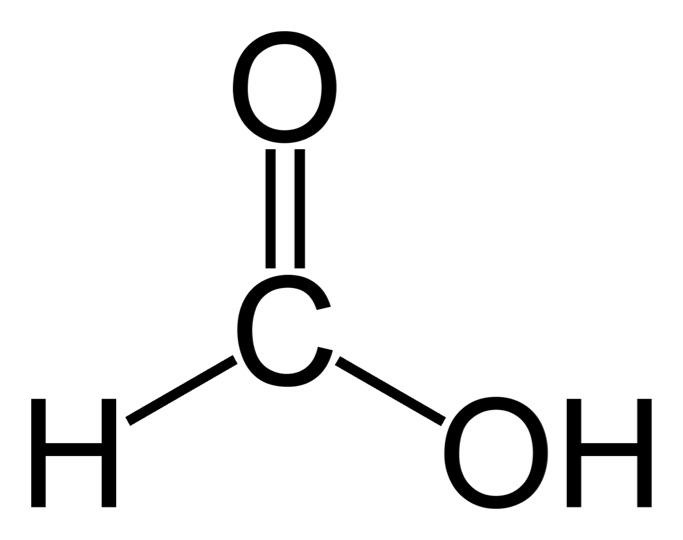
Which of the following violates the rules for writing resonance structures?


Which of the following violates the rules for curved arrows? Choose ALL.


Choose the correct resonance structure for compound A


Choose the correct resonance structure for compound A


Which of the following is/are correct resonance structures for compound A?
I and II
I and III
III and IV
I and III
I and IV

Which of the following is a correct resonance structure for compound A?


What is the picture showing?
All of the resonance structures for carbonate.
The formal charge on each atom in carbonate.
The electronegativity for carbonate.
The ionization energy for carbonate.
What is the name for when more than one valid Lewis structure can be drawn for a molecule?
coordinate covalent bond
resonance
endothermic
structural formula
Draw the Lewis structure for BH3 on your own. Then compare your drawing to the answer choices, and select the correct drawing for BH3.


Which of the following is true about expanded octets? (Check all that apply.)
Any element can have an expanded octet.
Elements in row 3 and lower on the periodic table can have expanded octets.
An expanded octet is when an element has less than 8 electrons.
An expanded octet is when an element has more than 8 electrons.
An expanded octet is when an atom has an unpaired set of electrons in its outer shell.

Match the following functional groups with the appropriate suffix
carboxylic acid
-oic acid
ketone
-one
aldehyde
-al
alcohol
-ol
ester
-oate
Match the following
-SH
-thiol
amine
-amine
-amide
-amide
RX
-ide
ether
-ether
Match the following functional groups with the appropriate suffix
alkyl
-ane
alkenyl
-ene
alkynyl
-ynl
Match the following Match the following alkyl groups with the appropriate number of carbons
2
ethyl
4
butyl
6
hexyl
5
pentyl
7
heptyl
Match the following alkyl groups with the appropriate number of carbons
methyl
1
decyl
10
octyl
8
propyl
3
undecyl
11
Draw the structure for 5-methylhexan-2-ol

Draw the bond-line structure for 2-bromo-4,5-dimethylhexane
Draw all isomers for the molecular formula C2H2Br2
Draw all isomers for the molecular formula C2H4BrCl
Draw all isomers of the molecular formula C2H7N
Draw all isomers of the molecular formula C3H8O
Draw all isomers of the molecular formula C3H8S
Identify the type(s) of conformations for the following Newman Projection
Anti
Partially Eclipsed
Eclipsed
Gauche
Identify each isomer with the appropriate prefix
iso-
n-
neo-
General molecular formula for both alcohols and ethers is
CnH2n+2O
CnH2nO
CnH2n+2N
CnH2n+1O
General molecular formula for both aldehydes, ketones, and unsaturated alcohols is
CnH2n+2O
CnH2nO
CnH2n+2N
CnH2n+1O
General molecular formula for both acids and esters is
CnH2n+2O2
CnH2nO2
CnH2n+2N2
CnH2n+3O
Molecules can have Greek letters to denote the position of various functional groups. Label the following with the appropriate Greek letters.
α
β
γ
Draw the condensed structure of 3-bromo-2-methylpentane
Draw the condensed structure for 4-methylpent-1-yne
draw the condensed structure for neopentyl bromide
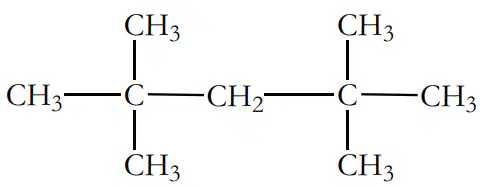
How many quaternary carbons are present in the following molecule?
(a)
How many primary carbons are present in the following molecule?
(a)
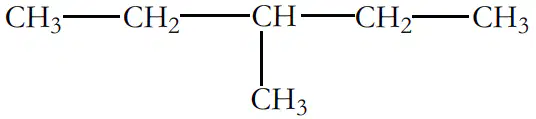
How many secondary carbons are present in the following molecule?
(a)
How many tertiary carbons are present in the following molecule?
(a)
Draw the bond-line structure for isopropylcyclohexane
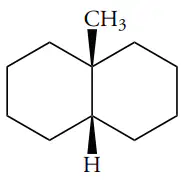
What is the molecular formula for the following compound
C10H16
C8H8
C10H13
C11H16
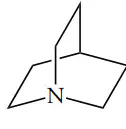
What is the molecular formula for the following compound
C7H13N
C5H11N
C7H11NH2
C5H10N
Which of the following is an eclipsed Newman Projection?


Which of the following is a staggered Newman Projection? (Choose ALL)


Draw the Newman Projection for the following compound as viewed down the indicated bond in the conformation shown:


Given the following molecule, what does the Newman Projection look like from C2-C3?


What is the name of the following molecule?
3,7,11-trimethyldodecane
2,6,10-trimethyldodecane
2,5,10-trimethyldodecane
2,5,10-trimethylundecane
Given 3-bromo-2,2-dimethylbutane. What does the Newman projection look like from C2-C3?


What is an appropriate name for the following compound?
4-ethylhexane
3-ethylhexane
3-ethylpentane
2,2-dimethylpentane

What does the line angle drawing look like given the following Newman?


Given the following molecule, what does the most stable Newman structure look like from C3-C2?


What is an appropriate name for the following compound?
5-cyclobutyl-4-fluoro-3-methyl-3-propylheptane
3-cyclobutyl-5-ethyl-4-fluoro-5-methyloctane
3-cyclobutyl-4-fluoro-5-methyl-5-propylheptane
3-cyclobutyl-6-ethyl-4-fluoro-6-methyloctane

Given the following molecule, what does the highest energy Newman structure look like from C2-C3?


What is the main reason why totally eclipsed Newman projections are the most unstable?
torsional strain
angle strain
steric strain
bond strain
Staggered and eclipsed conformations are best shown using which projection?
Newman
Haworth
Fisher
Kramer
If the axial substituent at C1 is up, then what are the axial directions at C3 and C4?
Up and up
Down and down
Up and down
Down and up
How dare you?!?
If the axial substituent at C1 is up and then a ring flip is performed, then what are the axial directions at C3 and C4?
Up and up
Down and down
Up and down
Down and up
What gives you the right?!?
Cis-trans isomers are
constitutional isomers
optical isomers
geometric diastereomers
readily interconverted by rotating bonds
all of the above
Cyclohexane in the chair conformation
has no eclipsed substituents
has sp3 hybridized carbons
has bond angles of 109.5 degrees
all of the above
Draw the most stable chair conformation of the following molecule:

Draw the most stable chair conformation for the following molecule:

Draw the most stable ring conformation for the following molecule:

What would the following ring conformation look like if you were to conduct a ring flip?

Are atoms more stable in the equatorial or axial position?
equatorial
axial
don't know

Name the following compound:
(a)
Draw the newman projection of 2-bromobutane from the C3-C2 axis
Draw the newman projection for ethane (CH3CH3) at the C1-C2 axis

