
 Worksheets
Unit 7 - Physical Properties of Matter
Total questions: 50
Worksheet time: 38mins
Transition from a liquid to a gas
Condensation
Freezing
Evaporation
Melting
Gas condenses to a liquid
Evaporation
Melting
Freezing
Condensation
What happens to molecules when their kinetic energy increases?
The molecules move slower
The molecules move faster
The molecules get heavier
It depends on the type of molecule

Three containers with the same amount of the same material are shown below. Which container has the substance with the highest amount of energy?
The container on the left
The middle container
The container on the right
All have an equal amount of energy
Three containers with the same amount of the same material are shown below. Which container has the substance with the lowest amount of energy?
The container on the left
The middle container
The container on the right
All have an equal amount of energy
When you boil water in a pot, some of the water escapes as steam. Which of the following choices explains what is happening with the water molecules in this scenario?
The molecules slow down as the kinetic energy increases and move farther apart from one another.
The molecules slow down as the kinetic energy decreases and move closer together.
The molecules speed up as the kinetic energy increases and the molecules move farther apart from one another.
The molecules speed up as the kinetic energy decreases and the molecules move closer together.
Which statement best describes what happens when heat is added to a substance?
Energy moves out of the substance causing the molecules to slow down.
Energy moves out of the substance causing the molecules to speed up.
Energy moves into the substance causing the molecules to slow down.
Energy moves into the substance causing the molecules to speed up.
Phase change going from a Solid to a Gas...
Deposition
Sublimation
Condensation
Recombination
Phase change going from a Gas to a Solid...
Deposition
Sublimation
Condensation
Vaporization
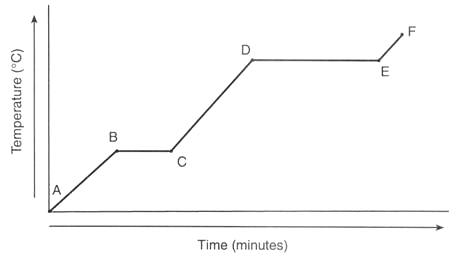
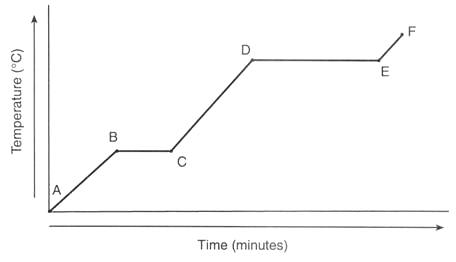
Is the substance gaining or losing energy?
Gaining
Losing
What state/phase is the object likely from points A to B?
Solid
Liquid
Gas
What is happening to the particles in the substance between points A and B?
Melting
Freezing
Speeding Up
Slowing Down
What is happening to the particles in the substance between points D and E?
Melting
Freezing
Vaporizing
Sublimating

Where on the graph are phase changes taking place?
1
2
3
4
5


Concentration is
the amount of solute in the solvent
the amount of solvent in the solute
density
particle size
A student is preparing solutions for a laboratory experiment by dissolving solid solutes in liquid solvents. Which actions will increase the rate of solubility? Select all that apply
Increase the temperature of the solution
stirring the solute in the solution
Decrease the particle size of the solute
increasing the particle size of the solute
A student inflates a balloon with helium then places it in the freezer. The student should expect
the balloon's volume to increase
the balloon's volume to decrease
the balloon's moles to increase
the balloon's moles to decrease
Pressure is
defined as the mass that an object exerts when at rest.
not a measurable in gases.
defined as the number of moles of substance divided by the mass of the substance.
created by the force of the gas particles impacting the walls of the container.
How do the particles move in a solid? Select all that apply.
rotation
translation
vibration
limited translation
How do the particles move in a liquid? Select all that apply.
rotation
translation
vibration
limited translation
How do the particles move in a gas? Select all that apply.
rotation
translation
vibration
limited translation
How much energy is required to heat 23g of ice at -46°C to O°C?
2,116 J
7,685.7 J
9,623.2 J
50,738 J
How much heat energy is required to melt 23g of ice at 0°C?
2,116 J
7,659 J
9,623.2 J
418.14 J
How much energy is required to convert 100g of liquid water at 20°C completely to steam at 100°C?
254,072 J
70,581.04 J
587,236 J
258,168 j
How much energy is required to change 23g of liquid water at 100°C to steam at 109°C?
104,546 J
42,520 J
51,156.1 J
89,544 J
Which type of particles move the fastest?
Solid
Liquid
Gas
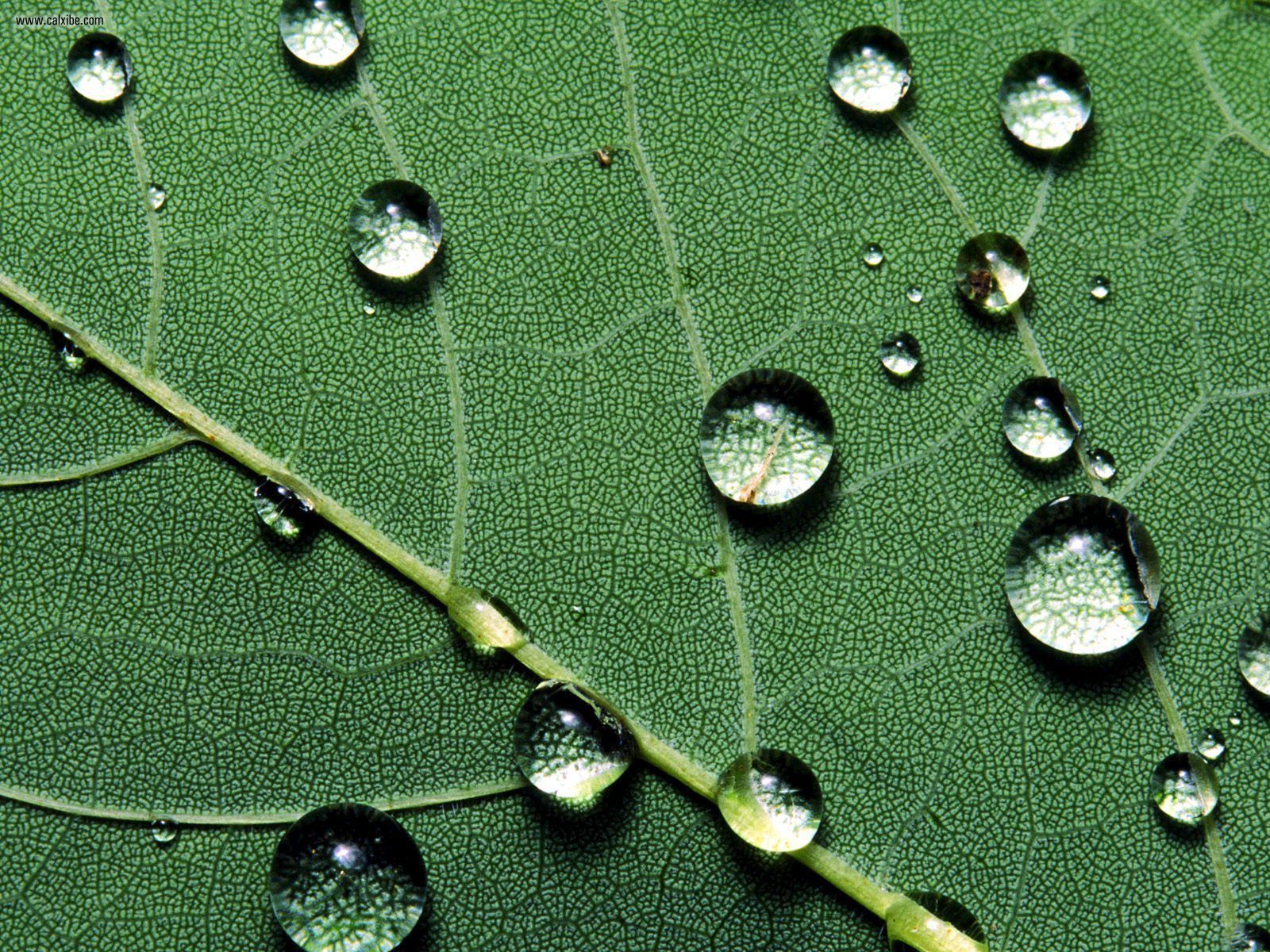
Refer to the picture of water sticking to a leaf; this is occurring because of:
Adhesion
Cohesion
Describe COHESION.
Water molecules attracted to other substances.
Water molecules climbing upwards against the force of gravity.
Water molecules dissolving many substances because of its polarity.
Water molecules attracted to other water molecules.

Since water can dissolve many different materials, it is called a __________.
Universal liquid
Universal solvent
Universal Dissolvent
Universal Chemical

Water is a polar molecule because:
Water is frozen at the North and South Poles.
Oxygen has a negative charge and hydrogen has a positive charge.
Water exists in all three states of matter naturally on Earth.
All living things need water

A water bug “walking” on water is an example of:
Solvent and solute
water cycle and precipitation
Adhesion and polarity
surface tension and cohesion
Surface tension is the property of water in which...
water molecules at the surface tend to stick together.
water spills easily.
water tends to be see-through.

Refer to the picture; this is occurring because of:
Cohesion
Adhesion
Capillary action
Surface tension
The upward movement of water through tiny spaces in soil or rock is called
capillary action
porosity
permeability


In an endothermic reaction, energy is _________.
absorbed
released
In the following equation, the symbol for specific heat is .......
Q = mcΔTc
Q
m
ΔT
How many Joules of heat energy are required to change the temperature of 250 g of ice from -13°C to 49°C?
135,404 J
64,852 J
83500 J
121,120 J

