
 Worksheets
2 sst revise
Total questions: 120
Worksheet time: 3570secs
Who was the leader of the Peasant Movements of Awadh?
Baba Ramchandra
Alluri sitaram Raju
Mahatma Gandhi
B.R. Ambedkar
Under which act the Plantations workers of Assam were not permitted to leave the tea garden?
The Rowlatt Act
Cripps Mission
The Inland Migration act
The Inland Emigration act
Name the leaders who founded Swaraj Party?
CR Das and Motilal Nehru
CR Das and Jawaharlal Nehru
CR Das and Subhash Chandra Bose
Motilal Nehru and Gandhiji
At which place did Gandhiji make salt out of sea water.
Dandi
Sabarmati
Ahmedabad
Kheda

Gandhiji, Jawaharlal Nehru and Jinnah
Gandhiji, Jawaharlal Nehru and Maulana Azad
Gandhiji, Jawaharlal Nehru and Muhammed Ali
Gandhiji, Jawaharlal Nehru and Shaukat Ali

Who designed this flag?
Jawaharlal Nehru
Mahatma Gandhi
Bal Gangadhar Tilek
Abanindranath Tagore
In which movement there was large scale participation of women?
Non-Cooperation Movement
Khilafat Movement
Boycott and Swadeshi Movement
Civil Disobedience Movement
Second Round Table Conference was held in December---------------(year)
(a)
In (a) (year) Gandhiji organised a Satyagraha to support the peasants of the Kheda district of Gujarat.
Why was Simon Commission boycotted?
It looked to the functioning of the
Constitutional system in India.
It was headed by Sir John Simon
It will suggest changes in the Constitutional system.
It did not have a single Indian member.
Who published "The folklore of Southern India", a collection of Tamil Folk tales?
Rabindranath Tagore
Abanindranath Tagore
Raja Ravi Varma
Natesha Shastri

Identify (A) the place where Gandhiji organised Satyagraha against oppressive plantation system.
Champaran
Kheda
Ahmedabad
Amritsar
Ambedkar and Gandhiji signed Poona Pact on September (a) (year)
The refusal to deal and associate with people, or participate in activities, or buy and use things; usually a form of protest is known as _________________.
Boycott
Picket
Forced recruitment
Begar
State whether the following statement is True or False.
Gandhiji relaunched the Non-Cooperation Movement
True
False
Why were the Dalits ignored by the Congress for a long time?
Fear of offending the Sanatanis
Fear from industrialists
Fear from Muslim League
Fear from Hindu Mahasabha
In which Congress session the idea of Non-Cooperation programme was adopted?
Calcutta
Nagpur
Madras
Lahore
State whether True Or False
Industrial working class did not participate in the Civil Disobedience Movement in large numbers.
True
False
Which one of the statements is false about Alluri Sitaram Raju?
He claimed he had special powers.
He was inspired by the Non-Cooperation Movement.
He believed in the principle of non-violence advocated by Gandhiji.
He persuaded people to give up drinking.

Who painted this image of Bharat Mata?
Bakim Chandra Chattopadhyay
Rabindranath Tagore
Abanindranath Tagore
Natesha Shastri
Who led the peasants rebellion in Awadh?
Muhammad Ali
General Dyer
Mahatma Gandhi
Baba Ramchandra
In Gudem Hills Alluri Sitaram Raju led the rebellion of the tribal peasants against.
High revenue demand
Inland immigration Act
High rent
Forest Act and Begar
This act gave the Government power to arrest political prisoners without trial for for two years.
Vernacular Press Act
Arms Act
Rowlatt Act
Government of India Act of 1919
The Non Cooperation movement slowed down in the cities because of-
People lots interest
Govt repression
Shortage of Indian institutions
Mahatma Gandhi called off the movement
Why did Mahatma Gandhi call off the Non Cooperation Movement?
Khadi was costly
because of Boycott movt
Violence at Chauri Chaura
Champaran Satyagraha
Under which act the Plantations workers of Assam were not permitted to leave the tea garden?
The Rowlatt Act
Cripps Mission
The Inland Migration act
The Inland Emigration act
What kind of movement was launched by tribal peasants of Gudem hills in Andra Pradesh?
Satyagraha Movement
Militant Guerilla Movement
Non-violent Movement
None of the above
'Hind Swaraj' was written by
Sardae Patel
Mahatma Gandhi
Abul Kalam Azad
Subhash Chandra Bose
Where is Chauri-Chaura located?
Bihar
Haryana
Maharashtra
Uttar Pradesh
The term "Picket" refers to
Stealing from shops
Protest by blocking shop entrances
Import of goods
None of the above

This is an image of the Indian system which is called
Coming Together
Unitary
Federalism
The jurisdiction of different tiers of government are specified by the .....
State Government
Central Government
Constitution
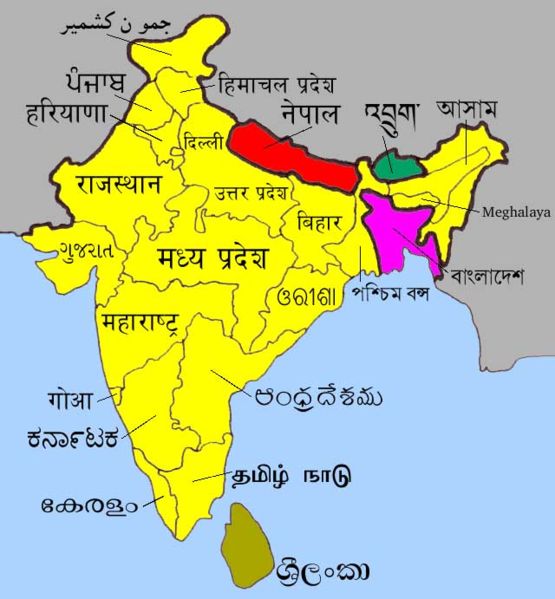
This map of India denotes accommodation based on
Linguistic Diversity
Economic and Social Diversity
System of government

System of governance where states are weak and centre is strong is .....
Bicameral
Unitary
Federal

What form of federalism is practiced in the US
Holding Together
Coming Together
Unitary
Sources of revenue of each level of government are specified to ensure
regional diversity
administration
financial autonomy
In a Unitary System.......
State government has power of its own
safeguards unity and accommodates regional diversity
one level of government or sub units are subordinate to the central government

The third tier of rural local body in India is
State government
Panchayat Samiti
Municipal Corporation
Zila Parishad
What is the basic idea behind decentralization?
Large number of problems and issues are best settled at the local level
People have better knowledge of problems in their localities
It helps to inculcate a feeling of democratic participation
All of the above
How Belgium shifted from a unitary to a federal form of government?
Changes in the Belgian constitution
Regional governments were no longer dependent on the Central government
Reducing the powers of the Central government and giving these to the regional governments
All of the above
The jurisdiction of different tiers of government are specified by the .....
State Government
Central Government
Constitution
What are the aspects of Ideal Federal structure
Authority
Mutual trust and Coordination
balance of power
Division of Power
All those matters , which requires uniform policy are stated under
Concurrent lists
State lists
Union Lists
Residuary Lists
In a unitary form of government there are two levels of government
true
false
An example of a coming together federation is
India
Switzerland
Spain
China
Any changes in the constitution requires
Approval of central government
2/3rd majority of Lok Sabha
2/3rd majority of both the houses + Ratification by state legislature(1/2)
Approval of state and central government
The real success for federalism lies in __________ of nation.
Constitution
Democratic Structure
Power Sharing
Shared Ideals
Which of the following states are based on the Ethnic Culture
Nagaland
Ladakh
Daman and Diu
Bihar
When did the use of English stopped for the official purposes in India?
1967
1969
1965
1971
Which of the following is not a feature of Coalition Government?
Majority in Lok Sabha
forming partnerships at centre
Agreement on different ideologies
Power sharing with different political groups
The scheduled languages are part of Which schedule of Indian Constitution.
11th
12th
8th
10th
The elections to Municipal Council are conducted by
Muncipalties
Election Commission of India
Municipal Corporation
State Election Commission
the Chairperson of Municipal Corporation
Mayor
District Collector
Municipal Councillor
Ward Councillor
Which of the Following Union of India comes under Central Government Administration.
Bihar
Telangana
Pudducherry
Gujarat
Which subject is not included in the Union List?
Defence
Foreign Affairs
Agriculture
Banking
System of governance where states are weak and centre is strong is .....
Bicameral
Unitary
Federal
Pick the odd one out with respect to division of Powers.
Currencies
Foreign Policies
Armed Forces
Education Policies
In India GDP is a _________ task that is taken up by ____________
Enormous, Supreme Court
Mammoth, Central Govt.
Huge, State Govt.
Large, Central Govt.
Economic activities are highly ____________
Producing
Independent
Interdependent
Wasteful
How are goods produced in the agriculture and related sector?
Reusing Natural Resources
Overusing Natural Resources
Exploitation of Natural Resources
Effective usage of Natural Resources
Many organised sector enterprises are found in unorganized sector as to_______________
Ensure to pay taxes
Do illegal activities
Pay additional taxes
Evade taxes
In the years _______ tertiary sector replaced the primary sector as the largest _________ sector in India.
2012-13; Employing
2013-14; Employing
1973-74; Producing
2013-14; Producing
Protection and support of unorganised sector is needed for the _______________ development of the people
Economic
Economic and Social
Social
Mental
MGNREGA 2005 has been implemented in ______ districts of India
666
625
630
509
In a developing country the government has to take responsibility for provision of ______________.
Basic Services
Secondary Services
IT Services
Services
The process of ___________ is essential in the Secondary Sector.
Manufacturing
Producing
Recycling
Exploitation
GDP is the sum of the value of _________ goods and services produced in a particular year by all the three sectors
Primary
Secondary
Tertiary
Final
__% of rural households in India come under small and marginal farmer category
77 %
69 %
80 %
73 %
The unorganised sector is characterised by _______________________
Small and scattered units under the control of the government
Small and scattered units not under the control of the government
Large grouped units under the control of the government
None
As per Niti Aayog _______ jobs can be created by improvement of education sector
15 LAKH
10 LAKH
20 LAKH
30 Thousand
Activities in private sector have a motive of _____________
Service to citizens
Competition
Earning profits
Exploiting Labourers

Answer the following Assertion and Reasoning Question
Both A and R are true, and R is the correct explanation of A.
Both A and R are true, but R is not correct explanation of R
A is true but R is false
Both A and R are False
When we produce a good by exploiting natural resources, it is an activity of the:
Secondary sector
Tertiary sector
Primary sector
Organised sector
The service sector includes activities such as:
agriculture, dairy, fishing and forestry
making sugar, gur and bricks
transport, communication and banking
mining, livestock
Government owns most of the assets and provides all the services:
Public Sector
Private Sector
All goods which are used as raw material for further production of other goods or for resale in the same year are called (a) .
GDP is the sum total of the value of ________ goods produced during a particular year.
all goods and services
all final goods and services
all intermediate goods and services
all intermediate and final goods and services
The value of all goods and services produced within a country in a certain year is called its:
National Product
Net Domestic Product
Gross Domestic Product
None of these
Underemployment is a situation where people:
do not want to work
are not paid of their work
are working in a lazy manner
are working less than what they are capable of doing
The following sector is the largest contributor to GDP?
Primary Sector
Tertiary Sector
Quaternery Sector
Secondary Sector
The following sector is the largest contributor to Employment?
Primary Sector
Tertiary Sector
Quaternery Sector
Secondary Sector
What percentage of total number of species discovered in the world are found in India ?
3 %
8%
15%
30%
of the estimated 47000 plant species found in India , about 15000 flowering species belong to which category ?
Endangered species
Extinct Species
Endemic Species
Vulnerable species
Black Buck belongs to which of the following categories of fauna ?
Extinct category
Rare Category
Endemic Category
Endangered Category
In which of the following year was the Indian wildlife (protection) Act implemented ?
1962
1972
1992
1999
In which of the following years the Project Tiger launched?
1951
1973
1993
2009

Why do we need to ensure a variety of plants and trees continue to survive in forests?
Tick those that apply.
They help us build houses and provide us with paper.
They provide animals in the forest with shelter and food.
They help to beautify our streets and parks for us to visit and enjoy.
They play a part in the ecosystem and provide us with food, clean air and important things like medication.
What is the majority of land in India used for?
Pasture
Cultivation
Forests
None of these
Wildlife includes
Animals & Birds
Insects
Aquatic life forms
All of the above
Which of the following are not fauna?
Cactus
Lynx
Silver Ferns
Snakes
Reforestation cannot take place naturally.
True
False
______________________is the source book which keeps a record of all the endangered animals and plants.(All Starting Letters in Capitals)
Red Data Book
Red Datta Book
Green Data Book
This act is aimed at preservation and conservation of natural forests and meeting the basic needs of the people living in or near the forests
Forest(Conservation act)
Project Tiger
Wildlife Protection Act
Who was the leader of the Peasant Movements of Awadh?
Baba Ramchandra
Alluri sitaram Raju
Mahatma Gandhi
B.R. Ambedkar
roots of trees prevent ______ erosion
water
soil
air
rain
who is the leader of chipko movement
Nehru ji
Modi ji
sunderlal bhaugana
Which of the following conservation strategies do not directly involve community participation?
Joint Forest Management
Beej Bachao Andolan
Demarcation of wild life Sanctuaries
Chipko Movement
The Chipko Movement in the Himalayas to protect the forest cover was started by
Dr Aruna Roy of Kisan Mazdur Vikas
Medha Patkar
Sunder Lai Bahuguna
Dr Anil Agarwal of CSE
What is the majority of land in India used for?
Pasture
Cultivation
Forests
None of these
Which of the following terms is used to denote animal species ?
Fern
Flora
Fauna
None of these
......... helps in keeping earth cool.
Cooler
Ice
Refrigerator
Forest
What is biosphere?
The biosphere is made up of the parts of Earth where life exists.
The biosphere is made up of the parts of the Earth rocks and water is found
The biosphere is made up of the parts of Earth where air is in plenty
The biosphere is made up of the parts of Earth where no life exists.
Common property resources are also termed as (a) .
The thin layer of grainy substance covering the surface of the earth is known as (a) .
Why is wildlife endangered?
Poachers
Global Warming
Encroachment
All of the above
The species which are in danger of extinction are called:
Vulnerable species
Rare species
Endangered species
Normal species
The species whose population has declined to a level from where it is likely to move into the endangered category in the near future if the negative factors continue to operate are called:
Endemic species
Extinct species
Vulnerable species
Normal species
Species which are only found in some particular areas isolated by geographical barriers are called:
Extinct species
Endemic species
Rare species
Critical species
Which is not a threat to tiger population in India?
Shrinking habitat
The trade of tiger skins
Use of their bones in traditional medicines
“Project Tiger”
Reserved and protected forests are also referred to as:
Unclassed forest
Permanent forest estate
Open forest
Mangrove forest
Unclassed forests are mainly found in:
All north-eastern states and parts of Gujarat
Kerala and Tamil Nadu
Punjab and Haryana
West Bengal and Bihar
Why are forests an important resource?
It stops soil erosion
It provides shelter to animals
Forests are grown by people
it provides timber
What was the aim of Chipko movement?
human rights
forest conservation
agriculture improvement
political freedom
Under which Indian Prime Minister was Project Tiger initiated?
Morarji Desai
ManMohan Singh
Indira Gandhi
Narendra Modi
The full form of JFM
Judicial Forest Management
Joint Forest Making
Joint Forest Management
Justify Female Majority
Which of the following is also referred to as permanent forests ?
Reserved and Protected forests
Reserved and Unclassed forests
Reserved and Open forests
Unclassed and Protected forests
The Mundas and the Santhal of Chota Nagpur plateau worship which trees ?
Tamarind
Mahua
Mango
Apple
Black Buck belongs to which of the following categories of fauna ?
Extinct category
Rare Category
Endemic Category
Endangered Category
Extensive planting of a single commercially valuable species is called:
Jhumming
Intensive subsistence farming
Mixed farming
Enrichment plantation

