
Font size
 Worksheets
BIS Grade 7 Science AOC
Total questions: 202
Worksheet time: 2hrs 53mins


Responding to change helps an organism to survive. Which are a response to change in an environment? There are two correct choices.
A cell reproduces asexually.
You get hot and sweat.
A cell only grows in a certain environment.
Hummingbirds migrate to the south for the winter.
Identify all of the following that are living.
Volcano
Tree
Sun
Fungus
Identify the characteristic: A cactus grows toward the sunlight coming through the window.
Responds to stimuli
Grow and develop
Evolution
Take in and use energy
Identify the characteristic: When a dog is too hot, he will sweat through his paws and pant to cool himself down.
Reproduce
Made of cells
Share similar chemicals
Homeostasis

Air
Biotic factor
Abiotic factor

A pinecone
Biotic factor
Abiotic factor

Bacteria
Biotic factor
Abiotic factor

A cactus
Biotic factor
Abiotic factor

Virus
Biotic factor
Abiotic factor

Grizzly Bear
Biotic factor
Abiotic factor
What do you use to see cells?
microphone
microscope
telescope
binoculars
Which of the following converts food into energy for the cell?
vacuole
mitochondria
cytoplasm
cell membrane
The fluid that surrounds the organelles is... (hint... "Try to pull a fast one and..."
chloroplast
cytoplasm
vacuole
cell wall
Which organelle takes in "sun showers" and helps plants with the process or photosynthesis?
Vacuole
Mitochondria
Cytoplasm
Chloroplast
Which of these are microbes ?
Bacteria
virus
fungi
Antibiotic
Which is the smallest ?
bacterium
virus
fungus
they are all the same size
Microorganisms are found
in air
on our hands
on surfaces
everywhere
Microorganisms are
Harmful
useful
can be harmful and useful
have no effect o human body
Which foods and drinks are produced through the growth of microbes ?
cheese
bread
yogurt
fizzy drinks
Which of these microorganism causes common cold ?
bacteria
virus
antibiotic
Which of these are shapes of microorganisms
Rods
balls
spirals
all of the above
What is the other word for a harmful microorganisms ?
infectious
antibiotic
pathogen
flora
An organism that eats other organisms to get energy
Producer
Consumer
Decomposer
An organism that breaks down dead organisms and return nutrients to soil.
Consumer
Decomposer
Producer
An organism that can make its own food using the sun’s energy.
Producer
Consumer
Decomposer
An organism that feeds on dead organisms.
Producer
Decomposer
Scavenger
An organism that eats only animals (meat).
Carnivore
Herbivore
Omnivore
An organism that eats only plants.
Carnivore
Herbivore
Omnivore
An organism that eats both plants and animals (meat).
Carnivore
Herbivore
Omnivore
How much energy is passed on in an energy pyramid?
100%
20%
10%
0%
What to the arrows represent in a food chain or food web?
The flow of energy between organisms
Point out the name of the orgainisms
Point to the living things in the food web.
Point to the nonliving things in the food chain.
If an arrow points from a rabbit to a fox it means
The energy is going from the rabbit to the fox when it eats it.
The energy is going from the fox to the rabbit when the fox eats the rabbit.
Which way do arrows point in a food web.
Point from the prey to the predator
Point from the predator to the prey
Point from the food to what is eating it
Point from the animal eating to the food.

What is eating the grasshopper? Choose all that apply.
Owls
Birds
grains

What are the birds eating? Choose all that apply.
grasses
grains
grasshoppers
foxes

Which of the following is a producer in the web?
owl
carrot
rabbit
birds

Which of the following is a first level consumer in the web?
fox
rabbit
birds
grasses

Which of the following is an omnivore in the web?
owls
foxes
mice
birds

Which of the following is a carnivore in the web?
fox
rabbit
mice
birds

Which of the following is a herbivore in the web?
mice
fox
owls
birds

How many herbivores are shown in the web?
1
2
3
9

How many carnivores are shown in the web?
1
2
3
9
Which of the following demonstrates a property of a metal?
Malleable
Dull
Brittle
None of these

An element obtains the properties of brittle, and doesn’t have strong shine (dull). The element has similar properties to Iodine. The element has a period of number 3.
Fluorine
Astatine
Chlorine
Radon
The building block from which every substance is made
Lego
Jam
Atoms
Lattices
A distinct cluster of two or more atoms bonded together
molecule
lattice
element
Lego
Which could be a correct symbol for a chemical element?
Ca
n
CO
Alu
What happens during a chemical change?
new matter is produced
atoms rearrange and produce a new substance
a substance dissolves when combined with another
Which of the following is an example of a physical change?
an object is cut in half
water freezes
sugar dissolves in water
all of the above
Which of the following is evidence that a chemical change has occurred?
a change in color
metal rusts
a gas is produced
all of the above
What do we call the substances that are present BEFORE a chemical reaction occurs?
reactants
products
solids
quotients
What do we call substances that are present AFTER a chemical change occurs?
reactants
products
solids
quotients
What is one property of the bath bomb gas that we investigated?
toxicity
flammability
boiling point
melting point
How can we use density when trying to identify an unknown gas?
measure its density
if it is more dense, it will rise
compare its density to the density of air
How did we know that the elephant's toothpaste produced a gas that was LESS dense than the air in the room?
It sank in the flask
It put out a flame below the flask
It rose out of the flask
How do we know that the gas that was produced by the bath bombs was MORE dense than the air in the room?
the candle's flame went out below the flask
the flame went out above the flask
the flame got larger above the flask
Rusting is an example of what kind of change?
chemical
physical
substance
Physical changes produce new substances
True
False
Not enough information to tell
Which substances are possible gases produced by bath bombs?
Citric acid
Baking soda
Water
None of the above
Which substances are possible gases produced by bath bombs?
Nitrogen
Carbon Dioxide
Argon
All of the above
Which of the following are the REACTANTS in our bath bombs?
citric acid
baking soda
water
all of the above
Which of the following are the REACTANTS in the elephant's toothpaste chemical reaction?
potassium iodide
hydrogen peroxide
water
all of the above
Which of the following is a physical change?
a substance changes color and produces a gas
light is produced along with a loud "bang"
a candle melts
How are we sure that a chemical reaction occurred with both the bath bombs and the elephant's toothpaste experiments?
because a phase change occurred
a new gas was produced
dissolving occurred when the reactants were combined

Elephant toothpaste is an example of a chemical reaction.
True
False
Which of the following are examples of chemical reactions?
two liquids combine and a gas is released
a substance is added to water and dissolves
two liquids are combined and a solid precipitate forms

Rust in an example of a chemical change.
True
False
Which of the following are key property changes we could see in a chemical reaction?
changes in size
changes in color
changes in odor (smell)
changes in shape

Gas formation (bubbles/frothing) can happen when...
there is a physical change
there is a chemical change

A reactant changing from a liquid to a solid is an example of...
a chemical reaction
a physical change
What is the Law of Conservation of Mass?
mass of reactants > mass of products
mass of reactants < mass of products
mass of reactants = mass of products
In a ___________change, a substance changes into a different substance.
Physical
Chemical

Which is the name of the kind of solid substance formed when 2 liquids are combined shown in this figure?
aqueous
precipitate
acid
synthesis

Baking a cake is an example of
Physical Change (Just changed phases)
Chemical Change (can't change it back)
Ripping cardboard is an example of
Physical Change
Chemical Change
The production of carbon dioxide gas when baking soda and vinegar reacted indicated a _____________.
Chemical change
Physical change
A chemical reaction that gives OFF heat
Exothermic
Endothermic
If two substances react and the temperature of the mixture decreases. Example the athletic trainer gives you a pack that gets cold when you shake it.
Exothermic reaction
Endothermic reaction
I need to NEUTRALIZE and acidic food. Which of the following would be the best one?
Water (pH 6-7)
Dairy (pH 5-7)
Baking Soda (pH 8-9)
Choose the one that BEST describes an ENDOthermic chemical reaction
releases thermal energy
absorbs thermal energy


This red piece of pH paper has been dipped into ________ :
An acid
A base
A pH-neutral substance
A buffer


Pure water is _______ on the pH scale.
Acid
Base
Neutral

What is the range of pH values in an acidic solution?
0 - 7.0
7.1 - 14
15-239
pH = 7

In a ___________change, a the appearance of a substance may change, but NO NEW substances are created.
chemical
physical
verbal


A combination of two or more substances where each keep their own properties and CAN be easily separated.
Mixture
Solution
Substance
Solute

When a solution is saturated:
No additional material will dissolve in it
You need to stir it more
Two materials have combined to create a clear liquid
Matter which has specific structures and specific properties is ______________.
particles
solution
substance
mixture
Which if the following is described as being pure substances?
elements
compounds
elements and compounds
mixtures
Which of the following describes a substance that has been physically combined and is NOT uniform throughout (you see the DIFFERENT parts that make it up)?
Homogeneous Mixture
Compound
Heterogeneous mixture
element
What is the smallest part of a compound that retains the properties of that compound
atom
element
Molecule
mixture
A student is observing a substance that contains multiple element that have been chemically combine C6H12O6(SUGAR). Which of the following best describes what the student is observing?
Heterogeneous Mixture
Homogeneous Mixture
Element
Compound
What is the smallest part of an element that retains the properties of the element?
atom
molecule
compound
subatomic particles
Which two compounds are Ionic bonds?
water(H20) and rust(Fe2O3)
water(H2O) and carbon dioxide(CO2)
rust(Fe2O3) and salt(NaCl)
oxygen gas(O2) and nitrogen gas(N2)

atom

atom

atom
Metalloids
Metalloids

This substance can be separated by physical means such as filtering, sifting, and evaporating.
Mixtures
Pure Substances
Elements
Compounds
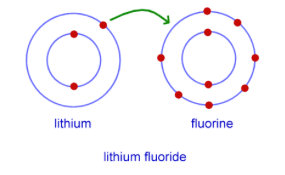

What type of bonding does this picture show?
Ionic
Covalent
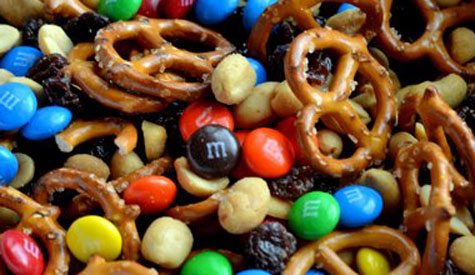

What kind of mixture is shown in the picture?
Homogeneous Mixture
Heterogeneous Mixture
When one or more substance is combined CHEMICALLY it is called __________________.
compound
element
mixture
solution
Compound
to move slightly in place around a fixed point
vibrate
swing
standing
sprinting
a push or a pull
gravity
force
friction
car crash
to move from one place to another
transform
energy
transfer
collision
to change shape (permanently or temporarily)
elastic limit
breaking point
deformation
force
wave height
frequency
amplitude
crest
trough
number of waves that pass a fixed point in a given amount of time
amplitude
trough
wavelength
frequency
changes based on frequency (lower vs higher)
pitch
volume
frequency
wavelength
how loud or soft something is
pitch
waves
frequency
volume
the highest (top) part of a wave
crest
trough
amplitude
frequency
the lowest (bottom) part of a wave
crest
trough
amplitude
medium
the distance between two crests OR two troughs
frequency
amplitude
wavelength
volume
the type of material that a waves passes through
medium
vibrate
transfer
energy
anything that has mass and takes up space (volume)
solid
energy
matter
gas
pattern of disturbance as energy passes through a medium
sound waves
amplitude
frequency
pitch
forcing molecules together, squishing
wavelength
frequency
amplitude
compression
molecules closely packed together
dense
volume
pitch
energy
membrane in the ear that vibrates when sound hits it
cochlea
stererocilia
ear drum
wavelength
spiral part of the inner ear that produces nerve signals in response to vibrations
ear drum
stereocilia
cochlea
amplitude
hair-like structures in the inner ear that help with hearing and balance
stereocillia
cochlea
ear drum
crest
the ability to do work, can be transferred between objects and transformed due to force
energy
volume
matter
trough

How do the waves differ from one another?
This illustration shows three different waves traveling through the same medium.
The waves travel at different speeds.
The waves have different wavelengths.
The waves carry different amounts of energy.
The waves are a different distance from the source.

Which Bar measures the wavelength of the wave?
W
Y
X
Z

Which points on the wave are the trough and the crest?
Point W is a trough; Point Y is a crest.
Point Y is a trough; Point X is a crest.
Point W is a trough; Point Z is a crest.
Point Y is a trough; Point W is a crest.
Which describes the relationship between waves and matter?
Waves DO not matter.
Nearly all waves travel through matter.
Most waves do not travel through matter.
Waves can travel in only one direction through matter.
Which is the most likely reason that thunder is heard after lightning is seen?
Only the light waves carry energy.
Only the sound waves carry energy.
Sound waves travel faster than light waves.
Light waves travel faster than sound waves.
How are transverse waves most likely created?
A force creates a sound.
A force creates a vibration.
A force creates a no speed.
A force creates no wavelength.
Which is the lowest point of a transverse wave?
compression
crest
trough
rarefraction
Which is a characteristic of electromagnetic waves?
They transfer energy.
They require a medium.
They have no frequency.
They have no wavelength
How does changing the temperature of the medium affect the waves passing through it?
It changes the speed of the waves.
It does not change the wave.
It stops the wave.
The wave only moves faster.
Which transverse wave would have the greatest amplitude?
the one with the highest crests
the one with the highest troughs
the one with no frequency.
Transverse waves consist of crests and troughs. Which are found in longitudinal waves?
reflections and echoes
amplitudes and frequencies
compressions and rarefactions
None
A push or a pull that starts, stops or changes the direction of an object
force
energy
gravity
motion
Can you transfer energy to another object
True
False
MASS x ACCELERATION =
Force
motion
speed
push/pull
Give and example of a force
Gravity
weather
sleeping
swimming

What does this measure
force
weight
mass
The SI unit for force is _______
Newtons
Gravity
Meter
Joules
9.8 newtons is the constant pull of which force.
Gravity
wind
ocean waves
tornado
Determines if and in which direction the object will move (total force)
Net force
Gravity
Push
Pull
If both forces are going in the same direction you should______ those forces
Add
Subtract
Divide
Multiply
When forces are going in the opposite direction of each other you should do what do find the net force
Subtract
Add
Divide
Multiply
What happens to an object if equal forces are pushing from opposite directions?
Does not move
Pushed up
Pushed down
Explodes
An object will move when the forces are
balanced
unequal
When the only force acting on an object is gravity this creates ________
free fall
net force
velocity
speed
An object at rest stays at rest until an outside force acts upon it. Which law?
1st
2nd
3rd
The driving force that keeps an object in motion can be defined as:
gravity
friction
inertia
newtons
The motion of an object depends on the amount of force acting on it. Which law
1st
2nd
3rd
A big boulder requires more force to move than a small rock. Which newtons law applies here
1st
2nd
3rd
no laws apply
For every action there is an equal and opposite reaction. Which law?
1st
2nd
3rd
When you jump on a diving board. You push down on the board and the board pushes you up. Which law applies
1st
2nd
3rd
no law applies
Without air resistance objects drop,
at the same time
faster depending on mass
depends on the object
there will be no gravity
What causes on object so slow down while sliding on a surface?
friction
inertia
momentum
force

