
 Worksheets
Week 1 Regents Practice Recap
Total questions: 46
Worksheet time: 2hrs 32mins

Mrs. Sue is planning a garden of sunflowers. Mrs. Sue read about a new multi-vitamin touted as making plants grow stronger and faster. Mrs. Sue is curious about this new multi-vitamin. She decides to split her garden into 3 sections, labeled with posts: "A" NO vitamin, "B" 1 dose of vitamin/day, "C" 1 dose of vitamin twice a day (2 total vitamin doses/day). Which of the following is accurate?
Group A is the control group because it lacks the independent variable.
Group A is the control group because it gets the independent variable.
Group B is the control group because it gets the average dose of vitamin.
Group A and B are the control groups. Group C is the experimental group because it an effective amount of the independent variable.
Which of the following is true about Mrs. Sue's garden experiment? Select ALL that apply
Plant height is the independent variable.
Plant height is the dependent variable because it's the data being collected.
Plant height is the dependent variable because what you get for height depends on the effect of the independent variable (if the vitamin works or not).
Group B, getting 1 vitamin dose/day, and Group C getting 2 vitamin doses/day are the experimental groups because they get the independent variable (the vitamin).
Which of the following is true when it comes to graphing? Select ALL that apply.
The independent variable is usually on the Y or vertical axis
You ONLY connect the dots of plotted data points.
The independent variable (what you are investigating/ testing) usually is on the X (horizontal) axis.
You should use at least half or more of the graph on the Regents
What part of the scientific method is this an example of?
What is the dependent variable?
music
time to fall asleep
person
The formal process of submitting research for examination by the scientific community if called...
Science regents
Scientific method
Scientist Review
Peer review
What is the organelle that packages and distributes materials? (it works with the ER)
ER
mitochondria
cell membrane
golgi body
What is the name of the organelle where photosynthesis occurs in plant cells?
vacuole
lysosome
chloroplast
cell wall

Which organelle is the arrow pointing to?
cell membrane
lysosome
mitochondria
centriole
Why is the mitochondria known as the "powerhouse" of cells? Select ALL that apply.
Breaks down sugar/food into usable energy called ATP.
Mitochondria are like the motor of a car, they give cells energy by performing cellular respiration
In many animals like puppies, kittens, goats and humans, it most often does AEROBIC cellular respiration because it uses Oxygen (O2)
It makes proteins which give muscles strength and structure.
You are planning an experiment to find out whether the rate at which water freezes depends on the shape of the container. What is the control variable?
The shape of the container
The rate at which water freezes
Amount of water

Would you trust the validity of the conclusion that dry cleaning bags have the greatest stretching ability? Select all that apply
Yes, because the dry cleaning bag stretched more at 10 mm than the kitchen wrap at 8 mm and the sandwich bag a 7 mm.
No, because there was only one trial.
No, because the experimented did not control for the starting length.
Yes, because one trial is good enough to be accurate
Which procedure would assess the reliability of an experiment?
Assess = test like an assessment = test/exam
Repeat the experiment to determine if the results remain the same
Test the degrees of precision of the instruments
Conduct similar tests that measure changes in the same dependent variable
Determine how close the measurements are to the true value

Which organelles are found only in plant cells?
nucleus and chloroplast
cell wall and vacuole
chloroplast and cell wall
large central vacuole and mitochondria
cells with a nucleus and membrane bound organelles
eukaryotic
prokaryotic
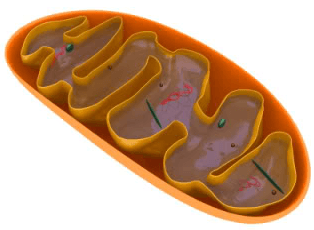
What organelle uses INORGANIC (No molecules with BOTH elements Carbon and Hydrogen in them) to make an organic molecule?
mitochondria, it breaks down glucose (C6H12O6) to make ATP, which is INORGANIC
chloroplast, it uses CO2 & H20 (both inorganic molecules) to make glucose which IS ORGANIC (C6H12O6)
ribosomes, they synthesize proteins in translation and proteins are inorganic
None of the above, you are tricking us Ms. F!
Ribosomes are the site of protein synthesis because it is through the process of translation, which occurs at the ribosome in the cytoplasm, that peptide bonds join amino acids to create poly peptides, which are eventually folded and modified into more complex proteins.
What could you replace the word "synthesis" with in the above statement?
decomposition, "ribosomes are the site of protein decomposition because..."
Hydrolysis (HYDRO = water-related, LYSIS = breaking); proteins are made by first breaking proteins at the ribosome into smaller subunits called amino acids.
making
"ribosomes are the site of protein making because..."
building, proteins are built or made at the ribosomes when amino acids are joined together through peptide bonds
Starch is hydrolyzed into glucose because
larger polysaccharides (larger carbohydrates) can be made faster this way
glucose monomers, glucose = building blocks of starch and glucose CAN pass through membranes (does facilitated diffusion)
lipids
it's not necessary, starch can cross membranes
The process of transpiration in plants helps in:
Opening of stomata
Absorption of CO2 from atmosphere
Upward conduction of water and minerals
Absorption of O2 from atmosphere

All living thing such as human, animals and plants need 7 characteristics of life processes to growth. Yes or No
Yes
No
In the process of respiration __________________________
ADP is converted into oxygen and proteins
Glucose is converted into oxygen
glucose is converted into carbon dioxide and water which releases energy
pyruvic acid is converted into monotheistic acid
The cell is the basic unit of life is ...
claim-evidence-reasoning
a life process/activity
part of cell theory.

Identify the purple-colored organelle
cytoplasm
ribosomes
endoplasmic reticulum
Hydrolysis means
breaking bonds with water
digestion reaction using water as a reactant
vaporizing water into its essential elements, releasing gas in the form of oxygen and hydrogen
water is used to break something down or break the bonds of something apart
Dehydration synthesis
overexercising (getting dehydrated) in order to build muscle (synthesis = making/building)
removing water to synthesize more complex (larger molecules)
reactions that will ALWAYS produce water because a water molecule is being made by removing elements from other reactants
the removal of a water molecule in order to join two other molecules together to make /synthesize a bigger compound
Glucose becomes starch through
hydrolysis
digestion reaction
dehydration synthesis (releasing a molecule of water to join sugar molecules to make starch)
synthetic decomposition because something is being broken down from what was once made
Graphs help us represent data
True
False

What do these graphs suggests in regards to which sized urchins are preferred by otters?
Otters prefer to eat small sea urchins.
Otters prefer to eat mid-sized to large urchins.
Otters do not have a preference for urchin size.
Otters refuse to eat medium sized urchins.

Base your answer to the question on the graphs and on your knowledge of biology. The graphs show the effect of sewage (human organic waste) flowing into a lake on the level of dissolved oxygen in the water and the size of different fish populations.
Which inference can be made from the graphs?
The increase in sewage waste from 1950 to 1970 was due to a decreasing human population.
The decrease in sewage waste shows that the environmental problems associated with land pollution have been solved.
Sewage waste is a good source of nutrients for most fish.
Increases in sewage waste were responsible for decreasing oxygen levels in the lake.
The following two graphs show sea urchin availability and consumption by otters.
What trend and/or relationship do you see in both of these graphs?
Larger urchins are found near Attu Island, and smaller urchin are rarely consumed near either island.
Larger urchins are found in Amchitka, and smaller urchin are rarely consumed near either island.
Similar sized urchins are found in both islands, and urchins are consumed evenly regardless of size.
Similar sized urchins are found in both islands, and only small urchins are consumed.
Typically, graphs are made with the _____ variable on the X (horizontal) axis and the ____ variable on the Y (vertical) axis.
dependent; control
dependent; independent
independent; dependent
independent; control

In living cells, enzymes act as catalysts, which may reduce the amount of activation energy required for a chemical reaction to occur. In the graphs below, pathway x is a solid line representing the uncatalyzed reaction. The dotted line shows the catalyzed reaction. Which graph best illustrates the changes in a reaction when the catalyst reduces the amount of energy required?
A
B
C
D

What graphing relationship is best shown by the diagram?
direct
indirect
constant
cyclical

What graphing relationship is best shown by the diagram?
direct
indirect
constant
cyclical

What type of graphing relationship is shown in this graph?
direct
indirect
cyclical
constant

What kind of graphing relationship is shown?
direct
indirect
constant
cyclical

Consider graphing the following table. What would you label your y-axis?
month
# of deer
# of deer per season
# of deer per month
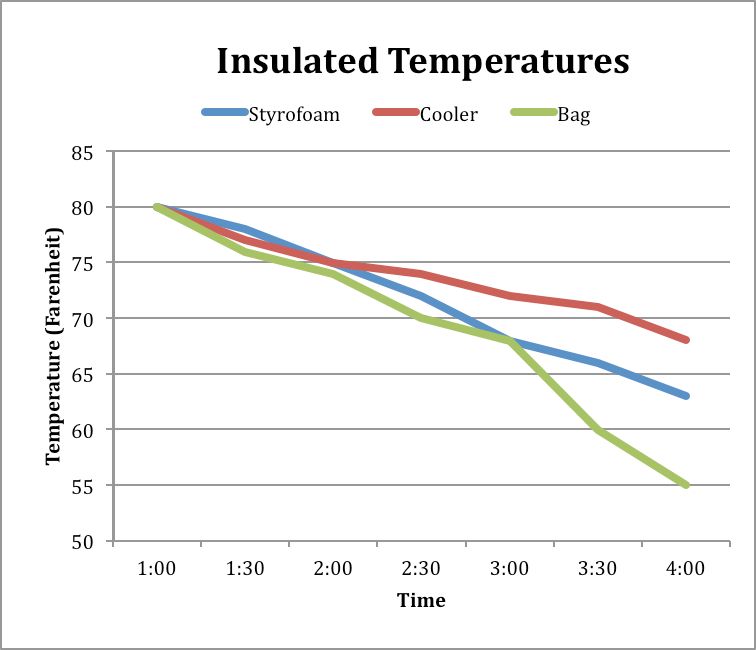
What data does this graph represent?
Change in temperature of a liquid over time in 3 different containers
How temperature can change the molecules in a material
The phase changes of a material
What type of container people use the most to store hot liquids.

Students construct a graphic organizer to illustrate the different levels of biological organization.
Which terms does the X represent?
cell
organism
ecosystem
biosphere

What kind of graphing relationship is shown by the graph?
direct
indirect
constant
cyclical

Sea otter consumption of different species of prey in the wild.
Based on this graph which species of prey do the sea otters prefer?
Purple urchins
Red urchins
Kelp
Crabs

Mrs. Smith's biology class tested the function of the enzyme amylase at various pH levels and recorded the data in a graph.
According to the results, what is the optimum (best) pH for amylase?
1
5
7
14
In the lab activity Making Connections, an experiment was designed to test the effect of exercise on the ability to squeeze a clothespin. The number of times the clothespin was squeezed served as the
independent variable
dependent variable
hypothesis
control

