
 Worksheets
Year 9 Year Summary
Total questions: 172
Worksheet time: 2hrs 38mins
What is the function of the cell membrane in plant and animal cells?
Controls the movement of substances in and out of the cell
Strengthens the cell and provides support to the cell
Controls activities of the cell
Carries out protein synthesis
Which organelle is the site of aerobic respiration in the cell?
Mitochondria
Cytoplasm
Chloroplast
Ribsosome
Which of the following is in a plant cell, but is not in an animal cell
Vacuole
Cell membrane
Mitochondria
Nucleus
What is defined as: A cell that has specific features that allow it to carry out a particular function
Specialised Cell
Animal Cell
Prokaryotic Cell
Eukaryotic Cell
Which specialised cell contain cilia which help to waft mucus along airways?
Ciliated Epithelial Cell
Muscle Cell
Nerve Cell
Root Hair cell

This is a root hair cell. Why does it not contain chloroplasts?
It is not a plant cell, and only plant cells contain chloroplasts
It is underground so cannot absorb sunlight
It doesn't need to produce glucose
It doesn't need to carry out respiration
This is a root hair cell. What is its function?
To carry out photosynthesis and to make glucose
To absorb water and minerals from the soil
To move dust and microorganisms away from the lungs
To transport oxygen around the body of the plant
This is a root hair cell. What is its function?
To carry out photosynthesis and to make glucose
To absorb water and minerals from the soil
To move dust and microorganisms away from the lungs
To transport oxygen around the body of the plant
The process of an undifferentiated cell becoming adapted to carry out a specific function is called:
Differentiation
Adaptation
Specialised Cell
Diffusion
What is magnification?
The degree to which an object is made to appear bigger
The smallest interval measurable by an instrument
How much an image can be zoomed in by
How clearly you can see an image
Which type of microscope has the highest resolution and magnification?
Light Microscope
Electron Microscope
What is the correct definition of diffusion?
Net movement of particles from an area of high concentration to an area of low concentration
The spreading out of particles in random directions
Net movement of particles from an area of low concentration to an area of high concentration
Water particles moving from dilute to concentrated solution

Will the oxygen molecules diffuse into or out of the cell? Why?
Into the cell because going from high concentration to low concentration
Out of the cell because going from high concentration to low concentration
Into the cell because going from low concentration to high concentration
Out of the cell because going from low concentration to high concentration
Which of the following will affect the rate of diffusion? (more than one answer)
Distance particles have to travel
The concentration gradient
The surface area
The type of particle

These are villi which are found inside the small intestine. What do they do?
Increase the surface area of the small intestine so more diffusion can take place
Decrease the surface area of the small intestine so more diffusion can take place
Make it easier for food to travel around in the small intestine
Increase the surface area of the small intestine so less diffusion can take place
What type of cell division produces 2 identical cells?
Mitosis
Meiosis
Differentiation
Stem Cells
What type of digestion takes place in the stomach?
mechanical
chemical
both mechanical and chemical
What enzyme is found in saliva that starts digesting carbohydrates?
amylase
chyme
pepsin
bile
What chemically breaks down food into smaller molecules?
teeth
muscles of the stomach
enzymes
What does the pancreas do?
produces digestive enzymes to break down proteins and fats
produces sodium bicarbonate to neutralize stomach acid
regulates our blood sugar levels
all answers are correct


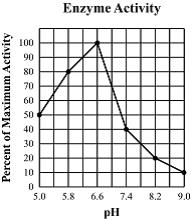
Enzymes in your body probably work best at which of the following temperatures>
25oC
98oC
37oC
210oC
Which of the following are the smallest blood vessels?
artery
vein
venule
capillary
The function of valves in the human circulatory system is to
stimulate the heart beat.
accelerate the flow of blood.
prevent the backward flow of blood.
serve as a cushion to prevent friction
Blood vessels that carry blood away from the heart are called
veins.
arteries.
capillaries.

Aorta
1
2
4
5

Left ventricle
1
2
3
4
The upper chambers of the heart are ventricles.
true
false

A disease that cannot be passed from person to person is
Communicable
Non Communicable
Chemotherapy is a treatment that destroys cancer cells in a specific location
True
False
Cardiovascular disease is a condition that reduces the strength or function of the heart or blood vessels
True
False
Catching it from someone else is a risk factor for cancer
True
False
Type 2 diabetes is closely linked to poor food choices, being overweight, and lack of physical activity.
True
False
Chemotherapy is the use of powerful medicines to destroy cancer cells.
True
False

Vascular tissue (tubes) responsible for the transportation of water and minerals up from the roots and around the plant.
Stomata
Transpiration
Phloem
Xylem
Where is xylem found in the plant?
leave -> roots -> stem
roots -> stem -> leaves
root hairs -> leaves -> veins
stem -> roots

Which element is graphene made from?
Carbon
Copper
Hydrogen
Sodium

Which structure is a fullerene?
A
B
C
D

What type of forces act between the ions in an ionic compound?
Electrostatic
Frictional
Gravitational
Magnetic

What are TWO properties of ionic compounds?
Conducts electricity when molten
High melting point
Low melting point
Small molecules
Weak bonds between particles
Each carbon atoms in graphite is joined to _______ other carbon atoms
Two
Three
Four

What type of bonding holds together the atoms in graphite?
ionic
covalent
metallic

Why is graphite so soft and slippery?
It is made of layers of atoms
It is made of small molecules
It is an ionic compound
Diamond is made from what type of atoms?
Carbon
Nitrogen
Oxygen
Silicon

The atoms in diamond are joined together by which type of bonds?
Ionic
Covalent
Metallic
In diamond each atom is joined to _______ others
two
three
four

Diamond is suitable for the cutting end of a drill bit because it is
hard
shiny
soft

Which structure has a very low boiling point?
A
B
C
D
E

What type of bond is in a molecule of hydrogen chloride?
Ionic
Covalent
Metallic

What type of bonding is preset in calcium oxide?
Ionic
Covalent
Macromolecular
Metallic

What type of particle is this?
An ion
A lattice
A molecule
A polymer

What type of structure is C60?
Diatomic
Giant ionic
A Fullerene
Giant Metallic

What type of bond is labelled A?
Metallic
Double
Ionic
Covalent

This is propane. What type of bonding holds the atoms together?
Ionic
Covalent
Metallic

In silicon dioxide the bonds between atoms are
Easily broken
Very strong
Weak

What type of structure does this diagram represent?
Ionic
Metallic
Alloy
Covalent

Which term would NOT apply to a metallic structure?
High melting point
Good insulator
Delocalised electrons
Malleable

When can ionic substances conduct electricity?
Never
As a solid
As a liquid
As a solution
What type of structure is H20 ?
Simple Covalent
Giant Covalent
What are the properties of giant covalent structures?
Low melting and boiling points
Can conduct electricity
Cannot Conduct electricity
High melting and boiling points
Why are metals malleable?
The particles are not able to slide over each other
The particles are able to slide over each other
Why are alloys harder than pure metals?
The different sized atoms distort the layers in the structure making it easier for them to slide over each other.
The different sized atoms distort the layers in the structure making to more difficult for them to slide over each other.
There is no difference in hardness.
Why do small molecules have low melting and boiling points?
Weak forces between molecules
Strong forces between molecules
The covalent bonds are broken more easily than giant molecules.
Weak ionic bonds


Why are dots and crosses used to show the electrons in the bonds?
To show which atoms the electrons belong to
Because this is what electrons looks like
To show if the electron came from a metal
To show if the electrons are gained or lost
Energy is measured in.....
kilograms
metres per second
Joules
metres
Which energy store is missing? Magnetic, electrostatic, nuclear, gravitational, elastic, thermal, chemical and....
heating
lighting
kinetic
sounding
Energy cannot be created or destroyed, it can only be _________ between the stores
removed
dissipated
transferred
stored
When a kettle boils, energy is transferred from the electrostatic store to the _________________ energy store.
chemical
kinetic
elastic
thermal
On a rollercoaster, the gravitational potential is at its highest/lowest when it reaches the top of the track
highest
lowest
On a rollercoaster, gravitational energy is transferred to which other two energy stores?
thermal and electrostatic
kinetic and chemical
kinetic and nuclear
thermal and kinetic
Work done is another way of saying energy is transferred. What are the units of measurement fir work done?
kilograms
Joules
Degrees celcius
Joules per kilogram degrees celcius
What is the equation to work out kinetic energy?
mass x velocity
0.5 x mass x velocity
0.5 x mass x velocity3
0.5 x mass x velocity2
The mass of a car is 2500kg. It travels at 20m/s. Calculate the kinetic energy.
500,000J
600,000J
400,000J
700,000J
What is the equation to work out gravitational potential energy?
mass x gravitational field strength x height
0.5 x mass x velocity2
mass x height
height x gravitational field strength
A book has a mass of 2.7kg. It is on a shelf that is 2.4m above the ground. The gravitational field strength is 10N/kg. Calculate the gravitational potential energy:
64.7
64.8
64.9
65.0
What is the unit of measurement for mass?
grams
kilograms
metres
metres per second
How much energy is needed to heat 2kg of water from 10oC to 100oc. The specific heat capacity of the water is 4200J/kg oC. Use the equation sheet to calculate the change in thermal energy.
753,000J
754,000J
755,000J
756,000J
Power = ______________ ÷ time
mass
height
energy
work done
What is the unit of measurement for Power?
metres
kilograms
Watts
Joules
Conduction mainly occurs in _________
solids
liquids
gases
Conduction is where particles vibrate and transfer thermal energy along the object. Do metals have a high or low thermal conductivity?
high
low
Insulation reduces the rate of energy transfer by heating. What methods below do we use in our homes to reduce wasted energy?
double glazed windows
log burners
thick carpets
cavity wall insulation
Lubricating certain machines or bikes reduces which type of force?
air resistance
tension
magnetic
friction
Efficiency = useful energy ÷ total energy. Torch A transfers 1200J of energy per minute. 480J of this energy is useful. Calculate the efficiency.
40%
41%
42%
50%
Efficiency = useful energy ÷ total energy. A blender is 70% efficient. It has a total power output of 600W. Calculate the useful power output.
410W
420W
430W
440W
Which of these are non renewable energy resources?
coal, oil, gas, wind
coal, oil, gas, tidal
coal, oil, gas, nuclear
coal, oil, gas, solar
What is a negative impact of wind turbines?
unreliable
noisy
visual pollution
produce carbon dioxide gas
What are the units for velocity?
mph
m/s
m/s2
km/h
What is the equation linking gravitational field strength, gravitational potential energy and height?
Gravitational field strength = mass x gravitational potential energy x height
Gravitational potential energy = mass x gravitational field strength x height
Height = mass x gravitational field strength
What is the equation linking energy transferred, power and time?
Power = energy x time
Power = energy / time
Energy = time / power
Food, batteries, fuel and muscles store which energy type?
Elastic potential energy
Kinetic energy
Thermal energy
Chemical energy
Which energy store changes as height of an object changes?
Kinetic energy
Gravitational potential energy
Elastic potential energy
Sound energy
Which energy store is linked with springs and catapults?
Nuclear energy
Light energy
Kinetic energy
Elastic potential energy
Which two energy stores change depending on the position of an object?
Electrical energy
Elastic potential energy
Gravitational potential energy
Chemical energy
What is the definition of efficiency?
A measure of how much energy is wasted by an appliance
A measure of how quickly energy is transferred to an appliance
A measure of the energy transferred usefully to an appliance
A measure of the energy given off to the surroundings by an appliance
What is the equation used to calculate efficiency?
Efficiency = total energy input / total energy output
Efficiency = useful energy output / total energy input
Efficiency = useful energy input / useful energy output
Efficiency = total energy input / useful energy output
Which key term is used to describe energy being spread out or wasted?
Efficient
Deficient
Dissipate
Elevate
What term is used to describe a method for reducing unwanted energy transfers by reducing friction?
Insulation
Titration
Lubrication
Dissipation
What is a thermal insulator?
A non-conductive material
A conductive material
What is the law of conservation of energy?
Energy is created and transferred
Energy is created and stored
Energy is stored and destroyed
Energy is stored and transferred
What is the definition of power?
How much electricity passes through an appliance
The amount of energy wasted by an appliance
The rate of energy transfer or the rate of doing work
The rate of electron transfer
Which energy transfers relate to a vehicle accelerating?
Increase chemical, increase elastic, increase sound
Decrease chemical, decrease KE, increase thermal
Decrease chemical, increase KE, increase thermal
Which energy transfers relate to a boiling kettle?
Decrease electrical, increase thermal, increase sound
Decrease electrical, increase thermal, increase chemical
Increase electrical decrease thermal, increase sound
What does it mean if a resource is renewable?
The resource is replenished
The resource will eventually run out
The resource will always release energy
The resource relies on external factors
What does it mean if a resource is reliable?
The resource is replenished
The resource will eventually run out
The resource will always release energy
The resource relies on external factors
What does it mean if a resource is non-renewable?
The resource is replenished
The resource will eventually run out
The resource will always release energy
The resource relies on external factors
Which resource is renewable?
Coal
Natural gas
Nuclear
Biofuel
Which resource does not release carbon dioxide?
Coal
Natural gas
Nuclear
Biofuel
What is the wasted energy output from a TV?
Sound and Light
Thermal
Chemical and Nuclear
Gravitational and Thermal
Energy cannot be created or destroyed, it can only be _________ between the stores
removed
dissipated
transferred
stored
Specific heat capacity = energy / (mass x change in temperature).
How much energy is needed to heat 2kg of water from 10oC to 100oC. The specific heat capacity of the water is 4200J/kg oC.
753,000J
754,000J
755,000J
756,000J

A ____ converts chemical energy into kinetic energy?


Wind is a __________ energy resource.
Non renewable
Renewable
Wind energy is intermittent which means what?
Can use all the time
Is reliable
Only works some of the time
Is cheap
Fossil fuels take ... of years to form.
(a)

What are fossil fuels?
Solar, Wind, Hydro
Coal, Solar, Natural Gas
Coal, Oil, Natural Gas
One ADVANTAGE of using fossil fuels is that:
They are better for the environment.
They can produce extremely high amounts of energy.
They contribute to the greenhouse effect.
They will never run out.
What is one DISADVANTAGE of using fossil fuels?
Fossil fuels will never run out.
Fossil fuels are very efficient forms of energy and are readily available, making them cheaper.
Burning fossil fuels contributes to the greenhouse effect which causes global warming.
Fossil fuels are better for the environment.
What is one ADVANTAGE of using renewable resources?
They will never run out.
They are more expensive.
They are bad for the environment.
Geothermal energy uses heat from ____ to produce electricity.
the earth
coal
oil
natural gas
Why are fossil fuels considered nonrenewable resources if they are still forming beneath the surface today?
They are being formed as a type of methane which we cannot use.
The fossil fuels are being broken down by a natural process.
They are being formed too far beneath the surface.
We are depleting the fossil fuels much faster than they can form.
Type of energy that comes from the movement of the air.
Solar Energy
Geothermal Energy
Hydroelectric Energy
Wind Energy
Kinetic energy is...
energy carried in ultraviolet waves
energy stored in food
energy in motion
energy from splitting an atom
What two factors affect an object's kinetic energy?
area and volume
mass and weight
weight and height
mass and speed

Where would this tossed baseball have the least amount of kinetic energy?
point W
point X
point y
point z
Where would this tossed baseball have the greatest amount of kinetic energy?
point W
point X
point y
point z
Which is the correct definition for an element?
A substance made up of only one type of atom that can be broken down
Two or more substances that are not chemically combined
Two or more different atoms that are chemically combined
A substance made up of only one type of atom that cannot be broken down
C is the correct chemical symbol for which element?
calcium
copper
carbon
caesium
The smallest part of an element is called...
a compound
a mixture
an element
an atom
Which is the correct definition for a compound?
A substance made up of only one type of atom that can be broken down
Two or more substances that are not chemically combined
Two or more different atoms that are chemically combined
A substance made up of only one type of atom that cannot be broken down
What is the missing word? The properties of a compound are __________ the elements it is made up of.
the same as
different to
Which is correct?
iron and sulfur are both metals
iron and sulfur are both non metals
iron is a non metal and sulfur is a metal
iron is a metal and sulfur is a non metal
What is the correct name for CO?
carbon dioxide
carbon monoxide
cobalt
carbon oxide
Which elements are present in H2SO4?
hydrogen and oxygen
hydrogen, oxygen and sodium
hydrogen, oxygen and sulfur
hydrogen, oxygen and silicon
How many atoms of aluminium are there in the chemical formula for aluminium oxide: Al2O3
2
3
5
1
Which element has the chemical symbol Ni?
nitrogen
nickel
sodium
neon
What is the chemical symbol for copper?
C
Co
Cp
Cu
What is the chemical symbol for gold?
Ag
Go
Gu
Au
Is water an element or a compound?
compound
element
How many different elements are there in Mg(OH)2
2
3
4
5
True or false: Hydrogen atoms go around in pairs called molecules
True
False

