Wayground logo

Free Printable Worksheets

Font size

S
M
L
XL
Worksheets

The Earth, Moon and Sun

Total questions: 40

Worksheet time: 27mins

Name
Class
Date
1.

The tidal force exerted by the ______ is stronger that the tidal force exerted by the _______.

a)

earth, ocean

b)

sun, moon

c)

moon, stars

d)

moon, sun

2.

The bulges that occur in the Earth's oceans are called ______ _______.

a)

low waters

b)

low tides

c)

high tides

d)

big dips

3.

The tidal bulge follows the movement of the _____.

a)

moon

b)

sun

c)

Earth

d)

ocean

4.

Because the moon is so much closer than the sun, the moon's gravitational force is much stronger than that of the ___.

a)

sun

b)

earth

c)

moon

d)

sea

5.

Because the tidal bulge follows the moon;s revolution-Many places on Earth experience ___ high tides and ___ low tides each day.

a)

4 and 4

b)

1 and 1

c)

2 and 2

d)

3 and 3

6.

What is a Total Lunar Eclipse?

a)

a) When the moon covers up the sun as it darkens some parts of earth

b)

b) When the moon appears larger

c)

c) When the moon turns Red as it passes into the earth's shadow.

d)

d) When the moon turns Blue as it passes into the earth's shadow.

7.

What is a Solar Eclipse?

a)

a) When the moon is covered by the sun

b)

b) When the sun is covering the moon

c)

c) When earth covers the moon from the sun

d)

d) When the sun is covered by the moon

8.

What type of eclipse occurs when the moon blocks the sun's light and cast a shadow on earth?

a)

a) Solar

b)

b) Lunar

9.

What moon phase occurs during a Solar Eclipse?

a)

a) Waxing gibbous

b)

b) New moon

c)

c) 1st quarter

d)

d) Full moon

10.

What moon phase occurs during a Lunar Eclipse?

a)

a) Full moon

b)

b) New moon

c)

c) 3rd quarter

d)

d) Waxing crescent

11.

What type of eclipse is this?

a)

a) Solar eclipse

b)

b) Lunar eclipse

12.

Which of the following is NOT true about a Total Solar Eclipse?

a)

a) It can be viewed from every spot on earth

b)

b) It is dangerous to look at without the proper device

c)

c) You must be within the earth's penumbra

d)

d) You must be within the moon's umbra to see it

13.

What type of eclipse is this?

a)

a) Solar Eclipse

b)

b) Lunar Eclipse

14.
What part of the moon do we see from Earth?
a)
all of it
b)
the same side
c)
none of it
d)
only one quarter
15.
The moon seems to change shape from day to day in a cycle that lasts about a month as it goes through _.
a)
revolutions
b)
phases
c)
rotations
d)
eclipses
16.
As the moon's shape appears to get smaller, we say that the moon is _.
a)
swelling
b)
waxing
c)
waning
d)
disappearing
17.
About how long does it take the moon to make one complete cycle around the earth?
a)
65 days
b)
8 days
c)
365 days
d)
28 days
18.
Which moon phase is when you can't see the moon at all?
a)
Waning crescent
b)
Full moon
c)
Waxing gibbous
d)
New moon
19.
What causes the phase of the Moon to change each night?
a)
The Moon changes its acutal shape throughout the course of the month.
b)
The alignment between the Earth, Moon, and Sun determines the amount of light reflected by the Moon.
c)
The season of the year determines the phase of the Moon.
d)
The closer the Moon is to Earth, the more light the Moon reflects.
20.
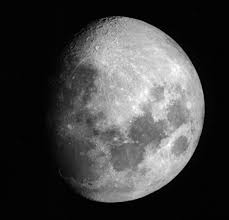
Name the moon phase
a)
waning crescent
b)
waxing crescent
c)
waning gibbous
d)
waxing gibbous
21.
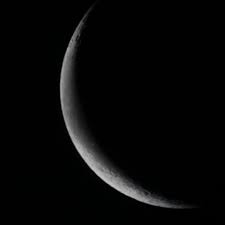
Name the moon phase
a)
waning crescent
b)
waxing crescent
c)
waning gibbous
d)
waxing gibbous
22.
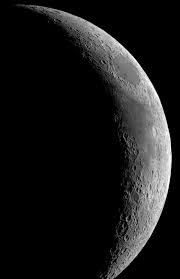
Name the moon phase
a)
waning crescent
b)
waxing crescent
c)
waning gibbous
d)
waxing gibbous
23.
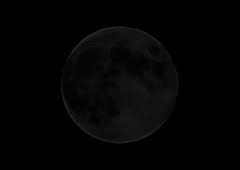
Name the moon phase
a)
First Quarter
b)
Last Quarter
c)
New Moon
d)
Full Moon
24.
Name the moon phase
a)
First Quarter
b)
Last Quarter
c)
New Moon
d)
Full Moon
25.
Name the moon phase
a)
First Quarter
b)
Last Quarter
c)
New Moon
d)
Full Moon
26.
Name the phase of the moon for letter a
a)
First Quarter
b)
Last Quarter
c)
Waxing Gibbous
d)
Waning Gibbous
27.
When the moon is in between the earth and the sun it is a
a)
New Moon
b)
Full Moon
c)
First Quarter
d)
Third Quarter
28.
How many phases does the moon have?
a)
7 phases
b)
5 phases
c)
I do not know
d)
8 phases
29.
The Moon gets its light from the
a)
Earth
b)
Stars
c)
Sun
30.

The phases of the moon are caused by the Earth's shadow on the moon

a)

True

b)

False

31.
Why do we experience the changing of the season on the earth?
a)
distance from the sun
b)
rotation of the earth
c)
change in solar output
d)

tilt of the earth's axis

32.
What season is when the north pole is tilted toward the sun?
a)
summer
b)
winter
c)
fall
d)
spring
33.
What effect does the tilt of the earth have?
a)
It changes the angle that the sun strikes the earth in different land areas
b)
It causes the earth to be farther away from the sun at different times of the year
c)
When the earth is tilted away from the sun we have night
d)
When the earth is tilted away from the sun we have day
34.

What would seasons be like if Earth's axis were straight up and down and not tilted?

a)
Seasons would be the same.
b)
Seasons would be more extreme.
c)
There would be no seasons.
35.

Which location has the greatest number of hours of daylight?

a)

A

b)

B

c)

C

d)

D

e)

E

36.

In the diagram below, the Northern hemisphere would be in what season at position A?

a)

Fall or Autumn

b)

Spring

c)

Winter

d)

Summer

37.

Why is summer warmer than winter?

a)

The hemisphere experiencing summer is tilted more directly toward the sun

b)

During summer, the entire planet is closer to the sum

c)

The sun radiates more energy during the summer

d)

The earth spins slower on its axis during the summer

38.
Why does the area around the equator stay the same temperature all year?
a)
The equator rotates slower than the poles.
b)
The equator remains the same distance from the sun.
c)
The equator always receives direct sunlight.
d)
The equator has 18 hour days.
39.
One rotation of Earth is equal to
a)
a day.
b)
a year.
40.

Earth revolves around _____.

a)

its axis

b)

the Sun