
 Worksheets
Unit 1 Review
Total questions: 67
Worksheet time: 1hrs 16mins
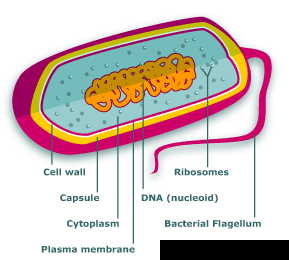
Which do BOTH prokaryotes and eukaryotes contain?
nucleus
mitochondria
ribosomes
cell wall
Which does only eukaryotic cells contain?
nucleus
DNA
cell membrane
ribosomes
Prokaryotic cells do not have…….
membrane bound organelles
cell membrane
DNA or RNA
life
You can distinguish a prokaryote apart from a nucleus by--
The presence of a ribosome
The presence of a cell membrane
The presence of DNA
The presence of a nuclear membrane
Which of the following structures is ALWAYS found in both eukaryotic and prokaryotic cells?
nucleus
mitochondria
ribosomes
cell wall
The smallest unit of a living thing are
atoms
cells
DNA
organelles
Which cell type tends to be smaller?
Prokaryote
Eukaryote
there is not a size difference
Bacteria is an example of a(n)
prokaryotic cell.
eukaryotic cell.
CHALLENGE QUESTION: Which of the following provides evidence for the hypothesis that prokaryotes evolved before eukaryotes.
prokaryotes are more complex
prokaryotes have no nucleus and fewer genes
eukaryotes are multicellular which makes them simpler
prokaryotes grow into eukaryotes

Different organs that work together make up me. What am I?
Organ system
Tissue
Molecule
Organism
Which of the following is/are true of viruses?
They are unicellular
They are multicellular
They must infect a host to replicate its DNA.
They contain a nucleus
When a virus enters a cell and it immediately makes copies of itself this is called _______________________________.
remediation
replica
replication
What macromolecule is the capsid of a virus made up of?
Nucleic Acids
Carbohydrates
Lipids
Proteins
Which type of genetic information can viruses contain?
DNA
viruses do not contain genetic information
Viral proteins
RNA
Viral entry into host cells is specific
True
False
Why do viruses need a host cell?
because they aren't living
because they need to reproduce
because they can't live without a host cell
What does the lytic cycle result in?
destruction of the infected cell and the membrane
multiple new cells
people going in sane

What is a cell?
Groups of similar types of cells that work together to carry out a specific task
Groups of different tissues working together to perform a particular job
Groups of different organs working together to complete a series of tasks
The smallest unit of life

What terms should replace X and Y in the table?
elements; compounds
abiotic; biotic
microscopic; macroscopic
natural; man-made
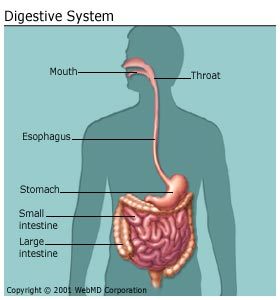
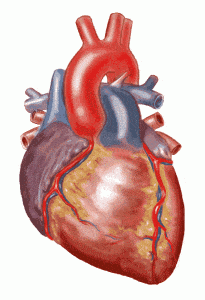
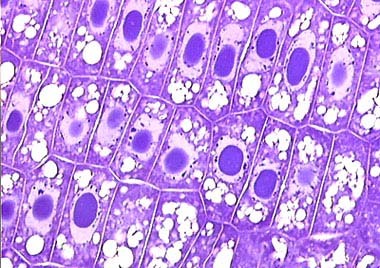

What are organs made out of?
cells
organisms
tissues
organ systems

What is the function of carbohydrates?
provides quick energy
stores energy
helps with growth and repair of tissues
stores genetic information
What is the function of lipids?
provides quick energy
stores energy
helps with growth and repair of tissues
stores genetic information
What is the function of proteins?
provides quick energy
stores energy
helps with growth and repair of tissues
stores genetic information
What is the function of nucleic acid?
provides quick energy
stores energy
helps with growth and repair of tissues
stores genetic information
What is the monomer for carbohydrates?
Monosaccarides
Fatty Acids
Amino Acids
Nucleotides
What is the monomer for Lipids?
Monosaccarides
Fatty Acids
Amino Acids
Nucleotides
What is the monomer for proteins?
Monosaccarides
Fatty Acids
Amino Acids
Nucleotides
What is the monomer for nucleic acid?
Monosaccarides
Fatty Acids
Amino Acids
Nucleotides
What is the function of nucleic acids such as DNA and RNA?
Stores energy
Stores genetic information
Movement
Physical structure

A student makes a Venn Diagram to compare functions of carbohydrates and lipids. Which cellular function of carbohydrates and lipids should be placed in the shared section of the Venn Diagram?
Hormone production
Structural support of the cell walls
Energy
Catalyst for chemical reactions

