
 Worksheets
Ch. 2 Chem Review for BIO
Total questions: 60
Worksheet time: 49mins
All matter is made of what?
energy
atoms
electrons
The positive particles of an atom are ___________.
electrons
protons
neutrons
The center of an atom where its neutrons and protons are is called the _____________.
nucleus
electron cloud
center
An atom with atomic number 6 would have how many protons?
6
12
3
5
Particles in an atom that are neutral and have no charge are
protons
electrons
neutrons
What is the atomic number for an element with three protons and 4 neutrons?
6
4
3
7
This energetic particle with negligible mass and a negative charge, moves around the nucleus.
Proton
Neutron
Electron
Quark

mass number
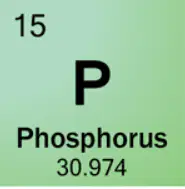
16
31
30
What is the number of neutrons that the element in this image contain?
16
31
30
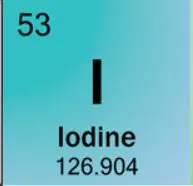
What is the most common mass number for Iodine?
53
74
126.904
127
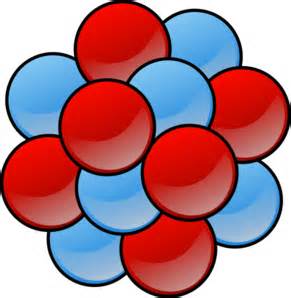
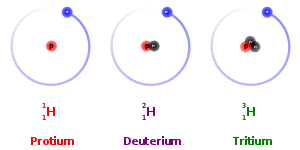
Different isotopes of the same element have...
different masses
different number of protons
different number of electrons
different number of neutrons
different number of neutrons and electrons
The stability of a nucleus depends on the balance between these two opposing forces in an atom?
strong force
electronic force
Coulombic force
Intermolecular force
intramolecular force
The atomic mass (weight) represents the weighted average of the ________ of an element.
electrons
isotopes
protons
isomers
This particle determines which element you have.
electron
proton
neutron
valence shell
What is the approximate mass of a proton or a neutron?
1 amu
2 X 10 23 g
1 g
0.0005 amu

quark
1/2000 the mass of an electron
Nearly all of the mass of an atom comes from what location?
nucleus
electron cloud
neutrons only
protons only
What is the volume of an atom mostly composed of?
protons
the nucleus where protons and neutrons are found
empty space where electrons are likely to be found
How does the size of an electron compare to a proton?
electrons are about 2000 times larger than a proton so they make up most of the mass of atoms
electrons are about 1800 times smaller so we consider them insignificant to the overall mass of the atom
electrons are nearly the same size as a proton
electrons have no size
The reactivity or chemical properties of an atom are determined by
protons
neutrons
electrons
protons & neutrons
The force between neutrons and protons in the nucleus that holds the nucleus together is called
Coulombic force
Stable force
Strong force
Cool Force
Atoms with unstable nuclei are ...
always very dangerous
noble gases
extra reactive
radioactive
Put the following elements in order from lowest to highest abundance (by mass) in the human body.
O
C
H
N
Ca
When do ionic compounds conduct electricity
when solid
when molten
when dissolved
when in a plasma state
Which of the following is not a property of a covalent compound?
particles are called formula units
can be solid, liquid or gas at room temp
poor conductor of electricity
may or may not dissolve in water

The following properties are all characteristics of ionic compounds EXCEPT
high melting and boiling points
soft
crystal lattice structure
conduct electricity when dissolved in water
Ionic bonds could be best described as:
A bond formed when 2 atoms share electrons
an attraction between 2 or more metals
An electrostatic attraction between oppositely charged ions
An electrostatic attraction between anions
How are atoms held together in covalent bonds?
By gaining electrons
By sharing electrons
By losing electrons
By transferring electrons
In forming covalent bonds, why do atoms share electrons?
To achieve noble-gas electron configuration
To become charged
To form ions
To empty electron shells
In a polar covalent bond, electrons are shared ____________ between two atoms.
equally
unequally
closely

Is this molecule polar or non-polar?
Polar
Non-polar

In a polar covalent bond, which atom will have a partial positive charge? (choose 2 correct answers)
The atom that attracts electrons less
The atom with the greater electronegitivity
The atom that attracts more electrons
The atom with the lower electronegativity
Which of the following types of compounds will likely dissolve in water, since water is polar?
ionic compounds
polar or hydrophilic molecules
nonpolar or hydrophobic molecules
metallic compounds
What explains the relatively high melting and boiling point of water (higher than some covalent compounds as it is not a gas at room temp)?
weak dipole forces between water molecules
lack of polarity in water
A polar covalent bond is an example of an ____________ force while a hydrogen bond is an example of ________________ force.
intermolecular/intramolecular
intermolecular/intermolecular
intramolecular/ionic
intramolecular/intermolecular
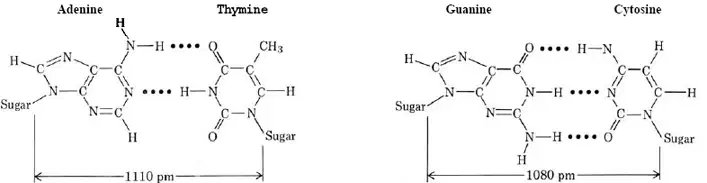
DNA strands are held together by these bonds that occur between the nitrogen bases on each strand due to the fact that N - H bonds present.
dipole-dipole forces
London dispersion forces
H-bonds
ionic forces
Which of the following could make a good electrolyte?
table sugar
olive oil
solid sodium chloride
an acidic solution like vinegar (acetic acid) or hydrochloric acid solution
When the ends of two wires, from a circuit containing a battery and a lightbulb, are placed into a beaker containing an aqueous solution the light bulb glows brightly. From this observation, you can conclude the solution is probably —
a weak electrolyte
a strong electrolyte
containing a very polar compound
containing nonpolar compounds
Ionic compounds undergo ___________ or split into separate ions when they dissolve in water
lysis
polarization
decomposition
disassociation
Which is not a major role that electrolytes play in the human body?
to send nerve signals
DNA replication
maintain proper pH of the blood
maintain hydration
Your stomach contains HCl. This gives off H+ ions when dissolved in water and gives a pH of 2. HCl is a/an
acid
base
neutral compound
nonelectrolyte
What is the charge of an electron?
Positive
Negative
Neutral
Which is not a use of radioisotopes?
dating formerly living things
diagnosing diseases
treating diseases
enhancing the health of growing cells
When one water molecule attracts to another, it is due to ...
Ionic bonds between water molecules
Covalent bonds between water molecules
polar bonds between water molecules
polar forces and/or hydrogen bonds between molecules

