Wayground logo

Free Printable Worksheets

Font size

S
M
L
XL
Worksheets

Cellular Structure and Function

Total questions: 52

Worksheet time: 3hrs 57mins

Name
Class
Date
1.

Cells only come ___

a)

from prokaryotes

b)

from other cells dividing

c)

from fungi

d)

from eukaryotes

2.

A hypertonic solution is one where

a)

the concentration of a solution outside the cell is higher than the concentration than inside the cell

b)

the concentration of a solution outside the cell is lower than the concentration than inside the cell

c)

the concentration of a solution outside the cell is equal to the concentration than inside the cell

3.

Organisms whose cells do not have a nucleus are called _____.

a)

Eukaryotes

b)

Multicellular

c)

Unicellular

d)

Prokaryotes

4.

Both prokaryotic and eukaryotic cells have all of the following EXCEPT:

a)

Cytoplasm

b)

Ribosomes

c)

DNA

d)

Cell Wall

5.

Eukaryotic cells are:

a)

only unicellular

b)

only multicellular

c)

unicellular or multicellular

d)

colonial

6.

The function of flagella is:

a)

Movement

b)

Provide Energy

c)

Protection

d)

Make Proteins

7.

What kind of cell is Euglena an example of?

a)

Virus

b)

Bacteria

c)

Prokaryotic cell

d)

Eukaryotic cell

8.

The cell part found only in plant cells that provides support and structure to the cell is

a)

Cell membrane

b)

Cell wall

c)

Nucleus

d)

Chloroplast

9.

The control center of the cell. It contains the DNA

a)

Vacuole

b)

Chloroplast

c)

Nucleus

d)

Mitochondria

10.

Cell parts that build proteins according to the DNA code

a)

Mitochondria

b)

Chloroplast

c)

Nucleus

d)

Ribosomes

11.
a)
mitochondria
b)
ribosomes
c)
nucleus
d)
nucleolus
12.
a)
1
b)
2
c)
3
d)
4
13.
This organelle controls all the functions of the cell
a)
Nucleus
b)
Cell membrane
c)
Golgi apparatus
d)
Mitochondria
14.
The __________________ is the organelle that stores extra water in a cell.
a)
Vacuole
b)
Nucleus
c)
Cytoplasm
d)
Cell membrane
15.
The cell membrane does this
a)
Controls what enters & exits a cell
b)
Stores material
c)
Carry out photosynthesis
d)
Contains the cell's DNA
16.
True or False: Animal cells have a cell wall.
a)
True
b)
False
17.
True or False: Mitochondria, cytoplasm, cell membranes, and vacuoles are all found in both animal cells and plant cells.
a)
True
b)
False
18.
The scientist who was the first person to use the word "cell" to describe cells was:
a)
Robert Hooke
b)
Anton van Leeuwenhoek
c)
Francesco Redi
d)
Charles Darwin
19.
True or False: All living things are made of cells.
a)
True
b)
False
20.
True or False: All living cells come from other living cells.
a)
True
b)
False
21.
True or False: Cells are the smallest part of organisms that can be considered alive.
a)
True
b)
False
22.
Which organelle produces the energy for a cell?
a)
Mitochondria
b)
Vacuole
c)
Endoplasmic reticulum
d)
Golgi apparatus
23.

A lipid bilayer allows certain molecules to pass through and blocks other molecules. Which structure is most often protected by a lipid bilayer?

a)

cell

b)

organ

c)

tissue

d)

system

24.

Osmosis occurs in living organisms as water moves across the cellular membrane. An environment is hypertonic when the concentration of solutes in the environment is greater than the concentration of solutes inside the cell.


In hypertonic environments, water flows

a)

from the nuclear membrane into the cell membrane

b)

from the cell into the environment

c)

inside and outside the cell at equal rates

d)

from the environment into the cell

25.

Osmosis occurs in living organisms as water moves across the cellular membrane. An environment is hypotonic when the concentration of solutes in the environment is less than the concentration of solutes inside the cell.


In hypotonic environments, water flows

a)

inside and outside the cell at equal rates

b)

from the cell into the environment

c)

from the environment into the cell

d)

from high concentration of solutes to low concentration of solutes

26.
Name structure #5.
a)
Rough ER
b)
Nucleus
c)
Lysosome
d)
Mitochondria
27.
Name structure #3.
a)
Ribosome
b)
Golgi body
c)
Smooth ER
d)
cytoplasm
28.
Name structure #9.
a)
rough ER
b)
mitochondria
c)
smooth ER
d)
cell wall
29.
This organelle is where DNA is stored (in eukaryotes only).
a)
Nucleus
b)
Cytoplasm
c)
Ribosome
d)
Mitochondria
30.

This is where you would find DNA in prokaryotic cells:

a)

Cytoplasm (loose)

b)

Nucleus (contained)

c)

Mitochondra

d)

Prokaryotic cells do not have DNA
31.
Which is a prokaryote?
a)
dog
b)
human
c)
sunflower
d)
bacterial cell
32.
Which organelle packages proteins to be transported out of the cell?
a)
Golgi body/apparatus
b)
ER
c)
ribosome
d)
mitochondria
33.
What type of cell is this?
a)
Plant
b)
Animal
c)
Prokaryotic
d)
Impossible to know
34.
Name structure #2.
a)
Lysosome
b)
Nucleus
c)
Ribosome
d)
Cytoplasm
35.
TRUE or FALSE: Plants do not have a nucleus or DNA
a)
FALSE
b)
TRUE
36.
TRUE or FALSE: ALL cells have a cell membrane.
a)
TRUE
b)
FALSE
37.
Which statement best describes the cell membrane?
a)
The protective outer layer that controls what enters and leaves the cell.
b)
Stores information on DNA molecules / Directs and controls the activities of the cell.
c)
A folded membrane that moves materials around inside cells / Also acts as the site of manufacturing materials needed by the cell.
d)
The smallest organelle with a huge job / Makes proteins, which are the building blocks of the body.
38.
Ideally, your cells should be in a(n) _______ solution
a)
Hypertonic
b)
Hypotonic
c)
Isotonic
d)
Cola
39.
An animal cell placed in a hypertonic (salty) solution will
a)
Shrink
b)
Swell
c)
Stay the same
40.
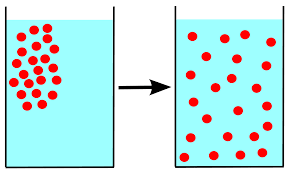
The picture below is an example of _________________.
a)
osmosis
b)
isotonic
c)
diffusion
d)
active transport
41.
Permeable means
a)
things can pass through
b)
the concentration levels are different
c)
it is permanent
d)
things are stuck
42.
The picture is an example of...
a)
active tranport
b)
passive transport
c)
diffusion
d)
osmosis
43.
_______ regulates what enters and leaves a cell.  
a)
Cell Membrane
b)
Nucleus
c)
Mitochondria
d)
Cytoplasm
44.
What is diffusion?
a)
when molecules move 
b)
when molecules move from a high concentration to a low.
c)
no movement 
d)
molecules move everywhere
45.
What is diffusion?
a)
when molecules move 
b)
when molecules move from a high concentration to a low.
c)
no movement 
d)
molecules move everywhere
46.
Where is there a low concentration of perfume?
a)
in the bottle
b)
on the hand
c)
in the room
d)
in the top
47.
When both inside and outside of a cell have the same amount of water it is said that the cell has reached a state of
a)
Osmosis
b)
Diffusion
c)
Equilibrium
48.
In the given scenario what will happen?  An egg is placed in pure water for 48 hours.
a)
The egg will gain water and swell.
b)
Water will move in and out of the cell equally, and the cell with neither shrink nor swell.
c)
The egg will lose water and shrink.
49.
The cell below is in a _________ solution.
a)
Hypotonic
b)
Hypertonic
c)
Isotonic
50.
Which cell is placed into a hypotonic environment? 
a)
A
b)
B
c)
C
d)
D
51.
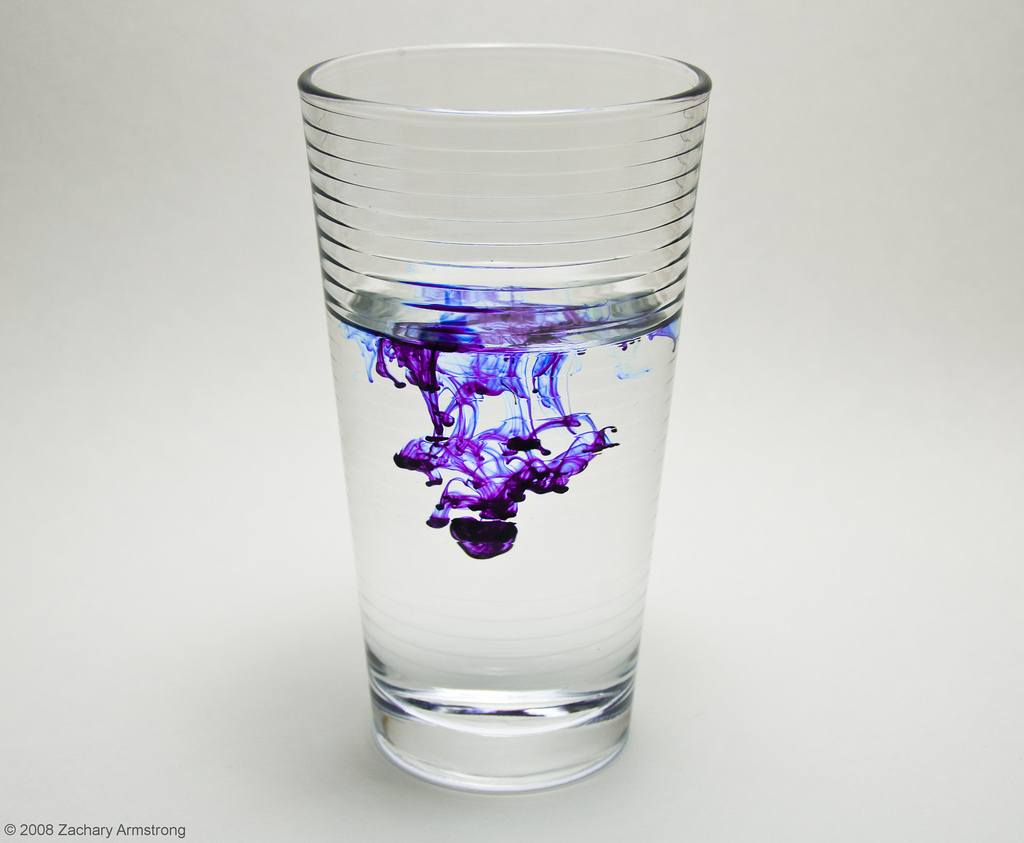
Where is there a low concentration of dye?
a)
at the bottom of cup
b)
in the color
c)
at the top of cup 
d)
no concenteraion gradient
52.

What is DIFFUSION?

a)
b)
c)
d)