wayground logo

Free Printable Worksheets

Font size

S
M
L
XL
Worksheets

Bio 111-Ch 2 & 3 Practice Questions Update

Total questions: 70

Worksheet time: 35mins

Name
Class
Date
1.
a)

Proteins

b)

Carbohydrates

c)

Lipids

d)

Nucleic Acids

2.

Which macromolecule would you use to STORE leftover energy from a big meal?

a)

carbohydrate

b)

protein

c)

lipid

d)

nucleic acid

3.

DNA and RNA are _______.

a)

Carbohydrates

b)

Lipids

c)

Proteins

d)

Nucleic acids

4.

Which elements are found in all four macromolecules?

a)

Iron, Oxygen, and Phospohorous

b)

Phosphorous, Nitrogen, and Sulfur

c)

Carbon, Hydrogen, and Oxygen

d)

Carbon, Hydrogen, and Nitrogen

5.
What is the function of nucleic acids?
a)
store genetic information
b)
store energy (long-term)
c)
store energy (short-term)
d)
build skin, hair, nails, muscles
6.

Match the following macromolecules with their monomers.

a)

carbohydrate

1.

monosaccharide

b)

protein

2.

amino acid

c)

lipid

3.

fatty acid

d)

nucleic acid

4.

nucleotides

7.

What kind of charge do electrons have?

a)

Positive charge

b)

No charge

c)

Negative charge

d)

Electric charge

8.

All matter is made of what?

a)

energy

b)

atoms

c)

electrons

9.

The positive particles of an atom are ___________.

a)

electrons

b)

protons

c)

neutrons

10.

The center of an atom where its neutrons and protons are is called the _____________.

a)

nucleus

b)

electron cloud

c)

center

11.

An atom with atomic number 6 would have how many protons?

a)

6

b)

12

c)

3

12.

Particles in an atom that are neutral and have no charge are

a)

protons

b)

electrons

c)

neutrons

13.

A particle that moves around the nucleus is called an _________.

a)

Proton

b)

Neutron

c)

Electron

d)

Quark

14.

What elements generally make an ionic bond ?

a)

Metal and nonmetal

b)

2 or more nonmetals

c)

2 or more metals

d)

2 elements

15.
What is a anion
a)
a metal with a negative (-) charge
b)
a non-metal with a negative (-) charge 
c)
a metal with a positive (+) charge 
d)
a non-metal with a positive (+) charge
16.

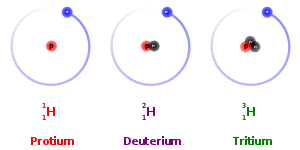
Different isotopes have...

a)

different masses

b)

different protons

c)

different electrons

17.
What word describes when water is attracted to other substances?
a)
cohesion
b)
adhesion
c)
capillary action
d)
surface tension
18.

Which of the following is LEAST likely to dissolve in water?

a)

nonpolar fats and oils

b)

polar sugar molecules

c)

salt made of a positive sodium ion and a negative chloride ion

d)

all of the substances will dissolve easily in water

19.
When water sticks to water
a)
Adhesion
b)
Cohesion
c)
Surface Tension
d)
Hydrogen Bonds
20.
Property of Water that means it can dissolve almost any substance
a)
High Specific Heat
b)
Universal Solvent
c)
Neutral pH
d)
Unique Density of Ice
21.

What type of bond is found BETWEEN water molecules?

a)

hydrogen bonds

b)

ionic bonds

c)

nonpolar covalent bonds

d)

polar covalent bonds

22.
Which end of the water molecule has a slightly positive charge?
a)
the oxygen end
b)
the hydrogen end
c)
both ends are slightly positive
d)
neither end is positive
23.
The fact that ice floats on liquid water is due to the fact that water's solid is ___________ than it's liquid form
a)
less polar
b)
more polar
c)
less dense
d)
more dense
24.
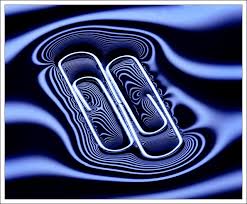
The tightness across the surface of water that enables paper clips to float is ____________.
a)
adhesion
b)
capillary action
c)
surface tension
d)
polarity
25.

Water is polar. What does that mean?

a)

it is a molecule with opposite charges on opposite ends

b)

it is a molecule with no charge

c)

it is a molecule with identical charges on opposite ends

d)

it is a molecule with too many protons
26.
Which statement explains why water molecules stick together?
a)
both sides are negative
b)
one side has a positive charge and the other side has a negative charge
c)
one side has a negative charge adn the other side has a neutral charge
d)
both sides are positive
27.
Large bodies of water help to keep nearby climates from being too hot or too cold  because they...
a)
absorb heat in the spring and slowly release that heat in the fall
b)
absorb heat in the fall and slowly release that heat in the spring
c)
absorb heat in the summer and slowly release that heat in the winter
d)
absorb heat in the winter and slowly release that heat in the summer
28.
How do covalent bonds form?
a)
Donating & receiving valence e- between atoms.
b)
Opposite slight charges attract each other between compounds.
c)
Scientists are still not sure how they form.
d)
Sharing valence e- between atoms.
29.
What two types of atoms make a covalent bond?
a)
2 Nonmetals
b)
1 Nonmetal and 1 Metal
c)
2 Metals
d)
2 Noble Gases
30.
What is a cation
a)
a metal with a negative (-) charge
b)
a non-metal with a negative (-) charge 
c)
a metal with a positive (+) charge 
d)
a non-metal with a positive (+) charge
31.

An acid

a)

is a substance that releases H+ ions when dissolved in water

b)

is a substance that does not release any ions when dissolved in water

c)

is a substance that releases OH- when dissolved in water

d)

releases an equal amount of OH- and H+ ions when dissolved in water

32.

Which of the following is the strongest acid?

a)

1

b)

5

c)

3

d)

8

33.

A base is a substance

a)

That releases OH- ions when dissolved in water

b)

That releases H+ ions when dissolved in water

c)

Does not release any ions when dissolved in water

d)

None of the above

34.
Buffer is defined as
a)
ability to resist pH change
b)
ability to prevent pH from decreasing
c)
ability to resist a pH increase
d)
ability to resist pH change when small amount of acid added
35.

Which of the following is the strongest base?

a)

4

b)

14

c)

7

d)

15

36.
The pH scale is a range from:
a)
1-7
b)
0-14
c)
1-5
d)
1-20
37.

A substance with a pH of 7 is which of the following?

a)

acid

b)

base

c)

neutral

38.

What is the only substance with a neutral pH of 7?

a)

Milk

b)

Orange Juice

c)

Pure Water

d)

Blood

e)

All Water

39.

As one moves down the pH scale from 14 to 1, what happens to the concentration of H+ in the solution?

a)

concentration of H+ decreases

b)

concentration of H+ increases

c)

concentration of H+ stays the same

40.

Which answer best describes what the cell membrane is made of?

a)

Phospholipids

b)

Proteins

c)

Nitrogen

d)

Glycogen

41.

What is the function of the golgi? The "warehouse" of the cell.

a)

package, sort, and store proteins

b)

synthesize proteins

c)

intracellular digestion

d)

ATP production

42.
A cell stores food, water or waste products in
a)

chloroplast

b)

nuclei

c)

ribosomes

d)

vesicle

43.

Contains digestive enzymes to break down waste for reuse. The "recycling center" of the cell.

a)

Smooth ER

b)

Cytoplasm

c)

Lysosome

d)

FLagella

44.

Where DNA and chromosomes are stored in a eukaryotic cell. The "library" of the cell.

a)

Nucleus

b)

Rough ER

c)

Cell Wall

d)

Mitochondria

45.

Which organelle hugs the nucleus and has ribosomes attached to it?

a)

Rough ER

b)

Cell Wall

c)

Mitochondria

d)

Smooth ER

46.

Which organelle is the site of protein synthesis and contains RNA? The "factory" of the cell.

a)

nucleus

b)

plasma (cell) membrane

c)

mitochondria

d)

ribosomes

47.

Which of the following is the function of smooth endoplasmic reticulum?

a)

Protein synthesis

b)

Macromolecule digestion

c)

Lipid synthesis and storage

d)

Ribosome production

48.
Supports cells structure & drives cell movement.  Composed of microfilaments, microtubules, & centrioles.
a)
endoplasmic reticulum
b)
golgi apparatus
c)
cytoskeleton
d)
vacuole
49.

The head of a phospholipid is attracted to water, and is referred to as:

a)

Hydroscopic

b)

Hydrogenated

c)

hydrophobic

d)

Hydrophilic

50.

Which molecule's main function is to maintain the cell's fluidity and keeps it from becoming too solid or soft?

a)

fatty acid

b)

glycerol

c)

acetylcholine

d)

cholesterol

51.
What am I?
a)
mitochondria
b)
lysosomes
c)
chloroplast
d)
endoplasmic reticulum
52.
What am I?
a)
vacuole
b)
ribosome
c)
endoplasmic reticulum
d)
golgi apparatus
53.
What am I?
a)
Nucleus
b)
Golgi Body
c)
Mitochondrion
d)
Plasma Membrane
54.

What do you call the tiny cell structures inside a cell that carry out a specific function within the cell?

a)

Biomolecules

b)

Organelles

c)

Cells

d)

Atoms

55.
Allows certain molecules or ions to pass through it by diffusion and doesn't allow others.
a)
protein
b)
semi-permeable membrane
c)
isotonic
d)
homeostasis
56.
In what step of cellular respiration is glucose broken down?
a)
Aerobic Respiration
b)
Krebs Cycle
c)
Electron Transport Chain
d)
Glycolysis
57.

In what molecule is the energy carried in cells?

a)

Glucose

b)

Oxygen

c)

ATP

d)

Carbon Dioxide

58.

Which organelle does aerobic cellular respiration happen in?

a)

Nucleus

b)

Mitochondria

c)

Chlorophyll

d)

Chloroplast

59.

Which step of aerobic cellular respiration makes the most ATP?

a)
Glycolysis
b)
Krebs Cycle
c)
Electron Transport Chain
d)
Light Dependent Reactions
60.

Which of these processes takes place in the cytoplasm of a cell?

a)

Electron transport

b)

Glycolysis

c)

Krebs cycle

d)

Photosynthesis

61.

The starting molecule for glycolysis is

a)

ADP

b)

Pyruvic acid

c)

Glucose

d)

Citric acid

62.

The Krebs cycle does NOT occur if

a)

oxygen is present

b)

oxygen is not present

c)

glycolysis occurs

d)

carbon dioxide is present

63.

Lactic acid fermentation occurs in

a)

bread dough

b)

any environment containing oxygen

c)

muscle cells

d)

mitochondria

64.
Where does the Krebs Cycle take place?
a)
mitochondria
b)
chloroplast
c)
cytoplasm
d)
nucleus
65.
What are the products of aerobic respiration?
a)
Glucose and oxygen
b)
Carbon dioxide and water
c)
Lactic acid
d)
Carbon monoxide
66.
What is the correct equation for cellular respiration?
a)
6O2 + C6H12O6 -> 6CO2 + 6H2O + Energy
b)
6O2 + C6H12O6 + Energy -> 6CO2 + 6H2O
c)
6CO2 + 6H2O -> 6O2 + C6H12O6 + Energy
d)
6CO2 + 6H2O + Energy -> 6O2 + C6H12O6
67.
Glycolysis results in a net gain of how many ATP?
a)
0
b)
2
c)
4
d)
1
68.
The energy in ATP is stored 
a)
in the bond between the second and third phosphate
b)
in the bond between the first and second phosphate
c)
in the bond between the adenosine and the first phosphate
d)
I like turtles
69.
What is the main job of the electron carriers in cellular respiration? 
a)
Transport electrons and hydrogen atoms to the electron transport chain 
b)
Capture energy throughout the process of cellular respiration
c)
Provide the reactants for the process of cellular respiration
d)
Pump positive hydrogen ions and shuttle electrons across the electron transport chain and contribute to chemiosmosis
70.

Where does at the electron transport chain take place?

a)

Cytoplasm

b)

Mitochondria

c)

Stroma

d)

Thylakoid