
 Worksheets
PS Unit 3 Bonding and Nomenclature
Total questions: 42
Worksheet time: 40mins
Which of the following is NOT a property of ionic compounds?
They conduct electricity when molten
They conduct electricity when in solution
They have high boiling points
They are insoluble in water
Which of the following cannot conduct electricity?
Covalent Solids
Metallic Solids
Metallic Liquids
Ionic Liquids
What is the name TiN?
Tin
Titanium (III) Nitrite
Titanium Nitride
Titanium (III) Nitride
What is the formula for Iron (II) Oxide?
Fe2O
Fe2O2
FeO
Fe2O3
What is the formula for Carbon Monoxide
CO
C2O
CO2
CoO
What is the name of V3P5?
Trivanadium pentaphosphide
vanadium phosphide
vanadium (V) phosphide
vanadium phosphate
What kind of bonding is in H2O
ionic
non-polar covalent
metallic
polar covalent
What kind of bond is the weakest?
Ionic
Non-Polar covalent
metallic
polar covalent
What is the name and bond type of Li2O?
Lithium (I) Oxide; ionic
Lithium (I) Oxide; covalent
Lithium oxide; ionic
Lithium oxide; covalent
What kind of bonding is N2H4?
Ionic
Non-polar Covalent
Metallic
Polar Covalent
What is the best name of H3PO4
Hydrophosphoric acid
hydrogen phosphide
phosphoric acid
hydrogen phosphate
In the Lewis Dot Structure, how many dots should Fluorine have?
3
5
7
8
What do the dots represent on a dot diagram?
number of electrons
valence electrons
number of protons
number of shared electrons
electrons are shared between atoms
metallic bond
ionic bond
covalent bond
ionization bond
When the highest occupied energy level is filled with electrons.
stable electron configuration
valence electrons
polarity
ionization
When is an atom least likely to react?
When the highest occupied energy level of an atom is filled with electrons.
When the highest occupied energy level of an atom is filled with more than 8 electrons.
When the valence electrons of an atom gain one (1) more electron.
When the valence electrons of an atom gain two (2) more electron.
A chemical bond that forms when atoms share electrons is always a(n)
polar bond
ionic bond
metallic bond
covalent bond
When an atom loses an electron, it forms a(n)
anion
cation
polyatomic ion
neutral ion
Which category of elements usually form negative ions?
metals
nonmetals
metalloids
noble gases
What category of element usually forms a positive ion?
Metals
Nonmetals
metalloids
Noble gases
Predict the bond between Mg and Cl
covalent
ionic
metallic
none of the above
Which is the correct Lewis Structure for oxygen?

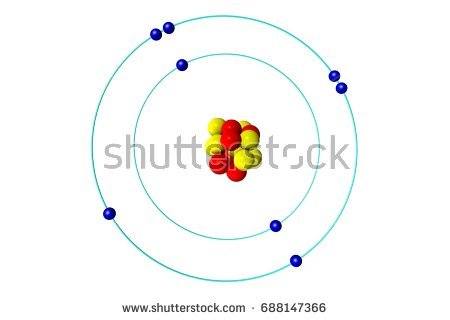
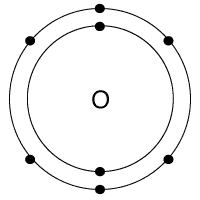
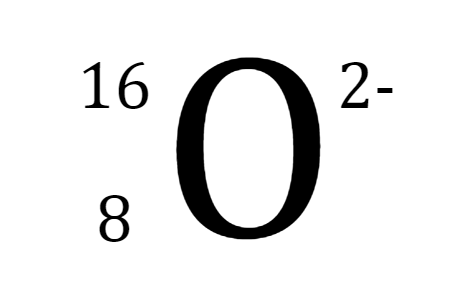
Why do atoms bond?
They typically don't bond
To add or take away energy levels
To have a full valance shell.
To have a full inner shell
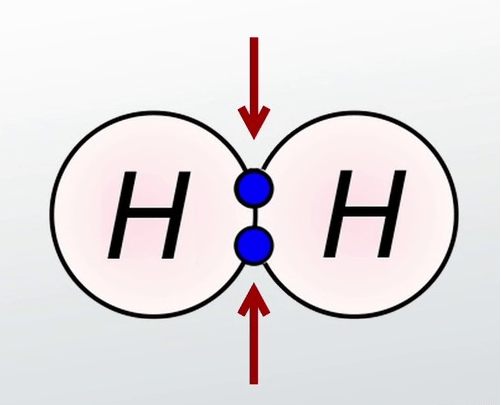
What type of bond is shown in this image?
Ionic
Polar Covalent
Nonpolar Covalent
London dispersion

