wayground logo

Free Printable Worksheets

NEW

Font size

S
M
L
XL
Worksheets

Matter Unit Test Part 1

Total questions: 43

Worksheet time: 29mins
Name
Class
Date
1.

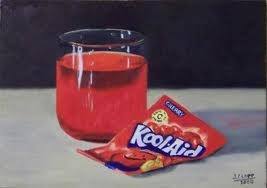
How would you classify this image?

a)

homogeneous mixture

b)

heterogeneous mixture

2.

What is a type of mixture in which different parts can easily be seen (Ex. Vegetable soup)?

a)

Heterogeneous mixture

b)

Homogeneous mixture

c)

Solution

d)

Colloid

3.
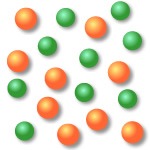
This picture represents: 
a)
Element
b)
Compound
c)
Mixture of Elements
d)
Mixture of Compounds
4.
This picture represents which of the following?
a)
element
b)
compound
c)
mixture
5.
If you change a substance into a new substance...
a)
Partial Change
b)
Physical Change
c)
Chemical Change
d)
Freezing
6.
Changing the phase, size or shape of something....
a)
Chemical change
b)
Physical Change
c)
Suspension
d)
Colloid
7.

What is the smallest unit of matter?

a)

A cell

b)

An atom

c)

A particle

d)

A compound

8.

__________ are when elements or compounds mix together in a substance but DO NOT chemically combine.

a)

Pure Substances

b)

Compounds

c)

Mixtures

9.

Elements and Compounds are classified as _______.

a)

Heterogeneous mixtures

b)

Homogeneous mixtures

c)

Pure substances

d)

Unpure substances

10.
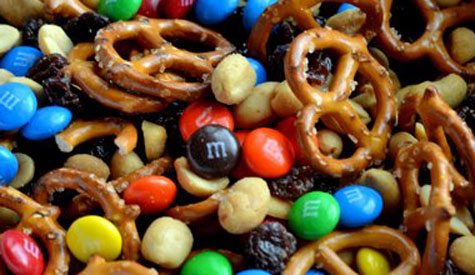
What type of mixture is this?
a)
homogenous mixture
b)
chemical
c)
heterogeneous mixture 
d)
solid mix
11.

A pure substance containing two or more types of elements that are chemically combined is called?

a)

Mixture

b)

Element

c)

Compound

d)

Solution

12.
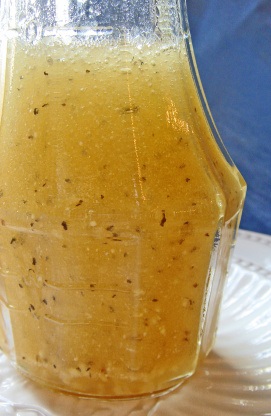
Italian Salad Dressing is a . . .
a)
heterogeneous mixture
b)
homogeneous mixture
c)
Pure Substance
d)
Compound
13.
As a substance heats up, its molecules ___________________.
a)
slow down and get closer together
b)
slow down
c)
speed up and get farther apart
d)
stop
14.
If a solid block of wood has a volume of 10 cm3 and a mass of 40 grams, what is its density?
a)
40 grams
b)
4 cm3
c)
4 g/cm3
d)
40 g/cm3
15.
Does the amount of a substance make a difference in its boiling point?
a)
yes
b)
no
16.
Which one is not a chemical change?
a)
a wick burning
b)

a nail rusting

c)
metal corroding
d)
wax melting
17.
Which one is not a physical change?
a)
paper ripping
b)
chopping wood
c)
gold melting into a liquid
d)
a match burning
18.

Which of the following describes a solid?

a)

No definite shape or definite volume, lowest intermolecular forces

b)

Definite volume, takes the shape of its container, no definite shape

c)

Definite shape and definite volume, vibrates in place and highest intermolecular forces

d)

Highest Kinetic Energy

19.

When a solid changes to a liquid as temperature increases, this is known as which phase change?

a)

Vaporization

b)

Condensation

c)

Freezing

d)

Melting

20.

When water vapor changes to liquid water as energy is removed, this is known as which phase change?

a)

melting

b)

freezing

c)

vaporization

d)

condensation

21.

Which phase change is being represented in the particle diagram?

a)

melting

b)

evaporation

c)

condensation

d)

freezing

22.
How is a gas defined?
a)
Indefinite shape, indefinite volume
b)
Definite shape, definite volume
c)
Found in stars
d)
Definite volume, indefinite shape
23.
What does the scale read?
a)
9.4 g
b)
9.6 g
c)
49.4 g
d)
49.6 g
24.

What is the definition of matter?

a)

Anything that has mass and takes up space

b)

A substance that is liquid, solid, or gas

c)

Anything that is pure

d)

Anything that you can see or hold

25.
The air is a _________. 
a)
element 
b)
mixture 
c)
compound 
d)
energy 
26.
Elements can be broken down into simpler substances. 
a)
false 
b)
true 
c)
sometimes 
27.
Is sugar (C12H22O11) an element or a compound?
a)
Element
b)
Compound
28.
What tool is used to measure mass?
a)
graduated cylinder
b)
triple-beam balance
c)
meter stick
d)
thermometer
29.
How do you measure the volume of an irregular shape?
a)
balancing scale
b)
meter stick
c)
water displacement
d)
LxWxH
30.
What unit of measurement is used to measure mass?
a)
grams
b)
meters
c)
liters
d)
centimeters
31.
What object is pictured here?
a)
Beaker
b)
Graduated cylinder
c)
Flask
d)
Test tube
32.
What is mass?
a)
The amount of matter in an object
b)
The amount of space an object takes up
c)
An object's ability to sink or float
d)
An object's weight
33.
What is the volume of water inside this graduated cylinder?
a)
10.3 mL
b)
13.0 mL
c)
14.0 mL
d)
15.0 mL
34.
What amount does this triple beam balance read?
a)
72.1 grams
b)
270.0 grams
c)
272.1 grams
d)
272.0 grams
35.
What is the volume of the fish inside the graduated cylinder?
a)
38 mL
b)
6 mL
c)
32 mL
d)
Not enough information to solve
36.

What is the amount of space that matter occupies?

a)

volume

b)

mass

c)

density

d)

peanut butter

37.

The formula for density is

a)

D=LxW

b)

D=M/V

c)

D=V/M

d)

D=L/Q

38.
What are the units used to measure mass?
a)
meter, inch, yard
b)
grams, milligrams, kilograms 
c)
liters, milliliters, kiloliters
39.
What are the units used to measure volume?
a)
meter, inch, yard
b)
grams, milligrams, kilograms 
c)
liters, milliliters, kiloliters
40.
What is an example of sublimation?
a)
Ice cream melting
b)
Dry ice
41.
Sublimation is
a)
when solid turns into gas
b)
when gas turns into plasma
c)
when liquid turns into gas
d)
when gas turns into solid
42.

Freezing is ...

a)

a change of state from a solid to a liquid

b)

a change of state from a liquid to a solid

c)

a change of state from a gas to a liquid

43.

Boiling is ...

a)

a change of state from a liquid to a solid

b)

a change of state from a solid to a liquid

c)

vaporization that occurs throughout the liquid rapidly